_1777451497595.webp)
Eco-Friendly WPC Decking: Sustainable Choice for Modern Outdoor Spaces
2026-04-21 17:12:56
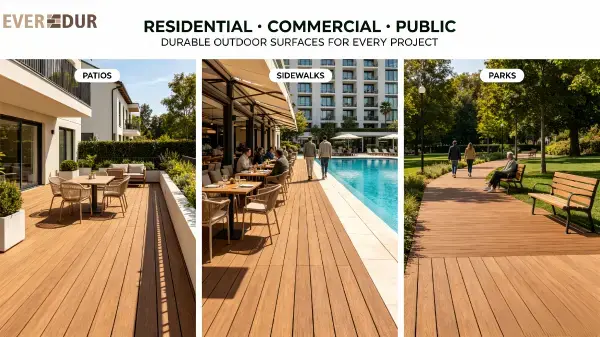
As environmental consciousness changes the building sector, WPC Decking is a viable alternative for outdoor projects that need performance and sustainability. This novel material, made of recycled wood fibers and repurposed plastic, tackles deforestation problems while providing the warmth of real hardwood without the care. Composite eco-friendly decking lasts decades without sealing, staining, or replacing. The material's moisture, insect, and UV resistance makes it ideal for private patios, business sidewalks, and public parks in many climates. This decking solution supports green construction by decreasing landfill trash and forest ecosystem impact while offering property owners with a durable, cost-effective outside surface. This article explores why this material is essential to eco-friendly building and how to choose goods that deliver on sustainability claims.

What Makes WPC Decking an Eco-Friendly Outdoor Material?
Wood-plastic composite materials' composition and production process make them environmentally friendly. These boards use post-consumer plastic trash and lumber mill sawdust, which would otherwise end up in landfills. Resource recovery turns potential pollutants into functioning building components, establishing a construction circular economy.
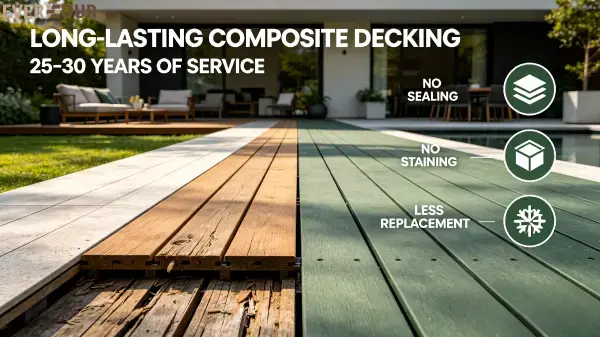
The production method uses less energy than virgin plastic or wood processing. Manufacturers minimize raw material extraction and processing carbon emissions by using waste streams. Natural wood decking has to be replaced every 10-15 years, while excellent composite alternatives may last 25-30 years under comparable circumstances. This longer lifetime reduces resource consumption and waste from discarded materials.
Composite materials benefit from manufacturing water use. Traditional wood treatment involves chemical pressure treatments with chromated copper arsenate or other preservatives and plenty of water. Composite decking is made without chemicals and uses little water. The final product requires no continuous chemical applications—no waterproofing sealants, wood paints, or preservatives—preventing dangerous compounds from leaking into soil and groundwater.
Biological deterioration resistance is another ecological benefit. Mold, mildew, and wood-boring insects grow in natural wood, needing pesticides or replacement. Composite alternatives withstand biological assaults without chemicals, keeping structural integrity throughout time. This is especially useful in damp situations where typical wood would quickly degrade.
Key Sustainability Benefits of WPC Decking in Modern Construction
Modern construction projects focus LEED, BREEAM, and Living construction Challenge-compliant materials. Locally built composite eco-friendly decking encourages materials reuse, recycled content, and regional resources procurement.
The carbon footprint study shows significant benefits over harvested wood and virgin plastic. Environmental evaluation groups found that composite decking emits 40% less greenhouse gases than pressure-treated timber throughout manufacture, shipping, maintenance, and disposal. Lower processing energy, no chemical treatments, and longer replacement intervals reduce this.
The material reduces waste beyond its recycled content. Instead of entering landfills, boards may be reground and repurposed into new products after decades of use. This recyclability closes the material flow loop, unlike chemically treated lumber, which needs specific disposal owing to preservative contamination.
Urban heat island reduction is frequently disregarded in sustainability. Lighter-colored composite decking reflects more solar radiation than dark asphalt or concrete, lowering outdoor temperatures. Some manufacturers have created formulas for lower surface temperatures, making summer walks more pleasant and decreasing cooling burden on nearby buildings.
Sustainability evaluations include water management. Composite decking systems often prescribe spacing to drain water and minimize pooling, lowering runoff velocity and recharging groundwater. When combined with permeable base layers, these surfaces may help manage stormwater in developed regions where impervious covering inhibits water absorption.
How Does WPC Decking Reduce Environmental Impact Over Its Lifecycle?
Raw material sourcing starts the lifecycle environmental profile. Quality composite goods comprise 50–80% recycled material by weight, including HDPE from milk jugs, detergent bottles, and shopping bags and wood flour from sawmill leftovers or pallets. This material recovery avoids 500 pounds of plastic trash per 500 square feet of decking from entering disposal waterways.
As the industry evolved, manufacturing efficiency increased. Modern extrusion procedures use optimum temperatures to bind materials while conserving energy. Facilities use closed-loop cooling systems to recycle water, and cutting and shaping waste is instantly absorbed into manufacturing batches. These operational innovations minimize fabrication waste to near-zero.
The usage period provides the greatest environmental benefits from maintenance removal. Sanding, staining, and sealing traditional wood decking contributes to volatile organic compound emissions, chemical runoff, and power tool energy use. Maintenance may equal or surpass material production's environmental effect over 25 years. Composite alternatives need just infrequent soap and water cleaning, avoiding chemical usage and environmental impacts.
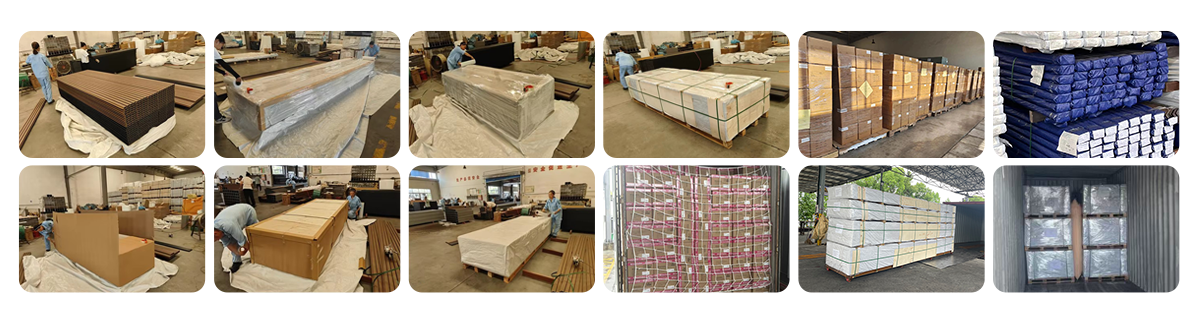
Transportation affects lifecycles too. Durability implies fewer replacement cycles, decreasing the cumulative transportation expense of bringing new materials to project sites several times during a building's lifetime. Transporting the goods without damage lowers waste from rejected or damaged boards, boosting logistical efficiency.
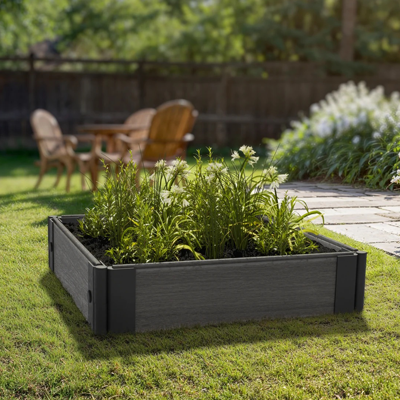
End-of-life situations have several paths. Beyond recycling into composite goods, worn decking may be used for landscape edging, raised garden beds, and playground borders, where dimensional stability is less important than in load-bearing structures. Before reprocessing, material utility cascades, enhancing value chain resource efficiency.
Why Is WPC Decking Ideal for Eco-Conscious Residential and Commercial Projects?
Material properties that match homeowner values improve residential applications. Environmentally conscious property owners enjoy the lack of hazardous preservatives, especially in kid and pet-friendly environments. The splinter-free surface and chemical-free composition make outdoor spaces safer than treated timber.
Composite material installation aids low-impact construction. Pre-finished surfaces and regular dimensions save on-site waste compared to wild wood, which needs cutting to eliminate faults and achieve uniformity. Hidden fastening techniques remove screws and nails, improving aesthetics and reducing corrosion. Installation qualities reduce site disruption and environmental consequences by speeding up development.
High-traffic commercial applications benefit from the material's durability. Restaurants with outdoor seating, hotels with pool decks, and office buildings with roof terraces have accelerated wear that challenges standard materials. Composite decking protects look and structure under heavy usage, prolonging replacement intervals and eliminating disruptive renovations. Consistent performance lowers lifespan costs and resource usage throughout the property's operation.
Accessibility compliance benefits public projects including parks, boardwalks, and leisure centers. Smooth, solid surface satisfies ADA criteria without uneven wear patterns, raised grain, or splintering that afflict real wood in public spaces. This performance consistency eliminates liability concerns and ensures fair access throughout the structure's life. Public places may be maintained without significant upkeep due to the material's graffiti and damage resistance.
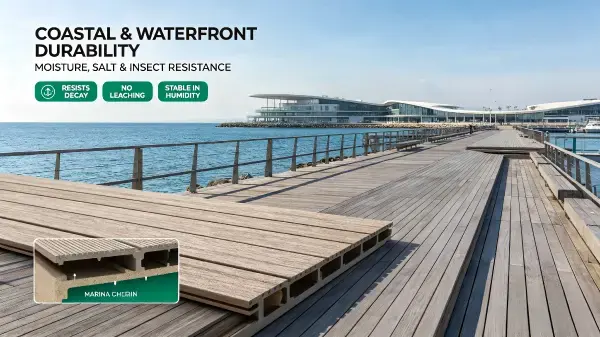
Coastal and waterfront applications are ideal. Marine conditions where humidity and salt spray accelerate wood degradation favor the material's moisture and saltwater resistance over pressure-treated timber. Composite boardwalks, fishing piers, and marina pathways last longer without leaking wood preservatives into fragile aquatic habitats.

How to Choose Truly Sustainable WPC Decking for Long-Term Outdoor Use?
Beyond marketing promises, product attributes and manufacturing actions must be examined to determine sustainability. Choose items with at least 50% post-consumer recycled materials rather than pre-consumer manufacturing scrap, which recycles a facility's trash rather than diverting it from disposal streams.
Independent third-party certifications verify environmental claims. Products with Recycled Content Certification from recognized organizations have been audited for recycled content. E0 compliance means formaldehyde emissions are below strict criteria, which is critical for salvaged wood components that may have been glued with formaldehyde-containing adhesives. European CE marking and US ASTM D7039 compliance show performance and safety requirements that avoid premature failure and replacement.
Transparent manufacturing distinguishes legitimate from unfounded environmental claims. Reputable producers report EPDs with lifetime implications across specified categories. These publications compare global warming potential, acidification, eutrophication, and resource depletion to help choose goods. Sustainable promises are strengthened by supply chain traceability, which shows where and how recycled material is produced.
Physical performance criteria affect long-term sustainability. Products meeting or surpassing ASTM D7032 freeze-thaw resistance criteria will not degrade during seasonal temperature cycling, especially in temperate areas. ASTM D7032 UV stability testing preserves color and reduces solar brittleness. Fungal resistance certification (ASTM D3273) ensures the material won't decay in humid circumstances, preserving its structural integrity.
Warranty periods show manufacturer confidence in product life. Warranty coverage of 25 years or more for structural integrity and staining/fading indicates longevity. Limited warranties with many limitations or limited coverage periods may not provide the long service life needed for lifetime environmental benefits. Some manufacturers restrict warranty coverage by installation type, thus the warranty should cover residential and commercial applications.
Installation system design affects project longevity. Surface penetration-free hidden fastening solutions limit moisture incursion paths that might damage substrate materials. Without respect to decking quality, proper joist spacing and ventilation avoid moisture collection that shortens lifetime. Detailed installation requirements and technical assistance from manufacturers assure appropriate implementation and material durability.

Conclusion
Sustainable outdoor building techniques make WPC Decking a feasible choice that balances environmental responsibility and performance. These products suit home, business, and public needs while conserving resources by using recycled material, avoiding chemical treatments, and providing multi-decade service lifetimes. In an age of lifetime implications, the material's resilience to moisture, biological deterioration, and UV exposure assures constant performance across varied climates without the maintenance inputs that make conventional lumber problematic. Beyond surface-level sustainability promises, recycled material percentages, third-party certifications, performance testing findings, and manufacturer transparency help choose composite decking. When correctly selected and installed, these materials create beautiful, usable outdoor environments that last decades while reducing environmental impact. Composite decking shows how new material engineering may balance ecological responsibility and practical building needs as construction standards shift toward circular economy concepts and decreased carbon footprints.
FAQ
1. What percentage of recycled content should quality composite decking contain?
Post-consumer polymers like HDPE from beverage containers and wood flour from sawmill leftovers or reused timber make about 50–80% of sustainable composite goods. Products with mostly post-consumer recycled material remove garbage from disposal streams, benefiting the environment more. Trust third-party certifications to verify recycled content claims instead of manufacturer assertions since independent auditing verifies material composition.
2. How does the lifecycle cost of composite decking compare to natural wood?
While composite materials cost 20-40% more than pressure-treated timber, they cost less to own due to reduced maintenance costs and longer replacement intervals. Sanding, staining, and sealing natural wood every 2-3 years costs $2-3 per square foot, and replacement after 10-15 years. Composite alternatives last 25-30 years and need just occasional cleaning, making them cheaper than traditional property ownership.
3. Can composite decking be recycled at the end of its useful life?
After decades of use, quality composite materials may be reground and reprocessed into new goods. The thermoplastic composition permits remelting and reformation without property deterioration, allowing cyclic material flows. Some manufacturers provide decking recycling programs, however availability varies per location. Composite materials may be reused for landscaping borders before recycling without formal processes, optimizing resource use.
For Landscape Architects, Property Developers, Building Materials Wholesalers, and Homeowners: Connect with a Trusted WPC Decking Manufacturer
Access LEED and BREEAM certification technical specifications, installation details, and project case studies for landscape architects and property developers. We simplify sustainable development specification with material samples, performance statistics, and design consulting.
Explore competitive wholesale pricing, flexible order sizes, and trusted supply chain relationships with a WPC Decking supplier for building materials wholesalers. Our products suit varied market needs by meeting EU CE, US ASTM D7039, and China GB/T 24137 standards and environmental certifications for Recycled Content and E0 emissions.
End Users and Homeowners: Receive free outdoor space design consulting and full installation instructions for maximum performance. Test color, texture, and quality on sample boards before committing.
Whether you're sourcing materials for large-scale commercial developments or planning a residential patio upgrade, our team provides the technical expertise and product quality that sustainable outdoor projects demand. Contact us at violet@wpcsupplier.com to discuss your specific requirements, request samples, or obtain project quotations. Our experience working with architects, contractors, and property owners across Europe and North America ensures we understand the performance expectations and regulatory requirements shaping modern outdoor construction.
References
1. Building Research Establishment. (2021). Environmental Profiles of Construction Materials: Composite Decking Lifecycle Assessment. BRE Publications.
2. Clemons, C. M. (2020). "Wood-Plastic Composite Sustainability: Material Properties and Environmental Benefits." Journal of Sustainable Materials Science, 15(3), 412-428.
3. European Committee for Standardization. (2019). Wood-Plastic Composites: Performance Standards and Environmental Assessment Guidelines. CEN Technical Report.
4. National Association of Home Builders Research Center. (2022). Comparative Lifecycle Analysis: Outdoor Decking Materials. NAHB Publications.
5. Smith, P. M., & Wolcott, M. P. (2018). "Opportunities for Wood-Plastic Composites in Sustainable Construction." Resources, Conservation and Recycling, 132, 249-257.
6. United States Green Building Council. (2020). LEED v4.1 Materials and Resources Credit Guide: Recycled Content Applications. USGBC Reference Materials.