
2026 Top Residential WPC Decking Options for Balconies & Gardens
2026-11-09 15:49:08
If you're contemplating an exterior renovation this year, residential WPC decking remains a practical, appealing option for balconies, gardens, patios and private terraces. WPC boards are constructed from recycled wood fibre and high-density polyethylene (HDPE) that give you the natural warmth of timber without any of the persistent maintenance that genuine wood needs. Increasingly, homeowners throughout Europe and North America are opting for composite choices that can withstand rain, UV exposure and seasonal temperature fluctuations without the need for yearly staining or sealing. Whether you are renovating a little urban balcony or planning the garden of a large mansion, today's WPC boards come in a broad choice of profiles, colours and surface textures to meet your vision. By 2026, the market is anticipated to see more optimisation of co-extrusion technology, wider customisation possibilities and increased emphasis on eco-friendly materials. This article will assist you to learn about the essential things to think about, the design options and the practical advantages of selecting composite decking for your home's outside areas this year.SEND INQUIRY

What Makes Residential WPC Decking Popular for Outdoor Living in 2026?
Living outside has quietly gone from being a yearly treat to a top concern for many families all year long. These changes have put more pressure on outdoor materials; they now have to work well in a wider range of circumstances and keep looking good over time.
WPC boards meet these needs with simple material logic: wood fiber gives the boards their natural look and structure, while HDPE works as a protection matrix that stops water from absorbing. This makes a board that doesn't rot or bend when left out in wet soil or rain for a long time.
In 2026, the most important change is that co-extrusion production is being used by more people. During production, a denser protective shell is fused directly onto the board's core. This makes the outside harder and better able to resist scratches, fading, and stains than first-generation extruded profiles. People who put in co-extruded boards five years or more ago say that the color and surface quality have held up well with little maintenance. This is proof that the technology works as it should.
People are also becoming more aware of lifetime value. People are considering not only the initial cost of the materials, but also the total cost of painting, finishing, and replacing natural wood over a ten-year period. When you look at it that way, composite decks usually costs less in the long run (15–20 years). This estimate hits home especially hard for people who live in places like Germany, the Netherlands, and the US, where the cost of labor for exterior care is high.
Another real driver is sustainability. Products made from recycled HDPE and wood fiber that comes from responsibly managed forests have certifications that matter to modern buyers. These include FSC, CE, and RoHS, and these credentials are important for both personal buying decisions and building projects that need to show they are environmentally friendly.SEND INQUIRY

Residential WPC Decking for Balconies, Gardens, Patios, and Terraces
Balconies need profiles that are lighter and don't put too much stress on the structure. With a metal or composite support and 20 mm-thick boards, the weight is kept under control while still giving the floor a solid feel. Another important factor is drainage. Boards with a hollow or grooved shape let water flow easily, which keeps it from pooling on raised areas where standing water is a constant problem with residential garden deck.
Garden decks and private yards usually use wider boards (138mm to 150mm), which cover more ground and make the surface look smoother. A board with a brushed or embossed texture might be a good choice for these areas because they get a lot of foot traffic from parties, kids' play, and outdoor furniture. Both treatments make the surface easier to grip and less likely to slip when it's wet outside in the morning.
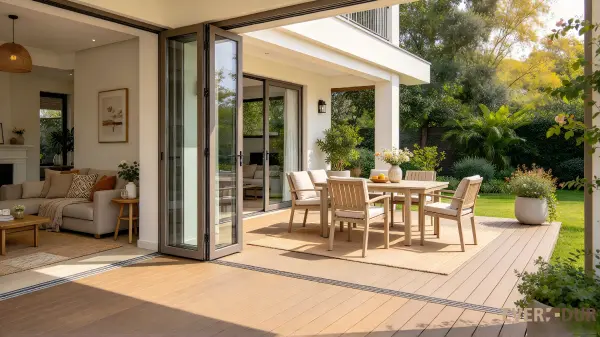
Decking makes the patios and terraces that link to the main living room look like they are part of the house. Warmer wood grain textures, like walnut, teak, or cedar finishes, make the transition between indoor and outdoor surfaces look smooth. Colors with cool tones, like ash gray or stone gray, look good with modern architecture that has straight lines and few decorations.
In all four cases, the installation method is the same: boards are placed over a joist system and held in place with hidden clips. This leaves the surface free of obvious fasteners and makes it easy to replace individual boards if needed.SEND INQUIRY

How Does Residential WPC Decking Improve Everyday Outdoor Comfort?
A Surface That Stays Safe in All Seasons
One quality of composite boards that doesn't get enough attention is that their surfaces behave the same way in all kinds of weather. A brushed or embossed finish keeps its grip even when it's wet, which is important for decks where kids play or where older family members walk. The rough surface of a composite board, unlike smooth stone or ceramic tile, makes it easier to grip without the need for an extra mat or covering.
The way temperatures change is also important to note. It's easier to walk barefoot on co-extruded boards with a dense outer shell in the summer than on darker solid materials because they don't soak up as much surface heat. Boards that are made to expand and contract very little during cold winters also stay the same size. This stops the small amounts of movement and noise that can happen over time in setups that aren't properly defined.
Low-Upkeep Living Without Compromise
Composite decks really does make upkeep outside easier. The surface only needs to be cleaned every so often with light soap and water to keep it looking nice. You don't have to strip and paint it once a year, and you don't have to worry about the sealer not sticking after a wet spring. Because it is so simple, you can spend more time using the deck and less time working on it.
For homes that take care of more than one outdoor place, like a balcony, a garden deck, and the area around the pool, the time saved over five or ten years is significant. That's not just a marketing term; it's what people who have switched from wood actually experience.
Splinter-Free and Family-Friendly
As natural wood ages and dries, it gets splinters, mostly along the edges of boards and where they were cut. That's really uncomfortable to walk on barefoot and really dangerous for little kids. There is no such risk with composite boards because the material doesn't splinter when it wears down, and cut ends can be sealed off cleanly during installation. During the product's useful life, the surface stays smooth and even.SEND INQUIRY

Residential WPC Decking Colors and Wood-Look Textures for Home Design
Matching Your Home's Exterior Palette
The color choices for composite decking have grown up a lot. Today's boards come in more than just brown or gray. They come in a range of colors with different undertones, from cool neutrals like stone gray and dark gray to warmer ones like copper brown, mocha, and sandal wood. These aren't just painted surfaces; the pigment is actually built into the material. This means that the board is all the same color and wear doesn't show a different color underneath.
It is possible to make custom colors for people who want something more special for their project, like a certain shade to match cladding, window frames, or landscaping materials. That level of detail is especially important for villa projects and high-end renovations where the way the materials look together is important for the design.
Wood Grain and Embossed Textures
The deck board's surface roughness affects how the place looks and feels when you walk on it. Deep wood grain embossing makes shadow lines on the surface that look like the natural variations in sawn wood. From a short distance, it looks a lot like real hardwood. Brushed finishes make surfaces that are softer and more regular, which fits with modern design ideas.
Sanded finishes are in the middle. They are smooth enough for high-end settings but have enough surface difference to give you grip. Custom surface tools can make profile-specific results for projects that need a very specific structure, like copying a certain type of wood or matching a material that is already on site.
Creating Visual Flow Between Indoor and Outdoor Spaces
The deck is more of an extension of the living space inside the most well-thought-out outdoor designs. If you choose a board color and texture that matches the flooring inside, like a light oak laminate or a dark concrete tile, the two rooms will look like they belong together and are bigger.
When paired with white render or light stone cladding, warm-toned home balcony deck surfaces look great. On the other hand, cooler grays look great with zinc, brushed steel, or dark timber window frames. Because there are so many styles to choose from, it's usually possible to find a close match without having to order a unique color.SEND INQUIRY

Flexible Residential WPC Decking for Changing Outdoor Lifestyle Needs
Adapting to Different Climate Conditions
The weather outside in Europe and North America is very different from place to place. A deck in southern France is very hot and gets a lot of UV light. A balcony in Scandinavia or Canada goes through long cycles of freezing and thawing. In the UK or the Pacific Northwest, a terrace has to deal with constant wetness and high humidity from clouds.
These factors can be taken into account by changing the WPC formulations. In wetter climates, higher HDPE content makes it better at resisting water. Better UV protector kits keep surfaces from fading in places with a lot of sun. For projects in places that get a lot of freeze-thaw cycles, boards that are designed with tighter dimensional limits work better and don't get gaps or surface stress during these cycles.
It's not too cautious to make sure you choose the right material setup for the temperature. It's a simple way to make the work last longer and lower the risk of warranty problems in the future.
Scalable for Residential Projects of Any Size
A private garden deck project can be as small as a 20-square-meter porch or as big as a garden terrace with several levels that covers several hundred square meters. Both use the same core product line, so the board profiles, colors, and installation hardware stay the same. This makes it easier to get the materials you need and makes sure that the installation logic is the same across a larger site.
For people who work with contractors, that regularity makes things easier on the job site. The clip-and-joist method is well-known and doesn't need any special tools for people who want to build their own homes or install them themselves. Standard lengths of 2.2m, 2.9m, and 3.6m leave enough extra material for most home layouts to be manageable.
Designed to Evolve With Your Space
The outdoors changes over time. In ten years, a yard that is now mostly used as a play area for little kids will probably be changed into a more formal place to have parties. Container growing on a deck could turn into a place to sit later on. Individual boards can be taken off and replaced without affecting the overall installation, and because the material is dimensionally stable, boards laid years apart will still line up perfectly with ones that are already there.
Newer products, like lighter boards with less thermal expansion, are also making design more flexible in places that are high or limited, where standard WPC shapes would add too much weight or need bigger expansion gaps.SEND INQUIRY

Conclusion
In 2026, there are so many composite choices that it is possible to find one that works well for almost any outdoor area in a home. Whether you want low maintenance on a balcony in the city, long-lasting performance in a garden that gets a lot of use from the family, or a sleek look on the terrace of your villa, composite boards can meet your needs without the trade-offs that come with natural wood. The materials have improved over time, giving you more color and pattern choices. The fitting methods have also become easier to understand. For most homes, it's clear that WPC is a good idea with residential WPC decking. The only thing left to decide is which profile and color will work best in their home.SEND INQUIRY

FAQ
Q: What is the typical service life of a residential WPC deck board?
A: Most co-extruded composite boards carry a service life of 15–25 years under normal residential use conditions. Products backed by a manufacturer's warranty in the 15–20 year range give a reliable indication of expected performance.
Q: Do composite deck boards get hot in direct summer sunlight?
A: All dark-colored outdoor surfaces absorb some heat in direct sun. Co-extruded boards with a dense outer shell manage this better than first-generation profiles. Lighter color choices — ash grey, ivory, or stone grey — also reduce surface temperature noticeably compared to darker tones.
Q: Can WPC decking be installed over an existing concrete balcony surface?
A: Yes. A pedestal or joist system raises the composite surface above the concrete, allowing drainage and air circulation beneath the boards. This is a common installation approach for urban balconies and terraces where a structural concrete base already exists.

Get in Touch With Everdur — Your Reliable Residential WPC Decking Manufacturer
Everdur can help you at every step of the way, whether you're a property developer looking for materials for a number of villa projects, a building materials wholesaler looking for a steady supply of materials at low volume prices, or a homeowner planning to improve your garden or balcony.
For building companies and builders, you can ask for technical specs, sample boards, and choices for a unique profile. We can help with project-specific material combinations that meet the needs of the local environment.
For people who buy and sell building materials in bulk: We offer wholesale prices, flexible minimum order quantities, and co-branded packaging options. Our ability to make things allows for regular, large-volume supply.
To help you choose the right board shape, color, and finish for your space, we offer free design consultations and installation tips on our website.
All of the goods meet foreign standards, such as the CE mark in the EU, ASTM D7039 in the US, and GB/T 24137 in China. Along with FSC, RoHS, and REACH, other environmental credentials include Recycled Content certification and E0 environmental standard compliance.
Everdur is a dedicated manufacturer of residential WPC decking with over 16 years of experience and active partnerships in more than 60 countries. They can guaranty quality and supply for every order.
Send information about your project or a sample request to violet@wpcsupplier.com. Our team will get back to you with a personalized suggestion.SEND INQUIRY

References
1. European Committee for Standardization. EN 15534: Composites Made from Cellulose-Based Materials and Thermoplastics (Wood-Polymer Composites). Brussels: CEN, 2014.
2. ASTM International. ASTM D7032: Standard Specification for Establishing Performance Ratings for Wood-Plastic Composite Deck Boards and Guardrail Systems. West Conshohocken: ASTM, 2021.
3. Forest Stewardship Council. FSC Principles and Criteria for Forest Stewardship. Bonn: FSC International, 2015.
4. Rowell, Roger M., ed. Handbook of Wood Chemistry and Wood Composites. 2nd ed. Boca Raton: CRC Press, 2012.
5. Najafi, S.K. "Use of Recycled Plastics in Wood Plastic Composites — A Review." Waste Management, vol. 33, no. 9, 2013, pp. 1898–1905.
6. European Chemicals Agency. REACH Regulation (EC) No 1907/2006: Understanding REACH. Helsinki: ECHA, 2023.
7. Klyosov, Anatole A. Wood-Plastic Composites. Hoboken: John Wiley & Sons, 2007.
Send Inquiry
Related Industry Knowledge
- Low MOQ Hollow WPC Decking: Perfect for Small Residential Projects
- Affordable WPC Decking Wholesale: Direct from Factory to Your Project
- Decorative Composite Fencing Installation: Enhance Your Property’s Aesthetics
- Wholesale Eco-Friendly WPC Decking: Green Supply & Factory Prices
- 2026 Guide to WPC Landscape Walls: Designs & Installation Tips
- Best WPC Cladding Designs for Villa and Luxury Residential Projects
- Anti-Slip Residential WPC Decking: Safe for Kids & Pets at Home
- How to Choose WPC Landscape Walls for Your Garden or Park
- 2026 Brushed WPC Decking Trends: Stylish & Durable Options
- Exterior WPC Cladding: Durable & Stylish External Wall Solution 2026