_1777451497595.webp)
2026 Guide to WPC Landscape Walls: Designs & Installation Tips
Outdoor spaces have shifted from purely functional areas to purposeful extensions of living environments. Homeowners, contractors, and landscape architects across Europe and America are rethinking how boundaries, privacy screens, and garden enclosures are built — and what materials make sense for the long term. WPC landscape walls have become a practical answer to that question. Wood-plastic composite panels combine recycled wood fiber and HDPE polymer to produce outdoor wall systems that resist moisture, UV exposure, and biological decay without the upkeep that timber demands. This guide covers everything you need to make informed decisions in 2026 — from available profiles and layout options to step-by-step installation guidance and finishing techniques. Whether you are specifying materials for a villa garden, managing a commercial landscaping contract, or planning a backyard boundary, the information here will help you move from concept to a completed outdoor wall with confidence.SEND INQUIRY
How Can WPC Landscape Walls Shape Modern Outdoor Designs?
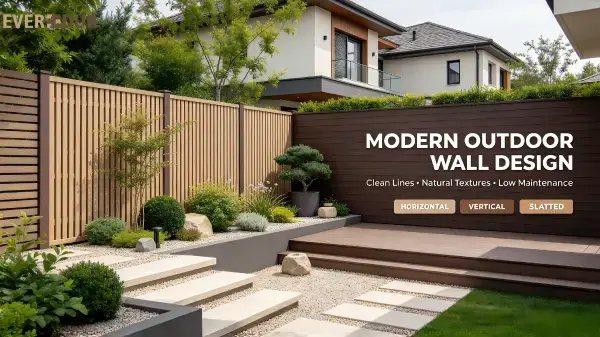
The graphic language of outdoor building has grown up a lot. North America, Northern Europe, and Scandinavia are now putting a lot of emphasis on landscapes with clean lines, natural textures, and surfaces that don't need much upkeep. In this direction, WPC garden walls naturally fit because they look like warm wood but behave more like an engineered material.
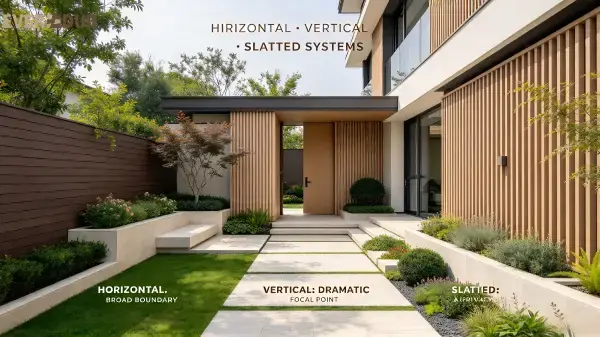
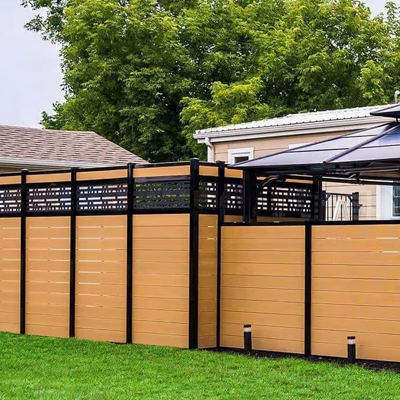
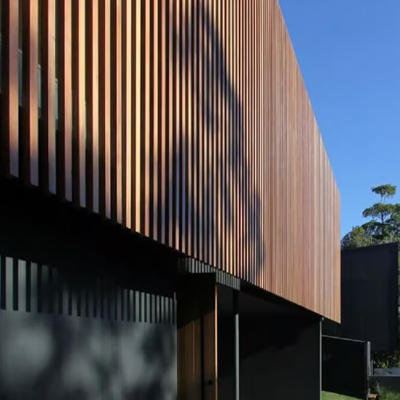
An edge wall does more than just mark the edge of a property. It handles wind, blocks out noise, controls sightlines, and holds planting plans in place. When composite pieces are used in that way, the design options get bigger. Panels can be laid out horizontally to draw attention to length and low horizontality, which is a feature that works well in modern suburban parks. They can be stacked vertically to make a small space look taller and draw the eye up. Slatted designs add rhythm and let light and air flow through while filtering them. This is important in urban gardening where being completely enclosed can feel suffocating.
The choice of color also has an impact on the structure of a scene. Ashes and stones are a shade of gray that blends in with plants, letting the plants take center stage. The warm tones of teak and wood look great with stone or concrete. Cedar and sandalwood are two types of wood that go well with traditional building materials found in older homes in North America and Europe.
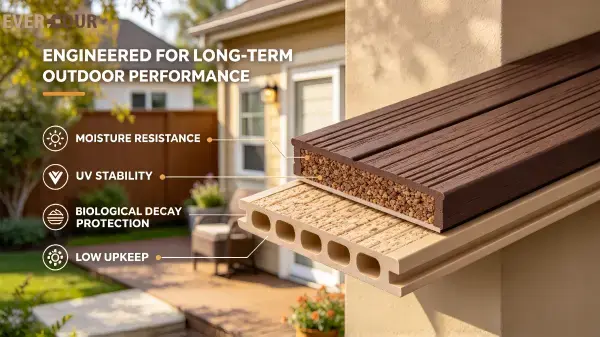
In addition to looking good, the material reacts consistently to weather. Panels made with second-generation co-extrusion technology have a safe polymer shell that keeps color from fading and moisture from getting in. When exposed to UV light for more than 2,000 hours, well-made composite panels don't fade much on the surface. This is a quality that directly affects the quality of the project over time and the satisfaction of the client. That certainty makes it less likely that a project will look old after a few seasons for landscape planners and specifiers.
WPC Landscape Walls Sizes, Profiles, and Layout Options
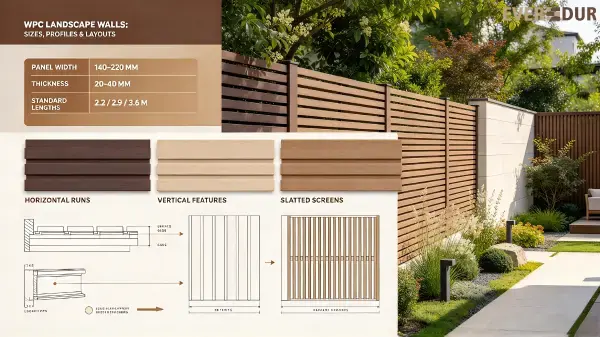
Choosing the right size for an outdoor wall system affects both how it looks and how it works structurally. The useful width range for composite landscape wall panels is from 140 mm to 220 mm, and the thicknesses range from 20 mm to 40 mm. Standard lengths of 2.2 m, 2.9 m, and 3.6 m match the average distance between posts and cut down on waste from cutting on-site.
Some common shape sizes are 90x25 mm, 120x20 mm, 135x25 mm, 138x23 mm, 140x20 mm, 140x25 mm, 145x25 mm, and 150x25 mm. Narrower shapes work well for slatted screen designs where the space between the boards is meant to be intended. Walls that need to keep the number of panels per linear meter low should have wider profiles.
When it comes to design, surface shapes are just as important as profile measurements. Brushed surfaces cut down on glare and give natural stone paving a subtle tactile quality that goes well with it. Traditional garden styles are supported by embossed wood grain textures. Sanded finishes make the surface look cleaner and more regular, which works well with modern designs. During the planning phase, it's important to think about how the different surface treatments will change how light moves across the wall at different times of the day.
These decisions are made even harder by layout direction. A horizontal plan with 150x25 mm boards makes a smooth, roomy area. A screen wall with strong geometric rhythm is made with a vertical pattern of 90x25 mm boards and planned gaps between them. When you use horizontal runs for boundary walls and vertical panels for entrance features in the same garden, you can add more compositional complexity without having to use more materials or special parts.
The range is even bigger when you can customize it. For projects in seaside areas with a lot of humidity or places where winter temperatures change a lot, climate-adapted material formulas are available. To meet the needs of a specific project, custom color palettes with more than twelve tones can be made.SEND INQUIRY
How to Install WPC Landscape Walls With Posts and Support Frames
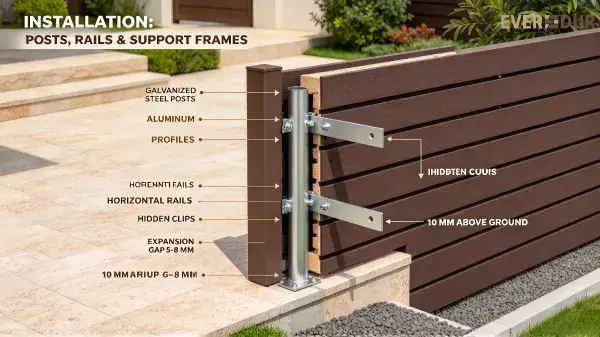
The choice of posts determines how strong the whole wall system is. Outdoor composite wall panels usually have either galvanized steel posts or aluminum profiles as their base. Steel is strong enough for high walls that are out in the open. Aluminum works well in coastal areas where the salty air speeds up the rusting of steel that hasn't been handled.
Post spacing should be worked out by multiplying the panel width by the wall height and the expected wind load at the site. More often than not, walls up to 1.8 m high have a maximum span of 1.2 m to 1.5 m between posts. In sandy or loose soils, the post footings need to be deeper. For walls that will be exposed to wind, it is best to have a concrete backfill depth of at least 600 mm.
Horizontal rails, also called purlins, run between the posts and give the panels a place to attach. For walls up to 1.2 m high, two rails are usually enough; three rails are needed for bigger structures. Before any panel work starts, the rails should be straight and level. Composite panels are connected to rails with hidden clips that keep the spacing even and allow for the small changes in temperature that all outdoor materials go through as the seasons change.
When fixing things, thermal growth and contraction should be taken into account. At the ends of each panel, there is an expansion gap of 5 mm to 8 mm that lets the length change without the panel buckle. This allowance protects the shape of the panels over time in climates with wide temperature ranges, which are common in Central Europe and much of North America.
WPC Landscape Walls for Horizontal, Vertical, and Slatted Designs
Orientation isn't just a matter of taste; it also affects how the wall works and how it fits in with nearby buildings. Most of the time, horizontal installation is what is meant. Panels that run parallel to the ground draw attention to the width of a border and create a surface that makes a yard look stable. This layout works well with low plantings and steps that are all the same level.
Vertical installation needs more exact planning of the posts and rails, but the effect is unique. The boards are set up so that they are straight out from the ground. This makes a surface with strong directional energy. This layout works well for walls at the entrance, feature screens behind seating areas, and garden rooms that need to create visual drama.
With slatted designs, empty space is used as part of the design. When it comes to privacy and air flow, the space can need anywhere from 10 mm to 30 mm of room between boards. When holes are smaller, they block more views while still letting air flow. When the main goal of a decorative screen is structure and rhythm rather than complete enclosure, wider gaps work best. Walls with slats also lower the wind load on the post system, which might let lighter post sections be used in protected areas with composite landscape wall panels.
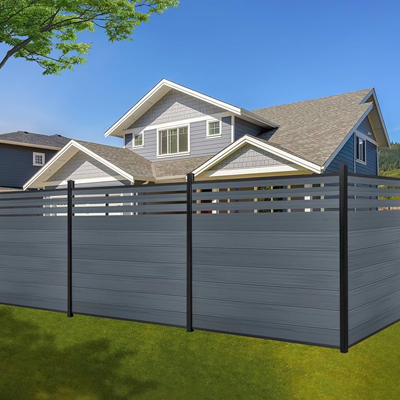
Mixed-orientation walls, which have a solid lower section and an open top section, are a good way to get privacy at a low level while still letting light and air flow above. This style is becoming more and more popular in modern yard design in the UK, Germany, and the Netherlands.SEND INQUIRY
How to Finish WPC Landscape Walls for a Clean Outdoor Look
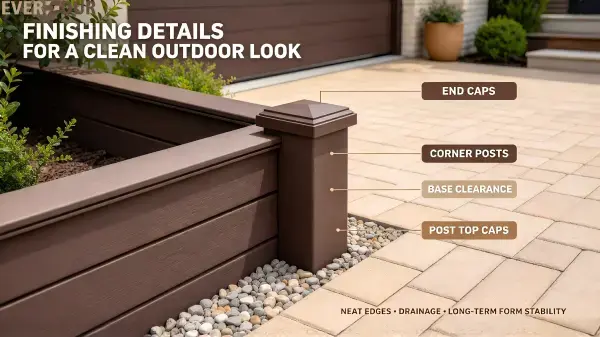
Finishing touches decide whether a wall looks like a well-thought-out outdoor structure or a collection of panels. End caps cover the cut ends of boards that are left open at corners and terminations. This keeps moisture out and makes the edge profile look neat. End caps come in colors that match, and they should be thought of as an essential part of the panel system, not an extra that you can choose not to use.
When two wall runs meet at an angle, corner posts and corner trim pieces keep them together. A special corner post makes it possible for both wall faces to end cleanly, without showing any rough cuts. When it comes to right-angle corners, pre-formed corner profiles are the best choice. For curves that aren't standard, like those found in gardens with uneven edges, mitered cuts with end caps and sealer can be used instead.
Pay close attention to the base detail where the wall meets the ground or the paving. To protect the bottom rail and stop capillary moisture uptake, composite panels should stay at least 10 mm above any amount of standing water. In a yard, this can be done with a gravel strip or draining trench running along the base of a wall. This also helps control surface water runoff.
To keep water from pooling inside hollow steel sections, post tops should be capped. Standard post sizes come with either simple pressed metal caps or custom-made post cap components. These little things add up to the quality of the finished project as a whole, so it's important to be clear about them from the start.
Conclusion
Composite wall systems for outside are no longer just experiments. The science behind the materials is well-established, the installation process is well-documented, and there is a lot of performance data from open environments in Europe and North America. If you choose the right panel size, surface finish, layout orientation, and structural substrate, your outdoor walls and boundaries will work well for at least ten years without much maintenance with WPC landscape walls. This article's advice is based on what people are doing now, in 2026, and it helps specifiers, builders, and residents plan their projects well.SEND INQUIRY
FAQ
Q: How long do you think a WPC landscape wall will last in northern Europe?
A: Well-made composite panels with a co-extruded protective shell should last 15 to 20 years in conditions in northern Europe. The material doesn't get much worse in cold weather, freeze-thaw cycles, or low UV levels in the winter. The HDPE part stays stable in the temperature range that is common in Scandinavia, the UK, and Germany. By preventing prolonged contact with water, keeping the drainage clearance at the base of the wall high increases its useful life.
Q: How do WPC panels work in places that are near the coast or have a lot of humidity?
A: Living near the coast comes with two unique problems: air that is heavy with salt and high humidity. Putting salt on composite panels made of HDPE and wood fiber doesn't hurt them, and the polymer matrix stops them from absorbing much more water than natural wood does. In coastal areas, you need to be more selective about the post and frame materials you use. Hot-dip galvanized steel or aluminum posts work better than standard powder-coated steel posts in these areas.
Q: Can composite wall panels be cut and modified on site?
A: Yes, composite wall panels can be cut and changed on-site. Jigsaws, hand saws, and circle saws with fine-tooth blades can all be used to cleanly cut composite panels. Cut ends should be sealed with color-matched sealer or end caps that match the wood to keep the look and stop water from getting into the cut face. Profile cuts for angles that aren't standard are easy to do with simple site tools. This means that the material can be used for yard plans and boundary lines that aren't straight.
Partner With Everdur for Your Next Outdoor Wall Project
For construction firms and fence contractors: Construction companies and fence builders can use Everdur's OEM and ODM production options, expert help, and reliable lead times for big project numbers. They are certified by FSC, REACH, RoHS, and Intertek, and they meet EU CE standards, US ASTM D7039 standards, and China GB/T 24137 standards. For project-specific needs, climate-adapted formulations and unique profiles are offered.
For building materials wholesalers and resellers: There are special wholesale price systems and free samples available for building materials wholesalers and resellers. We can keep delivery networks in Europe and North America supplied with goods thanks to our more than 50 production lines. The products are certified as having recycled content and meet E0 environmental standards.
For end customers and homeowners: We offer free design advice and help with installation as part of our service. Let us know the size and style of your project, and we'll help you choose the right panel sizes, colors, and surface textures for your outdoor space.
Since it started making WPC landscape walls 16 years ago, Everdur has helped more than 225 customers in 60 countries. You can email our team directly at violet@wpcsupplier.com to talk about your project or ask for samples.
References
1. European Committee for Standardization. EN 15534: Composites Made from Cellulose-Based Materials and Thermoplastics (Wood-Polymer Composites). CEN, Brussels, 2014.
2. ASTM International. ASTM D7031: Standard Guide for Evaluating Mechanical and Physical Properties of Wood-Plastic Composite Products. ASTM International, West Conshohocken, PA.
3. Forest Stewardship Council. FSC Certification Standards for Chain of Custody and Recycled Content. FSC International Center, Bonn, 2022.
4. Morrell, J. J. Wood-Plastic Composites: Performance and Environmental Impacts. Oregon State University Extension Service, Corvallis, 2019.
5. Stark, N. M., Rowlands, R. E., and Clemons, C. M. Wood-Fiber/Polymer Composites: Fundamental Concepts, Processes, and Material Options. Forest Products Society, Madison, WI, 2003.
6. European Plastics Converters (EuPC). Guidelines for the Use of Recycled Polymers in Exterior Building Products. EuPC Technical Committee Report, Brussels, 2021.
7. Wolcott, M. P., and Englund, K. A Technology Review of Wood-Plastic Composites. Washington State University, Pullman, WA, 2018.
Send Inquiry
Related Industry Knowledge
- Low MOQ Hollow WPC Decking: Perfect for Small Residential Projects
- How to Install Solid WPC Decking for Long-Lasting Durability
- How to Choose WPC Cladding: Material, Design and Installation Tips
- How to Choose WPC Landscape Walls for Your Garden or Park
- 3D Composite Decking: Elevate Your Outdoor Space with Textured Flooring
- Top Traditional WPC Decking Manufacturers for Quality Products
- WPC Villa Fence Installation: Guide for Luxury Villa Projects
- Co Extrusion WPC Decking vs Regular WPC: Which Saves You More Money?
- How to Choose High-Quality Co Extrusion WPC Decking for Your Garden
- Top Hollow WPC Decking Designs for Modern Gardens