_1777451497595.webp)
3D Composite Decking: Elevate Your Outdoor Space with Textured Flooring
Outdoor flooring has come a long way from pressure-treated timber and plain concrete slabs. 3D composite decking represents a meaningful step forward in how homeowners, architects, and contractors approach outdoor surface design — a single product that is durable, has a real texture, and is good for the environment. Smooth-faced boards need to be stained or sealed on a regular basis. This type of composite plank, on the other hand, uses inline stamping technology during the extrusion process to create deep, three-dimensional grain designs that look just like real wood. This makes a surface that not only looks better and more natural, but also works the same way all year round. It doesn't matter if you're planning a garden patio in Germany, a house deck in California, or a rooftop platform in the Netherlands. Textured composite flooring is a useful way to make an outdoor place that stays unique over time. There are many reasons why that material is important for structures and looks, how it helps with safety and weather performance, and the different design options it gives you for outdoor spaces.SEND INQUIRY
What Makes 3D Composite Decking Look and Feel Like Natural Wood?
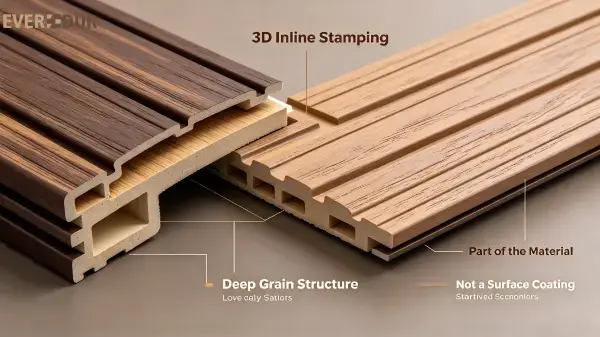
The visual authenticity of 3D composite decking comes down almost entirely to the manufacturing method used to apply its surface pattern. Traditional composite boards received their texture through secondary pressing or post-extrusion embossing — a process that tends to produce shallow, repetitive impressions that fade with UV exposure over time. The more precise approach involves stamping the grain pattern directly during the extrusion phase, while the material is still being shaped. This creates grain lines with genuine depth and variation, rather than a uniform repeat that trained eyes can quickly identify as artificial.
When you run your hand along a well-made composite plank, you'll notice that the bumps and grooves are not just for looks; they are structural parts of the board surface. That difference is important because it means the roughness stays the same as the surface wears down. The grain doesn't come off or flatten out because it wasn't added on top; it was made to be a part of the material.
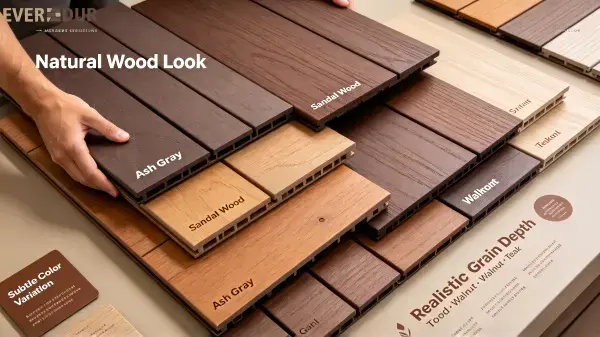
This realistic beauty is also helped by the raw materials. When Grade A recycled HDPE and processed wood fiber are mixed together, they make a composite that has the same subtle color changes as real wood. The wood fiber part changes how light reacts with the surface. Instead of returning light evenly like a plastic surface would, it absorbs and scatters it a bit. It looks like real hardwood from both up close and far away when you combine this with a color palette that includes Ash Gray, Sandal Wood, Walnut, and Teak.
The mix between grain depth, color layers, and surface texture category is what makes a really wood-like blend different from a good one. The brushed, sanded, embossed, and wood grain finishes all give the product a different look and feel, so it can be used in both rural yard designs and more modern, clean-lined buildings.
How Does 3D Composite Decking Enhance Textured Outdoor Flooring?
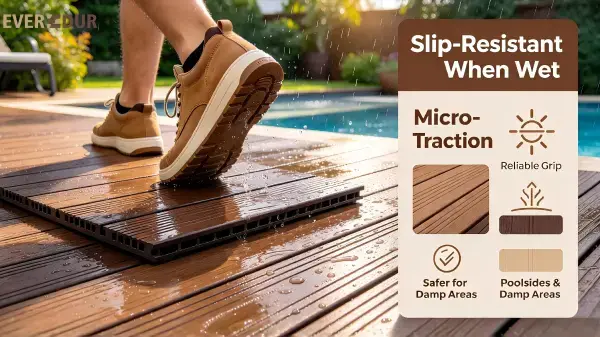
Texture in outdoor flooring is not purely a design decision — it is a functional one. A smooth outdoor surface becomes hazardous when wet, particularly on decks exposed to morning dew, rain, or poolside splash. The embossed surface of a 3d composite plank creates micro-traction across the board face, giving footwear something to grip without introducing the kind of aggressive ribbing that collects debris or feels unpleasant underfoot.
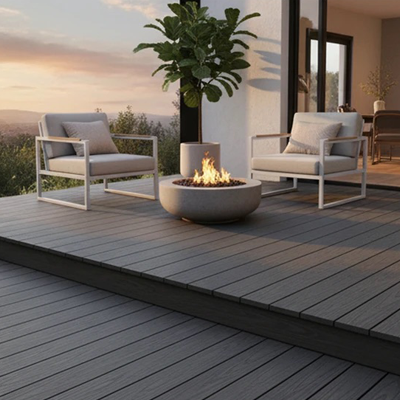
Aside from safety, material also affects how an outdoor area looks. A floor that is flat and even can make a big deck feel dull or bureaucratic because it reflects light evenly. As the sun moves throughout the day, a surface with directional grain lines and different depths makes shadows move around. This gives the room a sense of natural movement that can't be achieved with flat materials.
Textured composite flooring also performs better in high-traffic commercial environments. Hotels, resort terraces, and restaurant outdoor seating areas see constant foot traffic across varying weather conditions. A deeply embossed board surface resists showing wear patterns as visibly as smoother alternatives, maintaining its appearance across extended service periods without requiring refinishing.
From an installation standpoint, the surface texture does not complicate the process. Standard joist and clip systems accommodate these boards without modification, and the dimensional consistency produced through extrusion molding means individual planks align predictably. This is particularly relevant for large-area projects where minor dimensional variation across hundreds of boards would create visible inconsistencies at board joints.
3D Composite Decking for Slip-Resistant and Weather-Ready Outdoor Spaces
Slip Resistance That Holds Up in Real Conditions
Outdoor decking faces wet conditions regularly — rain, morning condensation, poolside water, and seasonal humidity all contribute to a surface that needs reliable traction. The embossed pattern on a quality 3d outdoor decking board provides a consistent grip surface that performs when the board is wet rather than only when dry. This is especially relevant in European climates where extended damp periods are common, and in coastal American settings where salt air adds an additional layer of surface exposure.
The slip resistance of composite decking is a measurable performance attribute, not merely a marketing claim. Products tested under ASTM and CE standards are evaluated under wet conditions, and boards carrying those certifications have passed objective criteria — not just internal assessments. For commercial applications where liability matters, this distinction is significant.
A smooth surface that gets slippery when wet is not a suitable choice for public decks, resort walkways, or any outdoor area used by children, elderly residents, or guests. The structured surface of embossed composite planks provides a practical answer without sacrificing the clean, natural appearance that makes an outdoor space inviting.
Weather Performance Across Seasons
One of the most difficult technical problems for any outdoor material is how it reacts to changes in temperature. When temperatures drop in the winter and rise in the summer, things move around. This can cause bending, joint gaps, or surface deformation over time. Composite boards made with the right amounts of HDPE to wood fiber and useful additives keep their shape better than untreated wood during these temperature changes.
Resistance to UV light is the other important weather-related efficiency factor. After a few years of use, the way an outdoor space looks changes because the colors fade over time in the sun. Composite planks that are made to keep their color go through accelerated UV testing, which is like putting them through several years of outdoor conditions in just a few hours in the lab. If boards keep their color tone after 2,000 hours or more of UV exposure in testing settings, that's probably a good sign that they will keep their look in real life outdoor use.
The last part of the weather performance rating is moisture protection. Natural wood can soak up water, swell, grow mold, and finally rot at the ends and joints where it was cut. But composite planks made with HDPE as the binding material don't let water in. In Northern Europe, they can grow in wet climates, and along the American Gulf Coast, they can grow in muggy warm temperatures.
Structural Integrity Under Load and Impact
Decking outside adds to physical stress in more ways than one. Moving furniture, heavy loads from pots or outdoor stoves, and random impacts are all ways to test how a material's structure responds. Composite boards made with a high density construction can withstand impacts without breaking easily like some lower-density options can.
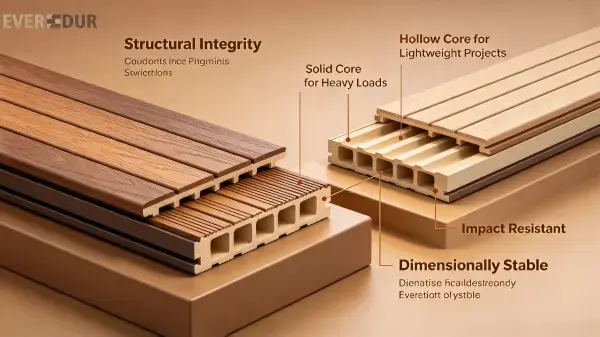
Whether you choose a solid or hollow profile affects how well the structure works. Solid boards can handle higher point loads and are better for commercial settings or places that will be used a lot. On the other hand, hollow-core boards are better for gardens and are lighter overall. The stamped surface treatment can be used on both types of profiles, so the choice of structure doesn't change the way the profile looks.SEND INQUIRY
Why Choose 3D Composite Decking for Low-Maintenance Outdoor Living Areas?
No Seasonal Maintenance Cycle Required
One of the consistent frustrations with natural timber decking is the seasonal maintenance it demands — sanding in spring, staining or oiling in summer, checking for rot and insect damage in autumn. This cycle requires time, materials, and physical effort year after year. Composite outdoor decking eliminates that cycle almost entirely.
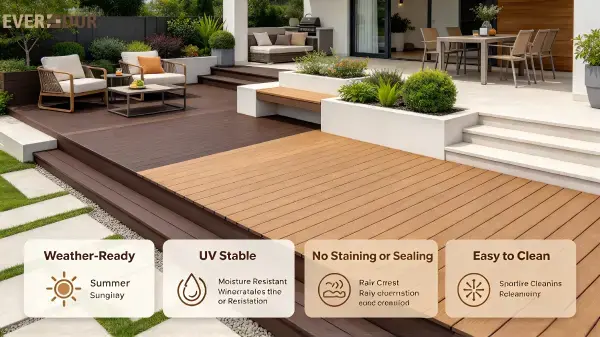
There is no painting, staining, or sealing required. The surface is cleaned with water and standard household cleaning products when needed, and that is the extent of routine care. For homeowners who want a functional, attractive outdoor space without dedicating weekends to maintenance, this is a practical advantage that accumulates in value over the product's service life.
For commercial operators — resort managers, hotel facility teams, restaurant owners — the reduction in maintenance labor has a direct cost implication. A surface that requires no annual refinishing is a surface that demands fewer contracted maintenance hours each year.
Long Service Life Reduces Replacement Costs
The service life of a well-constructed composite plank extends considerably beyond typical painted timber. Solid co-extrusion profiles carry warranties reaching twenty years, while hollow profiles are typically warranted for fifteen. When calculated against the frequency with which timber decking requires significant intervention or full replacement, the long-term cost position of composite becomes straightforward to justify.
This is particularly relevant in climates that accelerate timber degradation. Northern European environments with long wet seasons, UV-intense Australian summers, or salt-laden coastal American air all shorten the effective life of natural wood. A material that resists moisture, UV, mold, and insects does not face the same accelerated deterioration timeline.
Eco-Conscious Living Without Compromise
Choosing low-maintenance outdoor decking and choosing environmentally responsible materials are not competing priorities with composite products. Boards manufactured using Grade A recycled HDPE divert plastic from waste streams, and the wood fiber component utilizes material that would otherwise be discarded. The product itself contains no formaldehyde and is fully recyclable at end of life.
For homeowners in European markets where green building standards carry genuine weight — and for American consumers increasingly focused on sustainable purchasing decisions — this aligns practical outdoor living priorities with broader environmental values without requiring any performance trade-off.
3D Composite Decking Design Ideas for Patios, Villas, Gardens, and Yards
Patio and Terrace Layouts That Extend Living Space
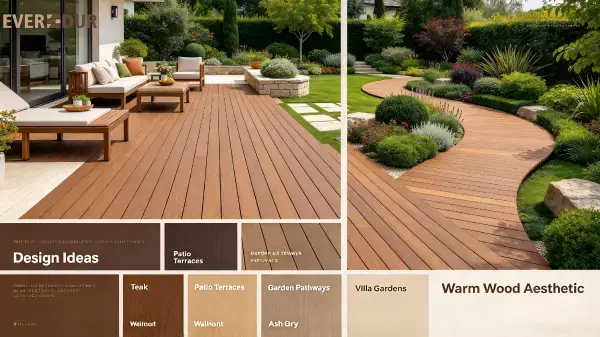
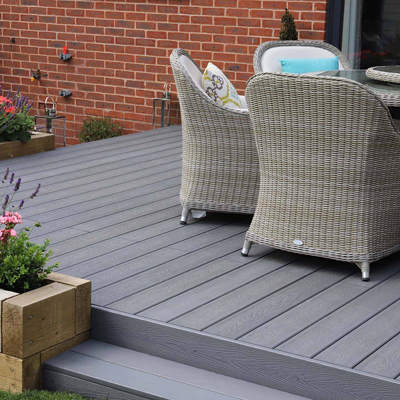
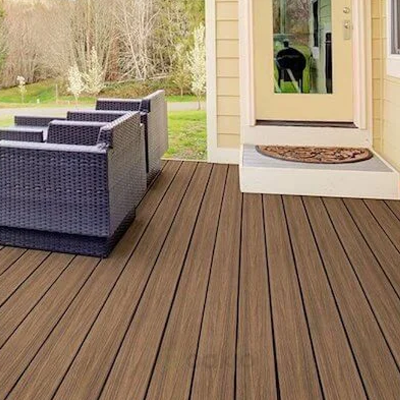
A well-thought-out patio deck makes the useful floor space of a house bigger by opening up the living space inside to the yard. When seen through glass doors, warm-toned composite pieces (Cedar, Teak, or Sandal Wood) look like they belong with the wood floors inside, giving the impression that the space is connected. Putting down boards on a patio in a zigzag or herringbone pattern makes it look more interesting without needing any special cutting skills other than making angle cuts.
For small patios in cities, picking a lighter color (like Ash Gray or Ivory) and a thinner board shape can make the room feel bigger. Because the surface doesn't slip, these areas can be used even after it rains, which extends the time when it's practical to have parties outside.
Villa Gardens and Private Outdoor Retreats
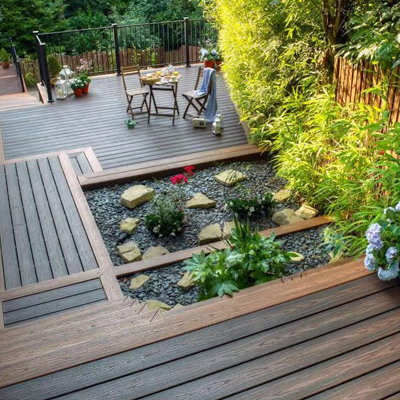
Villa garden environments often call for a more naturalistic approach — decking that settles into a landscaped setting rather than dominating it. Deep wood grain textures in Walnut or Mocha tones blend with planted borders and natural stone edging. A curved or angled deck layout around an existing tree or garden feature creates a bespoke look that aligns well with the organic character of a mature garden.
The availability of custom profile dimensions means that unusual spaces — a triangular garden corner, a wraparound terrace, or a sunken seating pit — can be accommodated without visible compromise in the finished result. Material customization options also allow the board specification to be adapted for specific regional climate conditions, ensuring the product performs correctly within its intended environment.
Yards, Pathways, and Functional Outdoor Zones
Not every 3D composite decking installation is a large-format terrace. Garden pathways, side-yard utility zones, and children's play area surrounds all benefit from a durable, splinter-free surface. A narrower plank laid lengthways along a garden path creates clear directional movement through the space while maintaining the warm aesthetic of natural timber.
For family yards where children and pets use the outdoor space regularly, the combination of smooth-to-touch grain texture and slip-resistant surface performance is a genuinely practical feature. A surface free from splinters, requiring no chemical treatments, and resistant to mold growth addresses the specific concerns parents and families bring to outdoor flooring decisions.
Conclusion
Textured composite outdoor flooring solves a number of real problems with traditional decking materials at the same time: the lack of style, the difficulty of upkeep, the poor weather performance, and the environmental impact. A well-made composite plank's etched surface makes it look and feel more like real oak than older generations of composite goods, but it doesn't need as much maintenance as wood does. It is clear and easy to see why an outdoor deck surface that is long-lasting, low-maintenance, and made in a responsible way should be used in a family yard in northern Europe, a private villa garden, or a commercial resort terrace.SEND INQUIRY
FAQ
Q: How does 3D composite decking differ from standard composite decking?
A: The primary difference lies in the surface treatment method. Standard composite boards often receive their texture through post-production pressing, resulting in shallower grain patterns that can fade more noticeably over time. Three-dimensional composite boards use inline stamping during the extrusion process, producing deeper, more varied grain profiles that maintain their character through extended outdoor exposure.
Q: Is 3D composite decking suitable for wet climates like Northern Europe?
A: Yes. Composite boards made with HDPE as the binding material don't absorb water, which is one of the main reasons why wood breaks down in places with a lot of rain or humidity. The raised surface also keeps its grip when it gets wet, which is useful for safety in places where it rains a lot.
Q: Can composite outdoor decking be customized for unusual project dimensions or specific color requirements?
A: Custom profile dimensions, color specifications beyond standard palettes, and surface texture options are available through ODM and OEM services. Climate-specific material formulations can also be developed for projects where standard specifications may not fully address regional temperature ranges or UV exposure levels.
Ready to Discuss Your Outdoor Decking Project? Contact Everdur
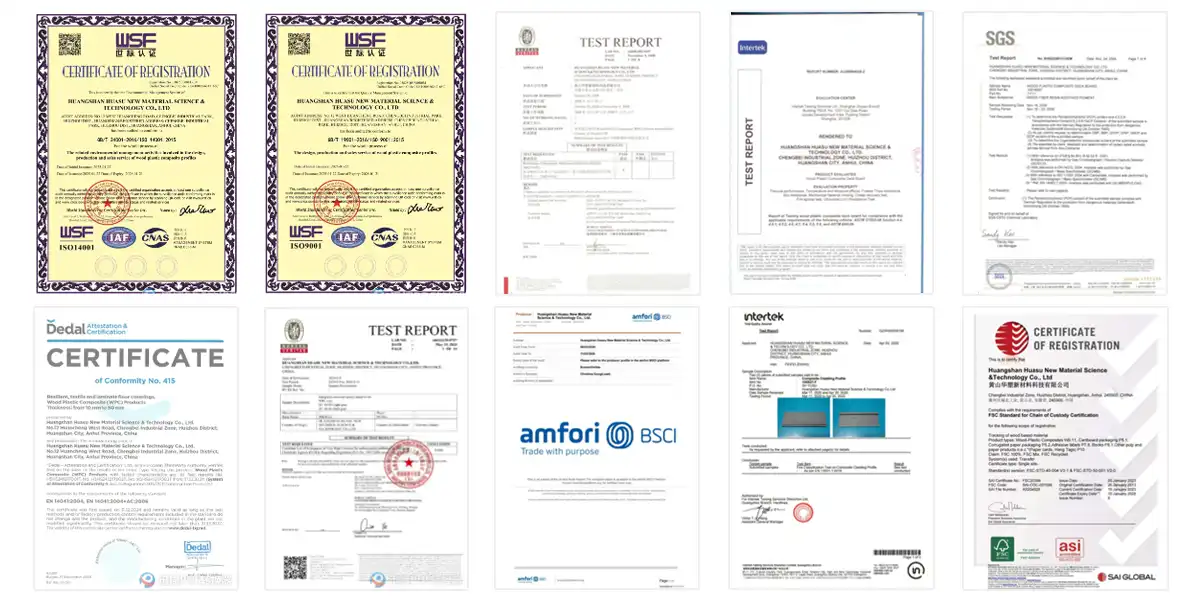
For Construction Firms and Architects: Everdur supports project-scale procurement with stable production capacity across 50+ WPC lines, technical consultation for specification development, and material customization adapted to your regional climate and load requirements. Our composite planks comply with EU CE standards, US ASTM D7039, and China GB/T 24137, and carry FSC, ISO 9001, SGS, REACH, and RoHS certifications — documentation your project team can use directly in compliance submissions.
For Building Materials Wholesalers and Resellers: Exclusive wholesale pricing structures, consistent container-ready supply, and free sample programs are available for qualified trade partners. With 225+ active clients across 60+ countries, our supply chain is structured for partners who need reliable volume and predictable lead times.
For End Customers: Free design consultation and installation guidance are included with your inquiry. Whether you are planning a villa garden terrace or a private yard pathway, our team will help you select the right profile, color, and surface finish for your space.
All products are manufactured from 100% recycled HDPE, meet E0 environmental standards, carry Recycled Content certification, and contain no formaldehyde or other restricted substances — fully aligned with green building requirements in both European and North American markets.
As a dedicated 3D composite decking manufacturer, Everdur is here to help you move from concept to a finished outdoor space with confidence.
📧 Reach our team directly: violet@wpcsupplier.com
References
1. Clemons, C. M. (2002). Wood-plastic composites in the United States: The interfacing of two industries. Forest Products Journal, 52(6), 10–18.
2. English, B., Clemons, C. M., Stark, N., & Schneider, J. P. (1996). Waste-wood-derived fillers for plastics. USDA Forest Service, Forest Products Laboratory, General Technical Report FPL-GTR-91.
3. Ashori, A. (2008). Wood–plastic composites as promising green-composites for automotive industries. Bioresource Technology, 99(11), 4661–4667.
4. Klyosov, A. A. (2007). Wood-Plastic Composites. John Wiley & Sons.
5. European Committee for Standardization. (2012). EN 15534-1: Composites made from cellulose-based materials and thermoplastics — Part 1: Specifications for compounds and products. CEN.
6. ASTM International. (2011). ASTM D7032: Standard Specification for Establishing Performance Ratings for Wood-Plastic Composite Deck Boards and Guardrail Systems. ASTM International.
7. Youngquist, J. A. (1999). Wood-based composites and panel products. In Wood Handbook: Wood as an Engineering Material (Chapter 10). USDA Forest Service, Forest Products Laboratory.
Send Inquiry

Related Industry Knowledge
- Affordable WPC Decking Wholesale: Direct from Factory to Your Project
- 3D Composite Decking vs Regular Composite: Which Is More Stylish?
- Brushed WPC Decking Installation: Achieve a Sophisticated Look
- Low MOQ WPC Composite Fencing: Perfect for Small Gardens
- Composite Screen Fencing for Patios & Gardens: Privacy & Aesthetics
- Top Composite Screen Fencing Manufacturers in 2026
- Composite Screen Fencing: Privacy & Decorative Screen for 2026
- How to Choose High-Quality Co Extrusion WPC Decking for Your Garden
- Privacy WPC Fence: Perfect for Residential and Villa Outdoor Spaces
- High-Quality WPC Decking for Poolside: Waterproof and Anti-Slip Solutions