_1777451497595.webp)
How to Choose WPC Cladding: Material, Design and Installation Tips
Choosing the right exterior cladding affects how a building looks, how long it lasts, and how much it costs to maintain over the years. WPC cladding — short for wood-plastic composite cladding — has proven to be a useful alternative to traditional wood for outdoor facades in North American and European homes, businesses, and hotels. It takes reclaimed plastic (usually HDPE) and wood fiber and mixes them together to make a material that feels and looks like real wood but is much more resistant to water, UV light, and organic decay. But not every composite cladding product works the same. The final result is affected by the quality of the raw materials, the way they are made, the shape of the profile, the finish on the surface, and the way they are attached. Before deciding on a facade solution, this guide walks architects, contractors, building materials resellers, and property owners through the important decisions they need to make. These decisions include the type of material used, the profile dimensions, the look of the surface, the installation methods, and how well the material will weather.SEND INQUIRY
What WPC Cladding Material Is Best for Long-Term Exterior Facade Performance?
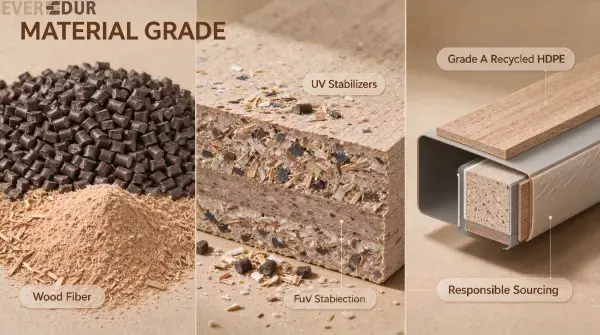
When it comes to composite façade boards, what goes into them is the most important thing. Wood fiber and polyethylene are the two main ingredients, and the quality of each is very important.
The best type of plastic is Grade A recovered HDPE (high-density polyethylene). It has a higher density and is more resistant to chemicals than lower-grade recovered plastics. This means that it keeps its shape better when the temperature changes. Its stiffness and warm look come from the wood fiber content, which is usually made from wood powder. During production, the amount of fiber to polymer is adjusted to find the best balance between stiffness, weight, and how the material reacts to heat.
Chemical additives are used to help these two base materials do their job. At the surface, UV protectors stop photodegradation from happening. When you mix hydrophilic wood fibers with hydrophobic polymer matrixes, you get a stronger link. Compounds that kill fungi and mildew stop living things from growing in damp places.
Asking about certificates is a good way to figure out how good the information is. Products that meet FSC (Forest Stewardship Council) standards show that the wood fiber they use was sourced in a responsible way. RoHS and REACH compliance makes sure that the recipe doesn't contain any banned dangerous chemicals. This is especially important for projects that will be sold in the EU. Environmental standards like E0 and Recycled Content certifications show how much recycled material was used after it was used.
Co-extrusion manufacturing — where a protective polymer shell is fused onto the composite core during extrusion — produces a more resilient surface than single-layer extruded boards. The outer shell acts as a physical barrier against moisture ingress, staining, and surface abrasion, which directly extends the usable service life of the WPC outdoor cladding under outdoor conditions. Products using this process typically carry warranty periods of 15 to 20 years for outdoor facade applications.
WPC Cladding Profiles and Dimensions: Choosing the Right 100–220 mm Width
The choice of profile affects both how a wall looks and how it works structurally. It's important to know the pros and cons of different body shapes, such as hollow vs. solid and curved vs. flat.
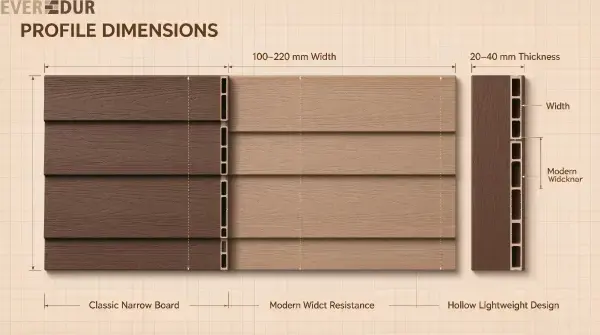
Most standard composite facade boards come in widths between 100 mm and 220 mm. Narrower boards (100–140 mm) give the wall a more classic, straight look that reminds me of horizontal wood paneling. Wider boards (150–220 mm) look cleaner and more modern because there are fewer joints that can be seen. This style works well on large commercial or institutional facades.
Between 20 mm and 40 mm of thickness changes how strong the structure is and how far apart the support joists can be. When you use thicker boards, you can space your joists farther apart, which can save you money on labor and materials for big projects. Cross-sections like 138×23 mm, 140×25 mm, and 150×25 mm are commonly used in European business and domestic wall projects because they balance how heavy something looks with how well it holds up.
Each linear meter of hollow shapes needs less raw material and weighs less. Solid profiles are slightly more resistant to impact and are usually chosen in places where they will be physically touched or loaded by accident, like around public access areas on the ground floor. Co-extruded hollow boards with a shell thickness of 2–3 mm often have the same level of weather protection as solid boards from earlier generations, if not better it.
Standard lengths of 2.2 m, 2.9 m, and 3.6 m are enough for most home and mid-rise business uses. Customers can get lengths that are just right for big projects where reducing cut waste is a top concern.SEND INQUIRY
How Do Wood Grain, Brushed, and Embossed WPC Cladding Surfaces Change Facade Design?
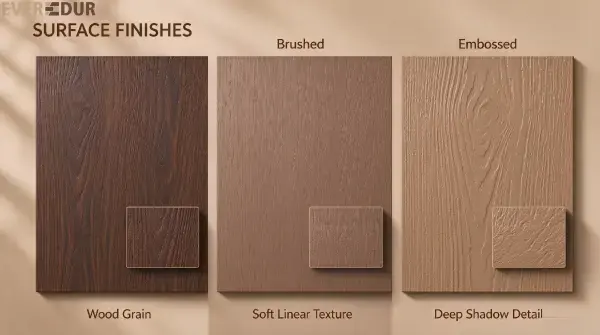
The surface roughness of any choice of outdoor siding is likely to be the most noticeable feature. It comes in three main finishes: wood grain, brushed, and embossed. Each one looks and feels different.
The natural growth patterns of wood species like teak, walnut, and cedar are reflected in wood grain textures. You can tell how natural the board sounds up close by how deep and regular the grain pattern is. A well-done wood grain texture can closely resemble solid wood without the upkeep that comes with it on fronts that people can see, like hotel entrances, villa exteriors, and storefronts.
Brushed finishes give things a matte, linear look that makes them look more modern. The fine linear texture makes the face look softer and less harsh by cutting down on glare. If the cladding on a building is meant to blend in with its surroundings rather than stand out, brushed boards work especially well.
For embossed surfaces, a three-dimensional relief pattern is pressed into the board while it is being made. Patterns like these can be very simple geometric copies or more complex artistic textures. From an architectural point of view, sweeping light and etched features work together to give the face depth and shadow that change throughout the day.
The effect of surface roughness is amplified by the color you choose. Light gray, ash gray, stone gray, and dark gray all look modern. Natural materials are reflected in warm tones like teak, walnut, cedar, and sandal wood. Custom color matching is possible beyond standard themes, which is important for projects that need to follow exact building color guidelines.
WPC Cladding Installation With Hidden Clips, Ventilation, and Concealed Fasteners
The method of fixing composite cladding to a building substrate has consequences for both the finished appearance and the long-term performance of the system.
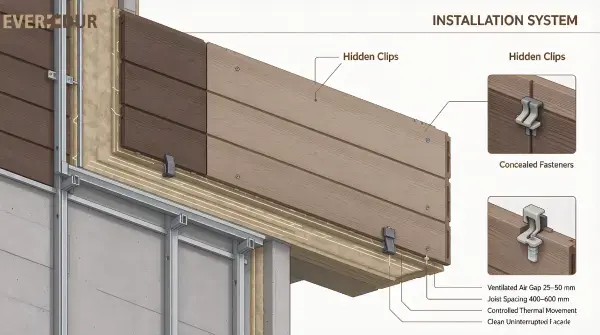
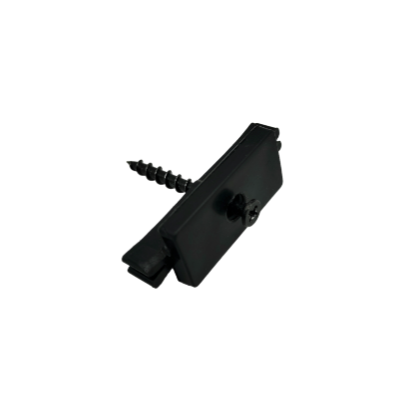
Hidden clip systems and concealed fasteners eliminate visible screw heads across the facade surface. The result is a clean, uninterrupted visual plane that aligns with contemporary facade aesthetics. Clip systems also allow for a degree of controlled movement — composite materials expand and contract with temperature, and clip-based fixing accommodates this without buckling or surface distortion.
Ventilated facade systems deserve particular attention. When WPC wall cladding panels are installed with a continuous air gap between the board and the substrate (typically 25–50 mm), convective airflow removes moisture from behind the cladding. This reduces condensation risk at the wall interface and protects the building envelope from moisture-related degradation over time. Ventilated systems also contribute to thermal performance by reducing solar heat gain through the wall assembly.
Joist spacing is another useful thing to think about. For most widths of exterior board, horizontal joists spaced 400–600 mm apart are normal. Careful attention to detail is needed at corners, reveals, and window frames. Trim profiles and corner pieces that are specifically made for these areas keep the look of hidden fixes.
Correct fitting has a direct effect on how long the product's guarantee lasts. It is important to follow the manufacturer's instructions for joist spacing, bolt force, and expansion gap sizes. Not doing so could damage the building or the buyer's investment.
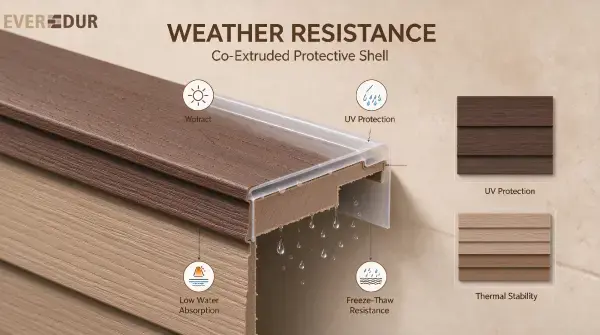
How Does Co-Extruded WPC Cladding Resist UV, Moisture, and Temperature Changes Outdoors?
WPC outdoor cladding has to deal with a lot of stresses that indoor materials never have to: constant UV rays, heavy rain, freeze-thaw cycles, and temperature changes of 40°C or more in continental Europe or North America.
By covering the hybrid core in a continuous polymer shell, co-extrusion technology gets rid of these pressures. There are UV protectors in this shell that either soak up or reflect UV light before it gets to the wood fibers below. When wood fiber is exposed to UV light for a long time, it bleaches and breaks down. The protective shell slows this process down significantly. Products that have been tested against more than 2,000 hours of accelerated UV exposure according to ISO or ASTM standards show little color change, which means they work well as stabilizers.
How well wood fibers can fight water depends on how much water can get to them. Compared to the first generation of composite boards, co-extruded boards have a sealed surface and sealed sides that make them much less likely to absorb water. In real life, this means less swelling, a lower chance of surface cracking, and better stability in terms of size during both wet and dry seasons.
Materials made from polymers are known to expand when heated. Composite wall boards have a higher linear coefficient of thermal expansion than aluminum or fiber cement, but a lower value than PVC that has not been changed. This movement can be controlled by installing the board correctly, leaving enough space between fixed points and at the ends of the board to allow for growth. Newer composite formulations are making thermal movement even less likely, which makes installation details easier for long facade runs.
Conclusion
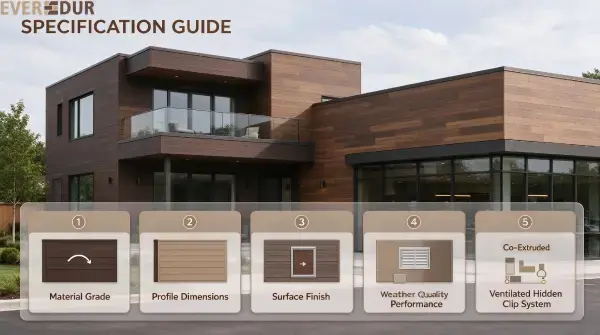
Choosing composite WPC cladding requires attention to several interconnected factors: the grade and certification of raw materials, the manufacturing process, the profile geometry, the surface finish, and the fixing method. Co-extruded products using Grade A recycled HDPE and certified wood fiber offer a reliable combination of durability, low maintenance, and design flexibility for outdoor applications. Pairing the right board dimensions with a ventilated hidden-clip installation system protects both the aesthetic and structural integrity of the facade over its service life.SEND INQUIRY
FAQ
Q: What is the typical service life of WPC cladding installed on an exterior facade?
A: Service life depends on material grade, manufacturing method, and installation quality. Co-extruded composite facade boards installed correctly on a ventilated system typically carry manufacturer warranties of 15 to 20 years, with expected functional lifespans extending beyond that in moderate climates. Hollow co-extruded boards are warranted at 15 years; solid co-extruded profiles at 20 years.
Q: Does composite facade cladding require painting or sealing after installation?
A: No. One of the practical advantages of composite facade boards over timber is that they do not require periodic painting, staining, or sealing to maintain their appearance or structural integrity. Routine cleaning with water is sufficient. The protective co-extruded surface layer maintains color stability and moisture resistance without additional treatment.
Q: Can composite wall cladding be used in cold climates with regular freeze-thaw cycles?
A: Yes, provided the product is specified correctly for outdoor use and installed with adequate expansion gaps. Co-extruded boards with low water absorption rates perform reliably through freeze-thaw cycles because minimal moisture enters the board — reducing the risk of internal expansion and surface damage during freezing. Always confirm that the product's water absorption data meets the requirements of your specific climate zone.
Ready to Specify Your Facade Cladding? Talk to Everdur
For Construction Firms and Architects: Everdur supports specification-stage enquiries with technical data sheets, sample boards, and custom profile development. Our products comply with EU CE marking, US ASTM D7039 testing standards, China GB/T 24137, Recycled Content certification, and E0 environmental standards — documentation available upon request to support your project approval process.
For Building Materials Wholesalers and Resellers: Exclusive wholesale pricing tiers, flexible MOQ from 100 SQM, and consistent production capacity across 50+ lines mean your supply chain stays predictable. Free samples available for new accounts.
For Fence Contractors and Installation Specialists: Full installation guidance, compatible accessory systems (clips, joists, trims), and technical support from our project team. We work with contractors across Europe and North America to ensure clean, compliant installs.
For End Customers and Property Owners: Free design consultation and material recommendations tailored to your climate zone and architectural style. No obligation to purchase.
As a dedicated WPC cladding manufacturer with 16+ years of production experience and 225+ clients across 60+ countries, Everdur delivers composite facade solutions built around your project requirements — not standard catalogue assumptions.
Send your project details or request samples today: violet@wpcsupplier.com
References
1. EN 15534-1: Composites Made from Cellulose-Based Materials and Thermoplastics — Part 1: Test Methods for Characterisation of Compounds and Products. European Committee for Standardization (CEN).
2. ASTM D7031: Standard Guide for Evaluating Mechanical and Physical Properties of Wood-Plastic Composite Products. ASTM International.
3. Clemons, C. M. (2002). Wood-Plastic Composites in the United States: The Interfacing of Two Industries. Forest Products Journal, 52(6), 10–18.
4. Stark, N. M., & Matuana, L. M. (2006). Influence of Photostabilizers on Wood Flour–HDPE Composites Exposed to Xenon-Arc Radiation with and without Water Spray. Polymer Degradation and Stability, 91(12), 3048–3056.
5. Klyosov, A. A. (2007). Wood-Plastic Composites. John Wiley & Sons, Hoboken, NJ.
6. EN 15534-4: Composites Made from Cellulose-Based Materials and Thermoplastics — Part 4: Specifications for Deck Boards and Cladding. European Committee for Standardization (CEN).
Send Inquiry
Related Industry Knowledge
- Hollow WPC Decking Installation Cost: How to Save Big in 2026
- Anti-Slip Residential WPC Decking: Safe for Kids & Pets at Home
- 2026 Brushed WPC Decking Trends: Stylish & Durable Options
- WPC Composite Fencing Installation: Easy Guide for Beginners
- Composite Screen Fencing for Patios & Gardens: Privacy & Aesthetics
- Top Composite Screen Fencing Manufacturers in 2026
- Composite Screen Fencing: Privacy & Decorative Screen for 2026
- Co Extrusion WPC Decking vs Regular WPC: Which Saves You More Money?
- Waterproof WPC Cladding: Perfect for Coastal and Rainy Areas
- High-Quality WPC Decking for Poolside: Waterproof and Anti-Slip Solutions