_1777451497595.webp)
Best WPC Cladding Designs for Villa and Luxury Residential Projects
When homeowners and architects search for exterior cladding solutions that balance visual refinement with long-term performance, WPC cladding consistently emerges as a leading choice for villas and upscale residential properties. Wood-plastic composite cladding combines the natural warmth of wood with the structural strength of man-made materials. This makes it a good choice for harsh outdoor settings in North America and Europe. Traditional wood boards need to be painted, sealed, or treated for pests on a regular basis. Composite exterior cladding, on the other hand, keeps its look with little work. The material is resistant to UV damage, water getting in, and changes in temperature, all of which are common problems for outdoor wall systems. Because composite wall boards come in a lot of different colors, sizes, and styles, they can be used to achieve a wide range of architectural ideas, from Scandinavian simplicity to Mediterranean warmth. Whether you are renovating a single-family house or building a luxury apartment complex with multiple units, knowing the different design options for WPC exterior panels will help you make a smart choice from the start.SEND INQUIRY
How Does WPC Cladding Enhance the Exterior Design of Modern Luxury Villas?
People can tell a lot about a luxury villa from the outside, even before they walk in the front door. The choice of material affects how good the property looks, how well the design fits together, and how long it will last. Composite wood-plastic covering solves all of these problems in a way that is both useful and good-looking.
The fact that WPC outdoor paneling can look like real wood without having any of the problems that come with wood is one of its best features. Brushed wood grain patterns, raised surface patterns, and sanded finishes make surfaces look and feel natural from a distance. The composite core underneath is resistant to rot, bug activity, and bending. Having this trait is especially important in seaside or wet areas, where real wood walls break down more quickly.
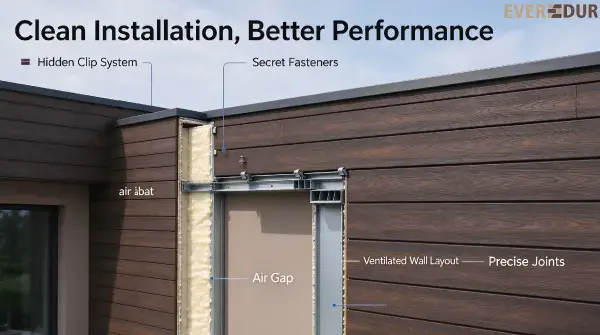
When it comes to design, composite facade boards fit right in with modern architectural styles. With hidden clip systems and secret fasteners, you can't see the screw heads on the wall. This creates a smooth surface that looks like it was purposefully and carefully thought out. In approved green home construction, managing wetness and keeping the building warm are important. Ventilated wall layouts, in which the cladding is mounted over an air gap, make these things better.
The dimensional consistency of manufactured composite profiles also benefits installation precision. Profile tolerances remain stable across production batches, which reduces on-site adjustment time and supports clean line work around windows, corners, and transitions. For high-specification residential projects where detail quality is non-negotiable, this consistency has measurable value. The combination of visual authenticity, weather durability, and installation control gives WPC cladding a genuine functional advantage over many alternative facade materials.
WPC Cladding Profiles for Villa Facades: Flat, Grooved, Slatted, and Wall Panel Styles
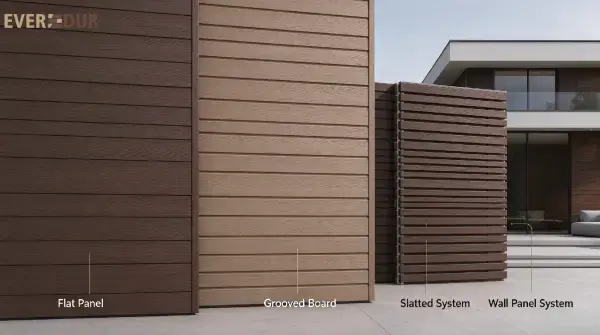
When defining composite wall systems, profile shape is one of the main design tools that can be used. There are different profile types that create different visual beats on an elevation, and the choice you make affects both how it looks and how it works.
Flat panel profiles make a surface that is smooth and continuous across the facade plane. This style works well with modern home designs where the outside looks like a clean skin. Especially when there are big glass openings, flat profiles look great because the simple wall surface draws attention to the clear window frames.
Grooved boards add depth without adding more complexity by making shadow lines that run across the facade in either a horizontal or vertical direction. The groove shape catches light in different ways at different times of the day, giving the face a lively look that changes with the weather. This profile type is used a lot in residential projects in Northern Europe where making the facade easy to read in diffuse light is an important design goal.
The shadow-line idea is taken a step further in slatted systems, which separate the boards by leaving gaps between them that let you see the base or insulation layer behind. This style gives the face a more layered, three-dimensional look, and it's often used with landscape lighting to make the outside look nice at nite. A lot of people choose slatted composite siding for villa gate walls, yard border screens, and accent zones on the front of the house.
Wall panel systems cover more surface area with fewer individual parts, which makes them easier to install on flat surfaces. When speed of covering is important or when the design calls for a wide, flat area, these panels are excellent choices. The following part talks about the different color and pattern choices for each profile type. This gives design teams real freedom across the whole project range.
Which WPC Cladding Colors and Wood Grain Textures Suit Luxury Residential Exteriors?
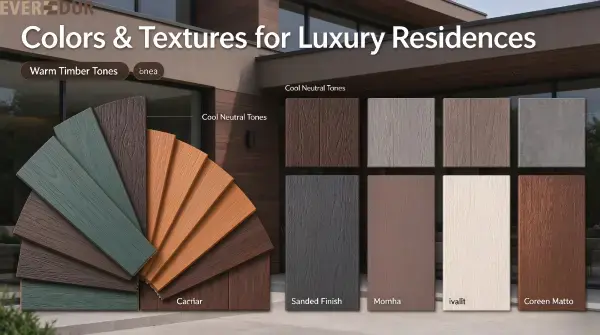
Color and surface texture selection sits at the intersection of personal preference and site-specific context. For luxury residential projects, the most enduring facade palettes tend to draw from the natural material tones already present in the site — stone, earth, sand, or established vegetation.
Warm timber tones such as teak, cedar, walnut, and sandal wood read as welcoming and traditional cladding. These options work well on villas situated within mature landscape settings, where the facade is intended to complement rather than contrast its surroundings. Cooler tones — ash grey, stone grey, dark grey, and mocha — suit contemporary architectural compositions where the exterior reads as restrained and precise. Ivory and copper brown occupy a middle ground, lending warmth without the full visual weight of darker finishes.
Color and surface texture are both important to how we see things. A deep wood grain stamp makes a surface that feels natural and supports the look of wood up close. Brushed finishes look more modern because they are straight and directional without looking like a certain type of wood. Sanded surfaces have a smooth, matte look that absorbs light instead of reflecting it, which works well for designs that want to use materials in a simple way.
For projects with specific design needs that don't fit into standard color palettes, custom color matching is possible. This makes composite outer siding a good choice for architect-led projects with clear material briefs.SEND INQUIRY
Vertical vs. Horizontal WPC Cladding: Which Layout Fits a Villa Facade?
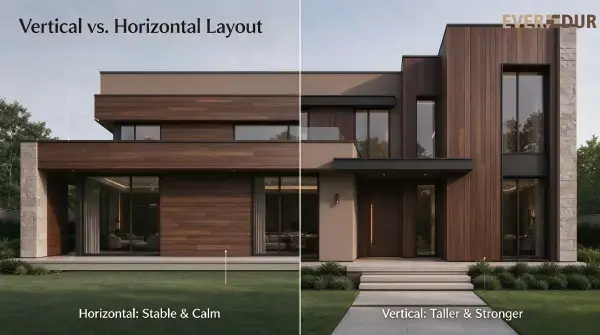
Board orientation is a design choice that has a big impact on how a facade looks. Layouts that are horizontal line up with the natural ground plane, which makes people feel more stable and calm. This direction is common in domestic building in Scandinavia, the Netherlands, and the Pacific Northwest. It is often used for low-profile designs that fit in with the scenery.
Vertical board plans draw the eye up, which can make a building look stronger and higher. This layout works well for house plots that aren't very wide, since the focus is on the vertical elements instead of the horizontal ones. It also looks good on gable ends and accent walls where a change in board direction shows a change in space or material.
When builders use mixed-orientation designs, which use both horizontal and vertical zones on the same face, they can use material movement to separate the building's functions. Entryways, garage frontages, and upper-story elevations can all have different orientations that help the design's sense of space hierarchy. The way they are installed doesn't affect the choice of style because they can both be used with secret clip fixing systems.
How Can Custom WPC Cladding Create a Distinctive Exterior for High-End Residential Projects?
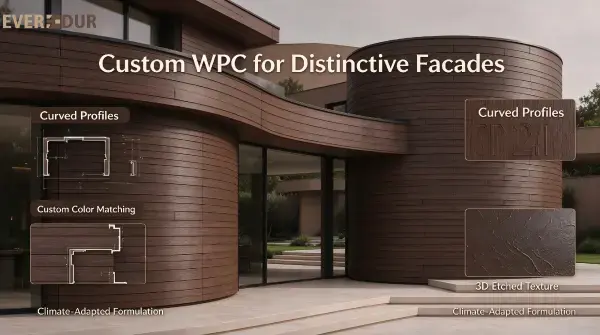
Standard choices of materials work well for many projects, but for high-end home buildings, the site, the program, or the client's brief often call for a more customized approach. Custom composite covering choices meet this need in terms of the type of material used, color, texture, and profile shape.
Climate-adapted material formulas change the composite mix so that it works best in certain natural conditions. For example, higher amounts of UV stabilizers are used in areas with a lot of sun, and thermal expansion rates are changed in places where temperatures change a lot from season to season. These formulations make sure that the wall keeps its shape and appearance throughout the building's service life without needing any extra details.
Custom color development lets design teams choose wall tones that perfectly match a project's larger material range. For example, they can match the color of the siding to the color of the roof, the woodwork, or the paving in the yard to make the whole thing look good. A wall that looks truly unique is made with custom surface textures, such as 3D etched designs that are made just for the job.
Customized profile sizes can work with odd structural conditions or design shapes that regular profiles can't handle. As an example, curved WPC profiles can be used for walls that are shaped like cylinders or faces, which are common in more complex residential projects. This level of material customization helps keep the integrity of the design without lowering performance or durability.
Conclusion
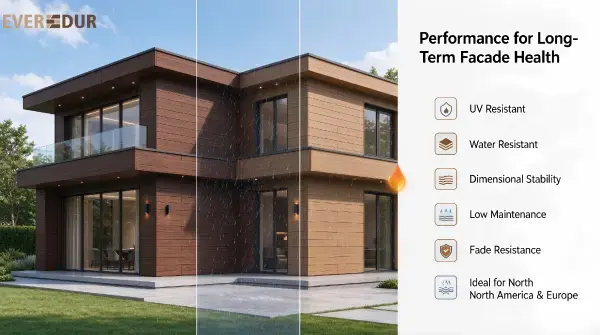
Composite cladding occupies a well-defined position in the contemporary residential material palette. It delivers the visual character of natural timber alongside performance qualities that support low-maintenance, long-service-life facade construction. The range of profiles, colors, textures, and custom options available makes composite residential cladding a versatile specification choice across a wide spectrum of villa and luxury residential typologies. For projects where facade quality, design resolution, and material longevity are equal priorities, WPC composite cladding warrants serious consideration alongside more established facade materials.SEND INQUIRY
FAQ
Q: How long does WPC exterior cladding last on a villa facade?
A: Service life varies by product type and installation quality, but co-extrusion composite cladding typically performs well for 15 to 25 years under normal outdoor conditions. Hollow co-extrusion profiles generally carry a 15-year warranty, while solid co-extrusion boards are warranted for 20 years.
Q: Does WPC cladding require painting or sealing after installation?
A: No. One of the practical benefits of composite facade boards over traditional cladding is that they do not require periodic painting, staining, or sealing. Routine cleaning with water is sufficient to maintain the surface appearance across the service life of the product.
Q: Is WPC exterior cladding suitable for both new-build villas and renovation projects?
A: Yes. Composite facade systems are compatible with both new construction and renovation applications. The relatively low weight of composite boards reduces structural loading on existing walls, and hidden fixing systems allow the new cladding to be mounted over existing substrates without major structural intervention.
Partner with Everdur for Your Villa Facade Project
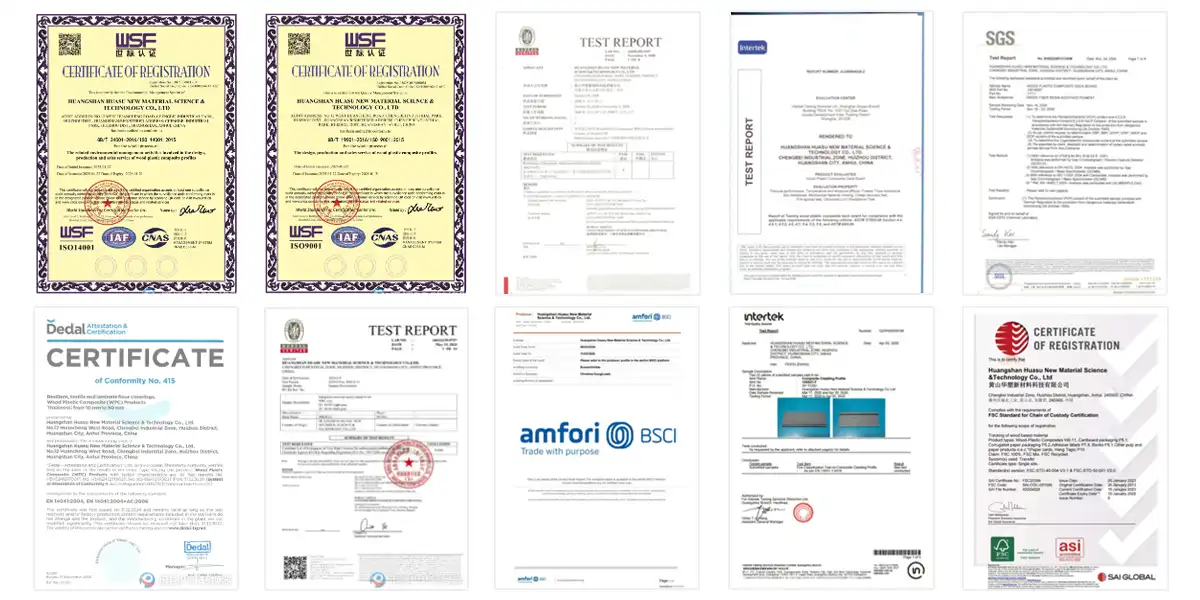
For construction firms and architects: Everdur offers technical specification support, custom profile development, and consistent production quality backed by ISO 9001 and ISO 14001 certified manufacturing systems. Our composite cladding complies with EU CE, US ASTM D7039, and China GB/T 24137 standards, and carries FSC, REACH, RoHS, and Intertek certifications — supporting green building documentation requirements on qualifying projects.
For building materials wholesalers and resellers: Contact us to discuss exclusive wholesale pricing structures, sample programs, and dedicated account support. Our 50+ production lines and annual output exceeding 1,500 containers provide the supply reliability that large-scale distribution requires.
For end customers and private villa owners: We provide complimentary design consultation and installation guidance to help you select the right profile, color, and layout for your specific project. Our WPC cladding manufacturer team will walk you through every option.
Reach our team directly at violet@wpcsupplier.com to request samples, technical datasheets, or a project-specific quotation.
References
1. European Committee for Standardization. EN 15534: Composites Made from Cellulose-Based Materials and Thermoplastics (Wood-Polymer Composites). CEN, Brussels.
2. ASTM International. ASTM D7032: Standard Specification for Establishing Performance Ratings for Wood-Plastic Composite Deck Boards and Guardrail Systems. ASTM International, West Conshohocken, PA.
3. Forest Stewardship Council. FSC Certification Standards for Chain of Custody and Recycled Content. FSC International, Bonn.
4. Cai, Z., and Ross, R.J. (eds.). Wood Handbook: Wood as an Engineering Material. USDA Forest Service, Forest Products Laboratory, General Technical Report FPL-GTR-190, Madison, WI.
5. European Parliament and Council of the European Union. Regulation (EC) No 1907/2006 Concerning the Registration, Evaluation, Authorisation and Restriction of Chemicals (REACH). Official Journal of the European Union.
6. Wolcott, M.P., and Englund, K. A Technology Review of Wood-Plastic Composites. Washington State University, Pullman, WA.
Send Inquiry
Related Industry Knowledge
- Low MOQ Hollow WPC Decking: Perfect for Small Residential Projects
- WPC Cladding: The Ultimate Solution for Durable and Stylish Building Exteriors
- Affordable WPC Decking Wholesale: Direct from Factory to Your Project
- Top WPC Composite Fencing Manufacturers in 2026
- 3D Composite Decking: Elevate Your Outdoor Space with Textured Flooring
- 3D Composite Decking vs Regular Composite: Which Is More Stylish?
- Low MOQ Traditional Cladding: Ideal for Small Traditional Projects
- Low MOQ WPC Composite Fencing: Perfect for Small Gardens
- WPC Villa Fence with Wood Grain: Enhance Your Villa’s Aesthetics
- WPC Composite Fencing Installation: Easy Guide for Beginners