
Anti-Fade WPC Commercial Building Facades: Long-Lasting Aesthetics
2026-11-01 12:05:11
For architects and developers choosing external claddings, colour retention may sometimes be the difference between a project that ages well and one that looks weary after a few seasons. This challenge is addressed by WPC commercial building facades that combine wood fibre and HDPE resin with UV-stabilizing chemicals that inhibit colour degradation due to exposure to sunshine. They are composite panels that won't require repainting every few years like painted wood or powder coated metal panels and are designed to withstand chalking, bleaching and surface oxidation in a range of conditions. That matters because commercial buildings — hotels, shopping centres, office complexes — depend on their exteriors to express quality and trustworthiness to visitors and tenants. That impression is soon destroyed by an irregularly fading or blotchy veneer. Everdur's co-extrusion manufacturing technique has a protective outer layer that protects the core material from moisture and UV rays, offering owners a cladding system that will retain its original hue for years to come. In this post, we'll cover how fading occurs, what makes a facade UV-resistant, the colour and texture choices you can choose from, and realistic expectations for how long your look will last so you can make an educated decision before you contact out for samples or a price.SEND INQUIRY
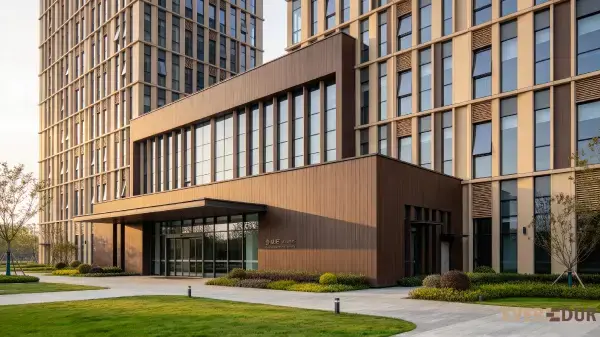
Do WPC Commercial Building Facades Fade in Direct Sunlight?
The chemical connections in many construction materials are broken by UV radiation in sunlight, causing colours to fade or alter over time. Wood rots when lignin decays due to UV exposure, while untreated polymers may become chalky or brittle. Composite commercial building walls that use wood-plastic mixes fall somewhere in between these two materials, therefore it is a fair question to inquire if fading will occur before committing to a big facade project.
Some fading may occur during the first weathering period when the surface settles, however the pace and magnitude are highly dependent on formulation quality. Composites of lower quality that omit the UV stabilizers, or that use recycled polymers without filtering, tend to fade dramatically after just a year or two—especially on south-facing walls that get continual direct sunshine. Careful quality control, including additive packages particularly tailored for outside architectural usage, slows this process greatly.
Climate also matters. Facades at high altitude or high summer sun zones are exposed to a higher UV burden than in temperate zones. Humidity and temperature variations create stress, since materials expand and compress, which may impact texture as well as colour. When selecting a manufacturer it's better to look for ones who test goods under accelerated weathering settings, rather than just accepting generic marketing promises, for a more accurate idea of how a particular facade line will function given the sun exposure and weather patterns of your project.
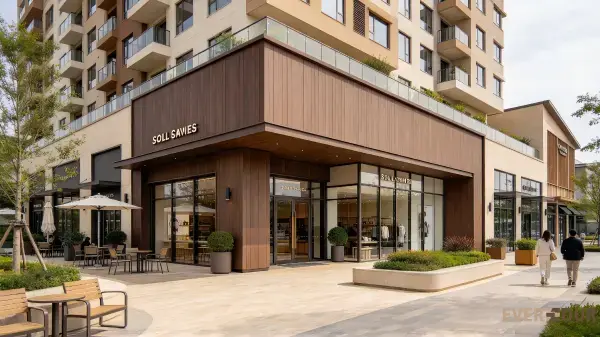
UV-Resistant WPC Commercial Building Facades for Exterior Walls
Composite cladding UV resistance is a function of the base resin, the additive package and even the production technique. Results indicate that the surface of high-density polyethylene with a correctly supplied wood fibre is denser with improved resistance to moisture penetration in comparison to lower-density alternatives. Pigments and light stabilizers designed for outdoor applications may absorb or reflect the damaging UV wavelengths before they reach the structural core.
Each Everdur board is wrapped in a protective outer shell using a sophisticated co-extrusion process that is independent from the wood-plastic core. In parallel, the shell functions as a barrier against rain, humidity, and sun exposure, which helps to explain why wpc commercial building cladding produced in this manner often out-performs single layer extruded boards in long-term field observations. The coextrusion layer also lowers water absorption, which is important since moisture trapped within a panel speeds up both fading and structural swelling.
Independent testing standards provide a realistic approach for purchasers to evaluate claims amongst vendors. Accelerated UV chamber testing is commonly undertaken for 2000 hours or more, and it replicates years of sun exposure in a controlled environment. Colour change is measured using a standard scale. Facades that demonstrate little movement under this testing are usually good options for exposed walls, roofs and vented façade systems, where sun exposure is inevitable. Before specifying a product for any external business project, it's reasonable to ask vendors for precise UV test results, rather than generic remarks.SEND INQUIRY
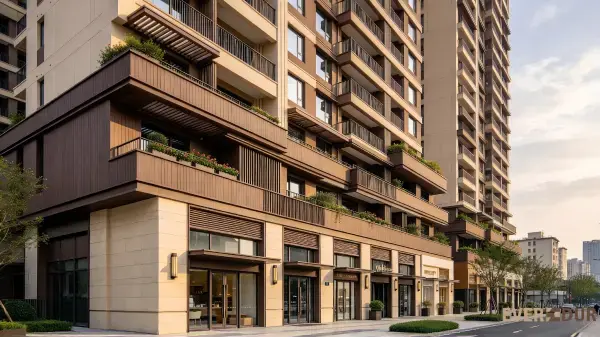
Custom Colors for WPC Commercial Building Facades
Commercial projects seldom use just one standardized hue , since branding , context , and local tastes all influence colour choices . For most conventional buildings a typical palette of ash grey, coffee, walnut and sandal wood is suitable, however architects working on unique constructions frequently desire something matching a certain brand guideline or merging in with existing stone work.
With composite panels, the colour is custom-matched by altering the pigment ratios in the extrusion process, not by adding surface coatings. That means the colour is throughout the material, not just on top. This technique guaranties that the colours will remain the same even if the surface is lightly abraded over the years, as there is no paint layer to crack or peel away. On large-scale exterior projects, this consistency is important when hundreds or thousands of panels need to match and small batch-to-batch variance would otherwise be seen from a distance.
Colour suggestions also consider climate. Darker colours absorb more heat and may have more rapid variations in surface temperature when exposed to direct light, thus for projects in really hot climates it's worth addressing this with a provider. The contrast between the original and worn colour is reduced, therefore light and mid-tone colours, such as stone grey or ivory, tend to fade less noticeably. The best way to be sure of how a bespoke colour will look in actual outside light is still to request tangible colour samples, not computer simulations.
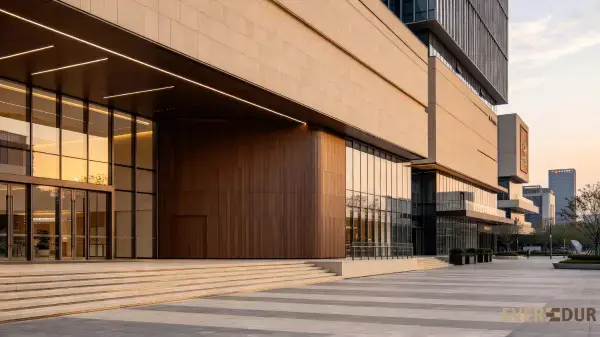
Wood Grain and 3D Embossed WPC Commercial Building Facades
As important as colour in the visual aging of a façade is the texture of the surface. Scratch and dust accumulation is more visible on flat, smooth panels but embossed or wood grain treatments hide small surface scratches and provide a textured feel that's more like genuine timber.
Wood grain embossing is made by pressing a rough roller into the panel surface during manufacture to provide the illusion of oak, cedar or teak without the maintenance actual wood demands. It also changes how light is reflected, which might reduce the visibility of small colour differences between panels since the surface scatters light instead of reflecting it consistently.
The 3D embossed finishes generate deeper grooves and more prominent grain patterns that are easily readable from a distance, perfect for big commercial buildings where the features of the façade need to be seen across a street or plaza. These finishes give tactile depth as well, although for vertical facade application visual authenticity is the primary advantage, rather than practical grip.
Brushed and sanded surfaces create a more subtle, modern appearance that is preferred in minimalist architecture. Different textures react differently to sunshine and weathering, thus seeing tangible samples of wpc commercial building cladding in outdoor light not just studio photographs offers a more realistic idea of how a selected finish will appear after installed and subjected to years of sun, rain and temperature change. These panels are especially designed for use in external architectural projects and are not to be used to create walls on interiors.SEND INQUIRY
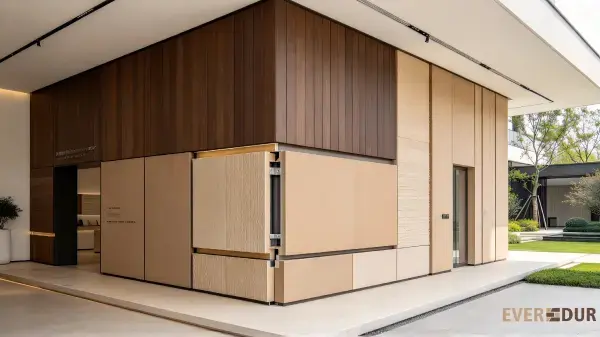
How Long Can WPC Commercial Building Facades Keep Their Appearance?
Composite facade service life expectations are generally 10 to 25 years, depending on product tier, installation quality and area environment. guarantee terms for hollow co-extrusion panels are often shorter, maybe 15 years. Solid co-extrusion constructions may have a guarantee of up to 20 years, using a denser core.
Aesthetic longevity is not the same as structural longevity. A panel may be well within its structural life far over its guarantee duration and start to exhibit some colour fading, especially on faces that get regular direct sun. Shaded areas of the same structure typically keep their original tone for much longer which is a common quality of outdoor composite materials and not a flaw.
Routine maintenance increases the life of look considerably. To avoid dust, pollen and other pollutants from building up on surfaces and making them seem duller than they really are, occasional rinsing of panels is a good idea. You may also safeguard the embossed texture from premature degradation by avoiding aggressive pressure washing settings or abrasive cleaning products.
Installation procedures also important. Properly ventilated façade solutions include ventilation holes beneath the panels, which limit the retention of moisture and assist to control the surface temperature, therefore slowing down the weathering process. Instead of installing them as if they were standard wood cladding, you're working with installers who understand the foundation needs for composite panels, which lowers the possibility of warping or uneven fading from insufficient ventilation or faulty attaching.
Conclusion
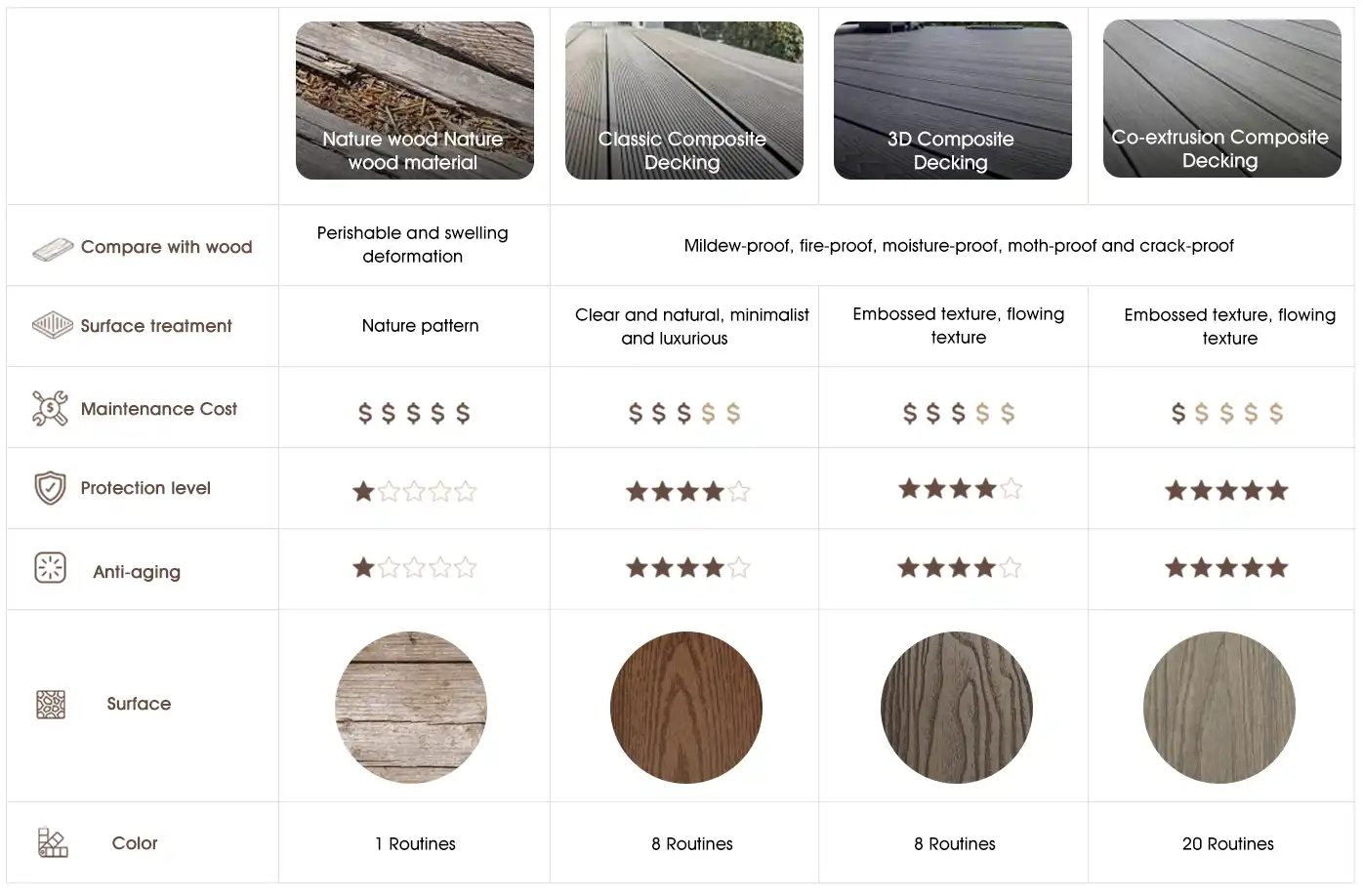
Wpc commercial building facades are a sensible compromise between the warmth of natural wood and the minimal maintenance requirements of contemporary commercial buildings. Fading is a serious concern, but the quality of the formulation, UV resistant ingredient packages and good installation all impact how well a façade maintains its beauty during its service life. Before you select panels for your next project, practical procedures include reviewing test results, getting real samples, and discussing your unique climatic circumstances with a qualified provider.SEND INQUIRY
FAQ
Q; Do anti-fade WPC facades require painting or sealing after installation?
A: No. The UV resistant pigments and the protective co-extrusion layer are mixed into the panel during the production process, so there is no need for extra paint or sealant after installation.
Q: Will all sides of a building fade at the same rate?
A: Not all the time. The colour change on the sun facing walls is often more pronounced over time than on the shaded or north facing portions of the building. This is typical of outdoor composite materials.
Q: Can I request a custom color that is not on the standard palette?
A: Yeah. Pigment ratios may be modified during manufacturing to suit certain design or branding criteria. Custom runs may be subject to lead time and minimum order quantity.
Get Anti-Fade WPC Commercial Building Facades for Your Next Project
Everdur is a WPC commercial building facades producer with over 16 years of manufacturing expertise. We welcome queries from enterprises considering façade projects of any size. For Construction Companies: free technical drawings and advice on structural loads. For Fence Contractors: bulk prices and flexible lead times to meet fast moving work schedules. For Resellers and construction materials wholesales: wholesale price only, free samples and marketing collateral for your sales force. For the end customer: free design consulting and installation assistance to ensure your façade performs as promised.
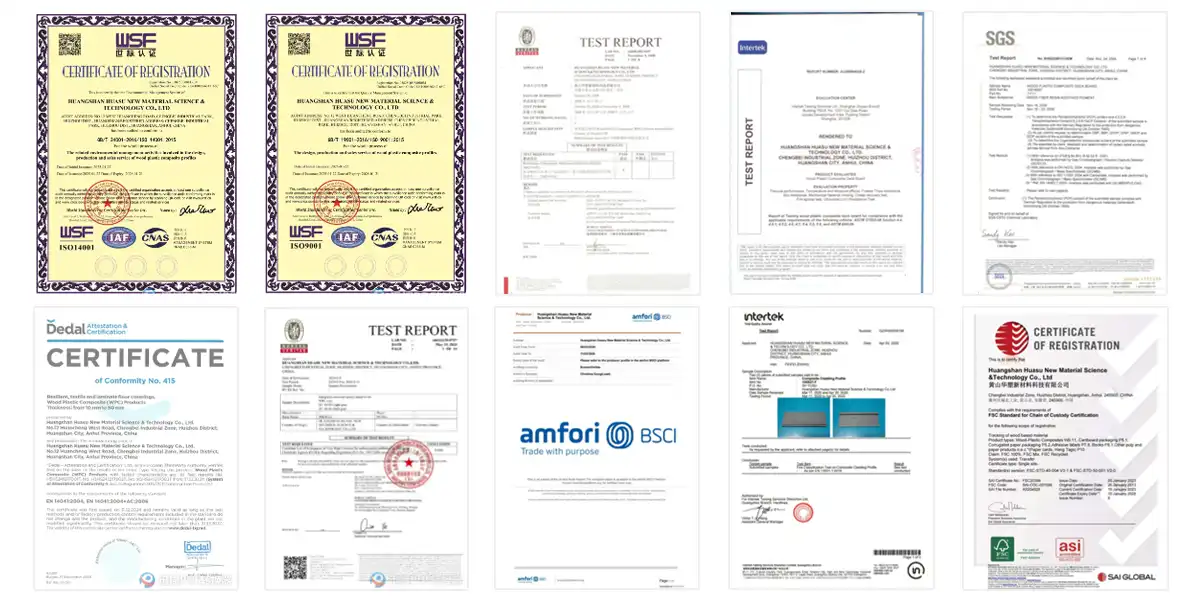
All panels meet EU CE criteria, US ASTM D7039 standards and China GB/T 24137 specifications, Recycled Content certification and the E0 environmental standard for reduced formaldehyde emissions. If you need samples, price or technical documentation, please contact our team at violet@wpcsupplier.com.
References
1. ASTM International. ASTM D7032-21: Standard Specification for Establishing Performance Ratings for Wood-Plastic Composite Deck Boards, Stair Treads, Guards, or Handrails.
2. ASTM International. ASTM G155-13: Standard Practice for Operating Xenon Arc Light Apparatus for Exposure of Non-Metallic Materials.
3. International Organization for Standardization. ISO 4892-2: Plastics — Methods of Exposure to Laboratory Light Sources — Part 2: Xenon-Arc Lamps.
4. Forest Stewardship Council. FSC Chain of Custody Certification Standard for Composite Wood Products.
5. European Committee for Standardization. EN 15534: Composites Made from Cellulose-Based Materials and Thermoplastics (Wood-Polymer Composites).
6. Standardization Administration of China. GB/T 24137: Wood-Plastic Composite Decorative Panels.
Send Inquiry
Related Industry Knowledge
- Weather Resistant Decorative Composite Fencing: Durable & Stylish
- Low MOQ WPC Commercial Building Facades: Perfect for Small Commercial Projects
- Weather Resistant Swimming Pool WPC Decking: Durable in All Seasons
- 2026 Guide to Grooved WPC Decking: Sizes, Styles & Prices
- WPC Composite Fencing for Residential Properties: Stylish & Secure
- WPC Landscape Walls Installation: Guide for Garden & Park Projects
- WPC Villa Fence with Wood Grain: Enhance Your Villa’s Aesthetics
- WPC Composite Fencing Installation: Easy Guide for Beginners
- Top Hollow WPC Decking Designs for Modern Gardens
- Eco-Friendly WPC Decking: Sustainable Choice for Modern Outdoor Spaces