_1777451497595.webp)
Weather Resistant Swimming Pool WPC Decking: Durable in All Seasons
2026-10-13 14:38:51
Outdoor pool areas take a beating from the elements year-round. Rain, frost, scorching sun, and constant splashing — these are conditions that few traditional materials can withstand gracefully over time. Swimming pool WPC decking has become a widely adopted solution for homeowners, resort developers, and landscape contractors who want a surface that holds up across every season without demanding excessive upkeep. This composite material is resistant to the deterioration of natural lumber caused by moisture, temperature changes, and UV exposure. It is made from a combination of wood fiber, recycled HDPE, and stabilizing chemicals. After years of exposure to the elements, WPC boards retain their structural integrity, in contrast to pressure-treated wood, which may split, splinter, and soak up water. This longevity is further enhanced by the co-extrusion manufacturing technique, which involves bonding a protective polymer shell to the core during manufacture. If you want to know how this material reacts to different weather situations, you can make a better decision when constructing a pool surround, whether it's for a hotel pool terrace in a warm coastal region or a home pool in northern Europe. The most important performance categories are outlined in this article.SEND INQUIRY
How Does Swimming Pool WPC Decking Perform in Changing Weather?
One of the harshest real-world tests that any outdoor surface must endure is weather unpredictability. Within the span of a single year, a German pool deck may go through subzero winters, drenching spring thaws, and scorching, dry summers. Extreme heat, high humidity, and heavy rains provide a whole new set of problems for decks in Florida and southern Spain.
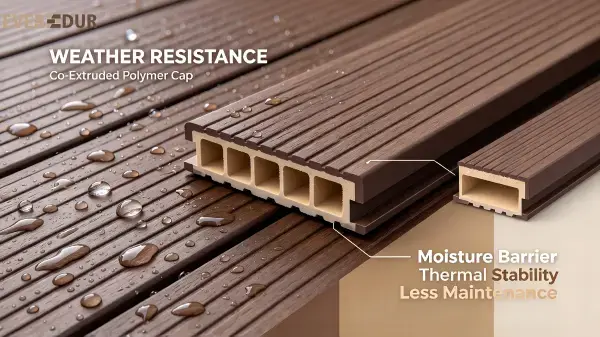
Swimming pool WPC decking is engineered to handle this variability without compromising its surface integrity or structural form. Under heat stress, the composite core—usually made of wood powder and recycled HDPE—behaves differently than solid wood. Wood fibers cannot absorb environmental moisture or stretch and contract as readily as raw wood grain because they are completely encased in a polymer matrix. A board with consistent dimensions across a large temperature range is the end product.
An additional level of durability is achieved using co-extrusion technology. Unlike surface coatings or paint, the exterior polymer cap does not peel, chip, or separate since it is bonded to the board during extrusion. In colder regions, surface degradation may occur due to freeze-thaw cycling, which is prevented by this upper layer. This process occurs when water trapped in micro-cracks expands when frozen, gradually damaging the material.
From a practical standpoint, pool decks built with WPC composite boards tend to retain their slip-resistant surface texture even after years of seasonal cycling. The grooved or brushed surface finish, common in pool-area applications, remains functional rather than glazing over or roughening unevenly as some cheaper materials do. For projects in regions with pronounced seasonal shifts, this consistent performance across temperature extremes is genuinely useful — not just a marketing claim.
Swimming Pool WPC Decking Against UV Exposure and Color Fading
Sunlight is a major contributor to the deterioration of outdoor surfaces. Over time, exposure to ultraviolet light causes organic polymers and pigments to degrade, leading to surface chalking, color bleaching, and material brittleness. This is especially important in pool regions, where the water's reflection increases the sun's rays, rather than in shady garden locations.
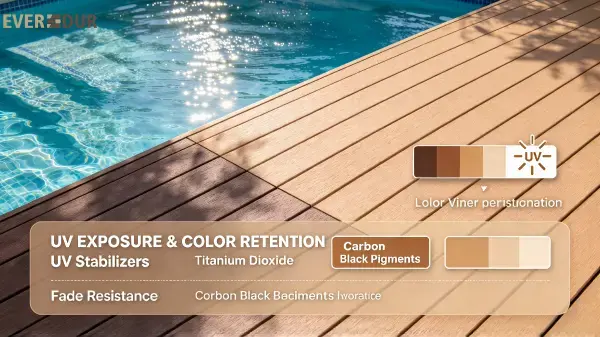
Incorporating UV stabilizers and pigments derived from carbon black or titanium dioxide into the polymer matrix allows modern pool deck composite formulas to address UV deterioration. Before ultraviolet (UV) rays may degrade the material's molecular chains, these chemicals absorb or redirect them. A well-formulated WPC board will keep its color stable enough to pass color retention testing even after being exposed to UV light for 2,000 hours or more, according to conventional testing procedures.
Additionally, the co-extrusion cap layer is significant in this context. The inner wood-fiber core is protected from photodegradation by the protective outer shell, which includes the UV-stabilizing chemicals at greater quantities. Whether you're talking about pool decks facing south in Europe or rooftop terraces in warmer countries, this is especially important for boards that are exposed to constant direct sunshine.
The choice of color also affects how it looks in the long run. For pool floors that are suitable for bare feet, lighter colors like ash gray, stone gray, or ivory absorb less radiant heat and have the added benefit of showing less noticeable fading than darker hues. After a few seasons of use, first-generation hollow or uncapped WPC profiles were known for chalking and color inconsistencies; however, premium co-extruded boards in all color ranges outperform them in terms of UV resistance.SEND INQUIRY
Swimming Pool WPC Decking for Hot Summers and Cold Winters
Thermal Expansion and Contraction Management
All solid materials expand when heated and contract when cooled. The critical question for any outdoor board is not whether this happens, but by how much — and whether the installation system can accommodate it without buckling or gapping.
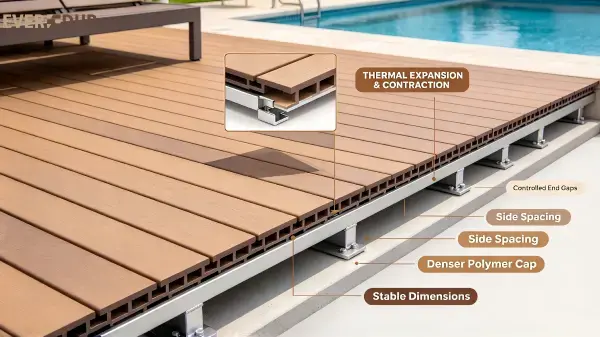
WPC composite boards have a measurable thermal expansion coefficient, and responsible installation practice accounts for this through controlled end gaps and side spacing. Co-extruded boards with a denser polymer cap tend to exhibit lower thermal movement than uncapped hollow profiles. For installations in continental European climates — where summer highs and winter lows can differ by 50°C or more — specifying boards with documented thermal performance data is a practical step worth taking.
Surface Temperature and Comfort Underfoot
One practical concern for barefoot pool users is surface temperature in direct sun. Dark composite boards can reach uncomfortable temperatures on a hot summer afternoon. Lighter color choices, grooved surface profiles that allow air circulation underneath, and formulations with heat-reflective additives all contribute to a more comfortable surface. Some next-generation composite profiles are specifically designed with reduced heat absorption in mind — a consideration worth raising with your supplier at the specification stage.
Freeze-Thaw Cycle Resistance
A structural challenge in colder areas is freeze-thaw cycling. The surface layer may be cracked when moisture seeps into a substance and subsequently freezes due to the volumetric expansion of ice. Co-extruded WPC boards that are well-made have a low chance of frost damage since they are surface-level impervious to water. Little water may freeze inside the board structure because the polymer top inhibits significant moisture infiltration.
How Does Swimming Pool WPC Decking Handle Constant Moisture?
Water Resistance at the Material Level
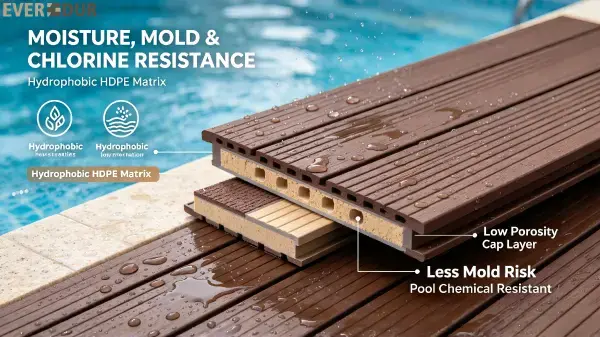
Pool surrounds are among the most moisture-intensive outdoor environments imaginable. Splash zones, drainage gradients, and ambient humidity all subject the deck surface to conditions far beyond what a typical garden terrace experiences. Pool area WPC deck boards are constructed with this in mind: the HDPE component is inherently hydrophobic, meaning it does not bond with water molecules or swell upon absorption.
Although wood pulp and sawdust (WPC) contains minuscule amounts of moisture-loving fibers, these fibers are adequately encased in a well-formulated composite to inhibit any significant absorption of water. When compared to traditional single-layer extrusion processes, co-extrusion production has a distinct advantage in this regard. The cap layer forms an exterior surface with a continuous and low-porosity structure, making it very water-resistant.
Anti-Mold and Mildew Performance
Additionally, mold and mildew thrive in damp environments. Because the cellulose structure of natural wood offers nourishment for fungal organisms, it is especially sensitive. In contrast, wood-plastic composite (WPC) boards have wood fibers interwoven in a polymer matrix, making them less inviting to mold spores than exposed wood grain. Mold is far less likely to colonize regions around pools that are dark or have inadequate ventilation because of this and the non-porous exterior.
Drainage Design and Standing Water
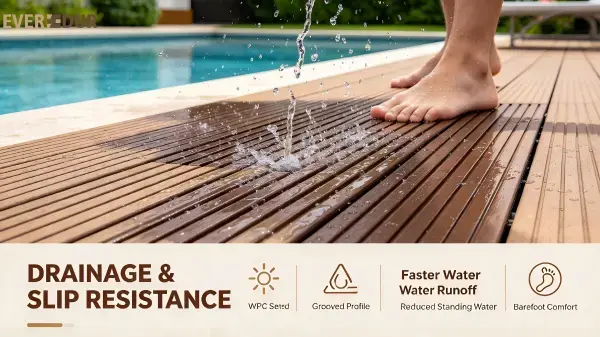
It is important to have excellent drainage even if the surface is resistant to moisture. Water is effectively directed away from the walking surface by grooved WPC profiles, minimizing the amount of time standing water stays on the deck. Both short-term cleanliness (algae buildup in pools of stagnant water) and long-term safety (slip dangers caused by surfaces that don't drain well) are affected by this. Quick drying and easy hygiene are the results of the material's water resistance and the careful design of the profile.SEND INQUIRY
Long-Term Swimming Pool WPC Decking Performance in Outdoor Climates
Service Life Expectations
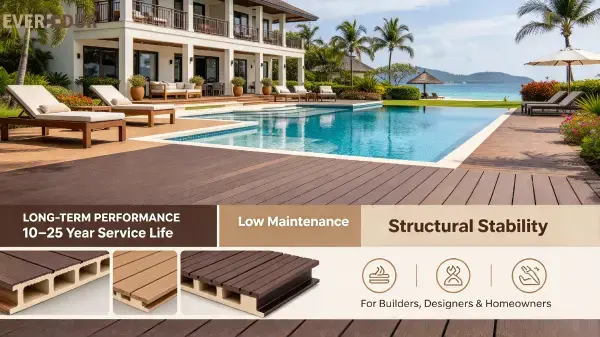
A well-specified WPC pool deck has a documented service life ranging from 10 to 25 years depending on the product specification and installation environment. Co-extruded boards at the higher end of the performance range carry warranties of up to 20 years for structural and surface integrity. These figures are grounded in accelerated weathering tests and field performance data across diverse climates — from northern European coastal regions to inland continental zones with extreme seasonal temperature variation.
Maintenance Requirements Over Time
Reduced upkeep is one of the most noticeable practical benefits of composite pool decking compared to real wood. You won't have to worry about sealing, staining, or sanding it every year. Periodically washing with water and a gentle detergent is an important part of routine cleaning. This helps to remove surface grime, algae, and mineral deposits. This decreased maintenance load immediately translates into lower lifespan operating costs for commercial projects, such as hotel pools, spa complexes, and waterfront resort areas.
Structural Stability in Substructure Systems
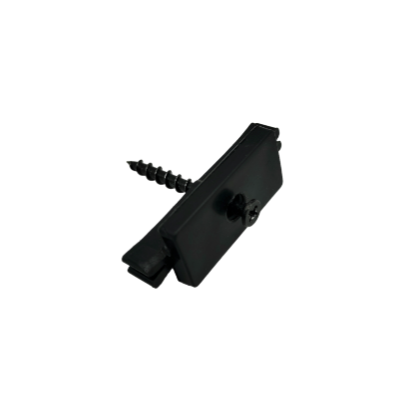
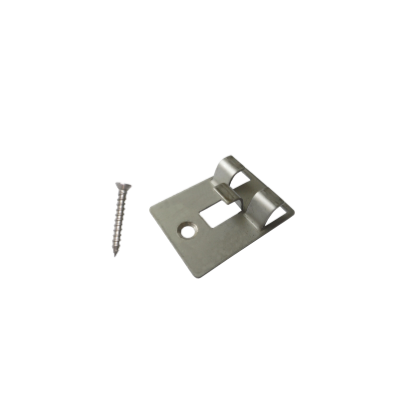
Long-term performance also depends on how the boards interact with their support structure over time. WPC decking is typically installed over aluminum or composite joists using hidden clip systems that allow for the small amounts of thermal movement described earlier. This installation method distributes load evenly, prevents direct ground contact that would accelerate moisture-related degradation, and maintains consistent gap dimensions for drainage. Properly installed pool decking systems retain their level surface and visual uniformity across many years of outdoor service.
Conclusion
Outdoor pool areas require materials that perform reliably across every season — not just on installation day. Swimming pool WPC decking addresses the specific demands of wet, sun-exposed, temperature-variable environments through a combination of material science and manufacturing precision. The deck surface is an attractive and long-lasting addition to any pool, thanks to the combination of UV stabilizers, co-extruded polymer caps, moisture-resistant cores, and slip-resistant surface textures. If you're a builder, designer, or homeowner thinking about the long run, composite decking is a solid, realistic choice for your pool's surround. It requires little upkeep and has shown to be resilient in the face of harsh weather.SEND INQUIRY
FAQ
Q: Is WPC decking safe to use directly around swimming pools where chlorinated water splashes regularly?
A: Yes. The chlorinated water and seawater that may corrode many traditional materials are not an issue for high-quality WPC composite boards because of their special formulation. The co-extruded surface cap and the chemical inertness of the HDPE polymer make it impossible for typical pool chemicals to dissolve the wood fiber core. In the majority of instances, routine rinse after strong chemical exposure is all that is needed for maintenance.
Q: How does composite pool decking compare to natural stone or porcelain tile around a pool?
A: While stone and porcelain tiles last a long time, they aren't the most comfortable flooring options in the winter since they become quite chilly underfoot and become extremely slippery when wet unless they're specially textured. WPC boards have a wood-toned esthetic, a warmer surface temperature, and built-in slide resistance via grooved or brushed profiles. Also, if damage happens in portions, it's simpler to fix or replace them.
Q: What is the recommended installation gap for WPC pool decking boards to allow for thermal expansion?
A: While precise instructions differ by manufacturer and temperature zone, it is generally recommended to leave a side gap of 6-8 mm between neighboring boards and an end gap of around 5-8 mm between boards while installing them. Typically, it is recommended to use the higher limit of these tolerances in areas with a greater yearly temperature variation. For installation instructions tailored to a particular product profile, it is essential to consult the manufacturer's handbook.
Ready to Specify Your Pool Deck Composite? Contact Everdur
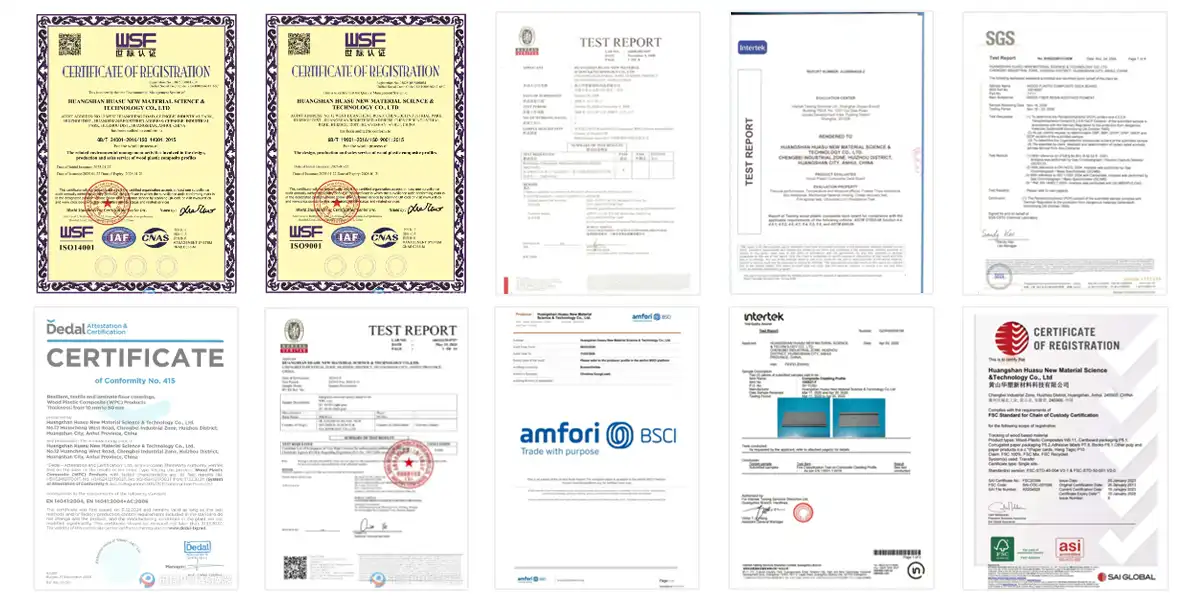
To aid in the specification and bidding processes, Everdur offers technical datasheets, material suggestions based on climate, and project-volume pricing to construction companies and landscape architects. Our co-extruded WPC boards meet all quality criteria set forth by the European Union (CE), the United States (ASTM D7039), and China (GB/T 24137). You may request evidence of our environmental credentials, which include our Recycled Content certification and our compliance with E0 standards, if you're interested.
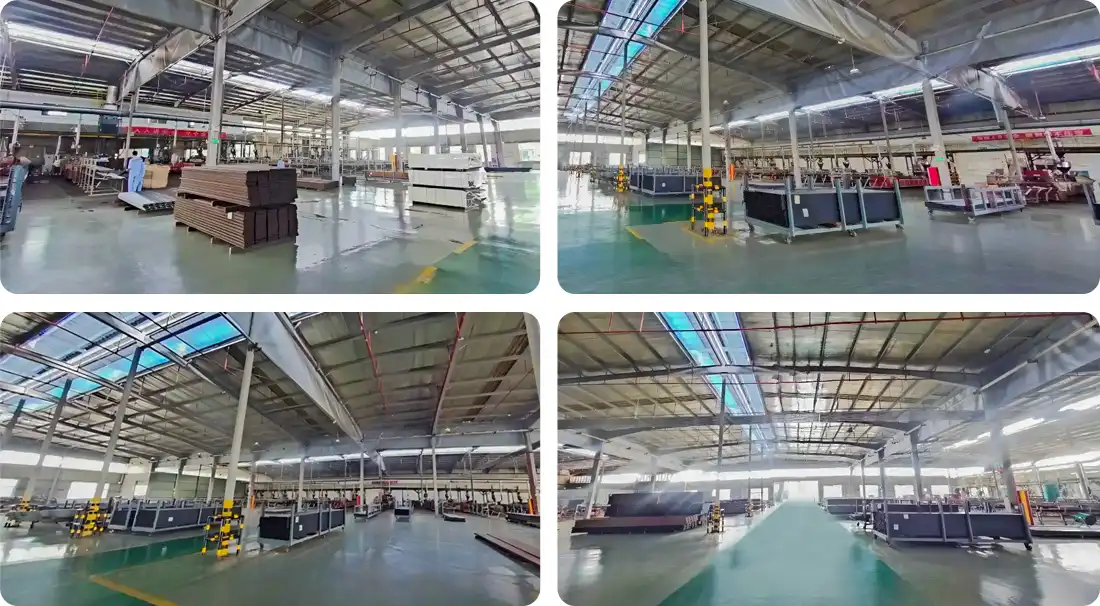
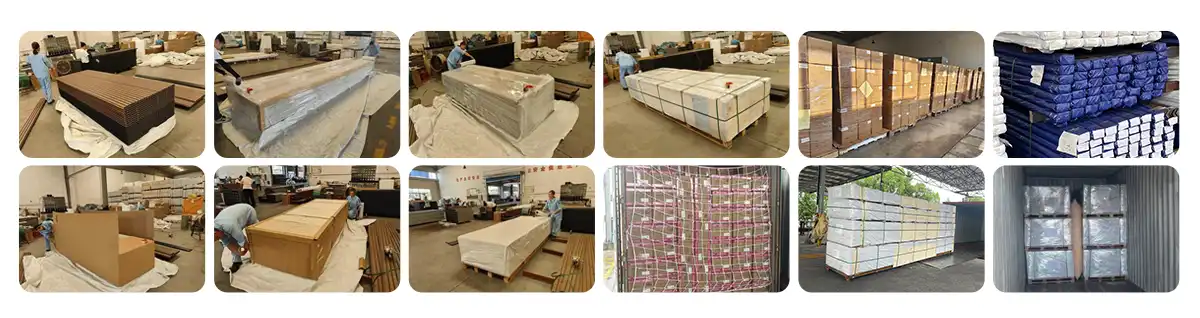
Ask about our special wholesale pricing structures, sample programs, and dependable container supply if you're a wholesaler or reseller of construction supplies. We have 50+ active manufacturing lines and can produce 1,500+ containers each year.
Get a free design consultation and installation instructions based on your pool area's size, temperature, and esthetic preferences—just for end users and private homeowners.
Whether you are sourcing as a contractor, distributor, or property owner, our team is ready to support your project from specification through delivery. As a dedicated swimming pool WPC decking manufacturer, Everdur backs every inquiry with practical expertise and consistent product quality across all order volumes.
📧 Contact us directly: violet@wpcsupplier.com
References
1. Clemons, C. M. (2002). Wood-plastic composites in the United States: The interfacing of two industries. Forest Products Journal, 52(6), 10–18.
2. Stark, N. M., & Matuana, L. M. (2004). Surface chemistry changes of weathered HDPE/wood-flour composites studied by XPS and FTIR spectroscopy. Polymer Degradation and Stability, 86(1), 1–9.
3. European Committee for Standardization. (2012). EN 15534-1: Composites made from cellulose-based materials and thermoplastics — Part 1: Specifications for compounds and products. CEN.
4. American Society for Testing and Materials. (2011). ASTM D7031: Standard Guide for Evaluating Mechanical and Physical Properties of Wood-Plastic Composite Products. ASTM International.
5. Fabiyi, J. S., McDonald, A. G., Wolcott, M. P., & Griffiths, P. R. (2008). Wood plastic composites weathering: Visual appearance and chemical changes. Polymer Degradation and Stability, 93(8), 1405–1414.
6. Yeh, S.-K., & Gupta, R. K. (2008). Improved wood–plastic composites through better processing. Composites Part A: Applied Science and Manufacturing, 39(11), 1694–1699.
7. Klyosov, A. A. (2007). Wood-Plastic Composites. John Wiley & Sons.
Send Inquiry
Related Industry Knowledge
- Tips and Tricks for Perfect WPC Solid Decking
- Eco-Friendly 3D Composite Decking: Sustainable & Aesthetically Pleasing
- Why Exterior WPC Cladding Is Better Than Vinyl for External Walls
- 2026 Guide to WPC Landscape Walls: Designs & Installation Tips
- WPC Composite Fencing for Residential Properties: Stylish & Secure
- Hollow WPC Decking Installation Cost: How to Save Big in 2026
- 3D Composite Decking vs Regular Composite: Which Is More Stylish?
- Low MOQ Traditional Cladding: Ideal for Small Traditional Projects
- WPC Composite Fencing Installation: Easy Guide for Beginners
- Top Hollow WPC Decking Designs for Modern Gardens