_1777451497595.webp)
Why Exterior WPC Cladding Is Better Than Vinyl for External Walls
When choosing a material for external wall cladding, the decision often narrows down to two popular options: exterior WPC cladding and vinyl. While vinyl has been a widely used choice for decades, composite wood-plastic cladding has earned a strong reputation among architects, contractors, and homeowners across Europe and North America — and for good reason. WPC cladding combines recycled wood fiber with high-density polyethylene (HDPE), producing a panel that delivers the warmth of natural wood alongside the resilience of engineered polymer materials. It performs well through seasonal weather shifts, resists moisture intrusion, and holds its color far longer than standard vinyl profiles. Vinyl, by contrast, can become brittle in cold climates, soften under prolonged heat, and lacks the structural texture depth that modern facade design demands. Beyond aesthetics, composite cladding aligns with today's green building requirements, incorporating recycled content and meeting international environmental standards. Whether you are renovating a residential facade or specifying materials for a commercial project, understanding what sets these two materials apart will help you make a more confident, long-term decision.SEND INQUIRY
Exterior WPC Cladding Materials vs Vinyl: What Is the Difference?
At the heart of this similarity is the idea of arrangement. Vinyl cladding, which is also known as PVC siding, is mostly made of polyvinyl chloride, a man-made plastic. It is easy to carry, doesn't get wet, and isn't too expensive for a starting level product. But PVC doesn't have any natural fibers in it, which limits the depth and structure of its texture.
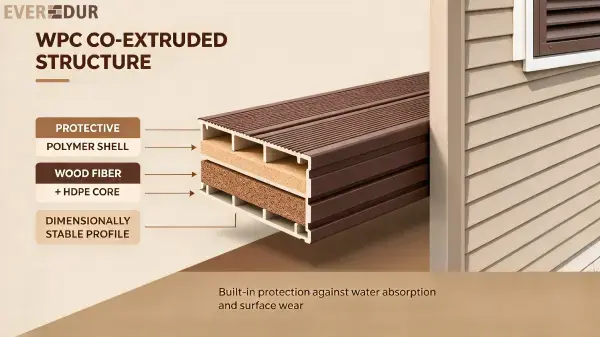
Outdoor composite cladding, by contrast, is produced by mixing wood powder or wood fiber with HDPE and chemical stabilizers, and then forcing the mixture out of a mold using heat and pressure. In this way, a dense, stable-in-dimension panel is made that looks like real wood in terms of tone and grain without needing the upkeep that real wood does.
This is taken even further by the second-generation co-extrusion process. When the board is made, a protective polymer shell is formed around the WPC core. This adds another layer of protection against water absorption and surface wear. Vinyl can't make this kind of structural layering.
The difference is also important from the point of view of longevity. Grade A recycled HDPE from post-consumer waste sources is often used in WPC goods, along with wood fiber salvaged from processing waste. Vinyl production, on the other hand, needs new petrochemicals to work, and European markets have been wary of how long it will last when recycled.
Composite wood-plastic panels are a better choice for cladding building surfaces in places like the UK and North America where environmental buying rules are very strict, like for BREEAM-rated projects or LEED-certified buildings. Composite panels are a good choice for environmentally friendly building materials because they are made from recovered materials, have less carbon than new plastics, and come from sources that are FSC-compatible.
How Does Exterior WPC Cladding Create a More Natural Wall Appearance?
The fact that vinyl cladding looks fake is something that architects and facade designers regularly say. Light bounces off of the flat, even surface in a way that makes it look like plastic instead of organic matter. This is especially clear up close, especially on private buildings where the appearance of real materials is important.
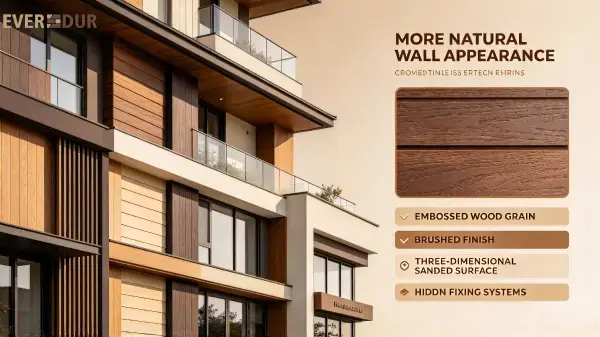
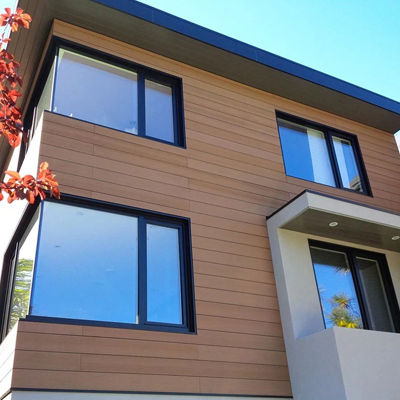
This is taken care of by surface texture creation in composite wall covering. Profiles come with brushed finishes, three-dimensional sanded surfaces, and wood grain patterns that are raised. All of these styles imitate the natural variation in grain and depth of feel found in hardwood and softwood species. These shapes aren't written on top; they're pressed into the surface of the board during extrusion. This means that they keep their look even after years of being outside.
Exterior WPC cladding also does better than vinyl when it comes to color depth. You can get composite panels in a lot of different colors, from light ash gray and ivory to deep mocha, walnut, and dark charcoal. The colors are built into the board instead of being added on top. This means that light surface wear doesn't show a white or gray substrate below, which can happen with colored vinyl profiles.
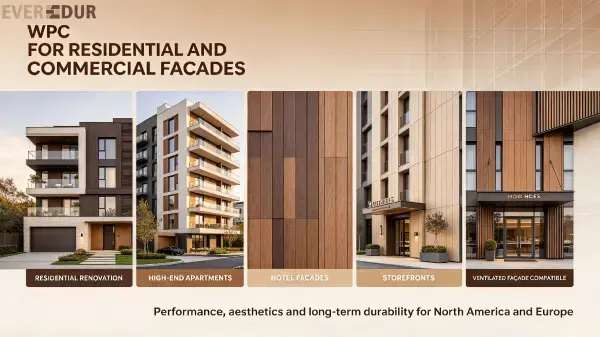
Custom color matching and unique surface designs can be done through ODM production for projects that need a one-of-a-kind finish. This amount of design freedom is important for projects like hotels, high-end apartment buildings, and storefronts that need to look the same across big areas.
By hiding the screw heads, hidden fixing systems like clip fasteners and secret fixes make the finished look even better. As a result, the wall has a smooth, continuous surface that looks more like a piece of architecture than an object that was put on top of the building.SEND INQUIRY
Exterior WPC Cladding Under Sun, Rain, Moisture, and Temperature Changes
How WPC Handles UV Radiation Outdoors
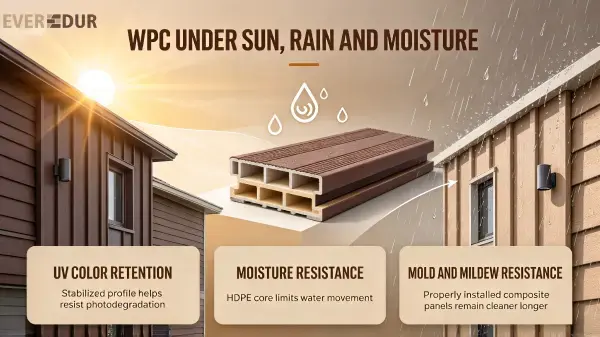
Long-term exposure to ultraviolet light is one of the main reasons why facade materials break down. Vinyl gets brittle and chalky after being exposed to UV light for a long time. Color fading happens faster in high-altitude or south-facing installations. Outdoor UV resistant WPC profiles are made with UV-stabilizing chemicals that are built into the board itself, and the co-extruded outer shell adds another layer of protection against photodegradation. Quality composite cladding keeps its color after 2,000 hours or more of UV exposure, which is a useful number for walls in areas that get a lot of sun in Europe or the United States.
Rain and Moisture Resistance in Facade Applications
Natural wood takes water and grows or shrinks in response, but co-extruded composite walls don't absorb water as quickly. The outer shell stops water from getting in at the surface, and the HDPE in the core stops water from moving inside. This is especially important for building surfaces near the coast, in places where it rains a lot during certain times of the year, or on buildings where the siding is exposed to long periods of condensation. Mold, mildew, and fungal growth are common problems for wood covering, but they are much less likely to happen on properly placed composite panels.
Thermal Expansion and Dimensional Stability
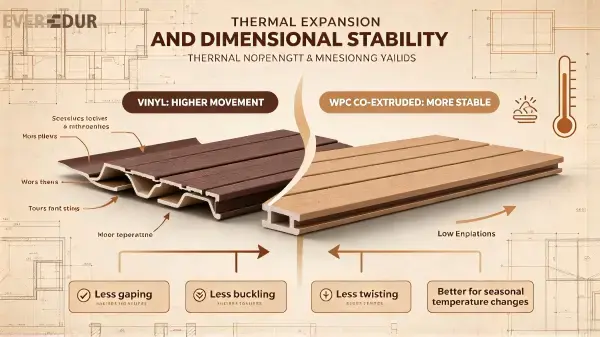
Changes in temperature cause all building materials to expand and contract, but the amount of movement is very different between materials. Vinyl's rate of thermal expansion is pretty high, which means that in places where temperatures change a lot from season to season, it can gape, buckle, or twist. Co-extruded composite cladding is more stable in terms of its dimensions than earlier generations of WPC. It also moves less when it heats up and cools down, which makes it better for continental climates in central Europe and temperature-changing areas across North America. This is getting even smaller as new materials are developed. The main goal of the next wave of formulas is to have very little thermal expansion.
Is Exterior WPC Cladding Easier to Maintain Than Vinyl?
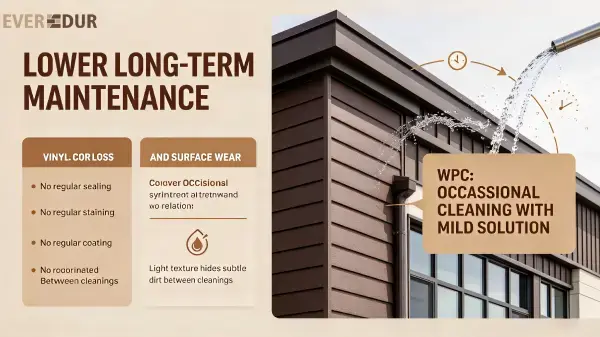
Vinyl is often sold as being low-maintenance, and it's true that it doesn't need to be painted. But over time, environmental layers, algal growth, and surface wear can make vinyl walls lose their color in a way that can't be fixed by cleaning them. It's hard to paint vinyl again because paint doesn't stick well to PVC surfaces without special primers and preparation.
Composite cladding keeps its good looks by being cleaned with water and a mild cleaning solution every so often. During the product's lifetime, it will never need to be sealed, stained, or coated to protect it. Good composite boards have a texture on the surface that helps hide light dirt between cleanings. This way, facades stay looking clean with little work.
This difference is directly related to money for building owners, facility managers, and property managers who want to lower long-term upkeep costs. Even though the original cost of composite cladding is higher than vinyl, it often has a lower total cost of ownership because it doesn't need to be coated or treated on a regular basis and can last between ten and twenty-five years, based on the product specification.SEND INQUIRY
Exterior WPC Cladding for Long-Term External Wall Applications
Structural Performance Over Time
When choosing a wall system, facts on how long it will last is important. Co-extruded composite panels don't break when they get hit, when they get eaten by bugs, or when they rot, which are three ways that natural wood and vinyl can fail. An excellent co-extruded board has a hollow or solid core shape that works with the enclosing shell to spread the load and keep the surface from deforming. Products that meet the requirements for ASTM D7039 and CE approval have been put through normal mechanical and atmospheric tests that prove these performance claims within certain limits.
Compatibility with Ventilated Facade Systems
Ventilated facade systems can be used with composite wall panels. This way of building has become standard in European high-performance building design. A well-ventilated space behind the cladding layer makes the wall assembly more thermally efficient, controls the flow of wetness, and increases the service life of both the siding and the layer below it. Vinyl panels are less reliable when used in ventilated wall systems that meet high standards because they have a lower density and behave differently in heat conditions.
Environmental Credentials and Certification Alignment
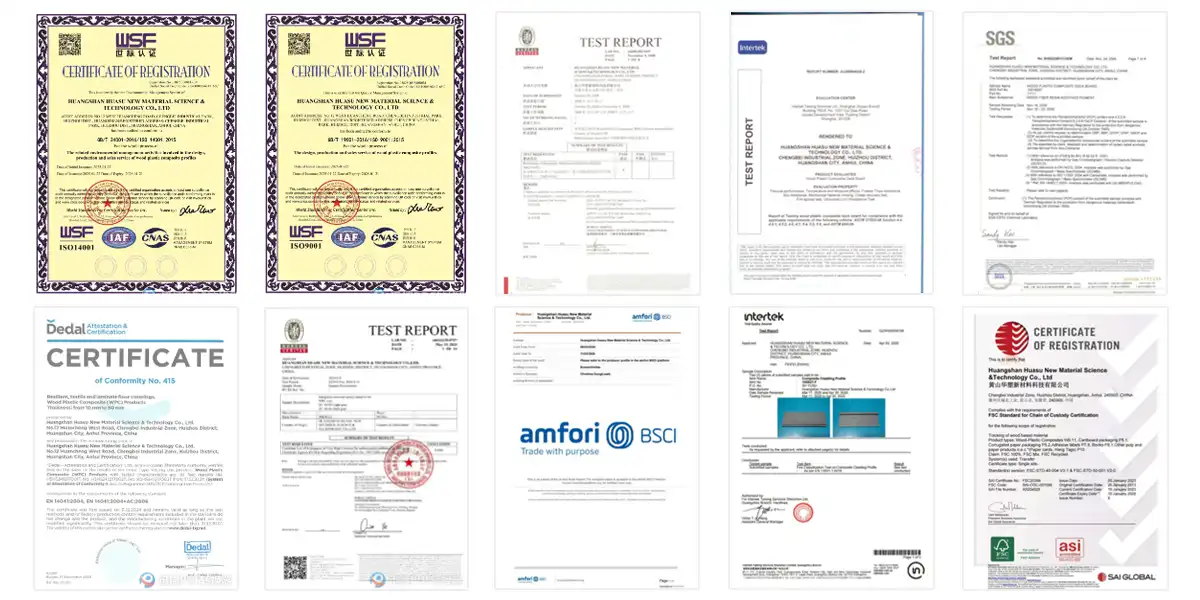
More and more, green building approval programs in North America and Europe need written proof of important environmental performance. These requirements are well met by outdoor composite cladding made from recycled HDPE and wood fiber, created under ISO 14001 environmental management systems, and approved to FSC and REACH standards. For specifiers working on BREEAM, LEED, or DGNB-rated projects, having access to Environmental Product Declarations and test certificates that are compliant lowers the risk of the specification and makes it easier to meet documentation needs.
Conclusion
Vinyl has been used for a long time as an exterior wall covering, but composite wood-plastic panels fix some of its structural and esthetic problems. The case for using exterior WPC cladding on outside walls is based on differences in performance that can be measured, not on marketing claims. These differences include a smoother surface, better UV color retention, better dimensional stability, and lower lifetime care costs. Composite cladding is a material that can be used in public, commercial, and residential buildings in North America and Europe. It makes buildings look good, is good for the environment, and will last for a long time.SEND INQUIRY
FAQ
Q: How long does exterior WPC cladding typically last on an external wall?
A: The service life depends on the type of product and how it was installed. Most co-extruded hollow shapes come with a 15-year warranty, while solid co-extruded boards may have a 20-year warranty. With regular upkeep, the actual service life often lasts longer than the warranty term.
Q: Does composite cladding require any special installation tools or skills compared to vinyl?
A: Composite cladding uses clip-based or hidden bolt systems that work with standard building methods. Most cladding installers with a lot of experience get used to the system quickly. Profiles come in regular lengths of 2.2m, 2.9m, and 3.6m, which fit most wall bay sizes without the need for special cutting tools.
Q: Is WPC wall cladding suitable for use in coastal or high-humidity environments?
A: Yes. Composite cladding is resistant to salt air, prolonged wetness, and condensation because it has HDPE content and a co-extruded outer shell. These are all things that speed up the deterioration of natural wood and can change the color of vinyl over time.
Work With Everdur — Reliable Exterior WPC Cladding Manufacturer for Your Next Project
Whether you are a building materials wholesaler looking to add more composite products to your selection, a construction company looking for facade materials for a large-scale project, or a contractor helping a customer choose the best wall option, Everdur has a clear answer for you.
For construction firms and facade contractors: Access help with technical specifications, product samples, and suggestions for profiles that are right for your project. Our products meet the standards set by CE (EU), ASTM D7039 (US), and GB/T 24137 (China). They also have FSC, REACH, RoHS, and Recycled Content certifications to back up your project paperwork.
For building materials wholesalers and resellers: Access special trade prices, help with volume sharing, and steady production capacity across more than 50 production lines. If you ask, you can get free samples.
For end customers: Our technology team will give you free design advice, help with color matching, and instructions on how to put the product.
As an established exterior WPC cladding manufacturer serving 225+ clients across 60+ countries, Everdur combines production reliability with genuine material expertise. Reach out to our team directly at violet@wpcsupplier.com to discuss your project requirements, request samples, or get a quotation.
References
1. Clemons, C. M. (2002). Wood-Plastic Composites in the United States: The Interfacing of Two Industries. Forest Products Journal, 52(6), 10–18.
2. European Committee for Standardization. EN 15534: Composites Made from Cellulose-Based Materials and Thermoplastics (Wood-Polymer Composites). CEN Technical Committee.
3. ASTM International. ASTM D7032: Standard Specification for Establishing Performance Ratings for Wood-Plastic Composite Deck Boards and Guardrail Systems. ASTM International.
4. Klyosov, A. A. (2007). Wood-Plastic Composites. John Wiley & Sons, Hoboken, NJ.
5. Rowell, R. M., & Jacobson, R. E. (2002). Weathering of Wood-Thermoplastic Composites. USDA Forest Service, Forest Products Laboratory Research Paper.
6. Pilarski, J. M., & Matuana, L. M. (2005). Durability of Wood Flour-Plastic Composites Exposed to Accelerated Freeze-Thaw Cycling. Journal of Applied Polymer Science, 100(1), 35–39.
Send Inquiry
Related Industry Knowledge
- WPC Villa Fence: Luxury Fencing for Villas & High-End Properties
- 2026 Guide to WPC Landscape Walls: Designs & Installation Tips
- Grooved WPC Decking: Anti-Slip Flooring for Poolside & Walkways
- Best WPC Cladding Designs for Villa and Luxury Residential Projects
- Top WPC Composite Fencing Manufacturers in 2026
- WPC Composite Fencing Installation: Easy Guide for Beginners
- Top Composite Screen Fencing Manufacturers in 2026
- Co Extrusion WPC Decking vs Regular WPC: Which Saves You More Money?
- WPC Decking Maintenance Tips: Keep Your Outdoor Deck Looking New for Years
- Eco-Friendly WPC Decking: Sustainable Choice for Modern Outdoor Spaces