_1777451497595.webp)
WPC Villa Fence: Luxury Fencing for Villas & High-End Properties
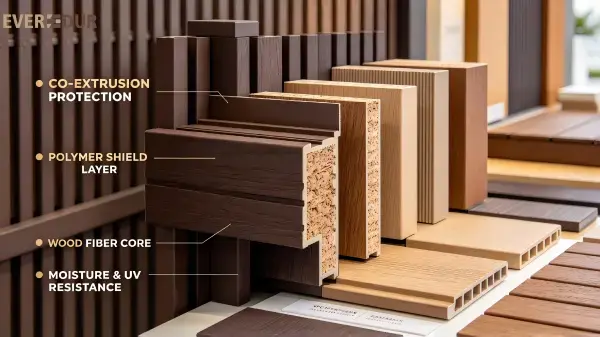
The WPC villa fence is a preferred option when property owners and landscape architects begin to seek outside boundary solutions that are stylish and durable in the long run. WPC – wood-plastic composite – blends recycled wood fibre with high-density polyethylene (HDPE) to produce a fence product that provides the warmth of genuine timber but without its inherent weaknesses. For villas, exclusive estates, boutique resorts and elite residential communities the draw is simple: you get a clean, natural-looking perimeter that keeps its beauty over the seasons, without the cycle of sanding, repainting or board replacement that typical wood requires. In co-extrusion production, a thick polymer shield layer is added around the core to provide a considerable boost in moisture resistance and UV stability. This structural approach makes the product especially well adapted for outdoor applications where the exposure is continual and resources for maintenance are restricted. Whether you are working on a coastal villa project in the South of France, a private estate in California or a luxury development in Scandinavia, its constant performance in all climates has made it a go-to material for experts who care about both look and lifespan.SEND INQUIRY
Why Is WPC Villa Fence Suitable for Luxury Outdoor Properties?
Luxury outdoor properties carry a distinct set of expectations. The boundary of a high-end villa is not just a security perimeter — it communicates the quality of everything behind it. Visitors, neighbors, and potential buyers form impressions the moment they approach the gate. This means fencing materials at this tier need to do two things simultaneously: hold their visual integrity over years of outdoor exposure and require minimal intervention from the property owner.
Traditional hardwood fencing has been the standard for high-end homes for a long time, and it's easy to see why: the warmth and natural grain of real wood are genuinely appealing. In fact, though, even high-quality forests need regular upkeep. UV light makes the skin gray. When moisture gets into joints and end-cuts, it causes the wood to twist and eventually break down. In humid or seaside areas, the time it takes for deterioration to happen is much shorter.
These weaknesses are fixed at the material level by WPC villa fence. The wood fibers give the project the look and feel that high-end projects need, and the polymer matrix stops water from absorbing and stops biological breakdown. Mold, mildew, and insects can't get into the composite structure. Surface textures like brushed, embossed, wood grain, and sanded look a lot like high-end hardwood finishes, and they don't need to be sealed or coated after installation.
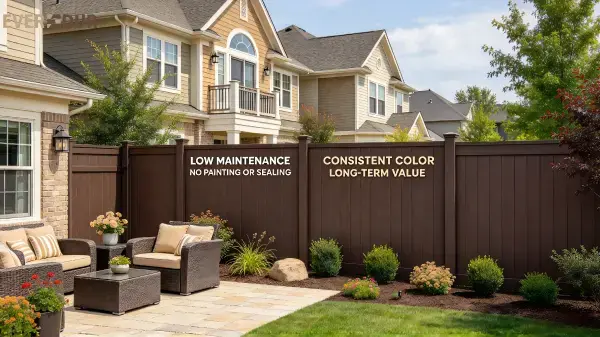
The perks get better over time for builders and developers who work on high-end homes. A fence that stays looking good without any work is an asset, not a cost that you have to pay over and over again. If the color stays the same after being exposed to UV light for a long time, the border will look the same year after year, which directly improves the look and value of the property. In high-end residential areas with strict rules about how each lot should look, that consistency across multiple sites really raises the value of the whole building.
WPC Villa Fence for Privacy, Security, and Elegant Property Boundaries
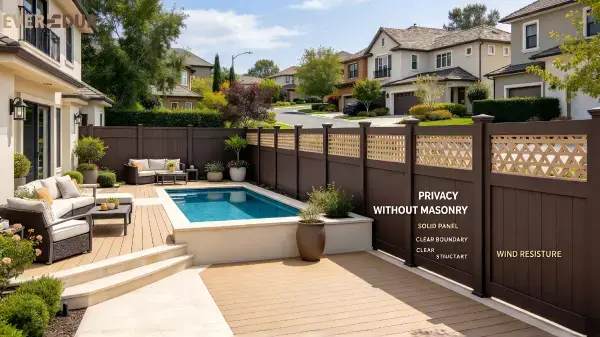
At the high end of the housing market, privacy is very important. Full-panel designs that are solid or nearly solid effectively block sightlines, giving you real privacy without the need for masonry walls that look heavy. This is especially important for homes with open gardens, pool decks, or entertainment areas where people want to enjoy the outdoors without being able to see into their private spaces from nearby roads or other homes.
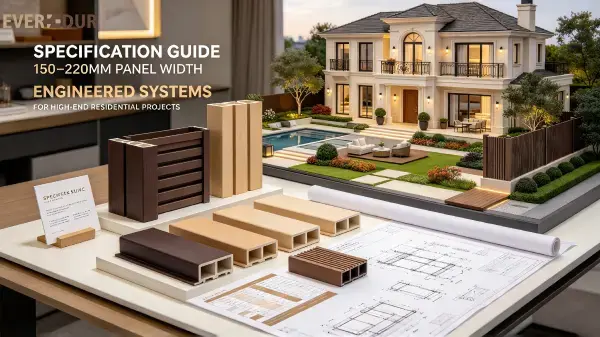
Composite villa fence systems let you change the layout in ways that other materials don't. Semi-open slatted designs let air move and light pass through while still making the limits clear. Layouts with horizontal slats look good with modern architectural styles, while layouts with vertical panels look great with more traditional or classical villa designs. The panel width range, which is usually between 150mm and 220mm, lets designers change the visual density and make the rhythm that fits the style of the project.
The function of security is built into the structure. The high-density material structure doesn't bend when it's loaded. Both solid core panels and reinforced hollow profiles are good at blocking wind and keeping the structure stable, which is important for places like the coast or hillsides where fencing is constantly being pushed side to side. Compatible aluminum alloy or stainless steel post systems securely attach the panels and are made to fit the panel sizes, so the whole system works as it should instead of relying on hardware pairs that don't work well together.
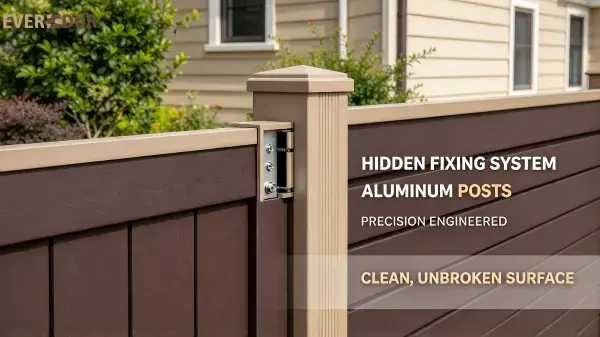
With hidden fixing systems, screws and frames are hidden from view on the finished surface. At the luxury level, this detail is important—seeing hardware on the edges of high-end properties makes them look like they are trying to save money, and it gets in the way of the smooth visual flow that high-end landscape design needs. The combined method means that the fence surface is shown without any breaks. This helps with both the project's esthetic goals and the installation's long-term structural stability.SEND INQUIRY
WPC Villa Fence Performance in Sun, Rain, Humidity, and Coastal Climates
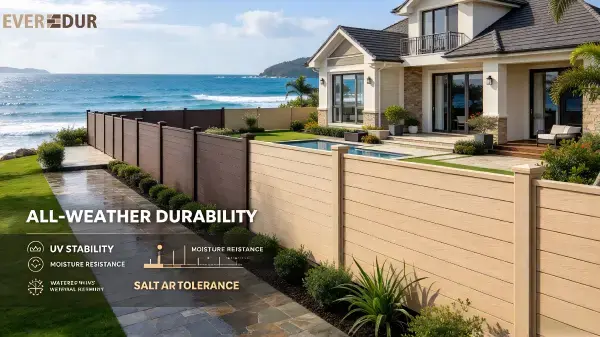
All-Weather Durability Across Diverse Climates
There is a test that is done every day of the year on the outdoor fence at a house or other high-end property. Solar radiation wears away surface coats and changes the color of things that aren't UV-stabilized. Rain and humidity bring water into porous substrates, which sets off cycles of expansion that crack and peel off surfaces over time. In seaside areas, the salty air speeds up the rusting of metal parts and the wearing away of the surface of natural materials that haven't been handled.
This group of pressures can't damage the WPC waterproof villa fence made with co-extrusion technology because it is built in layers. The top polymer shielding layer, which is added during production, completely covers the wood-fiber center. This barrier stops water from coming into direct touch with the organic fiber content, which is the main way that living things break down and structures grow. The material stays the same size even when the temperature and humidity change, which keeps the joints clean and the panels lined up over time.
UV blockers built into the mix keep the surface from fading. Independent tests that looked at how the color held up after being exposed to UV light for a long time (more than 2,000 hours in controlled settings) showed that the surface kept its color and didn't turn gray or chalky like untreated wood does. For installs near the coast, the anti-corrosion solution can stand up to salt air without needing to be treated on the outside or inspected regularly like metal and wood systems do.
WPC Villa Fence Systems With Gates, Posts, and Hidden Fixings
A well-designed fence is more than just panels. How the panel, post, and ground anchor are connected determines how well the installation stays in place and how long it can be used outside. When panels made for one system are put together with posts made for another system, they don't work well together. This leads to weak spots that become obvious as settlement and lateral movement build up.
In order to work with the panel's size and weight, posts made of aluminum alloy and stainless steel are precisely measured and designed to fit. This makes sure that the software correctly distributes load and that the system works as a whole instead of a bunch of separate parts. The end result is a steady, straight border that doesn't need to be adjusted on a regular basis.
Panels can be attached to posts without using surface screws with hidden clip-and-channel fixing methods. A clean, hardware-free surface looks better, and this method lets the panels move slightly due to temperature changes without leaving gaps or stress points that can be seen. Temperature changes cause panels to slightly expand and contract, but the secret system automatically handles this.
The same rules apply to gate integration in engineering. At the design stage, smart access gates and custom entry configurations can be added. This way, the visual language of the fence system is kept consistent along the entire perimeter, instead of a different gate solution being added that throws off the overall look.SEND INQUIRY
Long-Term WPC Villa Fence Value for High-End Residential Projects
It looks like the costs of fence at the luxury level are different from those of normal home jobs. Most of the time, high-end property owners and developers aren't looking for the lowest initial cost. Instead, they're looking at the total cost of ownership and how the asset will look in the long term.
When it comes to high-end properties, traditional wood fencing needs to be cleaned, sanded, stained or painted, and eventually, the boards need to be replaced. Over the course of 15 to 20 years, these costs add up to a lot. For big estate perimeters or residential developments with multiple lots, the costs of labor and materials for upkeep go up as needed.
This estimate is very different when you consider that WPC villa fence has a documented service life of 10 to 25 years and requires very little upkeep. The fence doesn't need to be sealed, painted, or checked often for damage from rot and pests. Cleaning is done on a regular basis and is easy. The surface's color and texture stay the same without any changes. This means that the asset will actually cost less over its lifetime, not just theoretically be more efficient.
For builders and developers working on high-end residential projects, this reliability also lowers the chance of having to do maintenance as required by the warranty. The project's long-term image is helped by a boundary solution that works regularly and doesn't need to be serviced often. The material's track record in foreign markets, including its use in confirmed high-end projects in Europe and North America, gives dealers and building materials wholesalers the specification trust that this market tier needs.
Conclusion
WPC villa fence has the good looks that high-end outdoor properties need, along with the durability and low upkeep that makes ownership a good idea for a long time. The co-extrusion construction, all-weather durability, integrated system design, and documented service life all address the real concerns of high-end architects, developers, and property owners. The material looks good, works well, and has a low total cost of ownership, so anyone looking at perimeter options for houses, private farms, or high-end residential developments should give it a close examination.SEND INQUIRY
FAQ
Q: How long does a WPC villa fence typically last in outdoor conditions?
A: A well-manufactured WPC villa fence that is placed outside in normal home conditions has a recorded service life of 10 to 25 years, based on the type of product used, the weather, and the quality of the installation. The co-extrusion protective layer is a big part of making this range longer because it keeps the core safe from UV damage and wetness.
Q: Does a composite villa fence require painting or sealing after installation?
A: No. The color and pattern of a WPC villa fence's surface are built into the material itself, not added on top of it. When this happens, the fence will never need to be painted, stained, or sealed again. Cleaning with water on a regular basis is enough to keep the look.
Q: Is WPC waterproof villa fencing suitable for coastal properties with salt air exposure?
A: Yes. The anti-corrosion solution used in good WPC villa fence works well against salt air. The polymer protective layer stops the surface damage caused by salt that makes metal and wood that hasn't been cleaned last less long in coastal areas. If you want extra safety for coastal jobs, choose a co-extrusion profile instead of a normal hollow extrusion.
Reach Out to Everdur — WPC Villa Fence Manufacturer for Premium Outdoor Projects
For Construction Firms and Fence Contractors:
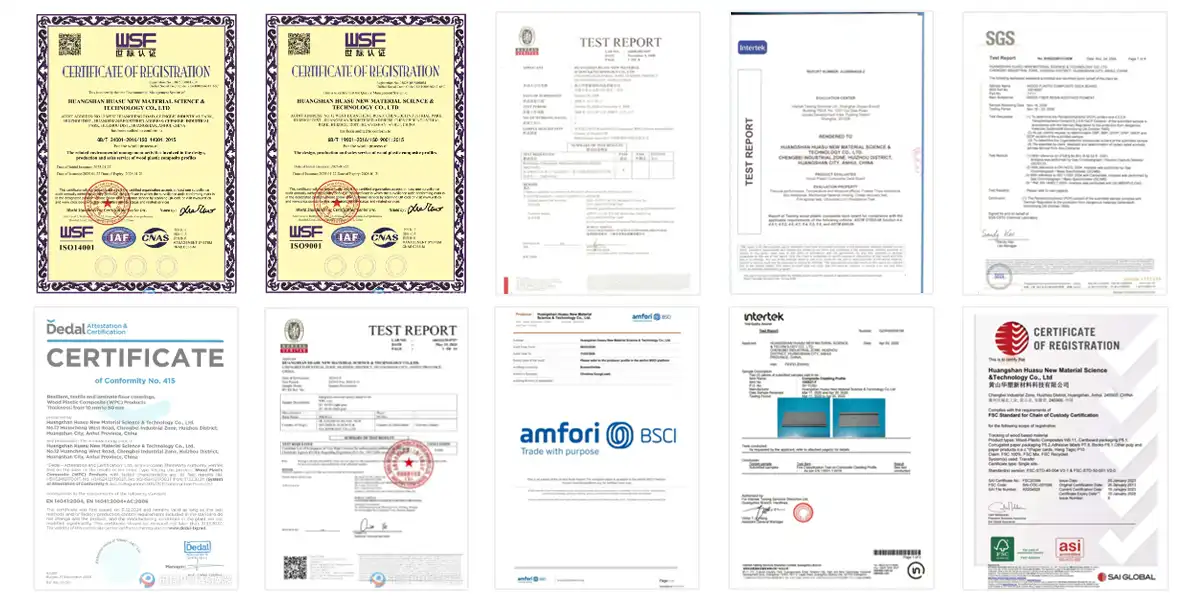
Receive full technical specifications, material samples, and project-matched engineering support. We supply stable volume across timelines — whether your project requires 10 containers or more, our 50+ production lines ensure consistent delivery. Our products comply with EU CE standards, US ASTM D7039, and China GB/T 24137, and carry FSC, REACH, RoHS, and Recycled Content certifications. E0 environmental standards are met across our formulations.
For Building Materials Wholesalers:
Inquire about exclusive wholesale pricing structures, sample programs, and co-branded supply arrangements. Our international logistics experience across 60+ countries means we understand the documentation and compliance requirements for your market.
For End Customers:
We offer complimentary design consultations and installation guidance. Tell us your project dimensions, climate conditions, and aesthetic goals — our technical team will recommend the right profile, color, and fixing configuration.
Contact our team directly: violet@wpcsupplier.com
As a dedicated WPC villa fence manufacturer, Everdur is ready to support your project from specification through delivery. Reach out today.
References
1. Clemons, C. (2002). Wood-Plastic Composites in the United States: The Interfacing of Two Industries. Forest Products Journal, 52(6), 10–18.
2. Klyosov, A. A. (2007). Wood-Plastic Composites. John Wiley & Sons.
3. European Committee for Standardization. (2012). EN 15534: Composites Made from Cellulose-Based Materials and Thermoplastics (Usually Called Wood-Polymer Composites or Natural Fibre Composites). CEN.
4. ASTM International. (2011). ASTM D7032: Standard Specification for Establishing Performance Ratings for Wood-Plastic Composite Deck Boards and Guardrail Systems. ASTM International.
5. Müller, M., & Reul, H. (2015). Durability and Weathering Performance of Co-Extruded Wood-Plastic Composites in Outdoor Applications. Journal of Applied Polymer Science, 132(14).
6. Forest Stewardship Council. (2023). FSC Certification: Standards for Responsible Sourcing and Recycled Content. FSC International.
7. American Institute of Architects. (2020). Material Selection for High-Performance Outdoor Environments: A Practitioner's Reference. AIA Press.
Send Inquiry
Related Industry Knowledge
- Grooved WPC Decking: Anti-Slip Flooring for Poolside & Walkways
- Best WPC Cladding Designs for Villa and Luxury Residential Projects
- How to Choose WPC Cladding: Material, Design and Installation Tips
- WPC Decking vs Wood Decking: Which Is More Durable and Cost-Effective?
- Low MOQ Traditional Cladding: Ideal for Small Traditional Projects
- Top Composite Screen Fencing Manufacturers in 2026
- Low MOQ Grooved WPC Decking: Ideal for Residential & Commercial
- Co Extrusion WPC Decking vs Regular WPC: Which Saves You More Money?
- Why Co-extruded WPC Decking Is a Must for Your Outdoor Project
- High-Quality WPC Decking for Poolside: Waterproof and Anti-Slip Solutions