_1777451497595.webp)
Eco-Friendly 3D Composite Decking: Sustainable & Aesthetically Pleasing
2026-10-12 16:38:04
When homeowners, architects, and landscape designers look for outdoor flooring that balances environmental responsibility with visual appeal, 3D composite decking has steadily earned its place as a practical, well-rounded option. Unlike conventional pressure-treated timber, this category of wood-plastic composite material is manufactured using recycled content, requires minimal upkeep, and delivers a realistic wood-grain surface through an inline embossing process — all without harvesting new timber. The result is an outdoor surface that genuinely looks warm and natural while carrying a measurably lower environmental footprint. Whether you are planning a garden terrace, a rooftop platform, or a commercial hospitality venue, understanding what makes this material both ecologically sound and visually satisfying can help you make a more confident specification decision. This article walks through the core sustainability attributes, the material science behind the textured surface, and the real-world applications where wood-plastic composite boards consistently perform well across European and North American climates.SEND INQUIRY
What Makes 3D Composite Decking an Eco-Friendly Outdoor Material?
The environmental case for composite outdoor flooring is based on a number of facts that can be measured, not on marketing speak. At the most basic level, the boards are mostly made from recovered wood fiber and recycled high-density polyethylene, which are trash streams from businesses and consumers. This keeps materials out of landfills and lowers the demand for new wood. Every board that comes out of this process is made from wood fiber that didn't come from cutting down a tree.
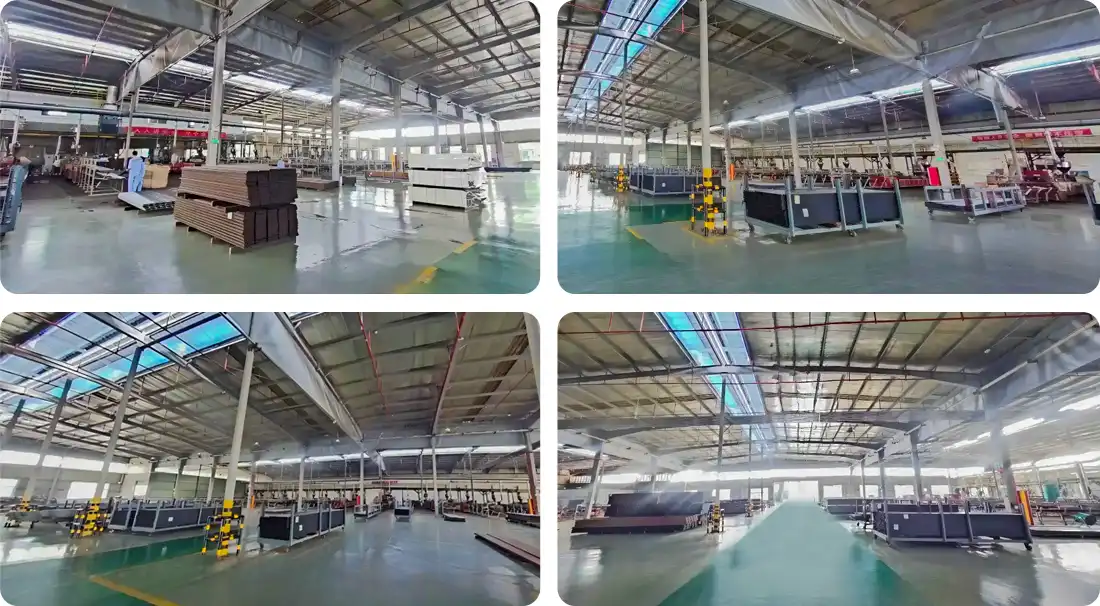
In addition to where the raw materials come from, the way the product is made also helps the environment. Extrusion molding is a continuous process that uses little energy and wastes little material. Off-cuts made on the production floor can usually be reground and put back into the manufacturing cycle. During the product's useful life, it doesn't need to be painted, sealed, or stained with chemicals. This means that none of those chemicals get into the soil or water table around it.
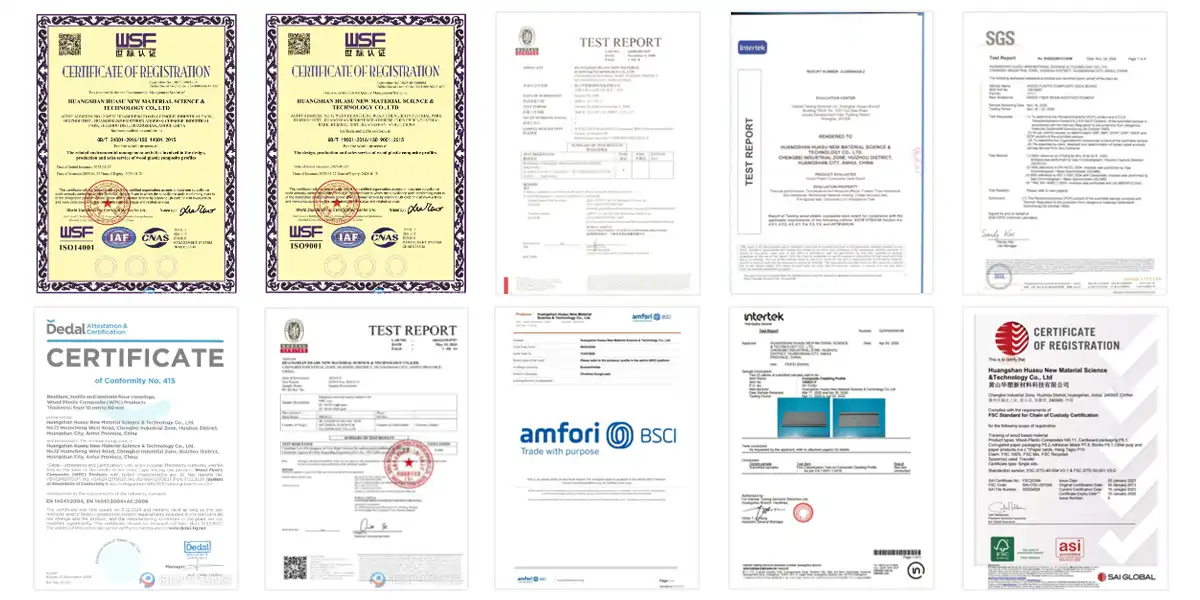
The boards also have third-party certifications that are accepted by the industry. These include CE marking for the European market, FSC chain-of-custody certification for responsible material sourcing, REACH compliance proving the lack of substances of very high concern, and RoHS alignment. Products that meet these standards don't have formaldehyde or other volatile organic compounds that are often linked to problems with indoor air quality. This is important for outdoor setups because rainwater running off of decking can affect the dirt, plants, and drainage systems over time.
Another important measure of sustainability is service life. Depending on the grade, a well-specified composite outdoor board can look good and hold up well for 10 to 25 years. This means that it will need to be replaced less often and produce less waste over the course of a building or landscaping project.
Recycled Wood Fiber and HDPE in 3D Composite Decking
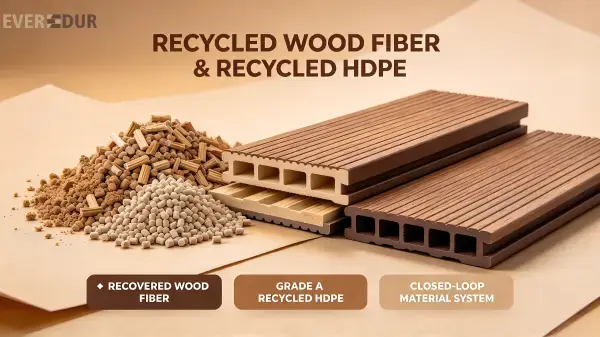
Reclaimed wood fiber and recycled HDPE are the two main ingredients in wood-plastic composite boards. Each gives the finished product different functional properties. It is the way they work together that gives the material its unique balance of rigidity, flexibility, and weather resistance.
Wood fiber, which comes from sawmill waste, furniture manufacturing waste, and farming byproducts, is what gives composite boards their structure and gives them a warmer feel than plastic options. It also changes the surface grain pattern: because natural fibers are in the blend, the raised texture interacts with the material in a way that gives it depth and variation instead of a flat, man-made look with 3d WPC flooring.
The binding material is recycled HDPE, which comes from things like milk jugs and soap boxes that have already been used. Grade A recycled HDPE, which is material that has been properly sorted, cleaned, and processed, has consistent mechanical properties. For example, it doesn't absorb water, break down in UV light, or be attacked by mold, mildew, and insects. The difference between Grade A and lower-grade recovered polymers is important: inconsistent material causes variations in density and surface quality, which impacts both how the polymer looks and how stable its dimensions are over time.
Functional chemical additives like UV stabilizers, coupling agents, and lubricants are added at controlled levels to make the extrusion process better and make the material last longer outside. These ingredients were chosen to meet the requirements of REACH and RoHS. This makes sure that the finished board doesn't release any harmful chemicals into the environment. When you mix these three types of materials—fiber, polymer, and additives—you get a mixture that can be recycled over and over again. This truly closes the material loop.SEND INQUIRY
How Does 3D Composite Decking Combine Sustainability with Wood-Like Design?
Inline Stamping Technology Produces Genuine Depth
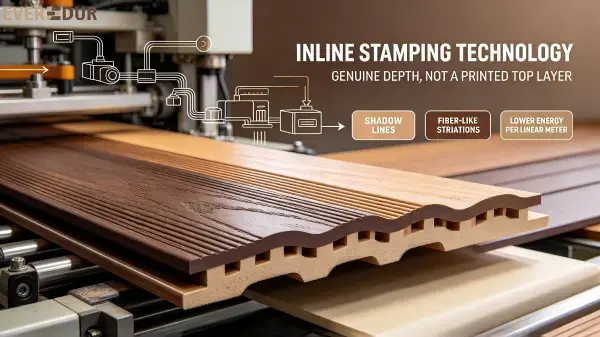
A well-made plastic outdoor board doesn't have a rough surface that was added after the fact. The grain design is imprinted directly during the molding process, while the material is still at the temperature needed for shaping. This makes groove levels and lateral variations that stand out more than designs that are applied by printing or secondary pressing. The look, with its shadow lines, fiber-like striations, and surface topography that changes as the light changes, is very similar to the look of weathered oak, but it doesn't need to be refinished as often as real wood does. In terms of the environment, getting this look with a single continuous production step instead of several post-processing stages also uses less energy per linear meter made.
Color Stability Reduces the Need for Surface Treatments
One of the practical environmental benefits of a pigmented composite board is that the color is built into the material instead of being added on top. UV-stable pigments are mixed into the mixture before it is extruded, so the color is spread out across the whole board. Well-made boards show almost no fading after 2,000 hours or more of rapid UV exposure tests. This feature means that external stains, oils, or paints, which contain solvents and biocides, don't have to be used again and again over the board's service life. This directly means less chemical use and lower upkeep costs over the life of the project for projects near the coast or in areas with a lot of UV light.
Design Versatility Across Multiple Project Types
3D WPC flooring comes in many different tones, from light ash and ivory to cedar and sandal wood in the middle, to deep mocha, walnut, and dark gray. This lets designers match outdoor surfaces with building materials, wall coverings, or soft landscaping. From 135 mm to 150 mm wide, the boards can be used for both small residential layouts and larger commercial platforms that need longer distances between the joists. Two-sided boards, where each side has a different design pattern, give you more choices for your specifications. When you choose an environmentally friendly material, you don't have to give up on style because you have so many design options.
Low-Maintenance 3D Composite Decking for Outdoor Living Spaces
No Sanding, Staining, or Sealing Required
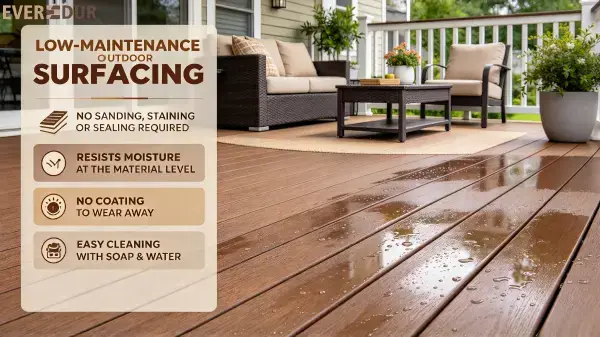
Traditional wooden decking needs to be oiled or stained once a year, sanded every so often to get rid of surface checks, and carefully checked for rot or bug damage. This loop is completely broken by composite outdoor boards. Instead of relying on a topcoat to keep water out, a 3D WPC board's surface stops water from getting in at the material level. This means that there is no coating to wear away and no substrate that can be wet. Cleaning is easy—a little light soap and water every once in a while will get rid of most surface dirt. This feature makes ongoing operational burdens related to outdoor surface maintenance a lot lighter for business places with a lot of foot traffic.
Structural Consistency Under Temperature Variation
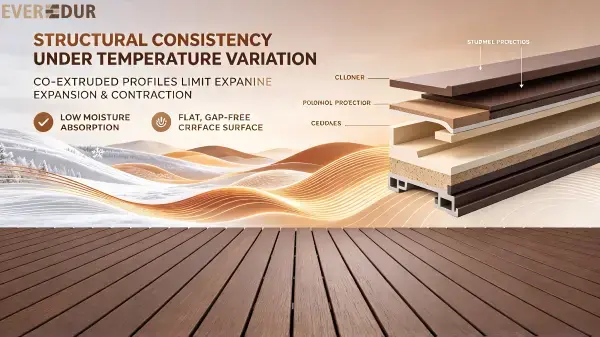
In Europe and North America, decking materials are exposed to big changes in temperature, from below zero in the winter to midsummer heat loads on south-facing surfaces. When these conditions happen, the wood's dimensions become unstable, which leads to gapping, cupping, and fastener pull-through. When compared to solid boards, co-extruded composite boards have much lower rates of thermal expansion and contraction. This is because they have a safe polymer shell around the core substance. Correct placement using manufacturer-recommended clip systems allows for the leftover movement that does happen, creating a surface that stays flat, gap-free, and structurally sound as the seasons change.
Long Service Life Translates to Lower Lifecycle Cost
A solid board usually comes with a 10-year warranty, a hollow composite board with a 5-year warranty, and a solid co-extruded profile with a 20-year warranty. Over the course of 20 years, a composite surface that is only put once and barely cared for will cost less overall than replacing, treating, and getting rid of wood several times. When specifying building materials using the LEED or BREEAM frameworks, the lifetime cost estimate takes into account less chemical use and lower embodied energy over the assessment period. This can help with materials points.SEND INQUIRY
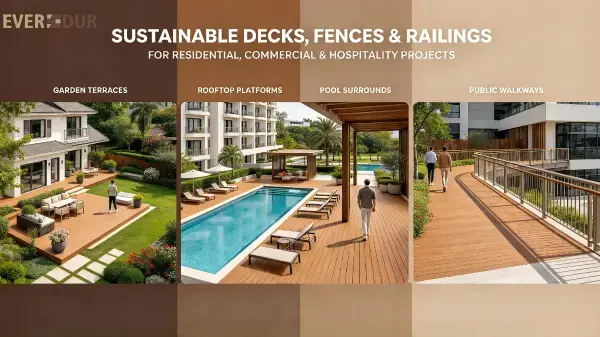
3D Composite Decking for Sustainable Decks, Fences, and Railings
Outdoor Deck Applications Across Residential and Commercial Settings
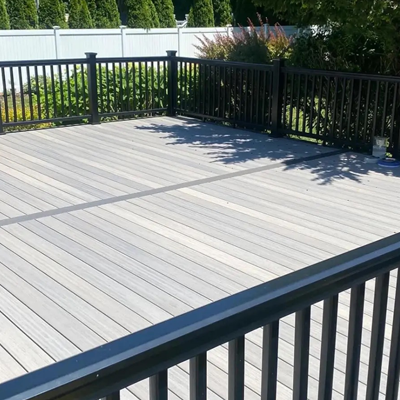
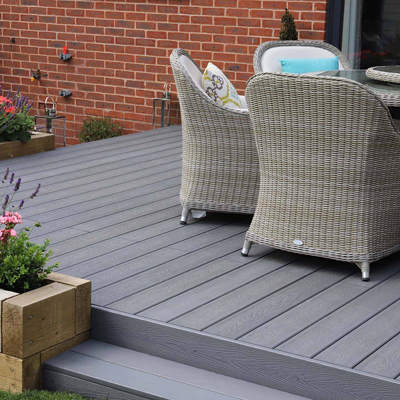
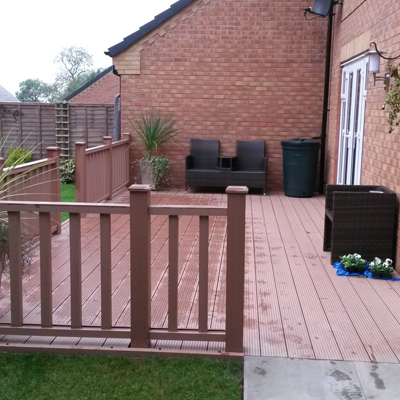
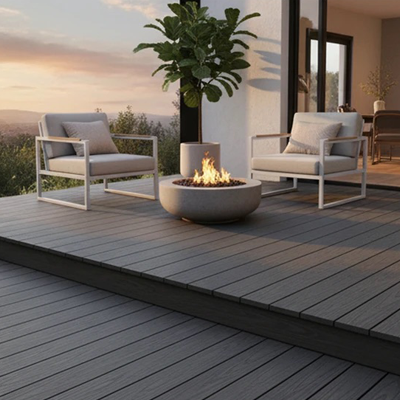
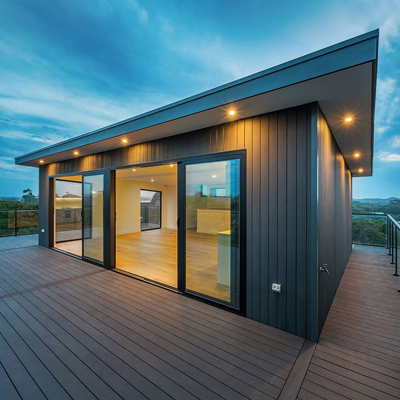
Garden terraces, house paths, balcony floors, rooftop decks, hotel pool surrounds, and public park walkways are all great places to use 3D composite decking on a flat surface outside. As a direct result of the thick embossed grain, the surface texture is non-slip and offers good grip on wet surfaces without the need for anti-slip tape or other surface treatment. There are fire-retardant formulations for projects where flame-spread limits are required by building codes. The boards work with standard aluminum or steel joist systems, which makes it easy to add them to landscape frameworks that are already in place or that are being built from scratch.
Fence and Screening Panels for Outdoor Privacy
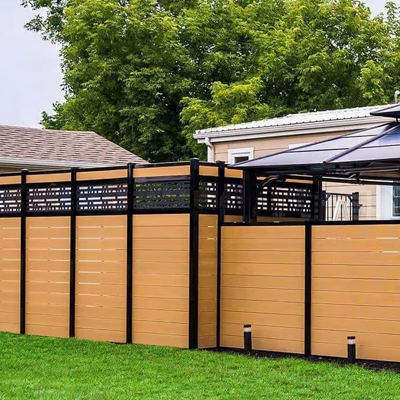
A lot of wood-plastic composite profiles are also used outside in vertical applications like privacy screens, boundary fencing, pergola cladding, and decorative screening panels. These products are only meant to be used outside, and they work well in the harsh, wet conditions that cause wood and steel products to rot and rust faster. The same UV-stable pigments and moisture-resistant makeup that make horizontal decks useful also work well for vertical fences, keeping their color and structure strong over many years of weathering. You can ask for custom shapes that match the details of an existing building or that meet local building codes for fence height and visibility.
Compatibility with Green Building Standards
For projects that want to get accepted sustainability awards, choosing materials with proven recycled content and environmental qualities is a good idea. Composite wood-plastic profiles made from recycled HDPE and wood fiber can be considered recycled-content materials in a number of ways. These materials meet the requirements for indoor-adjacent and outdoor use in a number of grading methods because they don't contain any added formaldehyde and meet E0 environmental guidelines for formaldehyde emission. A lot of different certifications, like FSC, REACH, RoHS, ISO 9001, and CE marking, give specification teams the proof they need to check the credits.
Conclusion
For outdoor design to be sustainable, you don't have to choose between being good to the earth and looking good. Wood-plastic composite boards made from recycled materials, finished with deep-embossed textures through continuous inline production, and certified to well-known international standards are a practical way to reach both goals. They cut down on the need for new wood, get rid of the need for regular chemical upkeep, and provide proof of environmental responsibility that supports green building standards in both Europe and North America. Composite wood-plastic profiles should be seriously considered for any project that cares about long-lasting outdoor surfaces, low lifecycle costs, and ethical material sourcing with 3D composite decking.SEND INQUIRY
FAQ
Q: Is 3D composite decking genuinely made from recycled materials?
A: Yes. The boards are manufactured from a blend of reclaimed wood fiber — sourced from sawmill and manufacturing waste — and Grade A recycled HDPE recovered from post-consumer packaging. The finished product is also 100% recyclable at end of life, which supports a closed-loop material approach.
Q: How does 3D WPC flooring perform in cold European or North American winters?
A: Co-extruded composite boards are engineered for dimensional stability under significant thermal variation. The polymer shell reduces moisture absorption and limits the expansion-contraction cycle that causes cracking or cupping in natural timber. When installed with manufacturer-specified clip systems that allow for residual movement, the surface remains structurally consistent through repeated freeze-thaw cycles.
Q: What certifications should I look for when specifying composite decking for a green building project?
A: Look for CE marking for European market compliance, FSC chain-of-custody certification for responsible sourcing, REACH and RoHS compliance confirming the absence of regulated hazardous substances, and ISO 9001 quality management certification. For North American projects, ASTM D7039 compliance is a relevant benchmark. Recycled Content certification and E0 environmental standard compliance support LEED and BREEAM credit documentation.
Get in Touch with Everdur — Your Composite Decking Manufacturer
Everdur has the right products for any project, whether you are a construction company choosing materials for a large commercial building, a fence contractor looking for reliable outdoor profiles, a building materials wholesaler wanting to add more composite products to your selection, or a homeowner planning a garden terrace.
For building companies and landscape architects: technical advice based on projects, custom profile creation, and a steady supply capacity for big orders.
For fence builders and sellers: MOQ is flexible starting at 100 SQM, quality is guarantyd by ISO 9001 and CE certification, and you can choose from a wide range of colors and textures to meet your clients' needs.
For distributors of building materials, we offer special wholesale prices, free samples to help you try out our products, and OEM/ODM services for making your own brand of products.
For end users, we offer free design help, help with installation, and a large color selection to match your outdoor living vision.
All of our goods meet the standards set by the EU for CE marking, the US for ASTM D7039, and China for GB/T 24137. Some environmental certifications are E0 environmental standard approval and Recycled Content certification.
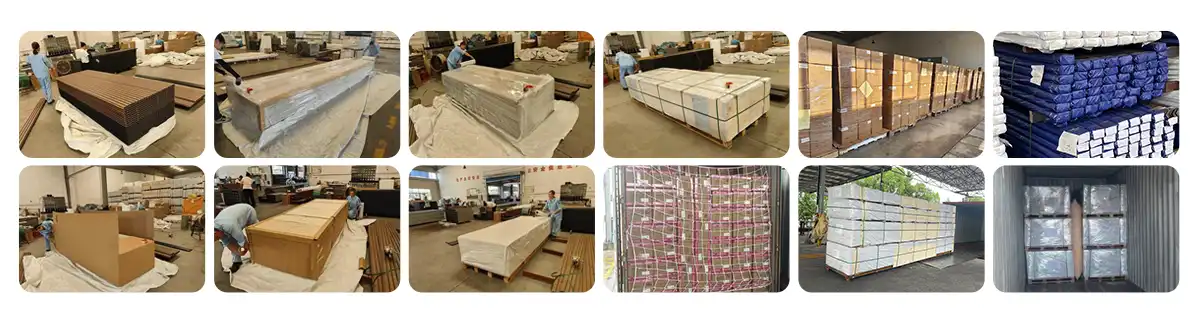
As a company that only makes 3D composite decking, Everdur ships to more than 60 countries on five continents. Get in touch with our team, and you'll get a custom quote within one business day.
▓ Get in touch with us at violet@wpcsupplier.com via email.
References
1. European Committee for Standardization (CEN). EN 15534: Composites made from cellulose-based materials and thermoplastics (wood-polymer composites or natural fibre-polymer composites). Brussels: CEN.
2. ASTM International. ASTM D7032: Standard Specification for Establishing Performance Ratings for Wood-Plastic Composite Deck Boards and Guardrail Systems. West Conshohocken, PA: ASTM International.
3. Forest Stewardship Council. FSC Principles and Criteria for Forest Stewardship. Bonn: FSC International.
4. European Chemicals Agency (ECHA). Understanding REACH: Guidance for Manufacturers and Importers of Articles. Helsinki: ECHA Publications.
5. U.S. Green Building Council. LEED v4.1 Building Design and Construction Reference Guide: Materials and Resources Credit — Building Product Disclosure and Optimization. Washington, DC: USGBC.
6. Clemons, C.M. "Wood-Plastic Composites in the United States: The Interfacing of Two Industries." Forest Products Journal, 52(6), 10–18.
Send Inquiry
Related Industry Knowledge
- Low MOQ Hollow WPC Decking: Perfect for Small Residential Projects
- WPC Landscape Walls for Public Parks: Safe & Sustainable
- Grooved WPC Decking: Anti-Slip Flooring for Poolside & Walkways
- Hollow WPC Decking Installation Cost: How to Save Big in 2026
- WPC Landscape Walls Installation: Guide for Garden & Park Projects
- Traditional Cladding for Residential Buildings: Classic & Reliable
- Low MOQ WPC Composite Fencing: Perfect for Small Gardens
- Composite Screen Fencing: Privacy & Decorative Screen for 2026
- Waterproof WPC Fence: Ideal for Coastal and Humid Areas
- Top Benefits of WPC Decking for Residential and Commercial Use in 2026