
Wholesale Balcony WPC Decking: Low MOQ for Home Balcony Projects
2026-11-06 17:23:08
In the past, buying balcony WPC decking in bulk meant huge orders, a hurdle for small contractors, independent builders and homeowners with restricted budgets for outdoor repairs. That is no longer the case. Manufacturers like Everdur provide modest minimum order quantities (beginning at 100 SQM) so you can buy in bulk without having to keep warehouse-scale inventory for residential uses. Wood-plastic composite decking contains recycled HDPE and wood fiber, and boards that are more resistant to damage from moisture, UV light and surface scratches than untreated wood. These performance features are especially significant for balconies - tiny, exposed to the weather and in regular use – resulting in reduced maintenance and a longer service life. Whether you're a homeowner doing a single apartment terrace, a small contractor trying to juggle multiple backyard jobs at once, or a reseller building a product offering for the European or American markets, knowing how wholesale procurement of composite decking works allows you to make smarter buying decisions. This page includes specification selections, color and surface options, sourcing logistics, and certifications to examine before placing a purchase.SEND INQUIRY

What Should You Consider When Buying Balcony WPC Decking Wholesale?
There is more to buying wholesale than merely pricing per square meter. When purchasing composite decking in volume – even at a modest 100 SQM MOQ – there are various practical aspects that influence the value of your purchase.
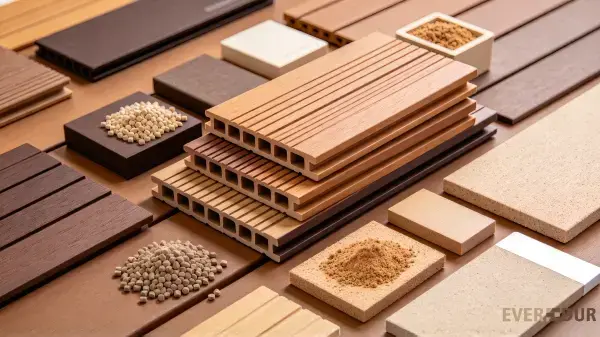
The material composition has to be carefully considered. Boards made with Grade A recycled HDPE and processed wood fiber have a more uniform density and dimensional stability than boards made from lower grade reclaimed polymers. That uniformity is important throughout a service life of 10 to 25 years: boards that retain their shape under temperature cycling lessen the likelihood of surface buckling or joint gaps, common concerns with cheaply made composite products.
Another factor is the production technology. Co-extrusion composite decking – which fuses a protective polymer shell to the board core during the production process – provides dramatically superior resistance to moisture penetration and color fading than ordinary single-process extrusion. If your balcony is an outside one and will be subject to rain and direct sunlight then this distinction is worth including in your description.
Supplying the European or American market must comply with certification. Check for at least the CE mark, plus FSC chain-of-custody certification and independent lab testing by companies like Intertek or SGS. ASTM D7039 is more adapted to the North American market whereas CE boards meet the construction material criteria in the EU. ROHS and REACH compliance means that banned chemical compounds are not present - this is critical for any home application where children and dogs have regular surface contact.
Sometimes buyers don't know how much lead periods and logistics effect project scheduling. Check FOB port alternatives – Shanghai and Ningbo are both common – and check packaging standards. PE film wrap over timber pallet & panel packaging to preserve boards during maritime freight and reduce damage claims on arrival.
Last but not least, see if the provider has ODM or OEM customisation. For contractors working on repeat projects or resellers creating a branded product line, the option to choose specific lengths, profiles or surface textures gives them a competitive edge.SEND INQUIRY

Balcony WPC Decking Width, Thickness, and Length Options
Not all balcony residential deck projects have the same requirements, as balconies are very different in terms of load demands, drainage requirements, and visual intent. Board dimensions have a direct impact on the performance and appearance of a finished surface.
Standard widths for balcony boards are normally between 135mm and 150mm, with narrower widths producing a more conventional timber appearance and larger boards covering more area per length. It is popular to utilize 138×23mm or 140×25mm, both of which are visually proportionate and structurally rigid enough for outdoor home use.
Most residential balcony joist spacing arrangements will suit thicknesses of 20mm to 25mm. Thicker boards can bridge longer distances between joists without flexing. This is important on raised balcony structures where deflection under foot traffic might lead to clip fasteners loosening over time.
Standard lengths of 2200 and 2900 mm accommodate most residential balcony layouts and eliminate the need for field cutting on each run. We are also able to supply custom lengths for projects with odd proportions. This is especially advantageous for long narrow terraces or wraparound balcony arrangements, where minimizing waste immediately reduces the cost of the project.
Solid vs. hollow construction is a commonly missed requirement. Hollow-core boards are lighter, a significant factor for elevated balconies with structural load constraints, and produce natural drainage channels inside the board profile. Solid boards provide a little better impact protection, but they add weight and material cost. Hollow structure is the more practical solution for most uses on residential balconies and terraces.
Surface profiles such as brushed, embossed, sanded or wood grain also alter perceived width and texture. A fine brushed finish can look slightly narrower than a deep embossed grain, which is a point to remember when trying to match your decking to surrounding architectural features.SEND INQUIRY

Low-MOQ Balcony WPC Decking for Residential Outdoor Projects
In the past, composite decking providers have not been able to serve the small residential market well with MOQ criteria starting at 500 SQM or more. With a MOQ of 100 SQM, wholesale pricing is within reach of independent contractors, boutique design-build businesses and homeowners.
One order of 100 SQM is enough to cover a mid-sized apartment balcony, a tiny rooftop patio or two to three modest garden additions at once. This flexibility enables buyers to combine material purchasing over several smaller projects – lowering cost per unit while preserving lean inventories.
For home builders running on a seasonal project schedule, low-MOQ wholesale access also means less capital tied up in material inventory. Contractors can order in bulk, based on actual project needs, instead than buying retail quantities at inflated unit prices.
Everdu's production capacity of 50 manufacturing lines and an annual aggregate output of 30,000 tons allows modest MOQ orders to be handled from the same production infrastructure as major commercial contracts. Quality control techniques comprising 5S on-site management and third-party certification testing are equally applicable, regardless of order size.SEND INQUIRY

Balcony WPC Decking Colors and Surface Profiles for Bulk Orders
And color uniformity on a bulk purchase is a practical matter that typically goes overlooked until the boards arrive and noticeable batch variation is apparent. In residential applications where all decking is continuously visible, even the smallest color variations from production run to production run are apparent.
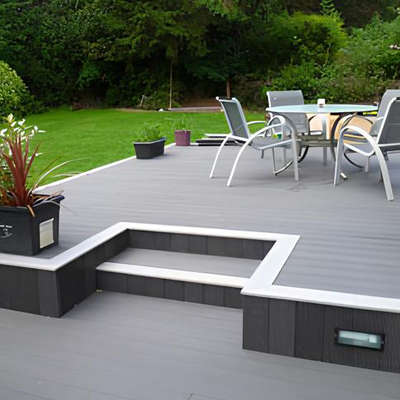
The balcony WPC board is available in standard colors including Ash Gray, Cedar, Coffee, Copper Brown, Dark Gray, Gray, Ivory, Mocha, Sandal Wood, Stone Gray, Teak and Walnut. They meet the most common aesthetic tastes of residential markets in Europe and North America, from the warm, timber-like colors that are popular in Scandinavian design settings to the cooler grays preferred in modern urban architecture.
In addition to basic palette, custom color specification is available to meet project specific requirements – beneficial for contractors working within architect specified color schemes or resellers establishing a differentiated product range. Custom colorways are matched to project samples and approved before full production runs.
The choice of surface texture can affect both the look and the slide resistance. The brushed finishes are medium textured with a clean, modern look. Embossed profiles provide a more visible grain and improved grip in wet circumstances. Wood grain surfaces are aimed at applications where the composite material is a replacement for existing timber decking and a natural timber look is desired. Sanded finishes create a smooth, even surface for minimalist balcony designs.
Dedicated manufacturing infrastructure for bulk orders provides a production benefit of controlled extrusion settings to guaranty consistency of surface profile vs smaller suppliers who may not have as much process control.SEND INQUIRY

How to Source Balcony WPC Decking for Multiple Outdoor Projects
Buying composite decking for several home renovations happening at the same time takes more coordination than buying for just one site. A couple of practical measures help to minimize friction and protect project timeframes.
Consolidate specifications sooner. Before ordering anything, create a complete list of all board dimensions, colors and surface profiles required for all active projects. Even when projects are at different stages, consolidated ordering means less per-unit cost and a more manageable time coordinating logistics with one supplier contact.
Order tangible samples before going to bulk amounts. Samples allow for on-site color matching to existing materials, surface texture assessment and basic dimensions verification. Everdur offers samples to approved buyers, a measure that helps avoid costly mismatches on larger orders.
Write down packaging and delivery terms. Verify availability of partial shipment and lead time difference between standard and custom specifications for various projects at different locations. Standard FOB prices from Shanghai or Ningbo; ask whether the supplier can help with the freight forwarding papers for import clearance to Europe or America.
If you have technical questions, please contact: The co-extrusion technology, recommendations for spacing of the joists, specifications for fixing of the clips and drainage aspects influence the installation quality. Having a source with technical help readily available will reduce the time on the job fixing problems, especially for contractors who aren't as comfortable with installing composite decking.SEND INQUIRY

Conclusion
Wholesale balcony WPC decking sourcing no longer has to commit to significant inventories. Wholesale buying of composite decking is made possible by low MOQ options that start at 100 SQM, as well as a broad spectrum of specification flexibility in terms of size, colors, surface textures, and custom profiles, making it suitable for residential contractors, small resellers, and homeowners with numerous outdoor projects to handle. Compliance verification required for supplying the European and American market is provided by certifications such as CE, FSC, ROHS, REACH and ASTM standards. Everdur's manufacturing infrastructure can handle consistent quality for both small and big orders, and second-generation co-extrusion technology provides significantly superior weather resistance and color stability than prior composite products.SEND INQUIRY

FAQ
Q: What is the minimum order quantity for wholesale balcony WPC decking from Everdur?
A: The minimum order quantity is 100 SQM. This threshold is accessible for individual residential projects, small contractors, and resellers who need wholesale pricing without committing to large inventory volumes.
Q: How does co-extrusion technology improve balcony decking performance compared to standard composite boards?
A: Co-extrusion bonds a dense polymer shell to the board core during manufacturing, creating a surface layer that resists moisture penetration and UV-induced color fading more effectively than standard single-process composite extrusion. For exposed balcony surfaces in varied climates, this translates to reduced maintenance and more consistent appearance over time.
Q: Which certifications should I verify before purchasing composite decking for European or North American residential projects?
A: For European markets, CE marking and REACH compliance are the primary requirements, with FSC certification relevant for buyers with sustainability specifications. For North American supply, ASTM D7039 testing is the relevant standard. ROHS compliance and independent lab verification through bodies such as Intertek or SGS add further credibility for residential applications.

Get Wholesale Pricing on Balcony WPC Decking — Contact Everdur
For Construction Firms and Fence Contractors: Access project-specific bulk pricing, technical specification support, and sample boards matched to your current project palette. Our team can advise on joist configurations, clip fixing systems, and board selection for balcony structures at any scale.
For Building Materials Wholesalers and Resellers: Receive exclusive wholesale pricing tiers, OEM/ODM customization options, and consistent supply from a manufacturer with 50+ production lines and 225+ active global clients. Free samples are available for catalog evaluation.
For End Customers and Homeowners: Receive free design consultation and installation guidance tailored to your balcony dimensions and aesthetic goals. Our low MOQ means you can order exactly what your project needs — no overstocking required.
All products comply with EU CE standards, US ASTM D7039, and China GB/T 24137. Environmental certifications include FSC chain-of-custody, Recycled Content certification, and E0 environmental standard compliance. ROHS and REACH verified.
Contact our balcony WPC decking manufacturer team directly to discuss your project requirements, request samples, or receive a wholesale quotation: violet@wpcsupplier.com.

References
1. European Committee for Standardization. EN 15534: Composites Made from Cellulose-Based Materials and Thermoplastics (Wood-Polymer Composites). Brussels: CEN, 2014.
2. ASTM International. ASTM D7032: Standard Specification for Establishing Performance Ratings for Wood-Plastic Composite Deck Boards and Guardrail Systems. West Conshohocken: ASTM, 2021.
3. Forest Stewardship Council. FSC Chain of Custody Certification: Requirements for Organizations. Bonn: FSC International, 2022.
4. Clemons, Craig M. Wood-Plastic Composites in the United States: The Interfacing of Two Industries. Forest Products Journal, Vol. 52, No. 6, 2002.
5. Morrell, Jeffrey J., and Stark, Nicole M. Durability of Wood-Plastic Composite Lumber. Advanced Performance Materials, Springer, 2006.
6. Pilarski, James M., and Matuana, Laurent M. Durability of Wood Flour-Plastic Composites Exposed to Accelerated Freeze-Thaw Cycling. Journal of Applied Polymer Science, Vol. 100, No. 1, 2006.
Send Inquiry
Related Industry Knowledge
- Does traditional WPC decking need sealing?
- Wholesale Custom WPC Decking: Bulk Custom Supply for Projects
- Low MOQ Co-Extrusion WPC Cladding: Perfect for Small Projects
- Low MOQ WPC Commercial Building Facades: Perfect for Small Commercial Projects
- Anti-Fade Decorative Composite Fencing: Long-Lasting Beauty
- Can hollow WPC decking be used for balconies?
- 2026 Guide to Waterproof WPC Decking: Sizes, Styles & Prices
- WPC Decking vs Wood Decking: Which Is More Durable and Cost-Effective?
- WPC Decking Maintenance Tips: Keep Your Outdoor Deck Looking New for Years
- Why Co-extruded WPC Decking Is a Must for Your Outdoor Project