
2026 Guide to Waterproof WPC Decking: Sizes, Styles & Prices
2026-10-21 16:55:46
There have been numerous changes to outdoor living spaces and materials used to create them during the last decade. Waterproof WPC decking is a wood-plastic composite board with a waterproof structure. It has evolved from a niche product to one of the most popular outdoor flooring solutions in Europe and North America. Whether you’re a contractor quoting a poolside project in Hamburg, a reseller building up your 2026 product catalogue or a homeowner planning a balcony renovation in California, knowing what this material actually brings to the table in terms of dimensions, aesthetics and realistic pricing, makes you make a well-informed decision well before the first plank is ordered.
This handbook provides the latest specifications, simplified cost benchmark, application guidelines and selection recommendations based on actual production data. It covers the whole range from hollow vs solid profiles, co-extrusion vs conventional extrusion, surface treatments that influence slip resistance and the certifications that matter when specifying for regulated markets. At the conclusion, you will have a good understanding of how to choose the proper composite decking for your outdoor project and the confidence to ask the right questions when speaking to a provider.SEND INQUIRY
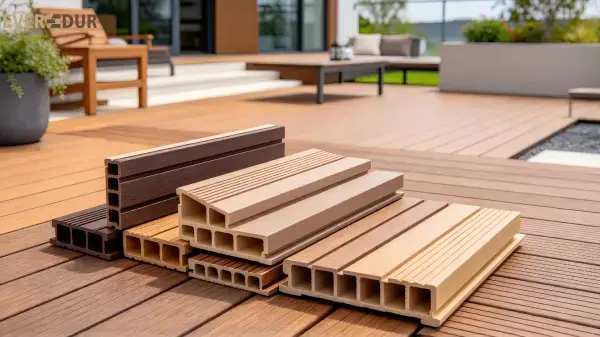
What Sizes Are Available for Waterproof WPC Decking?
Sizing is often the first practical thing customers enquire about, and rightly so. Measurement errors might mean wasted materials, difficulties with joist spacing or a completed surface that looks out of proportion. Most composite decking manufacturers provide a variety of widths and thicknesses to accommodate various structural and aesthetic needs.
The most requested widths are between 135 mm and 150 mm, although thinner profiles, such as 90 mm, are also available in more complex layouts or where a more delicate visual rhythm is desired. The thickness is usually between 20 mm and 25 mm. If the joists are 400 mm apart or less, then a 20 mm thick board should be enough for most residential applications. 25mm thickness for stiffness, necessary for business terraces, rooftop decks or any surface with wider spans than typical.
Some of the common cross sections available in the market are widely supplied and include 90x25, 120x20, 135x25, 138x23, 140x20, 140x25, 145x25 and 150x25 mm. Each dimension has a distinctive structural behaviour under stress and a different visual weight when placed on a deck.
The usual board lengths are often provided in 2,200 mm, 2,900 mm and 3,600 mm. Its length of 3.6 m makes it especially appropriate for bigger terraces, reducing the number of end joints and speeding up installation and giving a cleaner finish. If you have odd geometry projects it’s worth noting as most manufacturers will do one off lengths to minimum order quantities.
With hollow-core profiles, the deck is lighter overall, the drainage easier and the material costs per square metre lower. Solid core profiles provide better compressive strength and are utilised for heavy traffic commercial applications or installation of big outdoor furniture. The decision should be dictated by structural requirements since both hollow and solid sections are available in the whole size range mentioned above.
First of all, check the dimensional stability. High grade moisture resistant composite boards are designed to withstand thermal expansion and contraction, a very important characteristic for areas with large seasonal temperature variations such as most of Central Europe and the northern United States. If you get bids, ask for information regarding the thermal expansion coefficients, not vague statements about stability .
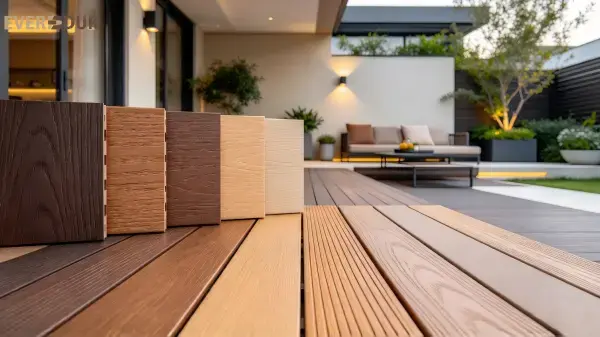
Waterproof WPC Decking Profiles, Colors, and Surface Styles
Beyond the data, the visual result of a deck is what customers really experience. Composite decking has evolved from the days of single-tone grey boards that seemed blatantly manufactured. The latest generation of co-extruded materials have a surface layer that is chemically attached to the core so colour is not only sprayed on but part of the material structure.
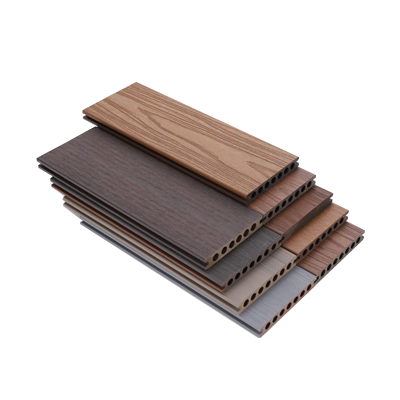
Colour palettes for water-resistant decking board from good manufacturers usually include twelve to fifteen shades. Popular possibilities include Ash Grey, Stone Grey, Dark Grey, Teak, Walnut, Cedar, Coffee, Copper Brown, Mocha, Sandal Wood, Ivory and Wood tones. They include the neutral and warm ranges that are prevalent in current exterior design on both the European and American markets. If you have a project-specific need – a hotel development with a set brand palette or a residential construction where the decking has to match with cladding – colour modification outside of the standard card is a feasible alternative.
Surface texture has both aesthetic and practical aspects. Brushed surfaces have a fine directional grain, which looks like real wood from a reasonable distance. Embossed textures are more detailed reproductions of the growth ring patterns of wood. Sanded finishes provide a smooth, matte look and pair well with more modern architectural types. The most realistic visual imitation of genuine timber is achieved with wood grain surfaces, which are commonly selected when a historic appearance is required.
From a safety point of view, the texture you go for will directly effect slip resistance on wet surfaces. Deeper embossing or brushed profiles are perfect for pool decks, seaside terraces and any surface that may see heavy rain, holding grip underfoot when wet. A non-slip surface is not merely a comfort element – in many European business applications it is a regulatory requirement.
The co-extrusion method creates a protective outer shell for the board. This shell provides a considerable increase in resistance to UV fading, surface staining and surface level moisture penetration. Well-made co-extruded boards have very little colour change over long periods of UV exposure, usually 2,000 hours or more in regulated testing. This performance difference between co-extruded and normal extruded goods is important for consumers in high-sunlight areas like southern Europe, the US Southwest or coastal Australia.SEND INQUIRY
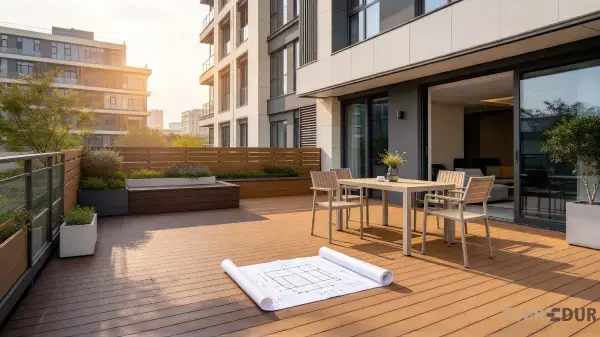
How Much Does Waterproof WPC Decking Cost per Square Meter?
Buyers are often surprised at how much prices for moisture-resistant composite decking may vary. Cost is determined by a number of factors, profile type (hollow vs solid), manufacturing technique (standard extrusion versus co-extrusion), board size, colour request, order volume and the port of origin relative to your destination.
Market direction 2026 Standard extruded hollow boards in common dimensions are to be found in the lower price segment, co-extruded solid boards in bespoke colours in the premium segment. There really is a difference in performance between these levels, and it comes down right to the durability advantages of the co-extrusion shell discussed above.
Unit price is greatly impacted by order volume. Container-scale purchases, usually for resellers, distributors and construction companies, benefit from dramatically reduced per-unit prices vs smaller buys for individual projects. Most manufacturers have a minimum order size of roughly 100 square meters, which is good for medium-sized residential projects.
Installation gear – concealed clip systems, aluminium joists, starter clips and end caps – are part of the overall project budget but should be calculated separately from the board price. The cost of professional installation labour varies widely in the market . Northern Europe has far higher labour rates than Eastern Europe or North America which influences the overall installed cost even when the price of the material is the same .
Warranty periods are a good proxy for value when comparing items at comparable price points. Hollow standard boards are usually covered by a 5 year guarantee, solid standard boards by 10 years. Co-extruded hollow boards normally last for 15 years, while co-extruded solid boards last up to 20 years. When you take total cost of ownership into account, a longer warranty with a somewhat higher initial cost is frequently the more affordable alternative, especially in commercial installations where the cost of interruption from repair is substantial.
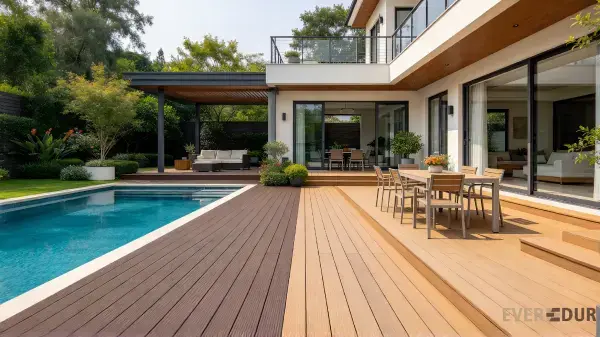
Waterproof WPC Decking for Pools, Balconies, Patios, and Rooftops
Each outdoor setting places various demands on decking materials. Understanding these expectations is essential to matching the proper product specification to each application.
Pool Surrounds and Wet Leisure Areas
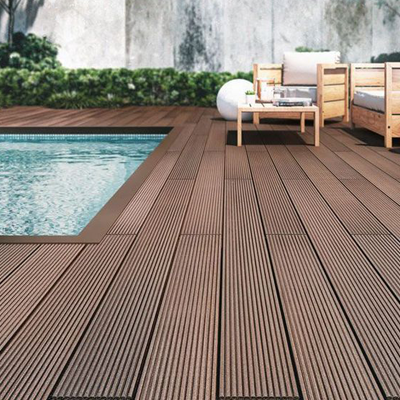
Pool areas expose waterproof weatherproof WPC to almost constant dampness, chlorinated water and significant foot activity from bare feet. These circumstances speed the decay of conventional lumber and lower-grade composite goods. Co-extruded board with protective outer layer, prevents chlorine absorption and will not expand when soaked. Texturing the surface to be non-slip is a practical need in this setting. Hollow profiles with internal drainage channels are great for pool surrounds since they encourage water runoff and prevent pooling.
Balconies and Elevated Terraces
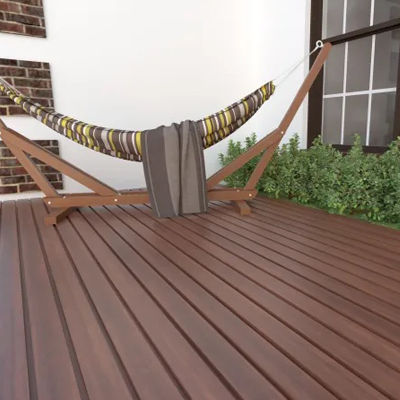
Dead load is a special technical factor pertaining to balconies. Every kg of decking material per square metre adds to the structural strain on the structure. Hollow-core composites provide a significant weight saving compared to solid wood and solid composite boards of similar thickness and are the standard specification for most balcony installations. Drainage is similarly important on high surfaces where standing water increases degradation of the ground. The inherent moisture shedding characteristic of premium composite decking solves both problems at once.
Patios, Garden Paths, and Ground-Level Outdoor Areas
Moisture in the soil, irrigation water and shadow in ground-level installations may promote the formation of mould and mildew on organic materials. The durability of composite decking for these applications is due to its resistance to biological deterioration – no rot, no mould, no insect damage. At ground level when certain point loads from furniture legs or heavy planters are probable, solid-core boards are generally selected.SEND INQUIRY
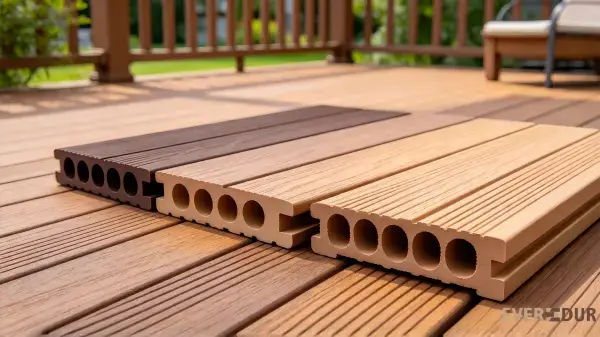
How to Choose Waterproof WPC Decking for Different Outdoor Spaces
Choosing the appropriate composite decking is more than just choosing a hue from a swatch card. Specification in a systematic way decreases the risk of expensive mismatches between product and application.
Match Profile and Core Type to Structural Requirements
You may choose hollow or solid core boards, and you can choose whatever thickness you like. It is contingent upon the structural requirements of your project. Solid-core boards are available in a thickness of 25 mm, making them suitable for high-traffic commercial surfaces, rooftop decks with broad joist spans, or places with heavy furniture or equipment loads. Hollow-core boards of 20-22 mm thickness are generally suitable for standard residential patios and balconies with standard joist spacing at 400 mm centers. It is fair to expect that any commercial standard will ask your provider for load bearing statistics rather than vague descriptions.
Consider Climate and Environmental Exposure
The environment where the deck will be constructed should be considered while choosing the materials. Salt air near the coast demands a board with a thick outer shell that resists surface corrosion. In regions with high altitude and many freeze-thaw cycles, boards with minimal moisture absorption are required. The water absorbed will expand when frozen and may cause fracturing of less resistant composite materials over time. In hot, high UV settings co-extruded boards with good UV resilience are needed. “Suppliers with manufacturing experience in a variety of export markets can be a good source of advice on material formulations suitable for particular regional conditions.
Verify Certifications Before Committing
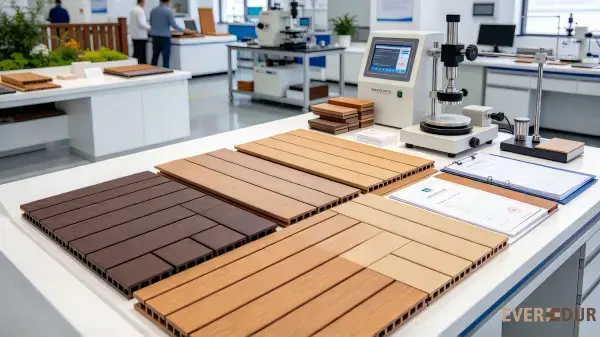
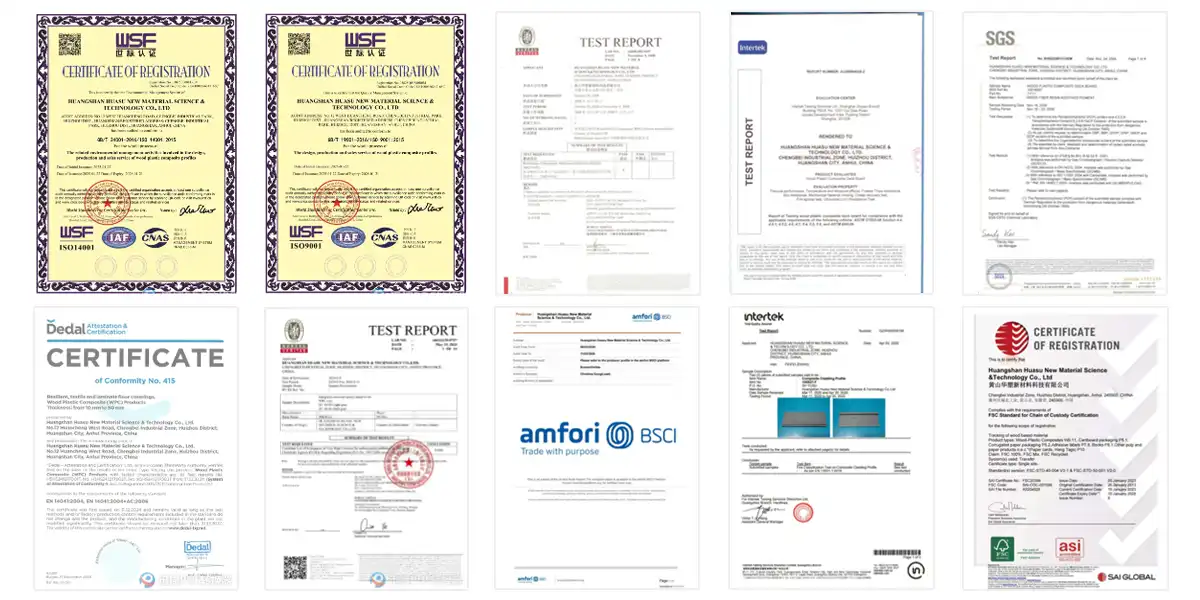
Certifications are not only marketing credentials, in many places they are procurement criteria. Waterproof WPC decking for European projects should have CE marking and FSC certification where environmental credentials are needed. Projects in the United States may need testing to ASTM D7039. ISO 9001 and ISO 14001 accreditation at the production site assures consistency of quality management and environmental responsibility correspondingly. REACH and RoHS compliance ensures that the product is free of banned chemical compounds, a must for responsible specification in regulated markets. One simple due-diligence step: Ask to see the real certificate paperwork, not just a verbal assurance.
Conclusion
In 2026, the selection of waterproof WPC decking for outdoor projects is a balancing act between initial material cost and long-term performance, aesthetic aspiration and structural necessity, personal choice and application-specific criteria. The material is now mature enough to really deliver on its fundamental promises: resilience when wet, minimal maintenance over a 10-to-25-year lifetime, and a diverse design language that fits in both modern and classic architectural settings.
The practical assistance in this book – on sizing, profile choosing, climate matching, and certification verification – provides you with a strong platform to make that decision with confidence.SEND INQUIRY
FAQ
Q: What is the difference between standard extruded and co-extruded waterproof WPC decking?
A: The usual extruded composites are made as one homogenous material. Co-extruded boards are made with a separate protective outer shell that is chemically bonded to the core during the manufacturing process. That shell greatly enhances resistance to UV fading, moisture infiltration, discolouration and surface abrasion. Co-extruded materials often come with longer warranties – up to 20 years for solid-core types – and perform better in harsh settings such as coastal applications, pool decks and busy commercial decks.
Q: Does moisture-resistant composite decking require any maintenance?
A: Routine maintenance is quite low as compared to natural lumber. Occasional washing with water and mild detergent gives a good looking surface. Composite boards do not need to be sealed, oiled, stained or painted periodically like wood. One of the practical advantages for composite decking in terms of calculating total cost of ownership over a 15-to-20 year period is the lack of continuous maintenance expenditure.
Q: What certifications should I look for when specifying composite deck boards for a project in Europe?
A: At the very least, seek for CE certification, which guarantees conformity to applicable EU product requirements. FSC certification is applicable when the project specification or client brief requires verification of sustainable sourcing. The product is REACH compliant and does not include any compound of very high concern according to the EU chemical legislation. For projects with particular environmental credentials, Recycled Content paperwork and ISO 14001 certification at the production plant provide substantial confidence. Ask for genuine certificate copies – not just assertions – before signing off a specification.
Get Composite Decking Quotes Tailored to Your Project — Contact Everdur
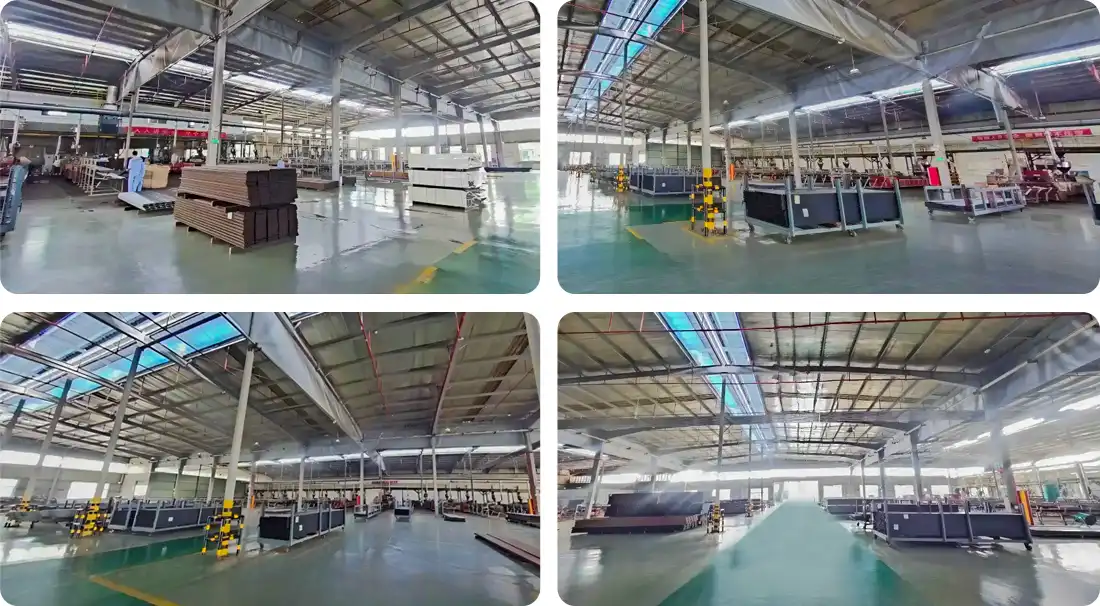
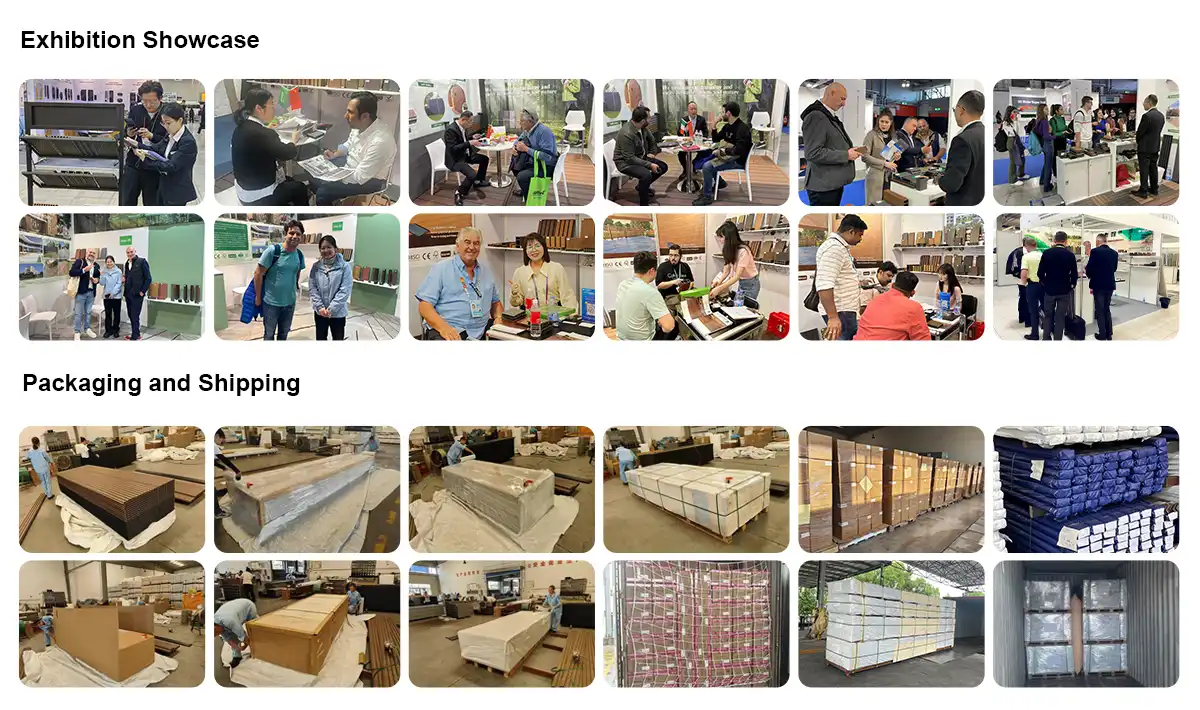
Everdur is a professional waterproof WPC decking manufacturer with 16 years of manufacturing experience and over 50 extrusion lines, and we have active supply partnerships in over 60 countries. Our goods are in compliance with EU CE certification, ASTM D7039 (test standard for US market), GB/T 24137 (national standard for wood plastic composites in China), FSC Chain of Custody certification, REACH and ROHS. All boards include Grade A recycled HDPE material as required by Recycled material certification and E0 environmental regulations for chemical emissions.
For construction companies and contractors: Technical requirements for individual projects, climate-adapted material formulations and consistent production schedule for large-volume orders – lowering procurement risk on time-sensitive projects.
For resellers and building materials wholesalers: Exclusive wholesale pricing structures, sample programs and consistent batch-to-batch quality supported by ISO 9001-certified manufacturing ensures you get the product dependability your clients need.
For the end user, we provide free design consulting, installation instruction and colour modification support to help you achieve the outdoor area you have in mind, with material that will operate well for years after installation.
Speak to our staff directly about your project needs. We will get right back to you with an exact quote based on your real demands.
📧 Contact us: violet@wpcsupplier.com
References
1. European Committee for Standardization. EN 15534: Composites Made from Cellulose-Based Materials and Thermoplastics (Wood-Polymer Composites). CEN, Brussels.
2. ASTM International. ASTM D7031: Standard Guide for Evaluating Mechanical and Physical Properties of Wood-Plastic Composite Products. ASTM, West Conshohocken, PA.
3. Forest Stewardship Council. FSC Chain of Custody Standard: FSC-STD-40-004. FSC International, Bonn.
4. European Chemicals Agency. REACH Regulation (EC) No 1907/2006: Registration, Evaluation, Authorisation and Restriction of Chemicals. ECHA, Helsinki.
5. International Organization for Standardization. ISO 9001:2015 — Quality Management Systems: Requirements. ISO, Geneva.
6. International Organization for Standardization. ISO 14001:2015 — Environmental Management Systems: Requirements with Guidance for Use. ISO, Geneva.
Send Inquiry

Related Industry Knowledge
- Low MOQ Hollow WPC Decking: Perfect for Small Residential Projects
- Eco-Friendly 3D Composite Decking: Sustainable & Aesthetically Pleasing
- Wood Grain Grooved WPC Decking: Stylish & Functional Outdoor Flooring
- Wholesale Traditional Cladding: Bulk Supply for Traditional Buildings
- Anti-Slip Residential WPC Decking: Safe for Kids & Pets at Home
- Top WPC Composite Fencing Manufacturers in 2026
- 3D Composite Decking: Elevate Your Outdoor Space with Textured Flooring
- WPC Villa Fence with Wood Grain: Enhance Your Villa’s Aesthetics
- WPC Decking Maintenance Tips: Keep Your Outdoor Deck Looking New for Years
- Hollow WPC Decking Maintenance Tips: Keep It New for 10+ Years