_1777451497595.webp)
Wholesale Traditional Cladding: Bulk Supply for Traditional Buildings
When construction teams and procurement managers source exterior wall materials at scale, the decisions they make early in the process shape project outcomes for years. Traditional cladding — particularly composite wood-plastic panels engineered to replicate natural timber aesthetics — has become a reliable specification choice across residential renovations, commercial facades, and heritage-style architectural projects in Europe and North America. Unlike raw timber, composite wall cladding resists moisture ingress, biological decay, and seasonal dimensional shifting without demanding repeated surface treatment. For bulk buyers, those performance attributes translate directly into reduced lifecycle costs and more predictable maintenance schedules. This article addresses the practical questions that arise when sourcing facade cladding at volume: what to verify before placing a large order, which dimensions and finishes suit different building typologies, how manufacturers can genuinely support large-scale procurement, and what to expect from a well-managed supply chain. Whether you represent a building materials wholesale operation, a general contractor, or an architectural practice specifying materials for multiple sites, the guidance below is designed to help you procure with clarity and confidence.SEND INQUIRY
What Should Buyers Check Before Ordering Traditional Cladding in Bulk?
Buying a lot of outdoor wall panels comes with real risks in terms of money and time. Having a mental checklist is helpful, but what's really important is knowing why each verification point exists, not just checking things off before signing a purchase order.
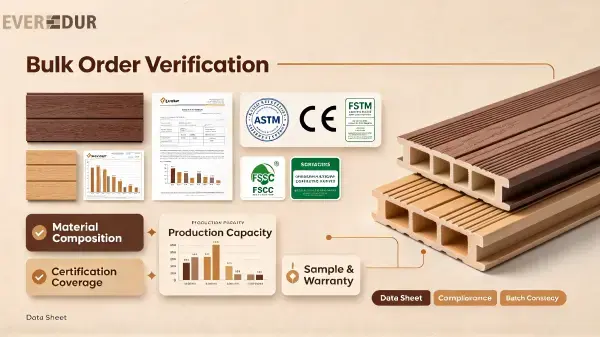
Material composition needs to be looked at very carefully. For composite wall cladding to work reliably outside in cold winters in northern Europe or hot, humid summers in the United States, the ratios of the raw materials used must be carefully controlled. The service life of panels made from wood fiber, Grade A recovered HDPE, and stabilization chemicals is significantly longer than that of panels made from mixed-grade recycled plastics. Ask your provider for a thorough material data sheet and make sure it doesn't contain any restricted substances. Reputable manufacturers always include REACH and RoHS compliance paperwork.
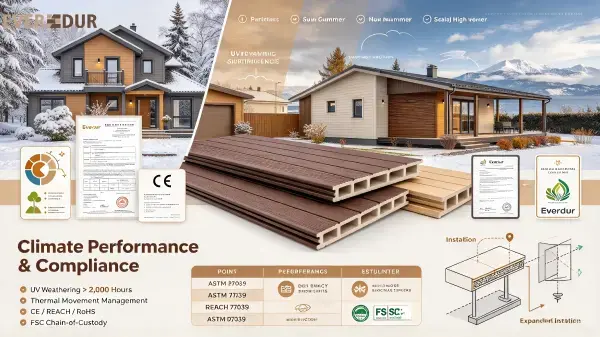
Coverage for certification is also very important. If you want to sell something in the EU, you should look for the CE mark. This shows that the product has been tried against the appropriate harmonized standards. In North America, projects often use ASTM D7039 test data. Environmental certifications, such as FSC chain-of-custody documentation and recycled content declarations, are being asked for more and more in bid specifications, especially in public sector construction.
A proof point that is often missed is production ability. A supplier with a low monthly throughput may offer good prices, but when a big order comes in, they may not be able to deliver on time. Find out exactly how many extrusion lines are in use and how many tons of product are made each year. A facility with 50 production lines and a yearly capacity of more than 30,000 tons has a very different set of risks than a smaller business.
Surface finish differences can be avoided by testing a sample before agreeing to a full order. Photographs can't always show things like color stability between batches, groove alignment for clip-based mounting systems, and the way brushed or embossed textures feel. Ask for actual samples, ideally from a production run instead of a separate batch just for samples.
The way a warranty is set up shows how confident the maker is in their product. Composite wall panels with hollow shapes usually have a warranty of five to fifteen years. Solid-core versions have a warranty of ten to twenty years. Before you order, you should find out what breaks a warranty and how claims are handled when they are sent across international shipping distances.
Traditional Cladding Sizes, Profiles, and Surface Options for Large Projects
When it comes to wall materials, big building projects rarely use a one-size-fits-all method. Specificators who work on apartment blocks, mixed-use business buildings, or house projects have to deal with different substrate conditions, design briefs, and installation methods. This can be fixed with a well-stocked range of "traditional WPC cladding," which gives real dimensional flexibility instead of just minor customization.
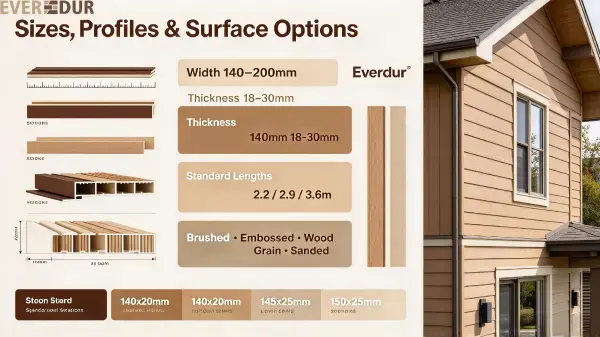
With width options from 140mm to 200mm, you can get both the narrow-board look that is common in Scandinavian and Northern European architecture and the wider panel formats that work well with modern facade designs. The thickness ranges from 18mm to 30mm, with the thinner layers being used for lighter decorative purposes and the thicker layers being used for strong structural needs in coastal or high-wind areas.
Standard lengths of 2.2m, 2.9m, and 3.6m match the sizes of most European modules. This cuts down on waste when cutting on-site and makes installation easier. Cross-sections like 140x20mm, 145x25mm, and 150x25mm profiles are popular because they fit into common layouts in home and light commercial construction.
The choice of surface treatment affects both how it looks and how it works. When you buff a finish, you create a slight, directional texture that spreads light evenly across a face, reducing glare and visual uniformity. Embossed surfaces are better at imitating the feel of sawn wood, which makes them suitable for historical repair projects where character is important. Wood grain finishes give printed patterns a depth that pleases customers who want natural warmth without the upkeep that comes with natural wood. Sanded surfaces look cleaner and more modern, which fits with the language of simple architecture.
Color retention over time is a real way to measure performance, not just a marketing claim. Panels that don't fade much after being exposed to UV light for more than 2,000 hours in normal tests give builders in southern Europe or western America real peace of mind. Instead of taking verbal promises, buyers should ask for UV weathering test certificates.SEND INQUIRY
How Can Traditional Cladding Manufacturers Support Bulk Building Orders?
More than just product quality is needed for a large source to be reliable. Whether a big order goes easily or causes delays on the job site depends on the manufacturer's working infrastructure, communication methods, and ability to adapt to the needs of each individual project.
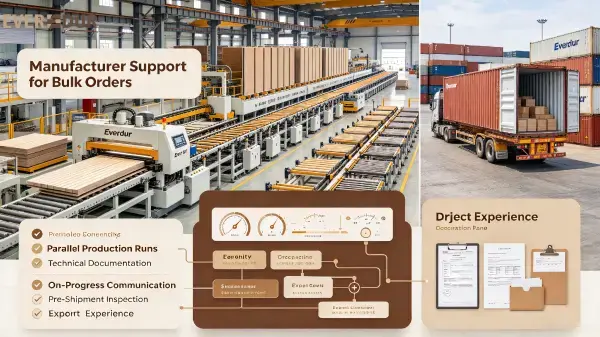
A company with more than one extrusion line can keep up parallel production runs for different groups of colors or profile sizes at the same time. This is important when a construction schedule calls for deliveries to happen at different times during different building steps instead of all at once. The factories that make more than 1,500 containers a year have shown that they can handle high turnover to serve foreign trade customers without affecting existing orders.
Support for technical documents, such as installation guides, material safety data sheets, and certification packages prepared for local regulatory submissions, makes it easier for buying teams to do their work. Suppliers who have exported to more than 60 countries know that EU member states, UK building regulations, and North American codes all have different documentation needs.
Active contact during production and access to inspections before shipping are useful ways to tell if a maker is honest. Buyers who place large orders get information on the progress of their orders and can have a third party check the quality of their goods before they are loaded. FOB shipping from Shanghai or Ningbo gives buyers who buy a lot of goods more options when it comes to choosing a transport and keeping costs down.
Custom Traditional Cladding Colors and Profiles for Architectural Projects
A standard color card isn't always enough for architectural projects with unique design identities. Standard WPC wall panel ranges work well for most projects, but for unique facades, like those on a boutique hotel, a residential development next to a historic site, or a branded commercial building, customizing the color and profile of the materials helps them fit perfectly with the design.
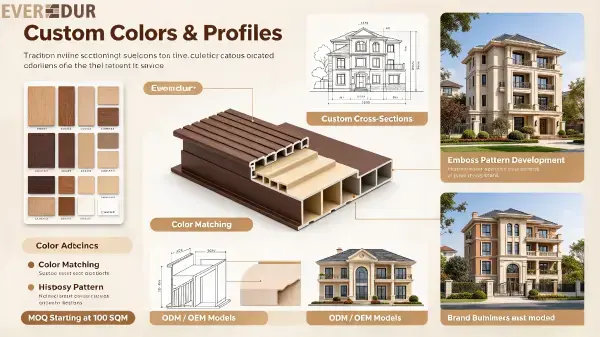
Color customization beyond standard palettes lets specifiers match current wall materials, match colors on the window frames and rooflines, or get a unique shade that makes a building stand out. For custom color production, you need to place orders in bulk in order for them to make economic sense. This is something that naturally fits with bulk supply situations.
Customizing a profile is useful when standard widths and thicknesses don't work well with the structure frame or additional support system that is being used. Custom cross-sections can be made to fit specific joist spacing, clip system geometries, or preferences for how big the shadow gap between boards should be for esthetic reasons.
Customizing the surface pattern opens up more artistic options. An emboss pattern made just for a project gives the facade a look that can't be achieved with off-the-shelf products. With ODM and OEM service models, contractors and wholesalers can offer goods that were made just for their project or brand.SEND INQUIRY
Traditional Cladding Supply and Delivery for Large-Scale Construction
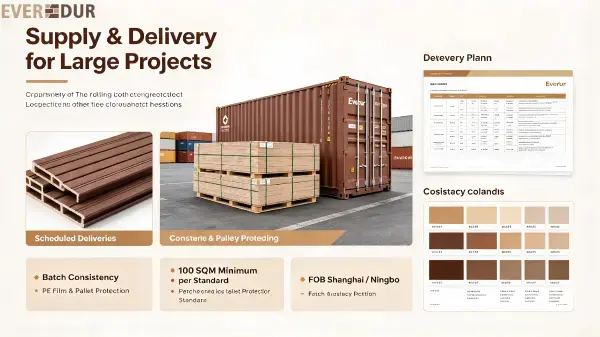
Project plan management and supply chain dependability go hand in hand. When installing facades on multiple buildings or during multiple stages of a construction project, the cladding provider needs to be able to coordinate scheduled deliveries, keep batches consistent, and communicate clearly when production or shipping variables change.
Long-haul sea freight packaging, which usually includes PE film wrapping along with a wooden pallet and panel protection, lowers the risk of damage during transport for panels that would otherwise come with surface scratches or edge compression marks. Before placing a final order, buyers should make sure they understand the packaging details and how the containers will be loaded.
With minimum order amounts of 100 square meters per standard, buyers can combine various profile and color needs into a single shipment, which saves money on freight costs. FOB terms from Shanghai or Ningbo give buyers from other countries the freedom to choose the freight forwarder they want to use and manage their insurance coverage.
Some people don't think about how important it is for batches to be consistent across successive production runs. If pigment batch management is not tightly controlled, composite panels made a few weeks apart may have small color differences. When buyers order shipments in stages, they should be clear about what kind of batch consistency they need and ask for color matching documentation for every production run.
Conclusion
When looking for a lot of outdoor wall covering for traditional building types, you have to think about the quality of the materials, how they can be made, who the certifications cover, and how the supply chain works all at the same time with traditional cladding. Composite wood-plastic cladding panels that look like real wood and are resistant to weather are a great deal for big buyers, but only if the company that makes them is honest and has the resources to support reliable large-scale purchases. Before committing to a wholesale order, make sure you check the above-mentioned details. This will protect project schedules and ensure that clients are happy.SEND INQUIRY
FAQ
Q: What is the typical lead time for a bulk order of composite wall cladding panels?
A: Lead time depends on order volume, profile complexity, and current production scheduling. Standard profile orders are generally fulfilled within 20 to 35 days after order confirmation. Custom color or profile orders may require an additional 10 to 15 days for tooling or pigment preparation. Confirming lead times at the quotation stage helps align supply with your construction program.
Q: Can composite facade cladding be used in climates with significant temperature variation?
A: Yes. Wood-plastic composite panels are engineered to accommodate moderate thermal expansion and contraction. Proper installation using the recommended clip spacing and expansion gaps — as specified in the installation guide — ensures dimensional stability across seasonal temperature cycles. Second-generation co-extruded panels offer further reduced thermal movement compared to earlier composite products.
Q: What certifications should European buyers specifically request when ordering traditional WPC cladding from an overseas manufacturer?
A: European buyers should request CE marking documentation, REACH compliance declarations confirming the absence of substances of very high concern, and RoHS certification. FSC chain-of-custody certification is increasingly required in public procurement tenders. For projects targeting sustainability ratings such as BREEAM or LEED, recycled content certification and environmental product declarations provide supporting documentation.
Get Bulk Traditional Cladding Quotes from Everdur — Manufacturer Direct
Everdur is a direct manufacturer of traditional cladding. They have been in business for 16 years, have more than 50 active extrusion lines, and have a history of exporting to Europe, the Americas, Asia, Africa, and Oceania.
For building companies and contractors: Get access to technical documents, a phased delivery schedule, and installation instructions that are made to fit your build program.
Wholesale price systems, sample provision, and regular batch production for long-term supply deals are all things that building materials wholesalers need.
You can customize the products as an ODM or OEM, and the minimum order quantity is variable starting at 100 SQM. You can also change the label or character to fit your market placement.
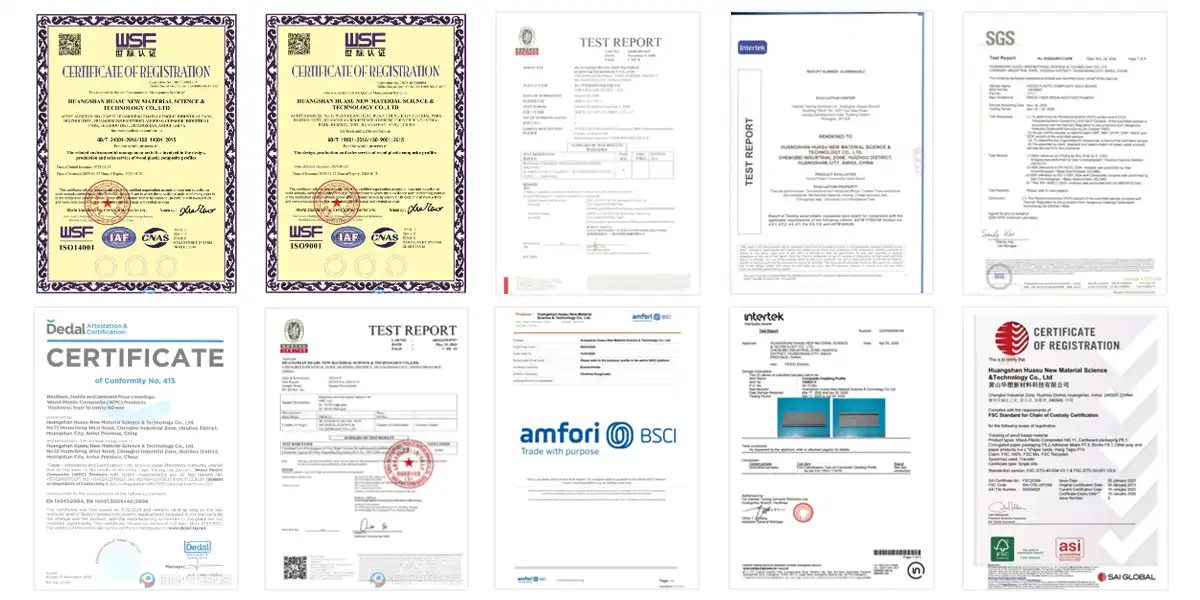
Free design consultation for end users and developers, color and profile suggestions based on your architectural brief, and full certification packages with CE (EU), ASTM D7039 (US), and GB/T 24137 (China) mark. Environmental paperwork includes FSC chain-of-custody, recovered HDPE material approval, and meeting E0 environmental standards.
Send your project details or number needs straight to Everdur's team at violet@wpcsupplier.com.
References
1. European Committee for Standardization. EN 15534 — Composites Made from Cellulose-Based Materials and Thermoplastics (Wood-Polymer Composites). CEN, Brussels.
2. ASTM International. ASTM D7032 — Standard Specification for Establishing Performance Ratings for Wood-Plastic Composite Deck Boards and Guardrail Systems. ASTM International, West Conshohocken, PA.
3. Forest Stewardship Council. FSC Chain of Custody Standard: FSC-STD-40-004. FSC International, Bonn.
4. European Chemicals Agency. REACH Regulation (EC) No 1907/2006: Understanding SVHC Requirements for Construction Products. ECHA, Helsinki.
5. British Board of Agrément. Guidance on Certification of Cladding Systems for Use on Buildings Over 11 Metres. BBA, Watford.
6. U.S. Green Building Council. LEED v4.1 Building Design and Construction: Material Ingredient Reporting Requirements. USGBC, Washington, D.C.
7. International Organization for Standardization. ISO 9001:2015 — Quality Management Systems: Requirements. ISO, Geneva.
Send Inquiry
Related Industry Knowledge
- Wholesale Traditional Cladding: Bulk Supply for Traditional Buildings
- WPC Landscape Walls for Public Parks: Safe & Sustainable
- How to Choose WPC Cladding: Material, Design and Installation Tips
- 2026 Brushed WPC Decking Trends: Stylish & Durable Options
- WPC Composite Fencing Installation: Easy Guide for Beginners
- Top Composite Screen Fencing Manufacturers in 2026
- How to Choose High-Quality Co Extrusion WPC Decking for Your Garden
- WPC Cladding vs Vinyl Cladding: Which Is Better for Outdoor Use?
- Hollow WPC Decking Maintenance Tips: Keep It New for 10+ Years
- High-Quality WPC Decking for Poolside: Waterproof and Anti-Slip Solutions