_1777451497595.webp)
Wood Grain Grooved WPC Decking: Stylish & Functional Outdoor Flooring
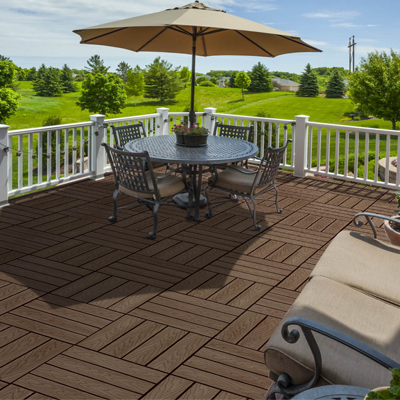
Outdoor flooring is more important than most people know. The material you pick determines the beauty of a place, the safety of its feel underfoot and the amount of effort you’ll spend maintaining it over the years. Grooved WPC decking has been a real hit with homeowners, landscape designers and builders throughout Europe and North America – and it's simple to see why. Wood-plastic composite boards are made from recycled wood fibre and HDPE polymer to create a surface that retains its form outside, without the cracking, warping or insect damage that limits the lifespan of solid timber. The grooved channel design down the length of the board surface serves a dual purpose, guiding water away from the walking surface and providing a textured grip to minimise slide hazards in wet weather. Add a genuine wood grain finish to that structural performance and you have outdoor flooring that delights the eye and the foot. In this post we’ll discuss how the wood grain impression is created, what textures and colours are available, how the groove geometry promotes comfort, and where this sort of decking operates best in actual outdoor environments.SEND INQUIRY
How Does Grooved WPC Decking Recreate the Look of Natural Wood?
Modern composite wood grain finishes look a lot like real wood, which can surprise people who haven't looked at WPC goods in a while. When they were first made, composite boards had a flat sheen, a uniform color, and no depth. A lot of work has been made in the making process since then.
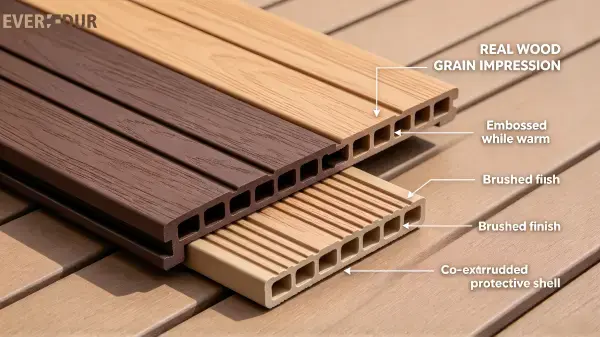
To make fine grain patterns on the surface of the board these days, embossing rollers are used while the material is still warm and flexible from being extruded. Since the pattern is based on real wood samples, the surface roughness, knot placement, and grain direction are all exactly the same as they would be on real hardwood boards. Then, a brushed final pass breaks up the micro-texture a bit. This makes the surface less smooth and shiny and more matte and smooth.
With co-extrusion technology, a thick, colored shell is wrapped around the heart of the board during the extrusion process, making it even better. Before, the finish was laminated or painted. This one is better at resisting surface wear and tear, water damage, and UV rays because the color and grain are built into the protective layer instead of being added on top. In heavy-use areas, the wood line design doesn't bubble, peel, or show through.
The ability of the composite material to keep its shape also helps with the long-term look. Solid wood shrinks and swells with the seasons, leaving spaces between the boards and warping the surface over time. The form of WPC boards stays better over time, even when the weather and humidity change. In other words, the deck will always look the same because the boards won't curl or come apart. This stability is useful for more than just looks for buyers in northern Europe or the wet coasts of North America.
Wood Grain and Surface Texture Options in Grooved WPC Decking
It's harder to choose a texture than it is to choose a color. The treatment on the deck's surface changes how it looks in different lights, how it feels when you walk on it with or without shoes, and how obvious it is that dirt, dust, and leaf stains are there every day between cleanings with grooved anti-slip WPC.
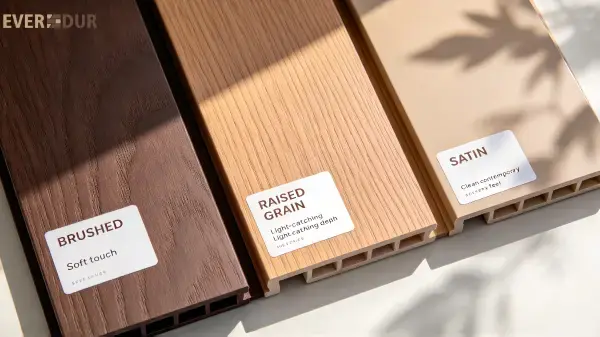
It feels a lot like old oak when you touch something that has been brushed. The finish is slightly open and flexible. The fine lines on the board catch the light and give it a warm look that flat surfaces can't match. People often put brushed boards in their parks, under pergolas, and on patios with covers so that people can see the deck well.
It looks like there is more depth when wood grain forms are raised. The hollow and raised parts of the surface cast small shadows that move across the surface based on the sun's angle. It looks like light is moving across real wood planks. This texture looks good from far away, which is why it works well in patios by pools, hotel grounds, and restaurant gardens.
Satin finishes are in the middle when it comes to how smooth the surface is. A smooth, even surface made by fine scratching feels good on the feet and looks clean, which goes well with modern building styles.
Some shapes let you brush the back of the board, which makes a single board useful on both sides and gives you two surface choices. Because of this, contractors and resellers can keep track of materials for a wide range of jobs with ease.SEND INQUIRY
Grooved WPC Decking Colors for Contemporary Outdoor Design
Neutral and Natural Tones That Work Across Architectural Styles
Ash gray, stone gray, and dark gray are some of the cooler colors that people in Scandinavia and northern Europe like to paint their homes. The colors in this group look good with glass, steel, and concrete, and they don't stand out too much. Sandalwood and ivory are both used to connect lighter, warmer rooms in Mediterranean homes, beach homes, and timber-frame homes. It's still mostly useful to use the neutral range because it works well with most things.
Warm Wood-Tone Colors That Bring Organic Character Outdoors
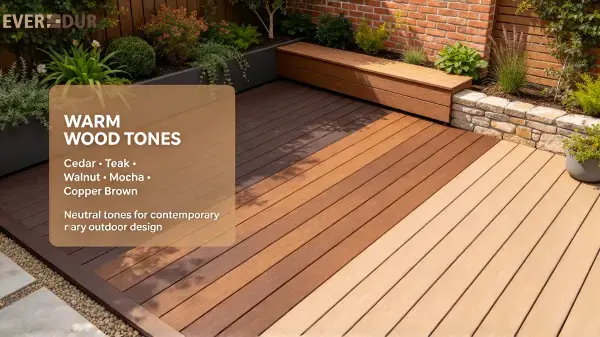
You can expect a wide range of colors from well-known trees like cedar, teak, walnut, mocha, and copper brown. It feels warmer on patios and steps in the yard when you paint them these colors. They also look great with brick, natural stone, and planted borders. Home projects in North America and the UK that use classic yard styles still like to use warm wood tones a lot. Because the color is locked into the co-extruded shell, it stays warm even after years of being in the sun. Unfinished wood, on the other hand, goes gray very quickly.
Custom Color Matching for Specified Projects
If a normal palette color doesn't work for a building or a business setting with a certain look, custom color matching is a possibility. An outline of the project, a piece of the material, or a color code can all be used to match the production run. There are strict brand or design rules that hotel chains, shopping malls, and home builders have to follow. This service can help them.
How Can Grooved WPC Decking Improve Outdoor Walking Comfort?
The Role of Channel Geometry in Water Clearance
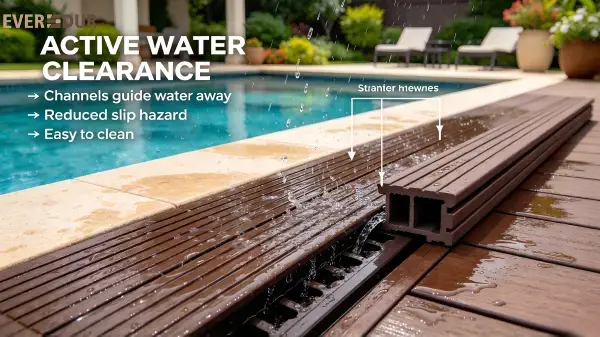
Each board has parallel lines that run the length of it. These lines let water flow off of the deck's surface. It doesn't pool in flat spots when rain or a pool splash hits the deck. Instead, the water moves along the channels and off the edges of the boards. The groove shape makes it safer to walk in places that stay wet for a long time, like around pools, on rocky shores, and in places that get a lot of rain every year. And this is because the chance of slipping is directly related to how fast water drains. Also, the drainage feature makes it easier to clean because it slows the growth of algae and moss on the surface.
Surface Texture and Barefoot Comfort
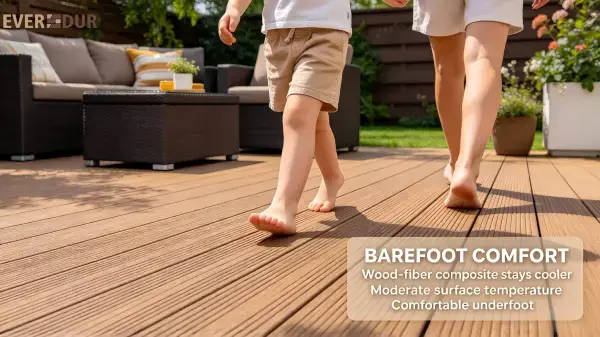
Two kinds of warmth can be found on the ground: how soft it is and how it responds to heat. Since wood fiber is mixed into composite boards, the surface doesn't heat up as quickly as stone or ceramic tile. This helps your feet feel better when you go barefoot on warm, sunny days. If you touch something with a rough surface, whether it's brushed or raised, most people think of natural materials instead of plastics. There is a lot of kids and bare feet in yard areas and around pools, so this mix of grip and moderate surface temperature is very helpful.
Structural Consistency Underfoot Over Time
Moving around on floors that bend, bounce, or get soft spots is painful and dangerous. WPC boards don't soak up water like wood boards do. In other words, they keep their shapes over time. If you keep drying out and growing wood joists and boards, they will finally separate, crack, or get weak spots in one place. When the weather changes, composite boards still have a flat surface and can hold weight. In other words, they are a safe place to walk from the first year to the twenty-first.SEND INQUIRY
Grooved WPC Decking Ideas for Patios, Pool Surrounds, and Garden Paths
Patio Deck Design With Integrated Furniture Zones
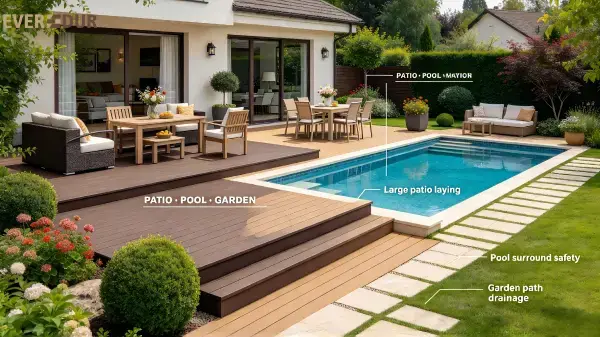
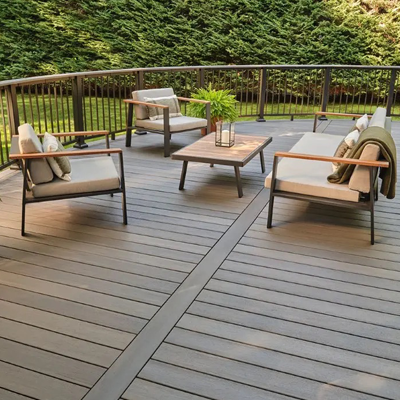
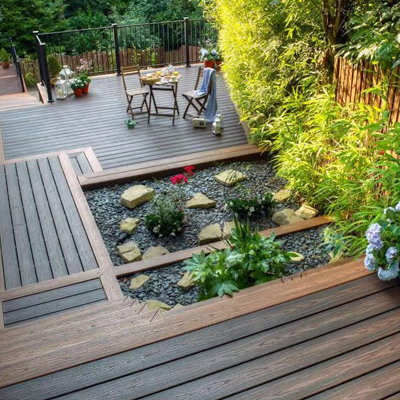
Putting together a backyard deck that takes up as much space as possible is not the best idea. Instead, think about how the space will be used. Grooved outdoor WPC boards can be laid in a single direction across a large patio, or they can be set up in a frame-and-fill pattern with border boards running perpendicular to the field boards to create different areas for different activities, such as an eating area, a sitting corner, or an edge with a built-in planting. Because all composite boards are the same size, you can make precise mitered joints and borders without having to account for the fitting tolerances that wood needs because it changes shape over time. Deck boards that are darker look more solid and stand out against walls or chairs that are lighter in color. Lighter colors make small terraces look bigger when they are used there.
Pool Surround Applications and Safety Considerations
One of the worst places for outdoor floors is around a pool. A lot of water falls on the surface, and it is always exposed to UV light and pool chemicals. If you want to keep people from slipping, you should use grooved anti-slip WPC. The groove profile actively drains splash water, the composite material can handle chlorine and salt water without damage to the surface, and the UV-stabilized pigment system stops wood around pools from bleaching. Old wood is dangerous to walk on without shoes because it has splinters. The boards don't have those. The surface is smooth and there are no obvious fixings that could catch toes or snag pool items when it is put in place with secret stainless steel clips.
Garden Paths and Walkways Through Planted Areas
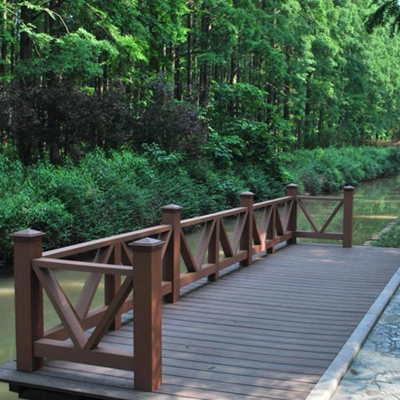
A well-planned garden path does more than just keep you dry as you walk through a planted area. It also sets the tone for how the whole garden looks. For the path, cut composite boards to the same thickness and lay them down over a simple bearer system. This will make a clean, defined sidewalk that stands out against the yard and grown edges. Boards can be different from the plants around them (like gray tones against green) or match them well (like warm wood tones that look like real wood). In wetter northern areas, curved WPC decks keep path surfaces dry after heavy rain because they let water drain away. This means the road can be used right away, without having to wait hours for the water to dry.
Conclusion
Now that it's good enough to use outside, wood grain composite decking looks good, is stable, and works well for everyday tasks. The groove form isn't just for looks; it's an important part of the design that gets water out, makes the surface easier to grip, and makes it last longer when it rains with grooved WPC decking. It's versatile and can be customized in a lot of ways, so it can be used for a wide range of projects, from small gardens in homes to larger areas for businesses. For people in North America and Europe who want a durable outdoor floor that doesn't cost a lot to keep up, this type of composite decking is a great choice.SEND INQUIRY
FAQ
Q: What is the difference between grooved and solid WPC decking profiles?
A: Grooved WPC boards have parallel channels running along the board length on the top surface. These channels provide active drainage and enhance slip resistance in wet conditions. Solid boards have a flat, closed surface that offers a different aesthetic and can be appropriate in sheltered or low-moisture environments. For exposed outdoor areas, pool surrounds, and anywhere water management is a priority, the grooved profile is generally the more practical choice.
Q: How long does wood grain WPC decking typically last outdoors in European or North American climates?
A: Service life depends on installation quality, maintenance regularity, and the specific climate, but well-manufactured composite boards with co-extruded protective shells are designed for 10 to 25 years of outdoor service. The material resists the freeze-thaw cycles common in northern Europe and Canada, the high UV loads experienced in southern Europe and the southern United States, and the persistent humidity of coastal regions on both continents. UV inhibitors in the material formulation slow surface color change to a minimal level after standard accelerated weathering tests exceeding 2,000 hours of UV exposure.
Q: Can grooved composite decking boards be cut and trimmed on site during installation?
A: Yes. Standard woodworking tools — circular saws, mitre saws, jigsaws — cut composite boards cleanly without specialist equipment. The material does not splinter at cut edges the way timber does, and cut ends can be capped with matching end caps for a finished appearance. On-site trimming makes it straightforward to fit boards around irregular boundaries, drainage outlets, posts, and other obstacles. Custom profile lengths are also available from the manufacturer to reduce on-site cutting for large-scale projects.
Ready to Specify or Source Grooved WPC Decking? Connect With Everdur
Everdur backs up project needs with technical data sheets, profile drawings, and samples of the materials used (for builders and architects). As a maker of grooved WPC decks, we can make shapes that are either standard or unique to your design needs with grooved WPC decking.
Looking to buy or sell a lot of building materials? We offer low market prices, a steady flow of goods that are ready to ship in containers from more than 50 production lines, and solid lead times in both Europe and North America. Ask for a sheet with free samples and prices for buying in bulk.
We have installation guides, secret clip systems, and technical support for workers and installers to help them stay on track with their projects.
You can get free color sample sets and help with plan planning if you ask. This is for houses and end users.
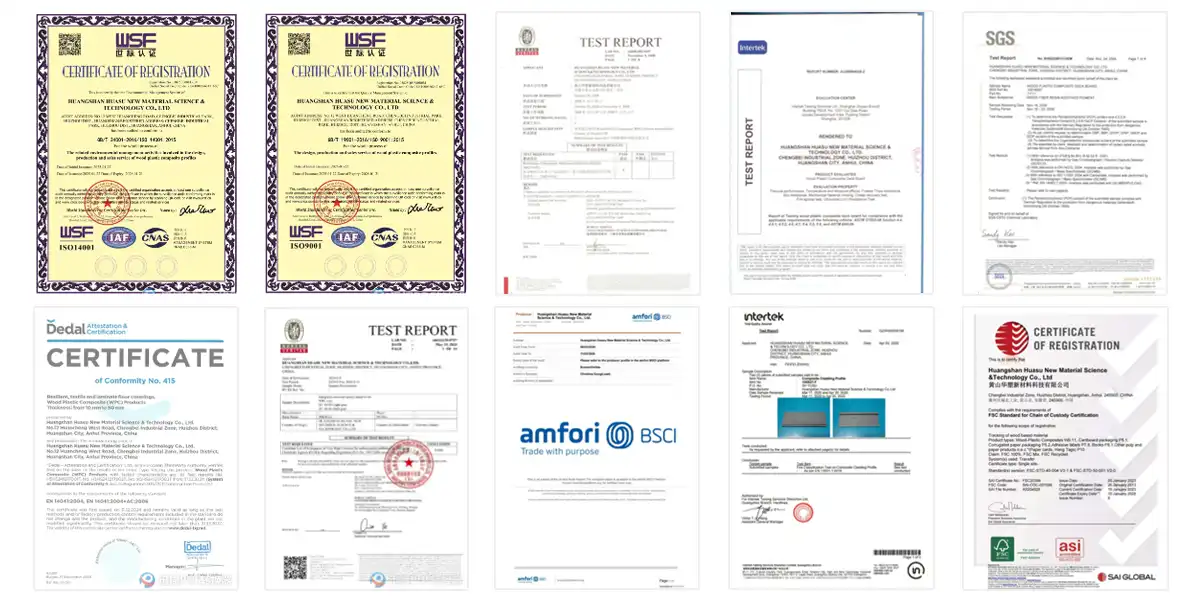
The things we sell meet the standards for EU CE certification, US ASTM D7039 testing, and China GB/T 24137 rules. FSC approval, RoHS and REACH compliance, and using products with recycled content that meet well-known standards for recycled content are all good ways to show that you care about the environment. The items also meet the E0 formaldehyde emission standards.
Everdur's direct email address is violet@wpcsupplier.com, where you can send details about your project or ask for a sample.
References
1. Clemons, C. M. (2002). Wood-plastic composites in the United States: The interfacing of two industries. Forest Products Journal, 52(6), 10–18.
2. European Committee for Standardization. (2012). EN 15534-1: Composites made from cellulose-based materials and thermoplastics (usually called wood-polymer composites or natural fibre composites). CEN.
3. Klyosov, A. A. (2007). Wood-Plastic Composites. John Wiley & Sons.
4. ASTM International. (2011). ASTM D7032: Standard Specification for Establishing Performance Ratings for Wood-Plastic Composite Deck Boards and Guardrail Systems. ASTM International.
5. Schirp, A., & Wolcott, M. P. (2005). Influence of fungal decay and moisture absorption on mechanical properties of extruded wood-plastic composites. Wood and Fiber Science, 37(4), 643–652.
6. Stark, N. M., Rowlands, R. E. (2003). Effects of wood fiber characteristics on mechanical properties of wood/polypropylene composites. Wood and Fiber Science, 35(2), 167–174.
Send Inquiry


Related Industry Knowledge
- Affordable WPC Decking Wholesale: Direct from Factory to Your Project
- WPC Villa Fence: Luxury Fencing for Villas & High-End Properties
- Grooved WPC Decking: Anti-Slip Flooring for Poolside & Walkways
- 2026 Brushed WPC Decking Trends: Stylish & Durable Options
- Top Traditional WPC Decking Manufacturers for Quality Products
- Top Composite Screen Fencing Manufacturers in 2026
- Privacy WPC Fence: Perfect for Residential and Villa Outdoor Spaces
- Top Hollow WPC Decking Designs for Modern Gardens
- Why Co-extruded WPC Decking Is a Must for Your Outdoor Project
- High-Quality WPC Decking for Poolside: Waterproof and Anti-Slip Solutions