
Can hollow WPC decking be used for balconies?
2026-10-21 17:00:42
Hollow WPC decking is ideal for residential balconies, terraces, roofs and light commercial areas where weight reduction and simple maintenance are important. Safe installation requires proper spacing of the joists, drainage, waterproofing, expansion gaps and load requirements. Hollow profiles may reduce the weight by 20-30% compared to solid composite boards. Before purchasing, buyers need to look at strength, water absorption, slide resistance, traceability, shipping and supplier documentation.SEND INQUIRY
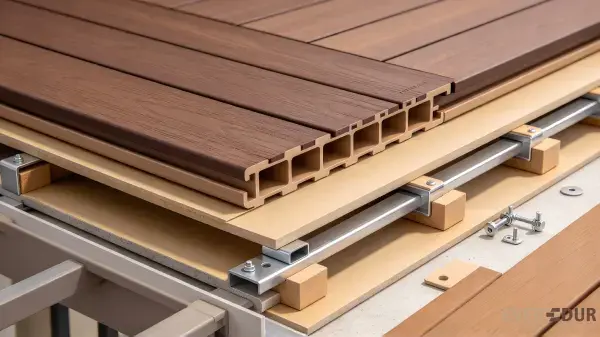
What Are the Main Benefits of Hollow WPC Decking for Balconies?
What Hollow WPC Decking Means
Hollow WPC decking is an extruded, ribbed construction of wood fibers, HDPE, pigments, binders and UV protection. This construction uses less material, yet still is able to handle foot traffic and light furniture. Unlike solid wood or hollow PVC, it has special durability and thermal features and needs an appropriate steel frame, designed joists or solid slab.
Main Benefits for Balcony Applications
Hollow WPC decking is 20–30% lighter than solid boards of the same size, which means it costs less to ship and is easier to install on upper floors. The polymer coating of the surface is more resistant to care than softwood and due to resistance to moisture, rot and insects it lasts longer in humid environments. Consistent extrusion sizes provide better matching of replacements, and less material use allows providers to offer competitive costs per square meter.
Hollow WPC Decking Benefits and Limitations
There's no such thing as a perfect metal roof. People who buy won't have any problems once the roof is on if they know what the limits are.
| Potential advantage | Limitation or condition |
|---|---|
| Lower weight for easier handling | Internal cavities are more sensitive to point loads and poor joist support |
| Low routine maintenance | Periodic sweeping and washing is still required |
| Weather-resistant surface layer | Color can fade under strong, sustained UV exposure |
| Consistent factory dimensions | Thermal expansion gaps must be respected during installation |
| Lower material use per board | Cutting near board ends needs extra support to avoid cracking |
| Workable for most balconies | Not suitable where drainage or structural support is already compromised |
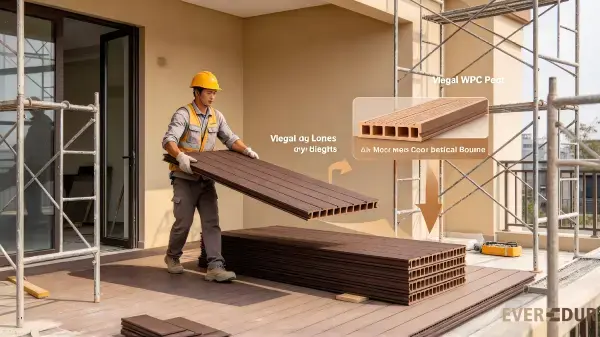
Why Is Hollow WPC Decking Practical for Elevated Balcony Spaces?
Residential Terraces and Apartment Balconies
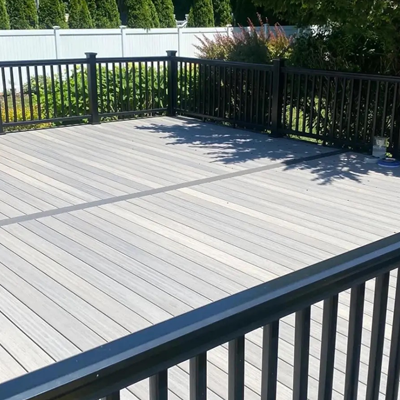
Hollow WPC decking is an excellent alternative for elevated apartment balconies, restorations with strict dead-load constraints, patios, rooftop decks and porches, where the wood-like appearance and ease of care are desired. But the light boards do not ensure the structural safety. The standard joist design may not be sufficient for certain severe loads such as hot tubs, brick fire pits, huge planters packed with damp soil or massive machinery and an engineering study may be necessary.
Commercial, OEM, and Distributor Use Cases
Hollow composite decking buyers want durability, ease of maintenance and simple installation instructions; OEM and modular builders want consistent dimensions, private label packaging and technical drawings; and distributors want consistent lead times, efficient pallet loading, flexible trial order MOQs and the right export documents to cut freight costs and delays at customs.
When Hollow WPC May Not Be the Best Choice
There are times when hollow profiles aren't the best choice. If the project is going to be on a balcony where waterproofing has been known to fail, in a small area with no air flow, or in a place that needs an approved fire-rated flooring assembly, people who are buying should think about a solid board, PVC decking, or a different system. If there are high-heat sources, like open flames near grills, or if there is a chance of chemical spills on a deck, outside-grade composites aren't the only choice.SEND INQUIRY
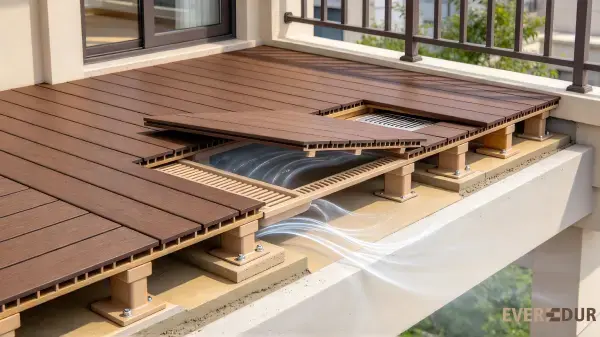
How Does Hollow WPC Decking Manage Balcony Drainage and Ventilation?
Drainage Requirements Beneath the Decking
WPC balcony decking is hollow, and needs sufficient drainage. Keep scuppers and floor drains clear. Follow the slope that’s there. Don't seal the underside, because moisture can be trapped. Use open subframes or high pedestals for water flow and evaporation. After installation check the joists, clips and wall connections for standing water after a hard rain to avoid drainage problems.
Ventilation of Hollow Profiles and the Substructure
Getting air under and into the boards is just as important as making sure they drain. Often the manufacturer will give a unique end cap or closing based on shape. Instead of inventing their own procedures, they should follow the directions given with the order. Do not allow dirt or other things to get inside the board during installation and keep away from standing water. Also leave inspection holes at important drainage points. This will make it less likely that water will be left behind later.
Balcony Waterproofing Interface
It is important to remember that hollow WPC decking is only a finish layer and not a way to protect the wood. Builders and stores often forget this. The membrane under the subframe needs to be checked carefully while it is still being put together. If there are clip systems, covered pads, or pedestals that can be moved but don't go through the waterproof layer, fasteners won't be able to get through. Instead of following general decking instructions for any screw or anchor that needs to go through the membrane, you should follow the instructions that came with the waterproofing.
What Balcony Conditions Can Hollow WPC Decking Withstand?
Weather, UV, Moisture, and Temperature Exposure
They are exposed to the sun, rain and weather variations, unlike an inside covered floor. Lightweight composite decking is also subject to UV exposure, color retention, humidity, splash water from the coast and thermal expansion from uneven sunshine and sea air. There is no one service life for all markets because it is contingent upon the environment, materials and quality of installation.
Performance Tests and Specifications to Request
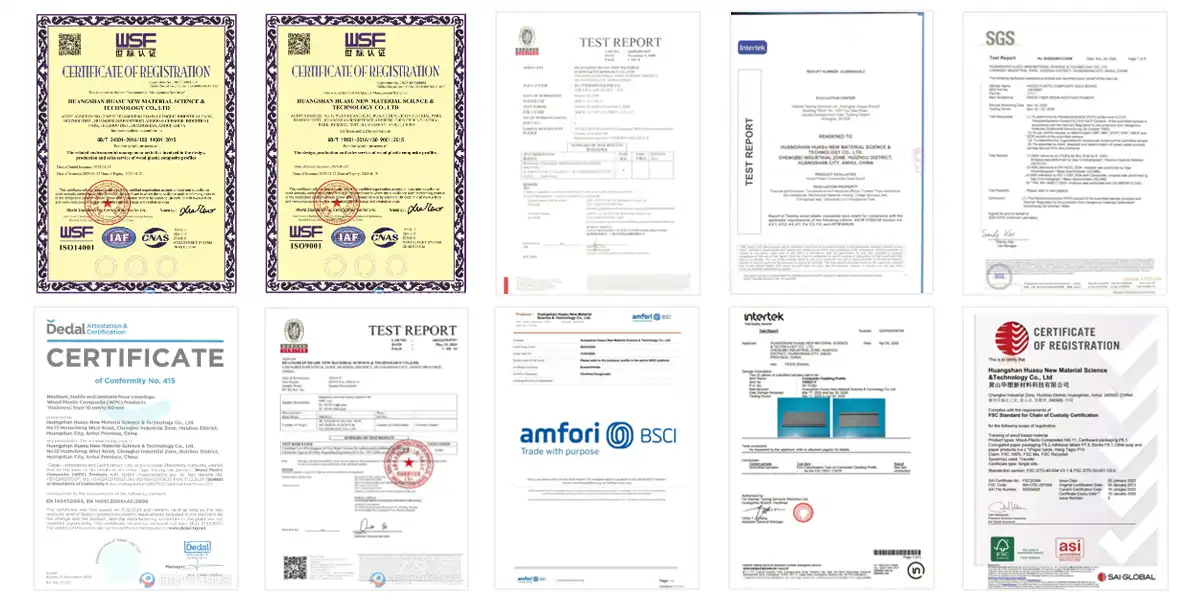
Check supplier test results on water absorption, strength, stiffness, impact and slide resistance, thermal expansion and the legally allowed flame spread before accepting big orders. The standards of relevance include ASTM D7031/D7032 for performance, ASTM D6109 for flexural properties, ISO 4892 for weathering, EN 15534 for composites and EN 16165 for slip resistance.
EU and US Compliance Notes
Compliance criteria vary from market to market. EU customers should refer to the appropriate EN 15534 regulations, REACH limitations, building product documentation and local fire or slip resistance laws. U.S. customers should identify referenced building codes, ASTM test methods, and needed I.B.C. or I.R.C. requirements. Decking does not have to be CE labelled, FDA, UL and RoHS regulations are more important to the components than the decking boards themselves.SEND INQUIRY

Does Hollow WPC Decking Affect Balcony Weight and Structure?
Hollow WPC Decking Weight Comparison
Often the first question a conscientious builder or structural engineer asks is how heavy is a deck finish.
| Material or profile | Typical weight consideration | Main structural implication |
|---|---|---|
| Hollow WPC decking | 20-30% lighter than a comparable solid WPC profile | Lower dead load, but joist spacing is still the limiting factor |
| Solid WPC decking | Heavier profile per linear meter | More dead load, generally higher impact tolerance |
| Wood decking | Varies with species and moisture content | Weight can shift seasonally as the timber absorbs or releases moisture |
| PVC decking | Often very light | Performance depends heavily on wall thickness and formulation |
| Ceramic or porcelain tile | Can be heavy once adhesive and screed are included | May add significant dead load to an older balcony slab |
To find out the install weight, you can't just look at one number on a data sheet. You need to know the board's exact size and weight, as well as the subframe you chose, any clips, and any pedestals.
Structural Load and Joist Spacing Review
A proper review would include examination of the load capacity of the balcony, the additional dead load of the boards and subframe, the expected live load of people and furniture, the concentrated load of planters or grills, the span rating of the board relative to the manufacturer’s published joist spacing table, and the potential for wind uplift on third-floor open-air balconies. When considering lightweight composite decking, the reduced board weight can also be taken into account when assessing the overall dead load, but it does not replace the need to verify the balcony’s structural capacity.
When to Obtain Engineering Approval
If you have an old or damaged balcony, a high-rise or public deck, inhabited space below, huge plants, outdoor kitchens, or dubious load ratings, contact a licensed structural engineer before you purchase materials. A common contractor warranty concern is the failure to check long-span or cantilevered structures.
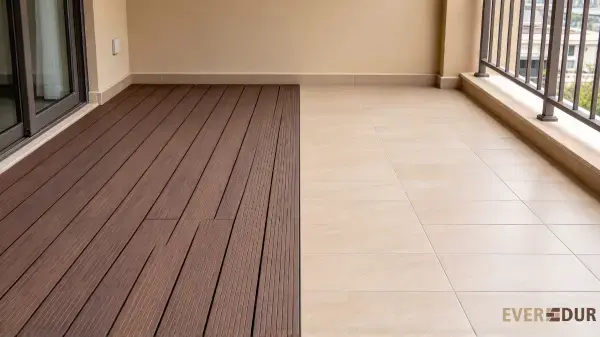
How Does Hollow WPC Decking Compare with Tiles for Balconies?
WPC Decking Versus Tile: Practical Comparison
Most overseas balcony purchasers do their comparisons on tile, so a side-by-side photo gives distributors a chance to quickly clear up misunderstandings.
| Criterion | Hollow WPC decking | Ceramic or porcelain tile |
|---|---|---|
| Weight | Generally lower, depending on subframe choice | Can be high once adhesive and screed are counted |
| Installation | Board-and-clip or screw-fixed system | Needs a prepared, leveled substrate and setting bed |
| Drainage | Raised, open-jointed systems support airflow and runoff | Grouted systems depend heavily on slope and membrane condition |
| Maintenance | Sweeping and occasional washing | Grout lines and cracked tiles may need repair over time |
| Thermal comfort | Usually cooler underfoot than tile in direct sun | Can become very hot or very cold depending on material |
| Repair | Individual boards can often be swapped out | Spare tiles from the original batch make repair easier |
| Visual style | Timber-look grain and embossed textures | Wide range of colors, patterns, and finishes |
| Balcony fit | Strong fit when subframe and drainage are designed correctly | Strong fit when substrate, waterproofing, and load capacity are confirmed |
Total Cost Comparison
Don’t just compare the cost per square metre of decking, compare the whole project expenses. The estimate must cover but not be limited to, frames, joists, pedestals, clips, screws and end caps, waterproofing, installation, transport, palletisation, maintenance, repairs, tile related supplies and floor preparation. When considering decking choices, consider all associated costs. For projects where reduced board weight can simplify handling and installation, hollow composite decking may also be worth evaluating as part of the overall cost and performance calculation.
Best Material by Balcony Condition
If you want something that appears like wood, is light in color, and doesn’t require much care then this is the perfect choice. Choose tile with a firm, water-proof substrate for natural gloss. If you want more weight for strong foot traffic or protection against blows, you should choose for solid WPC. PVC is a wonderful choice if you need flooring that can take a certain level of water or weight.SEND INQUIRY
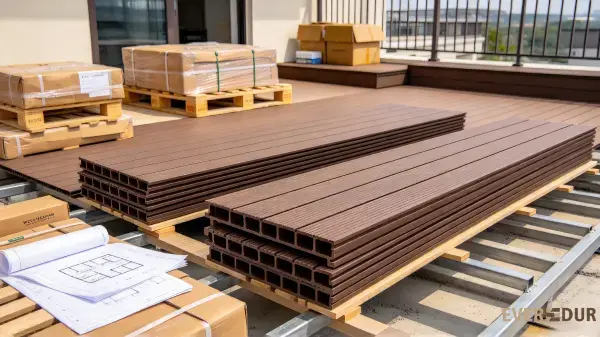
Which Hollow WPC Decking Features Matter Most for Balconies?
Balcony Decking Selection Checklist
Find out the board sizes and wall thickness before placing a bulk or test order. If you ruin a batch of boards, find out about the board’s absorption rate, its surface texture and slip-resistance figures, its fire class (if you need it for the project), safe operating temperature range, recommended joist space, clip and screw compatibility, warranty coverage and exclusions, and how soon you can have replacement boards shipped.
Hollow WPC Decking for Outdoor Use
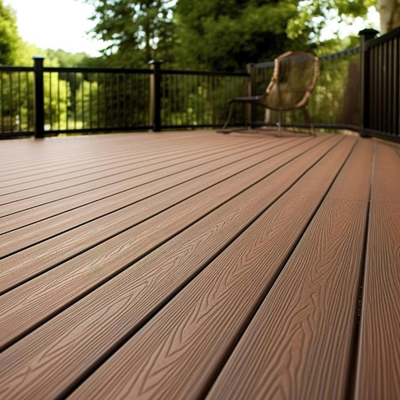
The best hollow WPC decking for use outdoors has a UV-stabilized polymer package, thermal expansion control, enough wall thickness in the screw and clip zones so the boards won’t crack, recorded slip and weathering tests, and installation notes specific to the buyer’s climate for very hot or very cold areas.
Supplier Capability & Evaluation
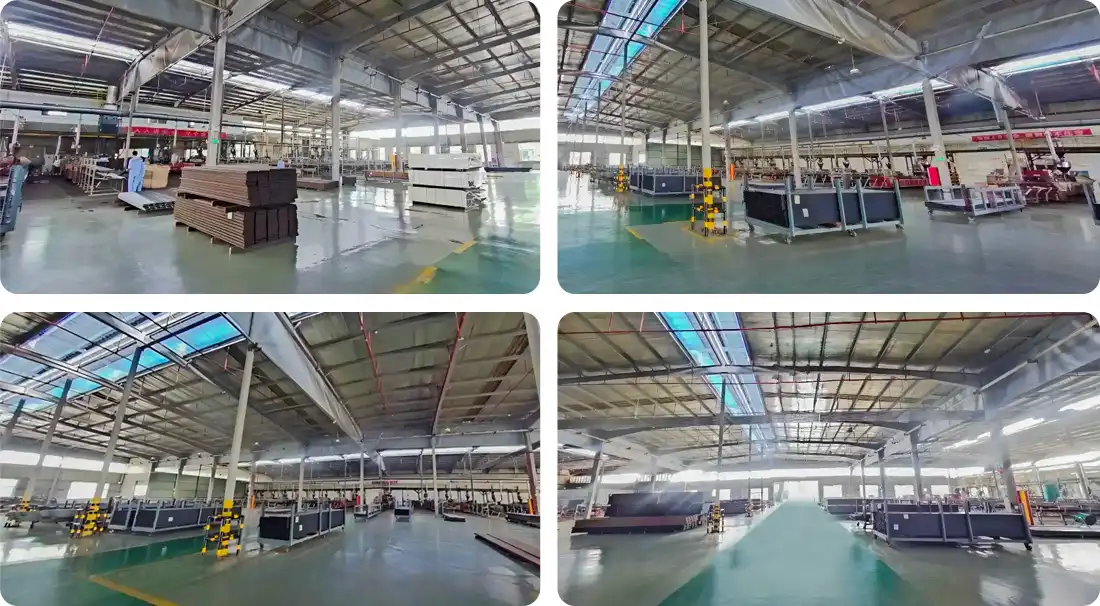
Before you deliver the first container, check if the supplier builds their own boards and can provide test results, batch records and technical data sheets. Production capacity, quality controls, MOQ, lead time, packaging, payment arrangements, Incoterms and after sales support Everdur has over 50 manufacturing lines with an annual capacity of 30,000 tonnes, shipping 1,500 containers a year and has over 225 customers in over 60 countries.
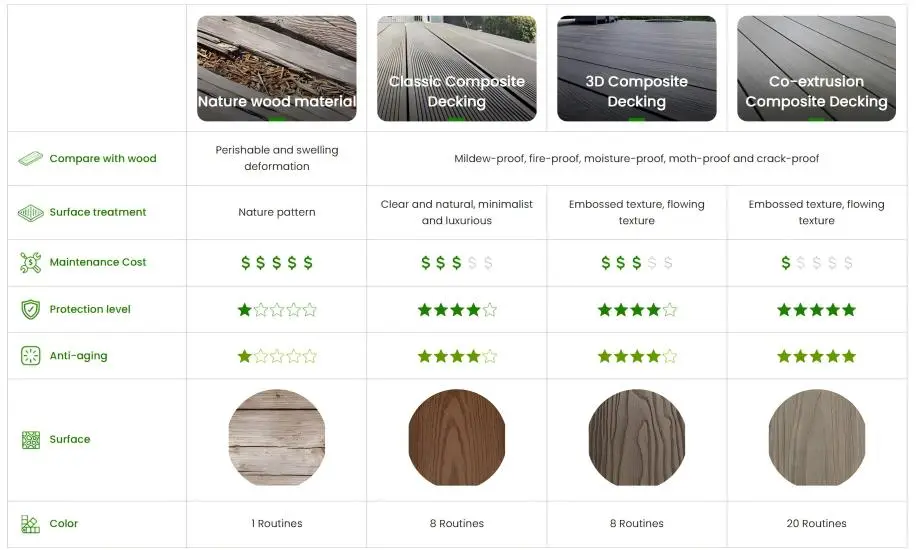
What Balcony Designs Work Best with Hollow WPC Decking?
Suitable Balcony Layouts
The decking should be designed to suit the purpose: straight boards will visibly lengthen the balconies of tiny apartments, while borders will divide larger patios into functional zones. Raised roofing subframes facilitate membrane examination. Designs of modular projects must provide for replacement of individual boards and standardisation of size of modules. Also lightweight composite decking may be considered for projects where simpler handling and installation is vital, but without sacrificing the overall design criteria.
Board Direction, Pattern, and Colour Planning
Before purchase decide the orientation of the board to effect the appearance and drainage. Think picture-frame, diagonal, or herringbone patterns. The subframe must be strong for cuts and connections. Paint south-facing porches light colours so they don't absorb too much heat; darker boards may be more noticeable and expand more in the sun. If you are considering hollow composite decking, evaluate the orientation and profile of the boards and how they will fit with your proposed subframe and drainage structure. Make border boards for small colour changes between batches.
Accessibility and Safety Design
The floor of a deck must always follow certain safety rules, no matter what it is made of. To do this, open board ends should have edge trims, drains and service points should be easy to get to, wet slip resistance should be checked before a finish is approved for a public-facing project, guardrail clearance should meet local fall-protection rules, and big gaps should be filled in so that pets or small things don't get caught.SEND INQUIRY
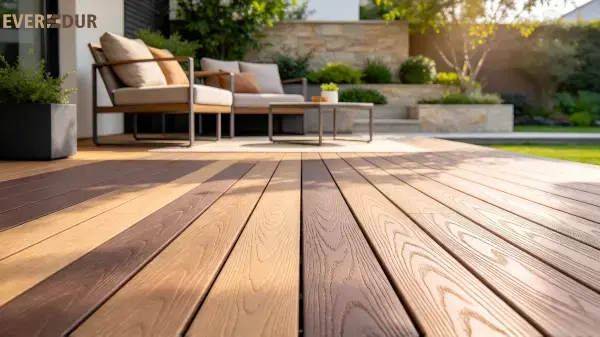
How Should Hollow WPC Decking Be Supported on a Balcony?
Recommended Subframe and Support Arrangement
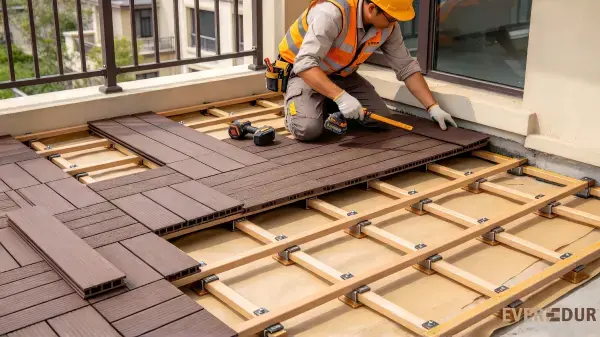
Roof decking boards are not self-supporting, they need a sturdy, appropriate framework. Use corrosion-resistant metal or stainless-steel rails, authorized pads or pedestals to protect waterproofing membranes and fully support all board ends. Hollow boards should not be used as a key structural element.
Hollow WPC Decking Joist Spacing and Clip System
The space is variable according on the load and the layout of the board. All projects must write down their figures to check they are right before obtaining hardware.
| Item | Project specification to confirm |
|---|---|
| Board width and thickness | Confirm against manufacturer data sheet (typical range 135-150 mm wide, 20-25 mm thick) |
| Maximum joist spacing | Request written value tied to the expected live load |
| End-support requirement | Confirm minimum support distance from board end |
| Expansion gap between boards | Confirm climate-specific value from the installation manual |
| Expansion gap at walls | Confirm minimum clearance value |
| Clip type | Starter, intermediate, end, or proprietary clip system |
| Screw specification | Material, diameter, length, and corrosion resistance class |
| Maximum overhang | Confirm manufacturer limit before cutting boards |
Installation Cost and Procurement Planning
A thorough cost plan for decking should include site preparation, waterproofing, subframes or pedestals, boards, clips, fasteners, cutting waste, labor, delivery, handling and removal of existing finishes. When budgeting for hollow WPC decking, also consider the board profile and installation requirements, as these can affect material quantities, support arrangements, and installation labor. Check Incoterms, MOQ, lead time, payment conditions, sample order, and export paperwork before ordering. Everdur ships from Shanghai and Ningbo with a minimum order of 100 m² and lead times of 20–30 days. The ocean transit of 25–40 days is protected by packing.

What Mistakes Should Be Avoided When Installing Hollow WPC Decking?
Common Installation Mistakes
Common warranty issues include weak subframes, blocked drains, inadequate expansion gaps, excessive joist spacing, overtightened fasteners, unsupported edges, incorrect overhangs, incompatible fixings, and poor acclimatization or ventilation. These mistakes can cause sagging, warping, cracking, water accumulation, and premature failure. Follow manufacturer installation and drainage specifications.
Hollow WPC Decking Repair and Maintenance Guide
Regular maintenance helps preserve patio decking throughout its warranty period. For hollow composite decking, sweep away leaves, grit, and dirt frequently, clean with mild soap and water, and remove spills promptly. Avoid harsh chemicals, abrasive brushes, and unapproved pressure washing. Inspect the decking annually, especially after severe weather. Replace structurally cracked boards rather than attempting repairs, and follow the supplier’s recommended cleaning and maintenance procedures.
Quality Verification and Risk Mitigation
Use a checklist to verify batch numbers, dimensions, colors, profiles, and purchase-order specifications. Inspect boards from multiple cartons for cracks, warping, defects, and damaged ends, and confirm samples match approved proofs and test requirements. Record joist spacing, expansion gaps, and fastener types. Photograph waterproofing and drainage layers before decking installation, and retain samples, invoices, batch records, and warranty documents for future claims.SEND INQUIRY
Looking for a Reliable Hollow WPC Decking Partner?
Builders and distributors can build customer trust through quality boards, clear packaging, and reliable warranties. Our second-generation co-extrusion hollow decking serves over 225 clients in 60+ countries and includes a 15-year warranty. For specifications, samples, or trial-order pricing, email violet@wpcsupplier.com with your contact details, quantity, and required delivery date.

Conclusion
Hollow WPC decking works well on porches as long as it's not a one-time fix but part of a bigger system. It stays colored, is simple to clean, and doesn't add much weight. The finished floor may last longer or shorter depending on how well it drains, how well it is insulated, how far apart the joists are, and the weather. When people compare solid WPC, wood, PVC, and tile to hollow boards based on load, cost, and seller paperwork, they don't make as many mistakes. They lose a lot of money because of these mistakes when the container gets there.SEND INQUIRY
FAQ
Q: Can hollow WPC decking be used on a balcony?
A: Yes. It can be installed on balconies when the existing structure, waterproofing, subframe, drainage, ventilation, and expansion gaps are all suited to the product. It should never replace proper structural engineering or balcony waterproofing.
Q: Is hollow WPC decking lighter than solid WPC decking?
A: Usually, yes, typically by 20-30%, because the internal chambers reduce material volume. The exact weight still depends on board dimensions, wall thickness, polymer density, and the full subframe assembly.
Q: How long does hollow WPC decking last outdoors?
A: Service life depends on the formulation, UV exposure, climate, loading pattern, and installation quality. Ask for product-specific weathering data and warranty terms rather than relying on a single universal lifespan figure.
Q: Does hollow WPC decking require waterproofing?
A: Yes. The balcony structure still needs its own waterproofing system. The decking is a surface finish and should never be relied on to stop water from reaching the structure below.
Q: What is the correct joist spacing for hollow WPC decking?
A: Correct spacing comes from the manufacturer's installation guide and the project's load requirements. It commonly changes based on board thickness, profile shape, support type, and expected live load, so always confirm it in writing before ordering hardware.
Q: How should hollow WPC decking be cleaned?
A: Sweep the surface on a regular schedule and wash it with water and a mild detergent. Skip abrasive cleaners, strong solvents, and pressure-washing settings the supplier has not approved.
Q: Is hollow WPC decking suitable for high-rise balconies?
A: It can be, but high-rise projects need extra review of structural load, wind exposure, fire performance, edge detailing, drainage, guardrail interfaces, and the local building code before any order is confirmed.
Ready to Source Hollow WPC Decking for Your Market?
Pulling together a few project details before you reach out speeds up the quote process on both sides. Share the balcony area, the existing substrate and waterproofing condition, your target colors and finish, the destination climate, expected furniture or load, your preferred installation method, and any test reports, certifications, MOQ, Incoterm, and delivery schedule you need. Everdur, a manufacturer and hollow WPC decking supplier working with distributors, cross-border sellers, and contractors across Europe, the Middle East, and the Americas, can turn this information into a formal quote within days. Send your project brief to violet@wpcsupplier.com to start a sample order or a full container quote.
References
1. ASTM International (2022). ASTM D7031 - Standard Guide for Evaluating Mechanical and Physical Properties of Wood-Plastic Composite Products.
2. ASTM International (2021). ASTM D7032 - Standard Specification for Establishing Performance Ratings for Wood-Plastic Composite Deck Boards and Guardrail Systems.
3. ASTM International (2020). ASTM D6109 - Standard Test Methods for Flexural Properties of Unreinforced and Reinforced Plastic Lumber.
4. European Committee for Standardization, CEN (2019). EN 15534 Series - Composites Made from Cellulose-Based Materials and Thermoplastics.
5. European Chemicals Agency, ECHA (2023). REACH Regulation Requirements for Substances and Articles Placed on the EU Market. Referenced under "EU and US Compliance Notes.
6. International Code Council (2021). International Building Code (IBC) Provisions for Balcony Loads and Exterior Construction.
About the author: Violet is a Product Manager at Everdur specializing in wood-plastic composite decking systems for export markets. She works directly with distributors, OEM buyers, and contractors across Europe, the Middle East, and the Americas on product specification, container loading, and after-sales quality review. Her background covers extrusion production, test-report evaluation, and installation troubleshooting for projects across 60-plus countries.
Send Inquiry
Related Industry Knowledge
- Affordable WPC Decking Wholesale: Direct from Factory to Your Project
- Traditional WPC Decking Maintenance: Easy Tips to Extend Its Life
- Brushed WPC Decking: Premium Textured Flooring for Luxury Outdoor Spaces
- WPC Composite Fencing for Residential Properties: Stylish & Secure
- Best WPC Cladding Designs for Villa and Luxury Residential Projects
- How to Choose WPC Cladding: Material, Design and Installation Tips
- WPC Landscape Walls Installation: Guide for Garden & Park Projects
- 2026 Brushed WPC Decking Trends: Stylish & Durable Options
- Brushed WPC Decking Installation: Achieve a Sophisticated Look
- High-Quality WPC Decking for Poolside: Waterproof and Anti-Slip Solutions