_1777451497595.webp)
WPC Fence Buying Guide: How to Choose the Right Fence for Your Garden and Villa
selecting the appropriate outdoor fence is seldom as easy as selecting a color and moving on. There is a lot to go through in terms of material science, installation logic, design language and long-term maintenance realities, particularly if you are thinking about a wood-plastic composite solution for a garden, villa perimeter or manicured property.
A WPC fence is a composite panel made from recycled wood fiber and high density polyethylene, and it acts somewhat differently from either pure lumber or regular PVC. It doesn’t decay, it fights moisture and it maintains its form over fluctuations in seasonal temperatures. That combination has made it suitable for European and North American residential and commercial applications.
This guide walks you through every dimension of that decision: panel size and profile, weather and UV performance, color and texture selection, privacy options, and installation compatibility. Whether you are a homeowner refining a villa garden boundary, a landscape contractor specifying materials for multiple sites, or a reseller sourcing reliable stock, the information here is structured to help you move from curiosity to confidence — without unnecessary fluff or vague promises.Let us get into it.
How Do You Choose the Right WPC Fence for Your Garden or Villa?
The starting point for any fence selection is understanding what the space actually needs — not what looks appealing in a product catalogue.
Outdoor garden fence and fencing around villas have various functional requirements. A garden fence may be more about esthetic framing, setting off flower beds, dividing grass areas, or giving a visual support to climbing plants. A villa fence, however, sometimes has to weigh seclusion, boundary clarity, and architectural harmony – often over longer linear stretches with variable topography.
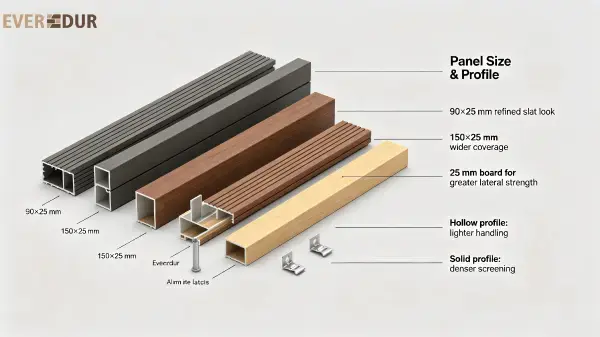
Wood-plastic composite fence is constant in substance, regardless of use, but the profile you pick is very important. Hollow profiles are lighter and simpler to handle on site. Solid profiles provide better acoustic dampening and a denser feel underfoot for low-level screening. The visibility of the post and rail construction is a gage of the width of each of the slats, which has a direct impact on privacy and visual rhythm.
Climate is another factor that determines the proper option. Dimensional stability is a prerequisite in northern European regions with considerable moisture and freeze-thaw cycles. In the warmer Mediterranean or Californian climates it becomes the UV resistance that is the emphasis. A good composite fence will do both, but it’s worth checking the technical data on any product you assess.
Maintenance expectations also vary. Some property owners are comfortable with annual cleaning; others want a truly hands-off perimeter solution. Composite fencing leans toward the low-maintenance end of the spectrum — no painting, no sealing, no annual retreatment — but surface texture choices do affect how debris accumulates and how easy a wash-down actually is.
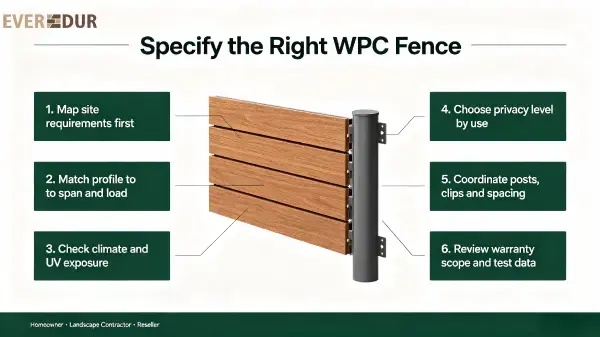
Begin by mapping these variables for your specific project before evaluating any product.
WPC Fence Panel Size, Thickness and Profile for Outdoor Projects
Dimensional specifications determine whether a fence integrates cleanly into your project or creates fitting problems during installation. Composite fence panels are typically available in widths ranging from 90 mm to 180 mm, with thickness options between 15 mm and 30 mm. Standard lengths run at 1.8 m and 2.2 m, though custom lengths are achievable through direct manufacturer arrangements.
Popular cross-sectional profiles include 90×25, 120×20, 135×25, 138×23, 140×20, 140×25, 145×25, and 150×25 mm. Each of these serves a slightly different purpose. Narrower profiles like 90×25 produce a more refined, slatted appearance — well-suited to contemporary garden designs where negative space is part of the aesthetic. Wider boards like 150×25 or 145×25 cover more surface per panel, reduce the number of fixing points needed, and create a more solid visual barrier.
Thickness is closely tied to structural performance. A 25 mm board will handle lateral pressure better than a 15 mm one, which becomes relevant in higher-wind exposure zones or where the fence is expected to carry some load, such as a climbing plant frame or a trellis attachment.
For projects with curved boundaries — a common reality in villa gardens with organic landscaping — slat width also affects how cleanly the fence follows a radius. Narrower slats flex more readily around gentle curves without the need for heat bending or specialized cutting.
Profile selection should also account for the post system being used. Aluminum post systems are increasingly common because they are lighter and corrosion-resistant. Steel posts offer more rigidity for taller fence runs. Either way, the panel width needs to coordinate with post spacing to avoid mid-span deflection over time.
Specifying panel dimensions is not a decorative decision — it is a structural and spatial one. Get the numbers right early, and the rest of the installation follows logically.
WPC Fence Weather Resistance, UV Stability and Long-Term Durability
How Composite Fencing Handles Rain, Frost and Heat
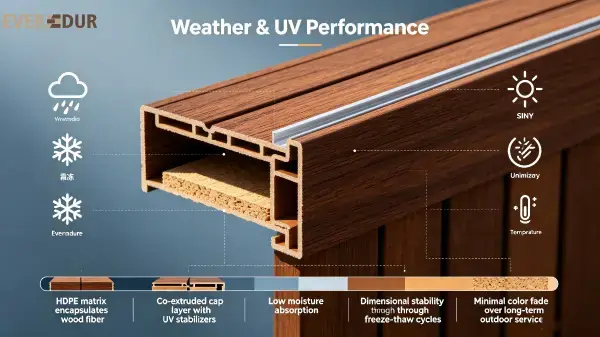
Outdoor fencing lives in conditions that would accelerate the deterioration of most natural materials. Rain is the most persistent challenge — not because of a single storm event, but because of cumulative moisture absorption over years. Traditional timber fencing swells when wet, contracts when dry, and gradually loses structural cohesion through that cycling. Wood-plastic composite panels address this through their hybrid composition: the HDPE matrix encapsulates the wood fiber particles, significantly reducing the surface area available for moisture ingress.
Co-extrusion manufacturing takes that protection a step further by applying a denser outer cap layer over the composite core. This cap layer is where UV stabilizers, color pigments, and surface texture are concentrated, which means the protective chemistry is exactly where weathering stress occurs.
Frost is a related concern. Water that penetrates a porous material and then freezes expands with enough force to fracture the substrate. A properly manufactured composite fence, with its low moisture absorption rate, avoids that failure mode. Panels maintain their dimensions through freeze-thaw cycles that would split untreated timber within a few seasons.
High summer temperatures present a different stress profile. Prolonged heat can cause materials to expand and soften. Composite fencing formulated with appropriate chemical additives maintains dimensional stability within normal outdoor temperature ranges — boards stay straight, surfaces stay flat, and fixing points remain secure.
UV Stability and Long-Term Color Retention
Color fade is one of the most visible signs of outdoor material aging. Natural wood exposed to UV radiation grays within a single season without protective treatment. Standard paint or stain systems slow that process but require reapplication every one to three years.
UV-stabilized composite fencing is formulated to minimize photodegradation of the color pigments within the cap layer. Quality composite fence boards demonstrate minimal visible fading after 2,000 hours of accelerated UV exposure testing — a standard benchmark used in material qualification. That translates to color stability across many years of outdoor service.
The practical implication is that colors chosen at installation remain recognizable and aesthetically coherent throughout the fence's service life, which typically spans 10 to 25 years depending on product specification and environmental conditions.
Service Life and Warranty Expectations
Service life claims in the fencing industry vary widely, and it is worth understanding what underpins them. A hollow composite fence profile backed by a 15-year warranty reflects manufacturer confidence in material consistency and structural retention. A solid panel option warranted for 20 years reflects the additional density and reduced moisture exposure that comes with that profile type.
These warranty periods are meaningful benchmarks, not marketing abstractions. They reflect the actual performance data that responsible manufacturers accumulate through accelerated testing and long-term field observation. When evaluating any composite fence product, ask specifically about warranty scope — what is covered, under what conditions, and through what process claims are handled.
How to Select WPC Fence Colors, Textures and Privacy Levels?
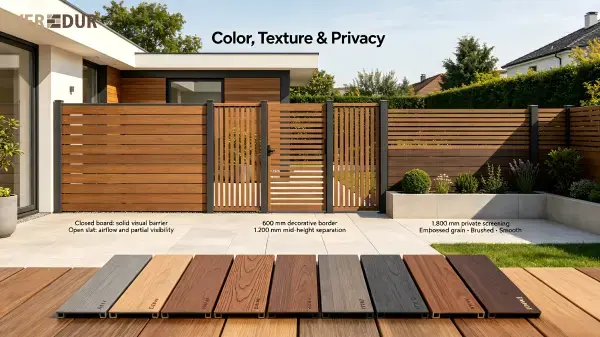
Color and texture are where functional specification meets personal or architectural preference. WPC garden fence panels are available in a range of tones that reference natural wood — ash grey, cedar, coffee, copper brown, dark grey, teak, walnut, and sandal wood, among others. Custom color matching is possible for projects where the fence needs to coordinate with specific architectural materials, rendered walls, or proprietary design schemes.
Surface texture options include brushed finishes, embossed wood grain patterns, sanding, and smooth profiles. Brushed surfaces offer a tactile quality that references hand-finished timber. Embossed wood grain adds visual depth without paint. Smooth surfaces are easier to clean and work well in minimalist design contexts. Each texture also affects how the fence reads from a distance — a brushed or grained surface catches light differently than a flat one, which changes the visual weight of a long fence run.
Privacy level is determined by slat spacing and panel height. Closed-board installation with no gap between slats creates a solid visual barrier — appropriate for pool enclosures, patio screens, and property boundaries where visibility reduction is the primary goal. Open-slat configurations with consistent gaps allow air movement and partial visibility, working well for decorative garden edging or front boundary fencing where complete enclosure would feel oppressive.
Panel height ranges from low decorative borders around 600 mm up to semi-private or fully private screens at 1,800 mm and above. Taller installations may require additional structural support through mid-rail systems or larger post sections, which should be factored into the design from the outset.
WPC Fence Installation, Post Compatibility and Outdoor Design Options
Post Systems, Clips and Fixing Methods
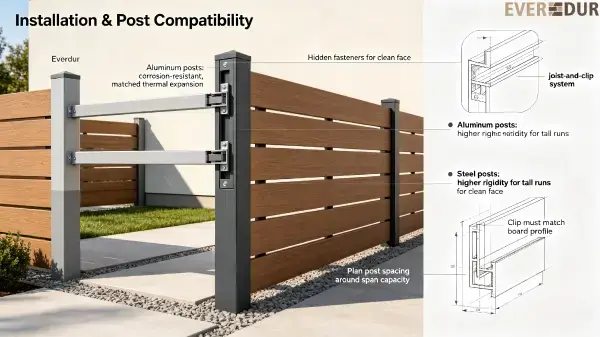
Composite fence panels are designed to be installed using a joist-and-clip system, which conceals fixings and allows for minor thermal movement without stressing the board surface. This method produces a clean face without exposed screw heads — a significant aesthetic advantage over face-fixed timber systems.
Post compatibility is an important specification point. Aluminum post systems are well-matched to composite panels because both materials share similar thermal expansion characteristics and corrosion resistance. Steel post systems are appropriate where greater rigidity is required — on taller fence runs, corner posts under lateral load, or in high-wind exposure zones. Post spacing should be calculated based on board span capacity, which varies with profile thickness and hollow or solid construction.
Clips are sized to match the profile of the fence boards being installed. Using clips designed for a 25 mm board with a 20 mm board introduces movement and rattling over time. Always confirm clip-to-profile compatibility before ordering installation hardware.
Design Flexibility for Curved, Angled and Uneven Sites
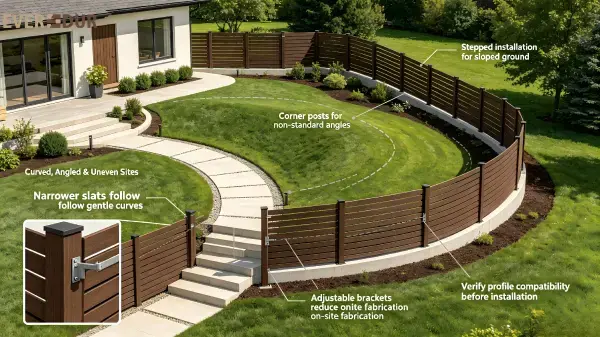
Outdoor sites are rarely flat, regular rectangles. Villa gardens often incorporate curved pathways, sloped terrain, and irregular boundary lines that require flexible installation solutions. Composite fence systems accommodate these conditions in several ways.
Narrower slat profiles can follow gentle horizontal curves by varying the angle at each post fixing point. Stepped installation handles sloped ground by descending in regular increments rather than raking — this maintains a consistent panel height visually while accommodating gradient changes. Corner posts and adjustable bracket systems allow non-standard angles to be addressed without custom fabrication on site.
These design accommodations are worth discussing with the manufacturer or supplier before finalizing the installation plan, as some profile configurations handle curved or angled runs more cleanly than others.
Height Options and Practical Applications
The height of an outdoor fence is not purely an aesthetic choice — it carries functional and sometimes regulatory implications. Low decorative borders at 600 mm define garden zones visually without creating an enclosure. Mid-height panels around 1,200 mm work well for separating outdoor dining areas from garden plantings, or marking a soft perimeter around a pool zone.
Taller configurations at 1,500 mm to 1,800 mm provide genuine privacy screening — appropriate for villa terraces, patio enclosures, or residential boundaries where overlooking from adjacent properties or public pathways is a concern. Some jurisdictions regulate maximum fence height in residential zones, so local planning requirements should be checked before specifying any perimeter over 1,200 mm.
For both WPC villa fence applications and residential garden settings, the height decision should be made in relation to the surrounding landscape — a fence that is slightly lower than an adjacent hedge line integrates more naturally than one that rises above it unexpectedly.
Conclusion
Selecting the right composite WPC Fence for a garden or villa project comes down to aligning material performance with site conditions, design intent, and long-term maintenance expectations. Panel dimensions, profile type, surface texture, color, privacy configuration, and post system compatibility all interact — and getting each of those decisions right produces a fence that serves the space well for a decade or more without demanding much in return. The material science behind quality composite fencing is well-established; the key is applying that knowledge to the specific conditions of your project.
FAQ
Q: What is the difference between a hollow and solid WPC fence panel, and which should I choose?
A: Hollow panels are lighter, easier to handle during installation, and sufficient for most residential applications. Solid panels offer greater density, better acoustic performance, and are typically backed by longer warranty coverage — often 20 years versus 15 for hollow profiles. If your project involves high-traffic areas, noise-sensitive environments, or maximum longevity, solid panels are worth the additional cost.
Q: How long does a composite garden fence actually last outdoors?
A: A well-manufactured composite fence panel in a typical outdoor environment — exposure to rain, UV radiation, frost, and temperature fluctuation — can perform reliably for 10 to 25 years depending on the specific product and climate conditions. Warranty periods offered by manufacturers are a useful proxy for their actual confidence in material longevity.
Q: Can composite fencing be installed on sloped or curved garden boundaries?
A: Yes. Composite fence systems accommodate sloped ground through stepped installation, where panels descend in increments to follow the gradient. Curved boundaries are handled by adjusting the fixing angle at each post, with narrower slat widths offering more flexibility around tighter radii. Discussing the site conditions with the supplier before specifying the profile is the most reliable way to confirm compatibility.
Ready to Specify Your Outdoor Fence Project? Contact Everdur Directly
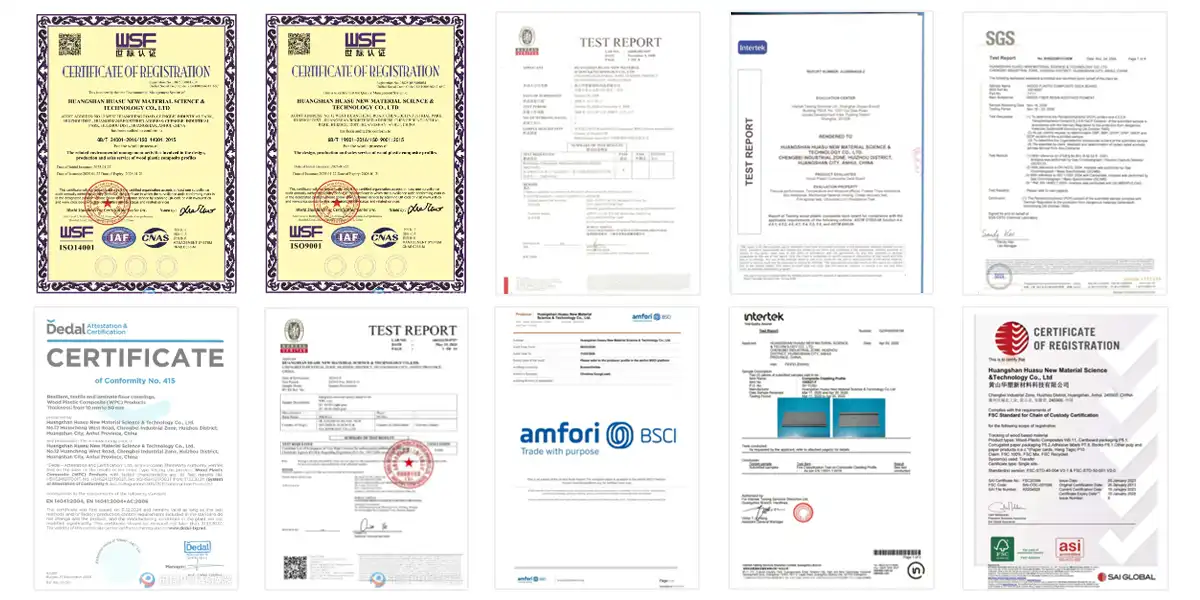
For Construction Firms and Fence Contractors: Access full technical documentation, profile specifications, and sample sets to support project tendering. Everdur's manufacturing processes are certified to ISO 9001 and ISO 14001 standards. Products meet EU CE requirements, US ASTM D7039 testing benchmarks, and China GB/T 24137 material standards. Environmental credentials include Recycled Content certification, FSC chain-of-custody, REACH and RoHS compliance, and E0 environmental standard alignment — documentation available on request.
For Building Materials Wholesalers and Resellers: Competitive wholesale pricing structures, annual capacity exceeding 1,500 containers, and consistent batch quality through 5S production management. FOB shipping from Shanghai and Ningbo. Free samples available for product qualification.
For End Customers and Property Owners: Free design consultation to help you select the right profile, color, and height configuration for your garden or villa boundary. Installation guidance provided as part of the inquiry process.
Whether you are sourcing as a WPC fence manufacturer partner or specifying for a single property, reach out to the Everdur team to discuss your project requirements. Contact: violet@wpcsupplier.com
References
1. European Committee for Standardization. EN 15534: Wood-Based Composites for Outdoor Applications — Classification and Performance Requirements. CEN, Brussels.
2. ASTM International. ASTM D7032: Standard Specification for Establishing Performance Ratings for Wood-Plastic Composite Deck Boards and Guardrail Systems. ASTM International, West Conshohocken, PA.
3. Forest Stewardship Council. FSC Certification Standards for Chain of Custody and Controlled Wood. FSC International, Bonn.
4. European Chemicals Agency. REACH Regulation (EC) No 1907/2006: Registration, Evaluation, Authorisation and Restriction of Chemicals. ECHA, Helsinki.
5. International Organization for Standardization. ISO 9001:2015 — Quality Management Systems: Requirements. ISO, Geneva.
6. International Organization for Standardization. ISO 14001:2015 — Environmental Management Systems: Requirements with Guidance for Use. ISO, Geneva.
7. American Wood Protection Association. AWPA Standards for Wood-Plastic Composite Materials Used in Outdoor Structural Applications. AWPA, Grandville, MI.
Send Inquiry
You may like