
2026 Guide to Choosing the Best Swimming Pool WPC Decking
2026-11-23 17:05:54
When designing a pool deck for 2026, you'll have many of choices to consider—and the material you pick will set the tone and performance of your outdoor area for years to come. Homeowners, builders and resort developers often use swimming pool WPC decking around swimming pools because it is a surface that can endure water, sun and foot traffic without the maintenance that genuine wood requires. A guide to what makes a composite pool deck reliable vs one that fades or warps in a season. We'll look at slide resistance, waterproofing technologies, color and texture options, and installation elements that determine how your deck functions over time. If you're remodeling a backyard pool or choosing materials for a resort project, knowing these characteristics will help you make an informed selection and choose a product that's constructed to withstand damp, high-traffic conditions.SEND INQUIRY
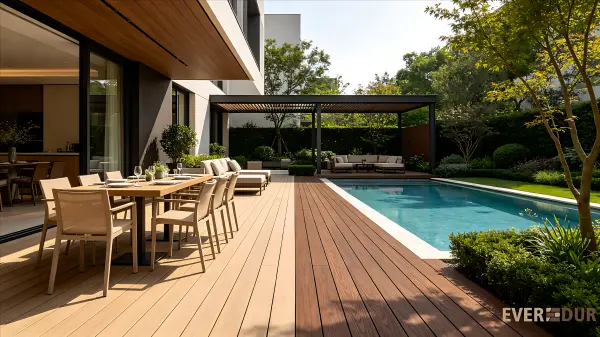
What Makes Swimming Pool WPC Decking a Better Choice Than Traditional Wood?
For decades, wood has been the material of choice for pool decks, but anybody who's had a wood deck near water will attest to the fact that the upkeep never truly ends. Sanding, sealing and replacing warped boards becomes an annual process. Composites were engineered to tackle these difficulties that happened again and over again, and the consequences are quite apparent when you put the two side by side.
The Problem with Natural Wood Around Pools
Wood absorbs moisture every time it gets wet and pool areas remain wet far longer than a normal backyard would. Splashing, rain and humidity keep the boards wet, causing them to expand, cup and finally decay. Chlorine or salt water added to the water can speed up the breakdown of the wood fibers. Bare feet are at risk from cracked boards and splinters, and the continuous refinishing is an expense most homeowners don't foresee when they first construct a wood deck.
How Composite Materials Solve This
Decking WPC panel for the pool is a combination of wood powder, HDPE plastic and additives melted together under heat and pressure. This mixture results in a surface that does not soak up water the way solid wood does. The plastic surrounds the wood fibers, keeping moisture out and preventing the swelling and warping issues that regular timber suffers. Everdur's co-extrusion technique provides a protective outer layer that further protects the board from chlorine exposure, UV radiation, and the typical wear and tear that occurs from frequent foot activity around a pool.
Cost Comparison Over Time
Cost Comparison Over Time On paper, wood decking may seem less costly at first, but the long-term arithmetic reveals a different picture. In addition to an occasional rotted board repair, a wood deck will need to be refinished every one to three years on average. Composite decking costs more initially, but needs nothing more than a soap and water wash once in a while. Most pool owners discover that swimming pool WPC decking works out cheaper over ten to fifteen years when you include in labor, materials and the nuisance of periodic maintenance. This is one of the reasons composite materials have been rapidly gaining momentum in residential and commercial pool construction in Europe and North America.SEND INQUIRY

Swimming Pool WPC Decking Slip Resistance: What Should Buyers Look For?
Safety around a pool is not optional and slide resistance is arguably the most critical performance feature to consider when you purchase. Wet feet, splashed water and sunscreen residue all produce slippery circumstances, thus the texture of your decking surface has to actively battle against that danger.
Surface Texture Options
Manufacturers provide a range of surface treatments for pool deck composite, each offering a particular grip profile. Brushed finishes provide a little texture that aids grip without feeling abrasive underfoot. The embossed wood grain design looks like real timber, and the small ridges assist drain water away from contact places. Sanded finishes feel smoother and more uniform, and they also work well in damp circumstances. The choice of finish frequently involves a compromise between grip and comfort, as a surface that is excessively aggressive might be irritating on naked skin.
Testing Standards for Slip Resistance
Reputable providers don't just go by marketing promises, they test their decking to known slip resistance specifications. Look for items that provide coefficient of friction testing or pendulum test data. These values provide an objective method to compare materials. Decking certified for wet areas should have appropriate grip while wet, not simply when dry. Asking for test paperwork from your supplier is a sensible request and a strong indicator of the firm standing behind its performance promises.
Why Grooved Designs Matter for Pool Areas
Safety is also a matter of the board's physical profile, not just surface roughness. The grooved underneath or surface channel allows water to drain rapidly, instead of sitting on top of the deck. Water that is standing is one of the greatest causes of slips therefore a design that conducts water away effectively decreases danger before you even consider the texture itself. The drainage-oriented design is particularly helpful in splash zones, around pool stairs and regions around water features where moisture collects the quickest. If your project involves youngsters, elderly visitors or heavy foot traffic, you'll want to consider composite pool decking and prioritize a grooved, well-drained profile. The additional effort in the selection process will pay off.SEND INQUIRY

Waterproof and Weather-Resistant Swimming Pool WPC Decking for Outdoor Use
A pool deck gets more environmental abuse than almost any other outdoor surface in your yard. It copes with direct light, standing water, chemical exposure and temperature changes, often all in one week. Knowing how composite decking is built to withstand these circumstances helps a lot in understanding why it acts so unlike raw wood.
Understanding Co-Extrusion Technology
Co-extrusion is a manufacturing method in which a protective cap layer is fused to the core of the board during manufacture. The outer shell works as a barrier against moisture, UV radiation and surface stains. Everdur's next generation co-extrusion technology builds on previous composite designs to tighter this protective layer reducing water absorption at the edges and ends of the board, which are generally more sensitive to damage. The outcome is a board that is more dimensionally and color stable, especially in a pool setting where the moisture exposure is continual rather than sporadic.
Resistance to Chlorine and Saltwater
Chlorine or saltwater treated pools generate a chemically hostile atmosphere that most construction materials do not like.” Metal rust, natural stone may etch and untreated wood can decay quicker than normal. A correctly prepared WPC panel for a pool deck is made of a recycled HDPE coupled with wood fiber and chemical additives that are resistant to this kind of chemical exposure. That way the boards won't have the bleached-out areas or soft places that might result from chlorine exposure in inferior materials. This resilience is even more important in the case of saltwater pools in particular, since salt is well known for its ability to corrode a broad variety of construction items.
UV Stability and Color Retention
Pool decks are unforgiving of sunlight; shadow seldom covers the full area. Over time, UV rays break down pigments and plastic bonding, which is why some decking fades unevenly or becomes chalky after a couple of summers. Quality composite decking is designed with UV stabilizers, and testing after 2,000-plus hours of UV exposure indicates negligible fading in well-formulated materials. This is practically important since a faded deck, unevenly, will seem worn out long before it really breaks structurally. If you choose swimming pool WPC decking that has been tested for UV, then you have a good idea of how well color will hold up after a few seasons of direct sun exposure, which is particularly significant for pool areas in sunny countries throughout southern Europe and the United States.SEND INQUIRY

How to Choose the Right Swimming Pool WPC Decking Colors, Textures, and Profiles?
Performance is king, but the visual character of your pool deck WPC panel impacts how the overall pool area feels. Getting the color, texture and board profile perfect means your deck will compliment your landscape and architecture rather than compete with it.
Matching Colors to Your Landscape
Lighter tones such as ivory, sandal wood and stone gray tend to remain cooler underfoot since they reflect more sunlight, making them a sensible selection for sunny locations where bare feet would be strolling over the surface often. Darker colors such as coffee, walnut and dark gray provide a more dramatic contrast against light colored pool tile or stucco and often cover dirt and water marks better in between cleanings. Consider your local temperature, and the current color scheme of your house — this will rapidly restrict your choices. Many vendors like Everdur also provide bespoke color matching for projects that need to fit a certain architectural theme or branding need, such as is typical in hotel and resort installations.
Texture Choices for Comfort and Style
Texture is not just about slide resistance, it also impacts the whole sense of the room. The embossed wood grain surface creates a natural, rustic look that works well with garden-style pools surrounded by flora. A brushed or sanded surface seems more modern and simple, and tends to pair well with contemporary pool designs that include clean lines and geometric landscaping. Because the boards are walked on barefoot all the time, it's recommended asking for a tangible sample before committing to a complete purchase, as photographs don't often convey what a texture feels like underfoot.
Profile and Dimension Considerations
Board width, thickness and length affect its look and performance. Typical widths for pool applications are in the range of 140mm to 150mm with thicknesses between 20mm and 25mm. These widths and thicknesses are considered to be good to meet structural support requirements and material efficiency. The longer boards like the 3.6 meter option mean there are less obvious seams throughout a large pool deck, creating a cleaner appearance for larger installations. Shorter lengths like 2.2 or 2.9 meters are generally enough for smaller home pools and easier to handle during installation. Custom profile choices enable the deck to accommodate odd pool shapes or architectural limitations rather than requiring unpleasant on-site cuts when a project demands anything beyond typical dimensions.SEND INQUIRY

Swimming Pool WPC Decking Installation: Joist Spacing, Hidden Clips, and Drainage
And even the greatest decking material won't work well if it's not placed correctly. But it's the details, such as joist spacing and drainage design, that will help your deck remain strong and attractive over its service life.
Proper Joist Spacing Guidelines
Joist spacing matters too, as it determines how much weight the deck can hold and how much the boards will bend underfoot over time. For most residential pool decking joists placed approximately 300mm to 400mm on center should offer appropriate support, however this may vary depending on the thickness of the boards and the intended foot traffic. In commercial environments (e.g. hotels, resorts) the spacing on pool decks is generally narrower to accommodate heavier and more frequent usage. If the spacing is too wide the deck surface may droop or bounce , which becomes obvious and unpleasant fairly fast . Before installation check the manufacturer's exact spacing guidelines .
Hidden Clip Systems for a Clean Finish
Hidden clip systems have been the installation technique of choice for composite decking because they remove the screw heads on the surface. The clips are set into a groove routed into the side of each board securing it to the joist below but allowing a little space between boards for drainage and natural expansion. This technique provides a cleaner, more polished look on pool decks than previous methods using face screws, while also reducing the potential for water to pool around exposed fastener holes, a common weak area for moisture penetration over time.
Drainage Planning Around Pools
Water management is perhaps the most ignored aspect of a pool deck construction. The substructure under the decking should be slightly sloped, generally 1% to 2%, so that water runs away from the house to a suitable drainage area instead of pooling under the boards. This sloping substructure, together with the gapped board arrangement from a concealed clip system, enables water to flow through rather than pool on top. It's a typical error to skip this step in installation and it may lead to mold development or structural difficulties below your deck even when the composite boards themselves are working well. Properly planning drainage takes time but will maintain your investment in swimming pool WPC decking and make the surrounding area safer and drier in-between swims.SEND INQUIRY

Conclusion
Choosing the proper pool deck material is all about finding the correct balance of safety, durability and attractiveness, and swimming pool WPC decking delivers on all these fronts in ways that conventional wood just cannot today. Today, WPC technology has been improved for the challenges of damp, sun-exposed environments—from slip-resistant surface textures to chemical resistance against chlorine and saltwater. The installation details — joist spacing, clip systems and drainage — are as important as the material itself. Compare these variables when you're planning your 2026 pool makeover to help you choose a deck that's safe, sturdy and good-looking for many seasons to come. When you are ready to look at choices made for your environment and design, a logical next step is to contact a manufacturer with a track record of success in your climate and design.SEND INQUIRY

FAQ
Q. Is swimming pool WPC decking safe for bare feet in hot climates?
A: Yes, quality composite decking is designed to reduce heat absorption compared to materials like stone or metal, and lighter colors stay noticeably cooler underfoot during peak sun hours.
Q. How long does a composite pool deck typically last?
A: Most composite pool decking carries a service life of 10 to 25 years, depending on the board design and climate, with solid co-extrusion boards often backed by extended warranties.
Q. Can pool deck WPC panel products be installed over an existing concrete pool deck?
A: Yes, with the correct joist or sleeper system installed first to create proper elevation and drainage, composite decking can often be installed directly over existing concrete surfaces.

Request a Quote from Everdur: Your Trusted Swimming Pool WPC Decking Supplier
Everdur has spent 16 years developing composite decking that holds up to real pool conditions, backed by more than 50 production lines and a track record with over 225 clients across 60-plus countries. Our pool deck composite boards comply with international standards including EU CE marking, US ASTM D7039, and China GB/T 24137, giving you confidence in both safety and consistency. We also hold Recycled Content certification and meet E0 environmental standards, reflecting our commitment to responsible manufacturing. Whether you need standard profiles or a fully customized pool deck WPC panel solution for a hotel, resort, or residential project, our team is ready to help. Reach out today at violet@wpcsupplier.com to start your inquiry with a dependable swimming pool WPC decking supplier.SEND INQUIRY

References
1. American Society for Testing and Materials. (2021). Standard Specification for Establishing Performance Ratings for Wood-Plastic Composite Deck Boards and Guardrail Systems (ASTM D7032).
2. European Committee for Standardization. (2014). EN 15534: Characterisation of Composites Made from Cellulose-Based Materials and Thermoplastics.
3. Standardization Administration of China. (2009). GB/T 24137: General Technical Requirements for Wood-Plastic Composite Products.
4. International Organization for Standardization. (2015). ISO 14021: Environmental Labels and Declarations — Self-Declared Environmental Claims.
5. Forest Products Laboratory, United States Department of Agriculture. (2010). Wood-Plastic Composites: A Primer on Performance and Durability.
6. National Association of Home Builders Research Center. (2017). Field Performance of Composite Decking in Residential Applications.
Send Inquiry
Related Industry Knowledge
- How to Choose Garden WPC Decking for Your Garden Style
- Upgrade Your Outdoor Spaces with WPC Railings
- Anti-Fade WPC Commercial Building Facades: Long-Lasting Aesthetics
- Weather Resistant Brushed WPC Decking: Perfect for All Climates
- Tips and Tricks for Perfect WPC Solid Decking
- How to Choose Exterior WPC Cladding for Your Building
- Co Extrusion WPC Decking vs Regular WPC: Which Saves You More Money?
- WPC Decking Maintenance Tips: Keep Your Outdoor Deck Looking New for Years
- Eco-Friendly WPC Decking: Sustainable Choice for Modern Outdoor Spaces
- High-Quality WPC Decking for Poolside: Waterproof and Anti-Slip Solutions