_1777451497595.webp)
How to Choose Exterior WPC Cladding for Your Building
2026-10-11 23:18:40
Choosing the right cladding for your building's facade involves more decisions than most people expect. Exterior WPC cladding — wood-plastic composite panels used on outdoor walls — has become a popular option across residential, commercial, and hospitality projects in Europe and North America. The appeal is practical: these panels blend the warmth of natural wood aesthetics with the resilience of engineered composite materials, without the ongoing maintenance burden that solid timber demands.
But not every WPC cladding product performs the same way. Profile dimensions, surface texture, co-extrusion coating thickness, fixing method, and raw material quality all vary considerably between manufacturers. A panel that works well on a sheltered villa wall in southern France may not hold up on a rain-exposed commercial facade in coastal Oregon.
This guide walks through the key selection criteria — from project type and climate exposure to profile sizing, installation compatibility, and quality verification — so you can make an informed purchasing decision. Whether you are a contractor specifying materials for a client, a developer sourcing for multiple units, or a building owner planning a renovation, the following sections will help you narrow your options with confidence.SEND INQUIRY
What Project Requirements Should Guide Exterior WPC Cladding Selection?
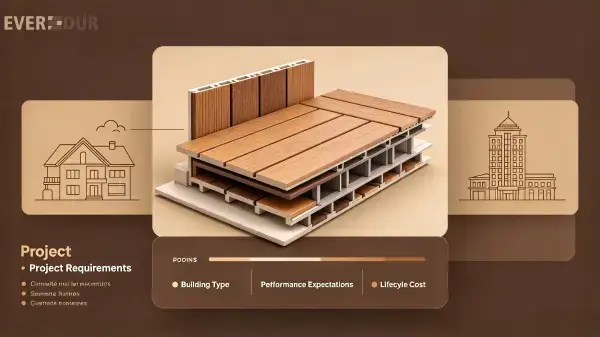
It's helpful to know what your project really needs before you start comparing product specs. The choice is based on three main things: the type of building, the expected performance, and the budget for the whole working life.
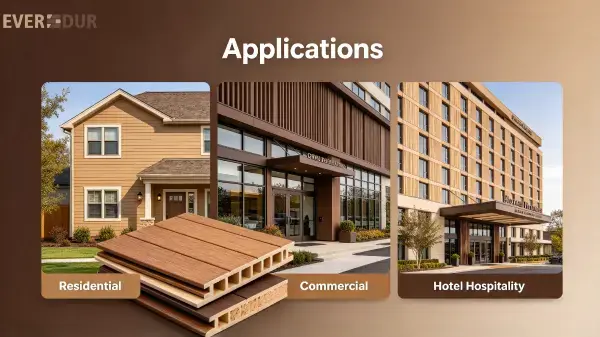
The type of building affects the structural and visual needs of your cladding. The needs of a private house with a yard facing side are different from those of a ground-floor storefront that is constantly exposed to UV light, street contact, and moisture splashes. For commercial and hotel entrances, panels need to be harder on the outside and less likely to get scratched. For home projects, color warmth and a natural wood grain look may be more important.
Expectations for performance should be based on where the building is located and how much publicity it gets. Think about how much direct sunshine the front gets, whether the wall faces rain, and whether there are freeze-thaw cycles in the area. When it comes to high-exposure situations, co-extruded composite panels usually do better than single-layer extruded boards. This is especially true when it comes to how well they absorb moisture and keep their color after being exposed to UV light for a long time.
Lifecycle cost, not the price of the materials up front, is the more important metric for most projects. During their useful life, composite wall pieces usually don't need to be painted, resealed, or treated for rot. When you look at how much you'll save on upkeep each year over 15–20 years, composite materials often end up being much cheaper than painted wood or fiber cement.
As a useful starting point, sort your project wall into groups based on its orientation (north-facing, west-facing, etc.), the type of building use (private, commercial, or public), and the minimum service life that is acceptable. With just these three parameters, you can get rid of a lot of products that aren't right for you before you even look at samples.
Exterior WPC Cladding for Different Building Orientations and Climates
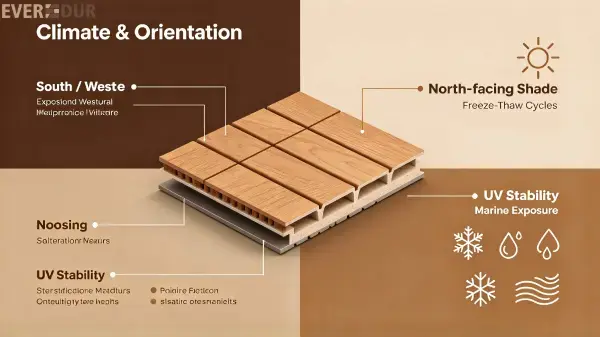
How cladding ages is directly affected by how the wall is oriented. The most UV rays and afternoon heat are absorbed by walls that face south or west in the northern hemisphere. These surfaces change size more when the temperature changes throughout the day and throughout the year. Panels with low heat expansion coefficients and reinforced co-extrusion covers are the better choice for these kinds of exposures with outdoor decorative WPC.
Walls that face north tend to keep water in for longer because they get less drying sunshine. This makes it more likely for surface mold to grow on panels with rough or porous finishes in humid places. On a wall that stays in the shade, a smooth surface that has been brushed or sanded tends to shed water better than a surface with a deep wood grain.
As much as orientation, climate zone is also important. In Central and Northern Europe, like Germany, Scandinavia, and the UK, freeze-thaw cycling is a big part of how long something lasts. If water gets into the top or end-grain of a panel, it can grow when it freezes, which can lead to micro-cracks over time. In this case, panels with sealed end caps and low water absorption rates (usually less than 1% by mass after 24 hours of soaking in well-specified goods) will work.
In warm, humid places like the South of the United States, the Gulf Coast, and the Mediterranean in Europe, UV stability and resistance to fungal growth are the most important things. Look for products that list the results of UV exposure tests. Panels that keep their acceptable color variation (ΔE values) after 2,000 hours or more of standardized UV testing will give you a good idea of how stable their appearance will be over time.
When installing things near the coast, you need to think about salt spray as well. Marine-grade composite cladding should be able to handle salty environments without any problems, as salt can damage both the polymer shell and any metal parts that hold it together. Fixings made of stainless steel or hot-dip galvanized steel are usually used near the coast.
Manufacturers who offer tailoring services can make climate-adapted material recipes for you. This means that the additive packages in the composite mix are changed to fit different temperature or humidity conditions. If your project is in a place with extreme or unusual weather, you should ask for this.SEND INQUIRY
How Do Exterior WPC Cladding Sizes and Profiles Fit Your Facade?
Choosing a profile is where engineering and style meet. The cladding board's width, thickness, and cross-section shape affect both how it looks and how well it holds up when it's placed.
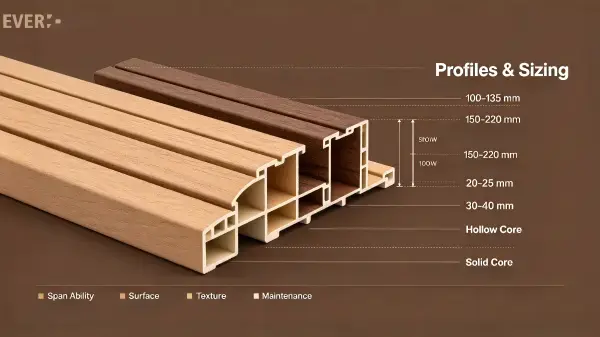
Wider boards, between 150 mm and 220 mm, make a bold, modern horizontal pattern that works well with modern office buildings. Narrower profiles, between 100 mm and 135 mm, tend to read as more traditional or homey. The choice you make should fit with the grid on your face, the size of your windows, and the general style of your building.
For spanning ability and binding strength, thickness is important. Boards between 20 mm and 25 mm thick can be used in most standard home and light commercial settings with joist spacing of up to 400 mm. For longer spans that don't need to be supported or for facades that are subject to higher wind loads, thicker profiles (30mm to 40mm) are best.
Another practical thing to think about is hollow-core vs. solid profiles. Hollow co-extruded boards are better at keeping heat in and are lighter. They are also easier to handle during installation. Solid boards are stiffer and less likely to break when hit with a point, which can be useful in public areas with a lot of foot traffic. In some projects, solid profiles are used below 2 meters, where there is a higher chance of touch, and hollow profiles are used above that.
When it comes to maintenance, surface texture and profile geometry work together. While deep-embossed wood grain textures on wide boards give them an authentic look, they may collect dust in open urban areas. A surface that has been brushed or lightly scraped on the same shape is usually easier to clean with water.
Exterior WPC Cladding Installation Methods for Different Wall Systems
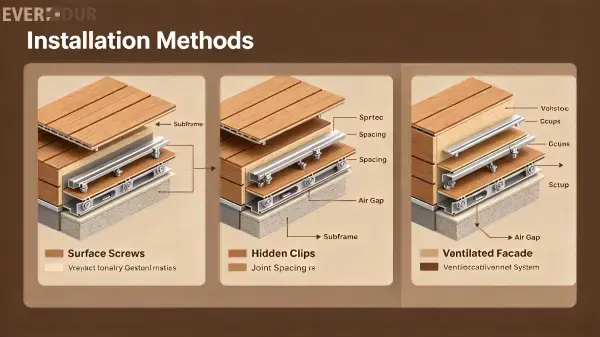
The way you fix your cladding system affects both how it looks when it's done and how well it works in the long run. These days, there are three main ways to put something: surface screw fixing, secret clip systems, and rail-mounted ventilated facade systems.
The easiest and least expensive way to fix something is with surface screws. Screws go through the board's face and into a metal or wood base that holds it up. Although this method works well and makes it easy to replace individual boards, some architects and clients will not like the visible fixings.
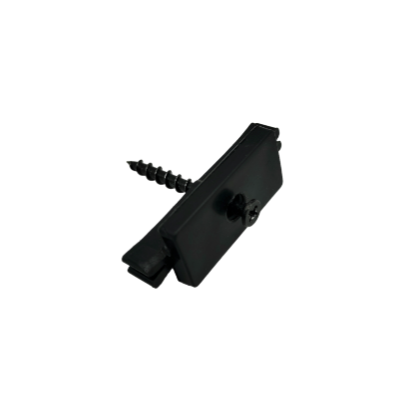
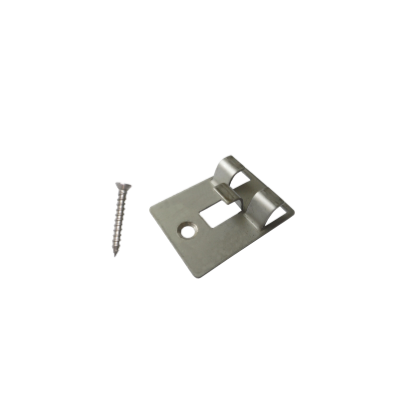
By fitting into grooves machined along the edges of the board, hidden clip systems get rid of the need for visible fasteners. The boards are attached from behind or between panels, making a smooth, clean surface. This method needs a little more care during installation to make sure that the joint spacing stays the same, but the finish looks better and is suitable for high-end residential and commercial projects. It is the best way to go for most outdoor artistic WPC projects where the look of the surface is important.
Ventilated facade systems, in which cladding panels are attached to a secondary frame with an air gap behind them, are becoming more popular in Germany and Northern Europe for business exterior WPC projects. The air gap lets any water that gets behind the cladding drain and dry, which lowers the risk of condensation building up and makes the building shell more energy efficient. A wall engineer is usually the one who chooses this system because it needs careful finishing at the eaves, sills, and corners.
No matter what method is used for gluing, material preparation is important. Whether it's made of aluminum rails or wooden battens, the subframe has to be level, plumb, and fixed at the right distances from each other to support the board span. Board deflection and fixing failure in the field are often caused by the wrong subframe spacing.SEND INQUIRY
What Quality Checks Matter When Buying Exterior WPC Cladding?
Choosing the right shape and size is only one part of the test. Whether the fixed facade works as planned for the length of time it's supposed to depends on the quality of the composite material and how well the maker makes it with external commercial WPC.
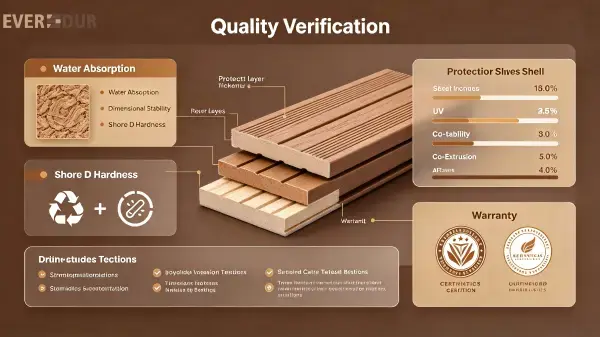
Instead of relying on printed claims, ask for test results that can be proven. Some important things to check are the rate at which the material absorbs water, how stable its dimensions are after being heated and cooled many times, how hard its surface is (usually measured by the Shore D or Brinell methods), and how stable its color is in UV light, shown as ΔE values after standard exposure testing. These numbers come from third-party laboratories that have been approved by the maker, not just internal tests.
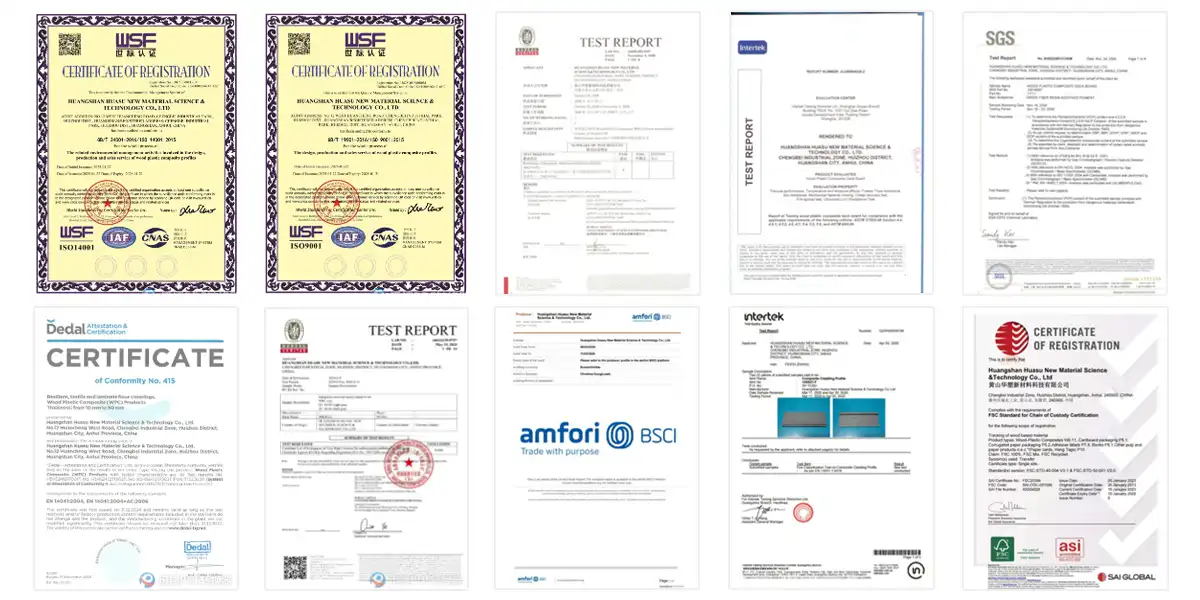
In many buying methods, certification compliance can be used as a stand-in for quality. The CE mark is important for goods sold in Europe because it shows that the product has been tested to meet European standards. Specifications in North America talk about ASTM D7039 and other related test methods. FSC chain-of-custody certification checks where the wood fibers came from, which is important for green building projects. More and more, clients in the public and private sectors want environmental certificates like Recycled Content verification and E0 formaldehyde emission guidelines.
It's harder to see how thick the co-extrusion layer is and how well it sticks, but these are important for long-term performance. Within a few years of placement, a thin or badly bonded co-extrusion shell can separate when exposed to temperature stress or changes in moisture. Ask for cross-section samples and ask the manufacturers to write down the shell thickness as part of the product documentation.
The terms of the warranty show how confident the company is in their goods. In this market, a 15-year warranty on hollow co-extruded siding and a 20-year warranty on solid co-extruded profiles are fair standards. Carefully read the guarantee terms and conditions, paying special attention to what doesn't cover the product (for example, UV exposure limits, chemical cleaners, and substrate requirements) to figure out if the warranty is useful for your situation.
Conclusion
It's important to think about how the siding will look, how well it will work in different climates, how easy it will be to install, and how much it will be worth in the long run. Exterior WPC cladding comes in a lot of different types, from basic single-extrusion boards to high-performance co-extruded composite systems. It's important to choose the right product level for your project so it doesn't go over or under specifications. Start by thinking about the conditions of exposure and performance needed for your project. Check the quality with test results and certifications, and work with manufacturers who can offer solutions that are suitable for your climate and clear warranty terms.SEND INQUIRY
FAQ
Q: What is the difference between co-extruded and standard extruded WPC cladding?
A: Standard extruded WPC boards are produced as a uniform composite of wood fiber and polymer throughout the cross-section. Co-extruded boards have an additional protective polymer shell bonded around the composite core during manufacture. This shell improves resistance to moisture ingress, UV fading, and surface staining, and generally extends the practical service life of the product in exposed outdoor conditions.
Q: How do I maintain WPC facade cladding over time?
A: Composite cladding panels require minimal maintenance compared to painted timber. In most cases, an annual wash with clean water and a soft brush is sufficient to remove accumulated surface dust and organic matter. Avoid abrasive cleaning pads or high-concentration chemical cleaners, which can affect the surface texture. Inspect fixing points and joint sealants periodically, particularly after severe weather events.
Q: Can WPC wall cladding be used on all types of exterior walls?
A: WPC cladding panels are suitable for most exterior wall substrates, provided a correctly spaced subframe is installed to carry the cladding. They are used on timber-frame, masonry, steel-frame, and concrete structures. The fixing and subframe specification will vary depending on wall construction and wind load requirements. For ventilated facade systems on commercial buildings, a facade engineer should review the fixing design.
Ready to Specify WPC Cladding for Your Project? Contact Everdur
Construction companies and facade contractors can get full technical paperwork, profile examples, and help with project-specific specifications from Everdur. With more than 50 production lines and more than 1,500 containers per year, we can keep your supply plan on track.
Ask about special bulk prices, flexible minimum orders, and co-branded packaging choices for established distribution partners if you are a wholesaler or reseller of building products.
For developers and end users: Get free advice on design and installation that is specific to your building type and climate zone.
Everdur's external WPC cladding goods all meet the standards for EU CE marking, ASTM D7039 test standards for the North American market, and GB/T 24137 composite material specs. Our products have environmental certifications like FSC chain-of-custody, recycled content, and E0, which can help you with your green building paperwork.
Everdur makes exterior WPC cladding and has been doing so for over 16 years. They have more than 225 customers in more than 60 countries. Our team is ready to help you find the best answer for your project, whether it's a private house, a business building, or a big renovation.
Send an email to violet@wpcsupplier.com to get in touch with our team.
References
1. EN 15534-1:2014 — Composites made from cellulose-based materials and thermoplastics (wood-plastic composites or natural fibre composites) — Part 1: Specifications for compounds and products. European Committee for Standardization (CEN).
2. ASTM D7031-11 — Standard Guide for Evaluating Mechanical and Physical Properties of Wood-Plastic Composite Products. ASTM International, West Conshohocken, PA.
3. Forest Stewardship Council (FSC) — FSC Standard for Chain of Custody Certification. FSC International Center, Bonn, Germany.
4. German Institute for Building Technology (DIBt) — Technical approvals for ventilated facade cladding systems. Berlin, Germany.
5. BRE (Building Research Establishment) — Good Building Guide 47: Choosing Exterior Cladding Materials for New and Existing Buildings. BRE Press, Garston, UK.
6. GB/T 24137-2009 — Wood-Plastic Composite Profiles. Standardization Administration of the People's Republic of China, Beijing.
7. European Commission — Construction Products Regulation (EU) No 305/2011 — Requirements for CE Marking of Construction Products. Official Journal of the European Union.
Send Inquiry
Related Industry Knowledge
- How to Install WPC Fence Easily: Step-by-Step Guide for Beginners
- WPC Composite Fencing for Residential Properties: Stylish & Secure
- Low MOQ Traditional Cladding: Ideal for Small Traditional Projects
- Top Composite Screen Fencing Manufacturers in 2026
- Exterior WPC Cladding: Durable & Stylish External Wall Solution 2026
- Composite Screen Fencing: Privacy & Decorative Screen for 2026
- How to Choose High-Quality Co Extrusion WPC Decking for Your Garden
- How to Install WPC Decking Easily: A Step-by-Step Tutorial for Beginners
- Eco-Friendly WPC Decking: Sustainable Choice for Modern Outdoor Spaces
- Top Benefits of WPC Decking for Residential and Commercial Use in 2026