
Custom WPC Decking: Tailored Flooring for Your Unique Outdoor Space
2026-11-03 18:24:24
When homeowners, builders and distributors ask us what makes a genuinely appropriate outdoor floor, the answer often boils down to one thing: flexibility. With custom WPC decking, purchasers may choose the board width, thickness, length, colour and surface texture instead of choosing a one-size-fits-all catalogue item. Outdoor areas seldom have a consistent template, and that's important because roofs need lighter boards, grand entrances require larger planks, and coastal regions require special resistance to moisture. A custom wpc board means designers may meet both structural demands and aesthetic wishes at the same time without sacrificing one for the other. Companies that specialize in this flooring usually have changeable dimensions, various wood-like colours and diverse core constructions so that the final result matches the specific plan of a patio, home or business sidewalk. For customers with big or oddly shaped projects, this level of personalization is sometimes the difference between a floor that looks good and one that will work dependably for years under local weather conditions.SEND INQUIRY
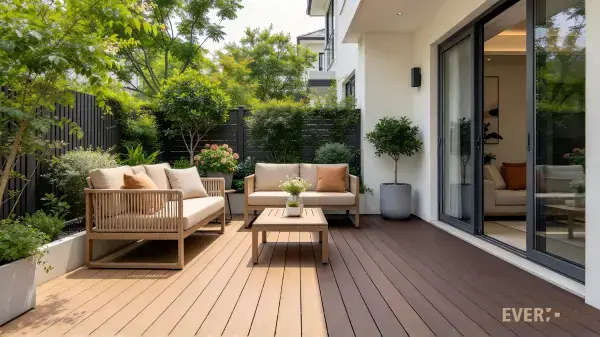
How to Customize WPC Decking Sizes for Outdoor Projects
Sizing is frequently the first step in any decking job as it will decide how the boards will sit on the joists, spacing of the substructure and the overall footprint of the area. The standard width is between 100 mm and 200 mm , the thickness is usually between 15 mm and 40 mm and the length between 2000 mm and 4000 mm . Popular profiles in these ranges include 120×20, 140×25 or 150×25 mm and are usual beginning points, although a made-to-order wpc deck may be changed beyond these numbers depending on the application.
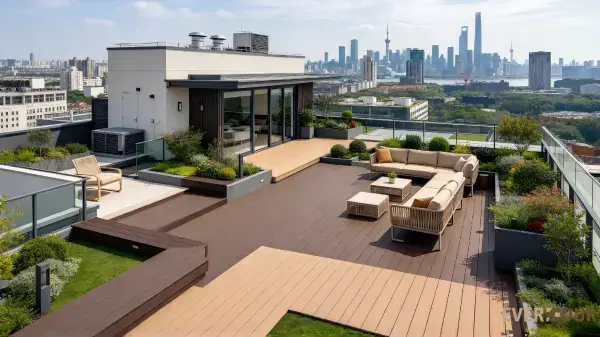
Rooftop terrace boards are often thinner and lighter to lessen the stress on the structure while yet providing durability. However, commercial pathways or hotel courtyards often need larger, reinforced profiles to handle considerable foot traffic across multiple seasons. Occasionally architects who are designing irregular layouts require non-standard lengths to prevent excessive seams or waste in the installation.
For bespoke sizing, minimum order numbers tend to start at about 100 square meters, making it viable for modest home projects as well as big scale commercial purchases. Buyers who are dealing with distributors or wholesalers will want to check on size tolerances early in the process, because even tiny variations in thickness may make a difference in clip fit and installation time. Correct measurements from the beginning save time on installation and decrease the likelihood of expensive alterations further down the line in the project.
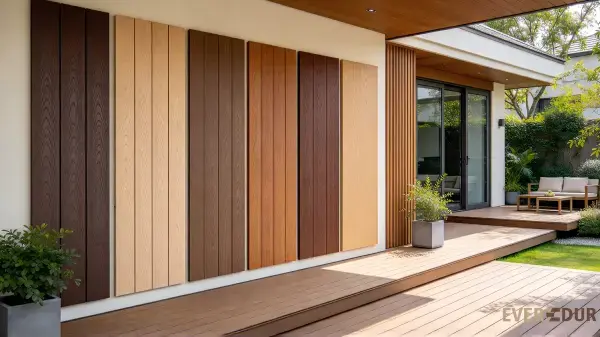
Custom WPC Decking Colors and Wood Grain Finishes
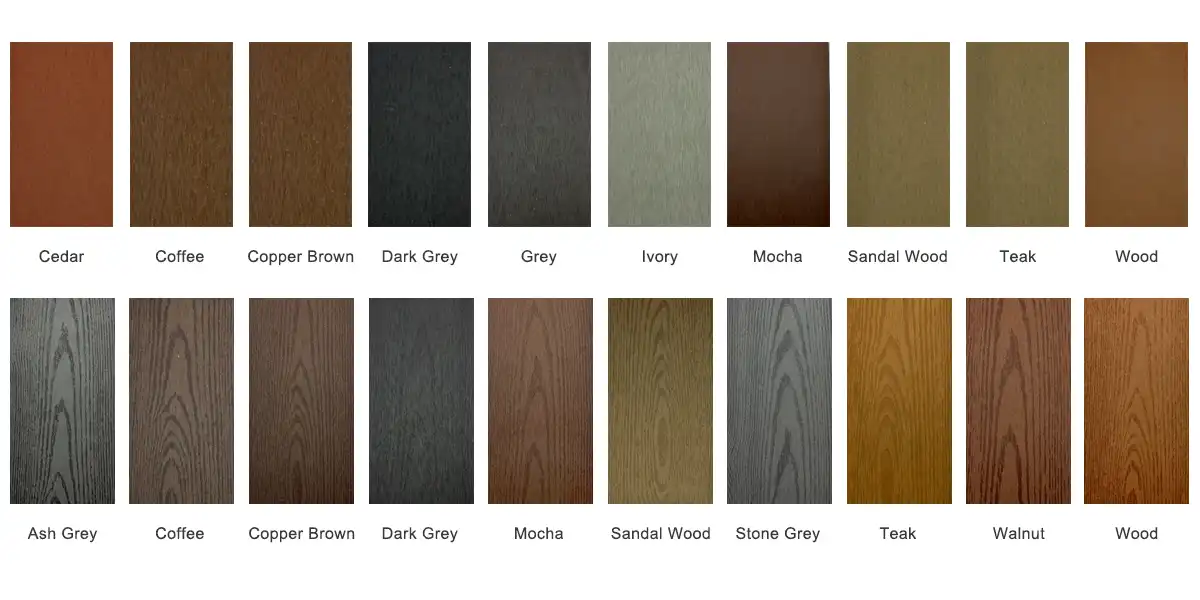
The colour and surface texture of a deck affect how well it fits in with its environment, with personalization often able to provide the most noticeable visual differences. The standard palette includes hues such as Ash Grey, Cedar, Coffee, Copper Brown, Dark Grey, Ivory, Mocha, Sandal Wood, Stone Grey, Teak and Walnut. This gives designers a reasonably broad starting point before progressing into totally bespoke tones that complement a building's external palette.
Surface finishes provide another dimension of individuality. Embossed textures resemble the appearance of sawn timber, brushed finishes provide a smoother tactile sensation underfoot, sanded surfaces provide a cleaner modern look and wood grain patterns reflect the inherent diversity of actual timber. Dual-surface boards, with two distinct textures on opposing sides, enable installers to utilize one product on various parts of the same project.
Colour stability is as important as the first look. UV resistant dyes used in made-to-order wpc board are often tested to see if they fade little after 2000 or more hours of UV exposure, which is a fair assessment of how the colour will stand up to years of sun exposure. For areas with strong seasonal sun this sort of testing data is worth asking for before placing a big order, since fading variations between batches might become apparent on larger installations.SEND INQUIRY
Solid vs. Hollow Custom WPC Decking for Different Applications
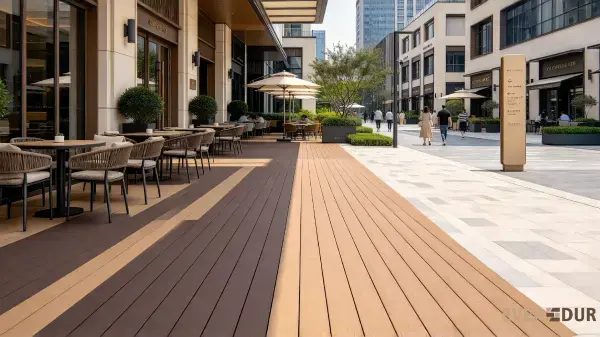
The decision to utilize a solid or hollow core is mostly dependent on the planned usage of the area. Solid boards have a higher weight-bearing capability and are often a better choice for commercial environments such as hotel terraces, shop storefronts, or public sidewalks with a lot of foot traffic. Because of the extra density of material and structural support, solid co-extrusion decking often has a warranty of up to 20 years.
The hollow core in the boards reduces the weight and amount of material used, saving on shipping costs and making the boards easier to handle during installation. Hollow profiles are often used for residential patios, private gardens and smaller balconies where the load requirements are reduced and the decrease in weight makes a considerable difference in shipping and installation. A made to order wpc deck designed with a hollow core still holds up well against moisture and pests but the guarantee duration is usually less than solid options, usually about 15 years for co-extrusion goods.
Budget is also a factor in this choice. Hollow boards are usually a more affordable option, which might be attractive for distributors who are selling to price-sensitive customers, while solid boards are a better fit for consumers that value long-term dependability above upfront cost. Matching the core type to the actual foot traffic and climatic exposure of a project prevents both overpaying and premature deterioration.
Custom WPC Decking Profiles for Patios, Villas, and Gardens
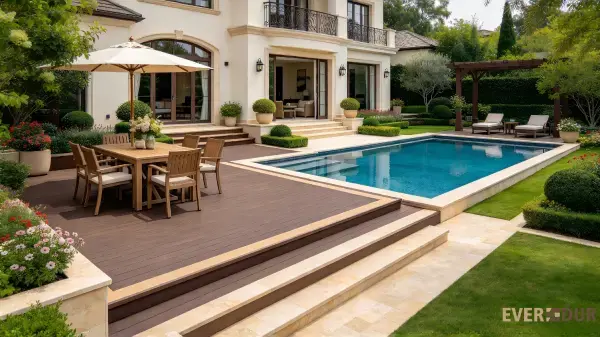
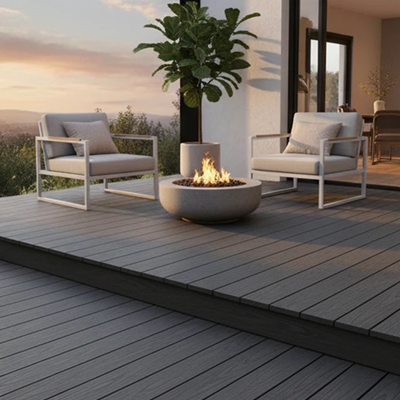
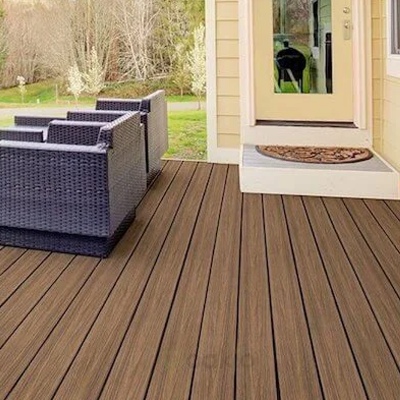
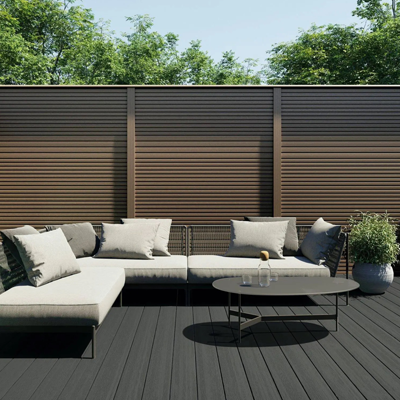
Residential outdoor areas sometimes need a different design approach than commercial projects, since the homeowner is frequently looking for aesthetics and comfort in addition to durability. Patio decking is more attractive with thinner boards with a wood grain or brushed finish. They provide a warm, natural appearance but don't need the care of actual timber. In villa gardens you will often see a selection of board widths used together to construct borders, transitions or beautiful patterns around pools and dining spaces.
Private yards come in many shapes and sizes thus a flexibility in board length is especially beneficial. If the garden has curves or odd corners, the cut lengths may need to be reduced, but wide lawns may be done with longer continuous lines that minimize obvious seams. Most of these home profiles may be installed without specialist equipment using joist and clip installation techniques.
The choice of surface textures in homes also tends to go toward natural wood grain patterns with homeowners typically wanting the look of timber without the maintenance. Embossed or sanded surfaces are still a popular choice for newer type houses that want a cleaner, less rustic appearance. Whether you are working with a little balcony or a massive villa terrace, choosing a board width that is in scale with your area can make the completed deck appear more proportional and less claustrophobic or enormous.SEND INQUIRY
Designing Custom WPC Decking for Unique Outdoor Layouts
Designing buildings with irregular forms, rooftop access points or multi-level terraces may create layout issues since traditional decking sizes don't always work. The answer to this is special model customisation of made-to-order wpc deck, which allows the boards to be made in proportions that correspond to a site's shape, minimizing visible joints and offcuts. This is especially true in architectural projects where symmetry and clean lines are part of the design brief.
This versatility is taken even further with OEM and ODM services for distributors and brand owners who want the decking to represent their own product range, rather than a generic offering. This procedure includes custom packaging, brand printing and sample production, which helps resellers to distinguish their goods without having to start from scratch with manufacturing.
In layouts subject to temperature changes, dimensional stability is particularly crucial since boards that expand or contract unevenly might develop gaps or buckling over time. In more demanding applications, reinforced structural designs aid with this, and the use of joist and clip systems helps to maintain installation uniform even on uneven and sloping surfaces. For teams building multi-phase construction projects, a consistent size and a steady supply source means there is less danger of getting batches that don't match up throughout various phases of installation.
Conclusion
Custom WPC decking provides a practical solution to make flooring fit the genuine needs of a project, whether it modifying the size of the boards, the choice of a colour or the choice between solid and hollow cores. Buyers who take the effort to match these characteristics to their site circumstances tend to wind up with a floor that operates well for years rather than one that requires early repairs or replacement.SEND INQUIRY
FAQ
Q: Can custom WPC decking be used for both residential and commercial projects?
A: Yes, the dimensions, core construction and surface treatment may all be altered depending on whether the project is a private garden or a high-traffic commercial pathway.
Q: How long does custom WPC decking typically last outdoors?
A: Depending on the core type and installation circumstances, the service life is normally between 10 and 25 years, with the longest warranty coverage for co-extrusion solid boards.
Q: Is custom WPC decking suitable for coastal or humid climates?
A: The material is less prone to moisture absorption, deterioration and insect damage than untreated real wood hence is good to use in humid or coastal locations.
Ready to Customize Your WPC Decking Project?
When you work with a seasoned custom wpc decking manufacturer you receive help at every level, from size to certification documents.
For construction companies: dedicated technical support and bulk production scheduling.
For fence and decking contractors: flexible MOQs and fast sample turnaround.
For building materials wholesalers and resellers: exclusive pricing tiers plus free samples for client testing.
For end customers: free design guidance and installation assistance.
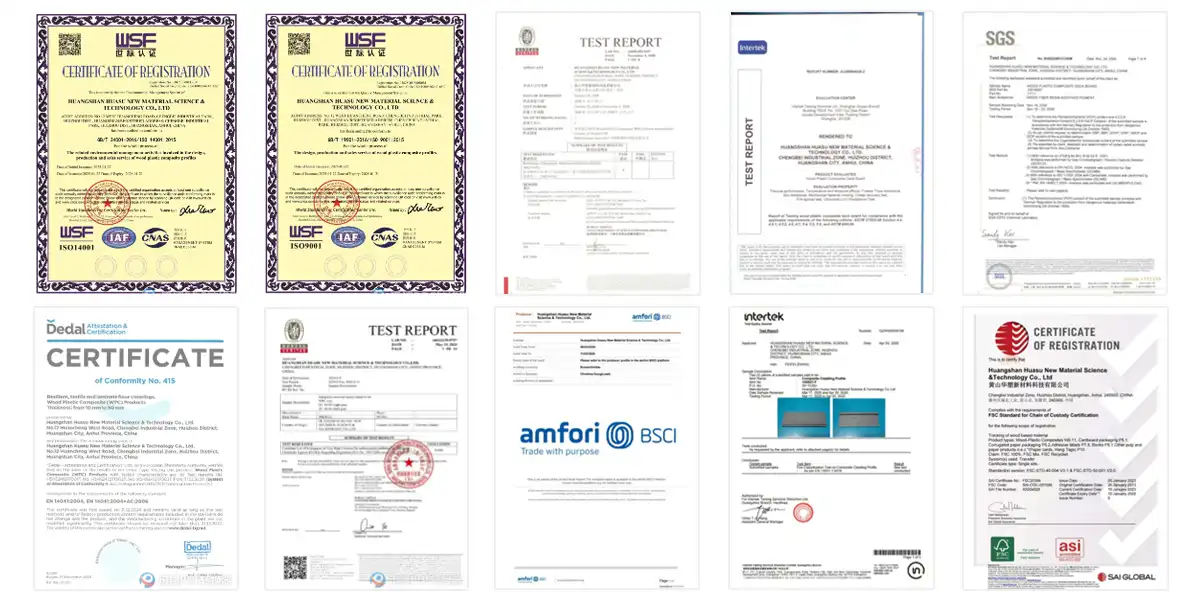
Everdur decking materials meet EU CE standards, US ASTM D7039 standard and Chinese GB/T 24137 specification. They are also certified as Recycled Content and manufactured to E0 norms of low emissions for environmental impact. Contact our staff at violet@wpcsupplier.com to discuss size, colours and certification paperwork for your next outdoor flooring project.
References
1. ASTM International. ASTM D7032, Standard Specification for Establishing Performance Ratings for Wood-Plastic Composite Deck Boards and Guardrail Systems (Guards or Handrails).
2. European Committee for Standardization. EN 15534-1, Composites Made from Cellulose-Based Materials and Thermoplastics (Wood-Polymer Composites).
3. Standardization Administration of China. GB/T 24137, Test Method for Wood-Plastic Composite Decking.
4. International Organization for Standardization. ISO 14021, Environmental Labels and Declarations — Self-Declared Environmental Claims.
5. Forest Stewardship Council. FSC-STD-40-004, FSC Standard for Chain of Custody Certification.
6. Intertek Group plc. Building Product Testing and Certification Guidelines for Composite Decking Materials.
Send Inquiry
Related Industry Knowledge
- Weather Resistant Decorative Composite Fencing: Durable & Stylish
- Top Residential WPC Decking Suppliers for Homeowners 2026
- WPC Villa Fence: Luxury Fencing for Villas & High-End Properties
- WPC Landscape Walls Installation: Guide for Garden & Park Projects
- WPC Villa Fence Installation: Guide for Luxury Villa Projects
- Co Extrusion WPC Decking vs Regular WPC: Which Saves You More Money?
- WPC Fence Buying Guide: How to Choose the Right Fence for Your Garden and Villa
- WPC Cladding vs Vinyl Cladding: Which Is Better for Outdoor Use?
- Waterproof WPC Cladding: Perfect for Coastal and Rainy Areas
- Hollow WPC Decking Maintenance Tips: Keep It New for 10+ Years