
Anti-Slip Landscape WPC Decking: Safe for Public Landscape Areas
2026-11-04 16:22:59
Walking a rainy park path or a sun-baked boardwalk should not seem like a gamble. That's the basic promise of landscape wpc decking developed with anti-slip surface technology. Unlike conventional wood that may become slippery with algae, moss or morning dew, composite decking combines wood fibre with recycled HDPE and textured finishing to provide a non-slip surface that withstands foot activity, rain and seasonal wear. Thousands of customers visit municipal plazas and seaside boardwalks everyday and one sliding board might be a big problem for the property management. This is solved with anti-slip decking, which employs surface patterns that are embossed or brushed and weather stable materials that will not bend, split or splinter over time. For park planners, hospitality companies and municipal contractors, this means fewer safety incidents, fewer requests for maintenance and a decking surface that is presentable season after season. In the next sections we will guide you through how this technology works, where it is most effective and what makes it stand up to severe outdoor situations in Europe and North America.SEND INQUIRY
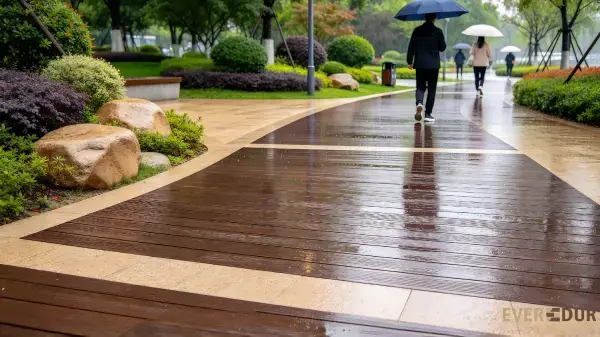
How Does Anti-Slip Landscape WPC Decking Improve Outdoor Safety?
Slip injuries are among the most frequent hazards in outdoor public spaces, especially near water features, shady walks, or areas that tend to stay wet. Composite decking overcomes this issue by texturing the surface during the manufacturing process of co-extrusion. The grip doesn't diminish after a few years of foot use, since the roughness is part of the capped layer itself, not a paint or surface coating that wears away over seasons.
Sanded textures, wood grain embossing and brushed finishes produce micro-channels that enable water to flow off the surface instead of collecting. This drainage feature diminishes the thin film of water which ordinarily causes slippage on smooth wood or polished stone. Many municipalities need slide resistance test results before they'll approve decking materials for parks, boardwalks and transit-adjacent paths. Composite boards tend to do well in wet-pad friction tests, as employed in the EU and US.
Wood-plastic composite deck boards also have a robust core structure, in addition to texturing, to prevent warping and board lifting that normally creates uneven walking surfaces in natural hardwood. A textured grip, plus a level, firm surface, provide a more predictable course underfoot for walkers, cyclists and wheelchair users. Landscape architects include anti-slip composite panels early in the design process for public-facing projects to avoid long-term liability concerns from pedestrian slips and falls.
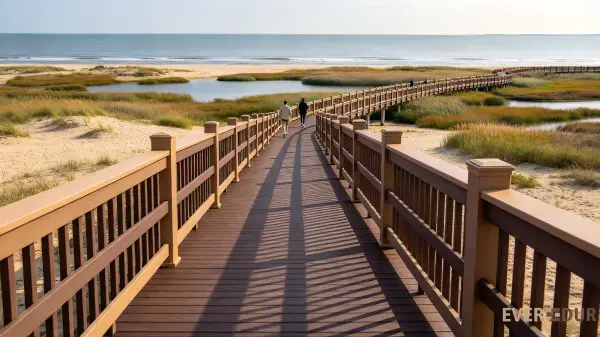
Non-Slip Landscape WPC Decking for High-Traffic Public Areas
Public parks, subway stations and commercial plazas see a lot of wear and tear, not like residential decks. The foot traffic is constant, the cleaning schedules are tighter and being exposed to spilled drinks, food or irrigation water is a given . That's why landscape anti-slip wpc boards are manufactured with a denser board core and textured crowns that will not be polished off by regular shoe contact.
Steady pressure on smooth natural wood or uncoated composite surfaces tends to make them glassy from years of use, which decreases friction just where it is needed. This is not the case with anti-slip composite decking (the texture is not a thin topical coating but is integrated into the surface layer). Maintenance crews responsible for high-traffic areas such as coastal promenades or event plazas will particularly value boards that just require occasional water washing and not resealing or refinishing.
The conservation of colour also has a back-up role in safety. Faded or patchy decking may visually blend into shadows or debris so uneven spots are more difficult for walkers to perceive. UV-stable pigments for the manufacturing of composite board provide a clear visual contrast between boards and their environment and so contribute to safer navigation in crowded public areas. This difference is particularly significant at the top and bottom of steps, ramps, and in transition zones where changes in footing are vital.SEND INQUIRY
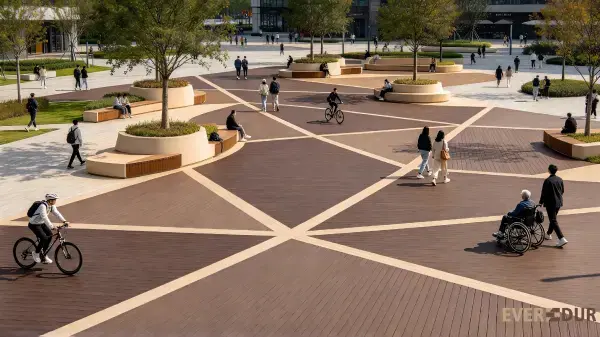
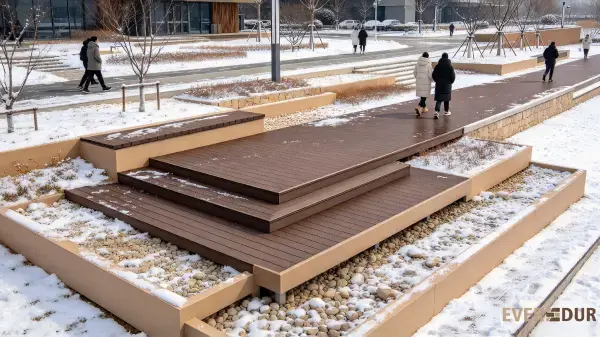
Landscape WPC Decking for Parks, Boardwalks, and Walking Paths
Public parks and boardwalks provide a unique challenge: shaded dampness, sandy or powdery detritus, irregular ground movement and constant pedestrian activity. For these sorts of situations, landscape decking panel systems tend to prefer grooved or wood-grain designs and joist-and-clip installation procedures which allow individual board replacement without disturbing a complete length of roadway.
boardwalks in marshes or along the seaside also have to deal with exposure to salt and humidity, which speeds up decomposition in natural wood. Composite boards of wood fibre and recycled HDPE are resistant to this moisture absorption, neither expanding or breaking even after repeated wet-dry cycles and keeping their dimensions. Wooded parks with walking routes get a similar advantage. Falling leaves and organic debris that would normally discolour or damage wood, have no lasting effect on a sealed composite surface.
City planners like the fact that the panels come in standard lengths (2.2 and 3.6 meters) that make it easy to lay them along long linear lines without a lot of pruning or waste. Cedar, walnut or stone grey, all earth-toned tints, also complement park landscaping, maintaining a consistent exterior look while yet delivering the slip resistance and durability required for high-traffic recreational areas.

Weather-Resistant Landscape WPC Decking for Wet Outdoor Areas
Changes in rain, humidity and temperature regularly test the longevity of outdoor flooring materials. This is achieved with wood-plastic composite decking by its simple structure, where wood fibre is encapsulated inside a polymer matrix, so limiting the absorption of water compared with untreated hardwood. This is particularly true near pools, fountains, splash pads, or seashore boardwalks where the surfaces stay wet for extended periods of time.
Unlike real wood which may expand, cup and develop mould when it is continually wet due to seasonal humidity variations, composite boards don't alter shape. It also means that the anti-slip texture will be maintained, since warped or damaged boards lose their grip pattern faster than flat, solid boards. Another is the common freeze-thaw cycles of northern European and North American climates, and composite material generally resists the breakage associated with water swelling in wood grain during winter freezes.
Also resistance to mould and mildew helps avoid slips, since biological growth on moist wood surfaces is a frequent cause of slippery areas in dark or poorly ventilated places. Landscape decking panel will not attract insects or grow fungus thus the texture of the surface will not change, not developing soft, slippery patches like untreated wood does after many wet seasons.SEND INQUIRY
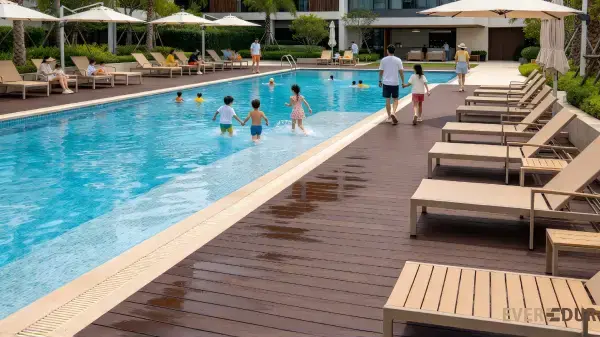
How Durable Is Landscape WPC Decking Under Heavy Foot Traffic?
It all boils down to how the material behaves over time, with repeated usage, pressure, weight distribution and surface friction. The durability of Landscape WPC decking made by extrusion moulding is generally good, since the load is more equally distributed to the wood fibre and HDPE combination than to a solid wood plank, which might develop pressure dents or splintered edges in high traffic areas.
Composite board guarantees of 15 to 20 years for co-extruded materials provide designers an acceptable baseline for predicted service life, which is particularly important in public installations such as plazas, resort pathways and seaside platforms that typically see years of continuous usage. UV-stable capping layers that resist fading and surface chalking – frequent wear indicators on lower-grade composite or painted wood alternatives – help ensure this prolonged longevity.
ASTM D7032 for example, testing deck board performance provides a benchmark for how boards react to point loads, impact resistance and flexural strength. This is important for public places that include events, markets or seasonal foot traffic spikes. Boards are available in hollow or solid core alternatives, providing some flexibility to meet load requirements for the individual demands of a project, whether it's a lightweight garden path or a reinforced commercial boardwalk anticipating greater daily usage.
Conclusion
Public landscaping projects have a greater degree of responsibility that residential decks could encounter since safety, longevity and long-term attractiveness all need to withstand continual public usage. Anti-slip landscape wpc decking answers these needs with textured surface technology, moisture-resistant core materials and UV-stable coatings that maintain grip and colour consistency for many seasons. Whether it's a boardwalk on the coast, a walking route in a metropolitan park, or a busy plaza, selecting decking material suited for these types of applications may help to minimize long-term maintenance costs, while promoting safer pedestrian traffic.SEND INQUIRY
FAQ
Q: Is anti-slip composite decking suitable for pool or waterfront areas?
A: Yes. The textured capping layer and water-resistant core make it a practical choice for pool surrounds, fountains, and waterfront boardwalks where surfaces stay damp for extended periods.
Q:How does composite decking compare to natural wood for public safety?
A: Composite boards generally resist the warping, splintering, and mold growth that often reduce traction on natural timber, offering a more consistent slip-resistant surface over time.
Q: What maintenance does anti-slip landscape decking require?
A: Routine rinsing with water is typically sufficient. Unlike timber, these boards don't need staining, sealing, or repainting to maintain their surface grip and appearance.
For Construction Firms, Fence Contractors, Resellers, Building Materials Wholesalers, and End Customers:
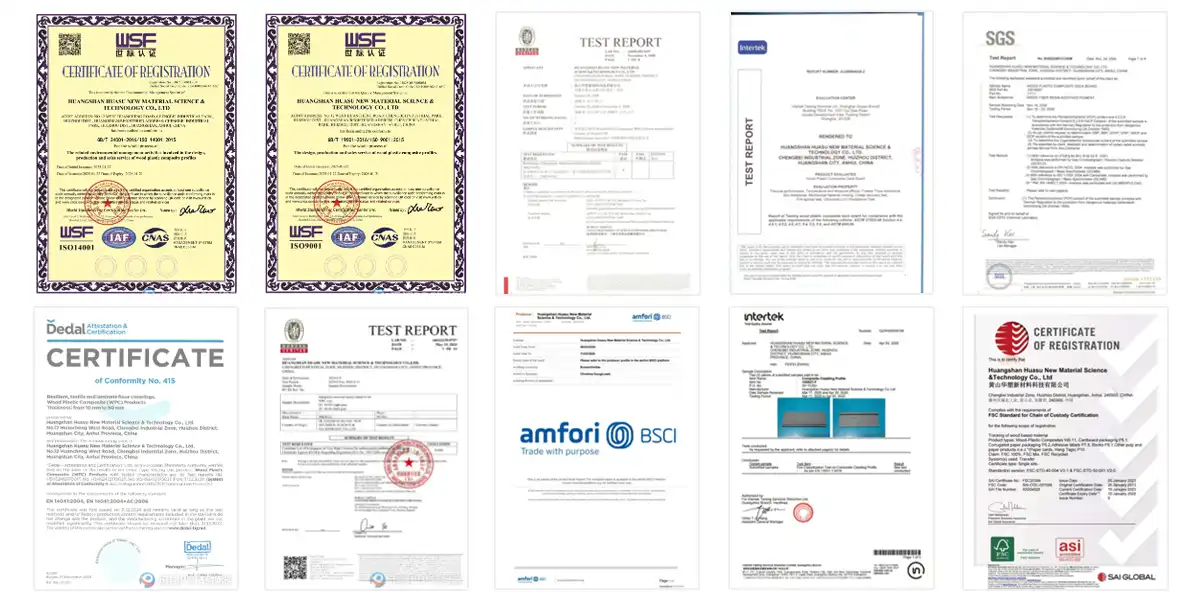
Everdur works directly with construction companies, fence contractors, resellers and building materials distributors supporting public landscape projects of all kinds. For construction materials wholesalers: unique wholesale prices and free samples will allow you test the quality of the boards before ordering in bulk. For construction companies and fence contractors: Every purchase comes with technical assistance and project-based support to help teams match board profiles to site circumstances. Free design consulting and installation assistance help resellers and end consumers plan from beginning to end. As a landscape wpc decking manufacturer, Everdur's boards conform with EU CE criteria, US ASTM D7039 standards, and China GB/T 24137 specifications, with Recycled Content certification and E0 environmental standards for low-emission materials. Reach out to violet@wpcsupplier.com for samples or your next project.
References
1. ASTM International. (2021). ASTM D7032-21: Standard Specification for Establishing Performance Ratings for Wood-Plastic Composite and Plastic Lumber Deck Boards, Stair Treads, Guards, and Handrails.
2. ASTM International. (2020). ASTM D2047-20: Standard Test Method for Static Coefficient of Friction of Polish-Coated Flooring Surfaces as Measured by the James Machine.
3. European Committee for Standardization. (2016). EN 335: Durability of Wood and Wood-Based Products — Use Classes.
4. Forest Stewardship Council. (2022). FSC Standards for Responsible Forest Management and Chain of Custody Certification.
5. International Organization for Standardization. (2015). ISO 9001: Quality Management Systems — Requirements.
6. U.S. Consumer Product Safety Commission. (2019). Public Playground and Outdoor Walkway Safety Guidelines.
Send Inquiry

Related Industry Knowledge
- Custom WPC Decking: Tailored Flooring for Your Unique Outdoor Space
- Why Wood Plastic Composite Fence Panels Are Better Than Wood Fencing
- Anti-Slip Commercial WPC Decking: Safe for Public Commercial Spaces
- Anti-Fade Decorative Composite Fencing: Long-Lasting Beauty
- Can hollow WPC decking be used for balconies?
- 3D Composite Decking: Elevate Your Outdoor Space with Textured Flooring
- WPC Composite Fencing Installation: Easy Guide for Beginners
- Low MOQ Grooved WPC Decking: Ideal for Residential & Commercial
- Exterior WPC Cladding: Durable & Stylish External Wall Solution 2026
- Eco-Friendly WPC Decking: Sustainable Choice for Modern Outdoor Spaces