
Everything You Need to Know About WPC Wall Cladding Panels
2026-11-23 17:05:59
WPC wall cladding is an external wall finish created from wood-plastic composite boards mounted on a frame over the wall of the structure. It offers the appearance of lumber without decay, annual painting or hefty weight. It is used by most facade teams in a ventilated system that creates an air gap beneath the boards, drying and draining the wall. This article covers how the panels are constructed, how they deal with heat, wind and fire paperwork and what to compare before ordering. It also outlines the most common installation faults seen on major projects.
Are you designing a 2000 SQM facade or more? Everdur is a WPC wall cladding manufacturer with 50+ manufacturing lines and 16 years experience. Send your designs, target firing class and fixing technique to violet@wpcsupplier.com Our staff will get in touch with choices for profiles, color samples and a delivery schedule for bulk orders. We can do ODM profiles and private label packaging for system vendors also.SEND INQUIRY
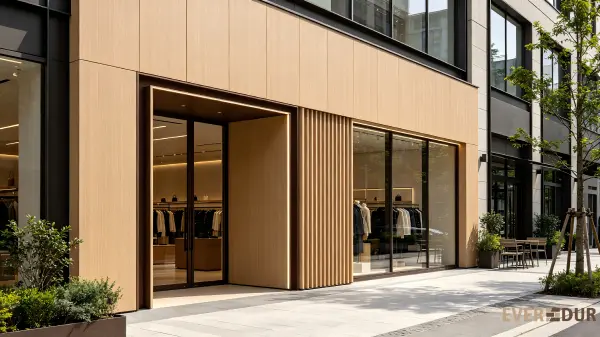
Why Are WPC Wall Cladding Panels Used in Modern Building Facades?
Wood Looks Without Wood Problems
Timber facades are an architect's favorite. Treatment, repainting and degradation in moist climates is not liked by project managers. WPC wall cladding preserves the grain and warm hue but trades those drawbacks for a sturdy composite. Everdur's WPC wall cladding panels are made of wood fiber, Grade A recycled HDPE (high-density polyethylene, a strong plastic) and functional additives. They are moisture-, mold- and insect-resistant and don't need to be painted or sealed. That reduces maintenance throughout the building's life. Everdur has a service life of 10 to 25 years, depending on the series, so you can plan a maintenance budget with accurate statistics.
Cost and Weight Against Timber and Aluminum
Normally teams look at three options: treated lumber, aluminum panels and WPC wall cladding. Timber requires frequent upkeep. Aluminum might be more expensive and typically appears frigid in wood-effect treatments. WPC wall cladding is used by many teams to reduce cost over aluminum and maintenance over wood. Hollow profiles minimize weight even further, so they are easier to handle on scaffolds and lifts. Crews may cut and work the boards on site using conventional equipment. It simplifies labor. And it matters on jobs when every additional hour on the scaffold adds to the price.
Market Momentum in Europe
Demand data indicates to the same. The European wood plastic composite market is projected by Mordor Intelligence to develop at a CAGR of 7.05% during the forecast period, from 657.82 kilotons in 2025 to 989.99 kilotons in 2031. That volume includes all WPC applications, not merely cladding. But it reflects a good level of buyer confidence. More composite possibilities will be found in bidding papers for facade contractors in Germany, France, Netherlands, UK and Nordics. If teams have their test results and node drawings handy, they can answer such calls within days instead of weeks.SEND INQUIRY
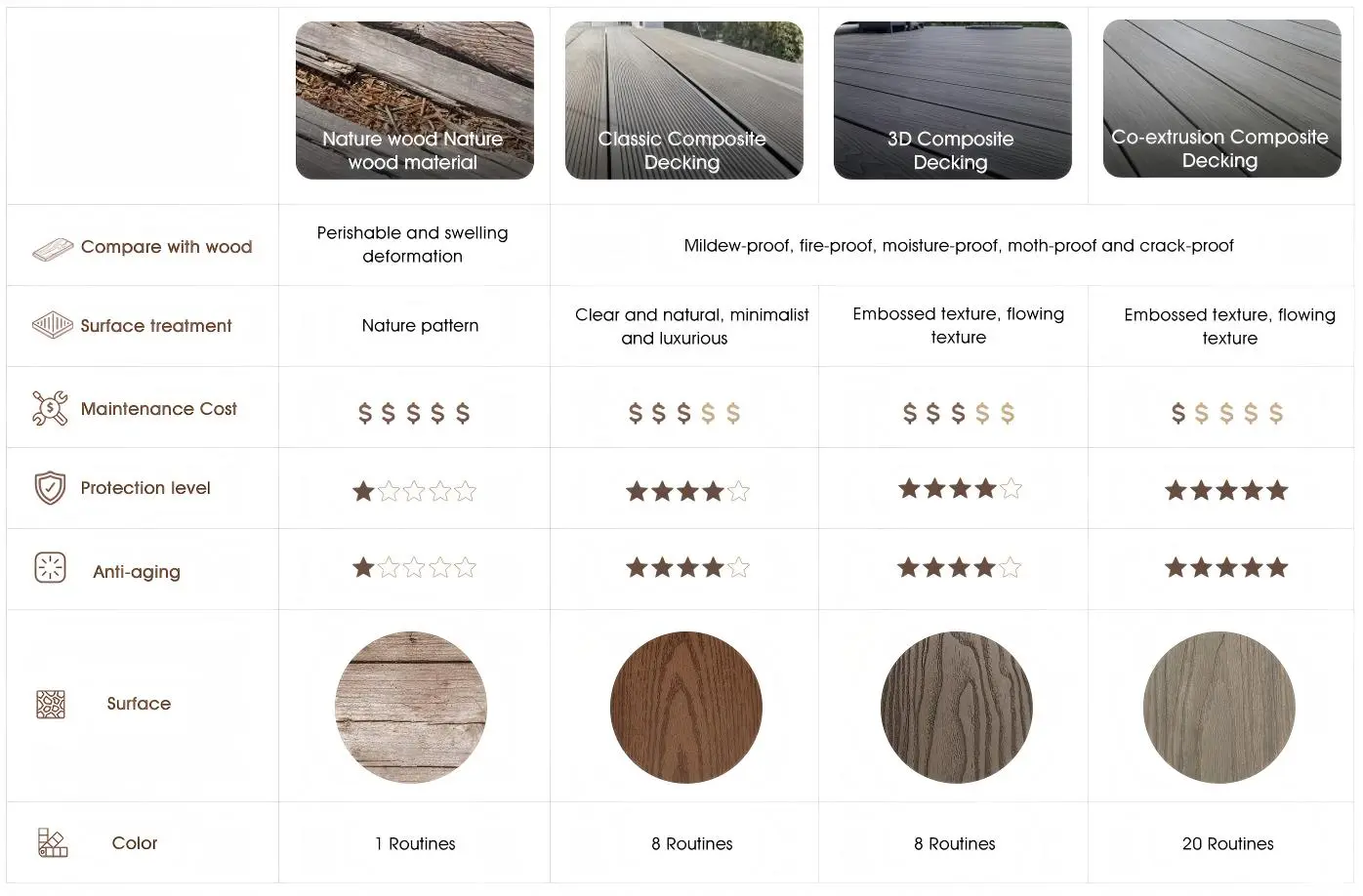
How Does the WPC Core Structure Affect Wall Cladding Performance?
Hollow and Solid Profiles
Hollow WPC wall cladding profiles consist of chambers within and solid profiles not. Hollow boards are lighter and cheaper per square meter. Solid boards take greater loading and retain fasteners better and are suitable for tall or exposed walls. Everdur produces both, in widths of 100 to 220 mm and thicknesses from 15 to 40 mm. Select by exposure. Hollow boards may serve for low rise protected wall. If you're building a coastal or high-rise wall you'll probably need solid boards or thicker walls, together with fasteners sized by your engineer for the planned wind load.
What EN 15534-5 Covers, and What It Leaves Out
The European standard EN 15534-5 deals with profiles and tiles composed of cellulose-based materials and thermoplastics, for exterior or interior usage. Support rail profiles, cover strip profiles and fastening devices are also excluded under the same specification. That information is important on-site. A board may fulfill a profile standard but your subframe and clips still require their own evidence. Ask each provider for documentation on every portion of the system, not just the board. The facade consultants will ask the same question so have your response ready before they ask.
Why Material Consistency Decides Flatness
Flat walls start at the compounding phase. Differences in melt or fiber content cause boards to warp, change color and cause joints to open at the corners. Everdur operates in excess of 50 WPC lines with on site 5S control. We track settings by profile and color. Ask any supplier how they trace batches . Ask for breadth and straightness tolerances in writing . If each board covers 140 mm then a 10,000 SQM project requires around 19,800 3.6 m boards (before cuts). So many parts. Small tolerance faults recur.SEND INQUIRY

What Role Do Surface Coatings Play in WPC Wall Cladding Protection?
Co-Extruded Cap Layers Versus Bare Core
The protection surface on WPC boards is often a co-extruded cap. Co-extrusion is when an additional layer of plastic is applied to the core in the same pass as the board. That layer protects the wood fiber from water, stain and sunlight. Everdur's new co-extrusion line is targeted at greater durability, waterproofing and ease of maintenance for WPC wall board. Warranty conditions follow the pattern. Classic and 3D panels are covered by a 5-year warranty on hollow profiles and a 10-year warranty on solid profiles. Co-extrusion panels are warranted for 15 years on hollow and 20 years on solid profiles. Always check to see what series a warranty covers.
UV Exposure and Color Stability
Decks get less sun than facades since they are horizontal while facades get the entire arc of the sky. Everdur panels demonstrate little fading after more than 2,000 hours of UV exposure. Ask any provider what is the number by test technique. As EN 15534-5 include xenon-arc and mercury-vapour photo-ageing procedures in its normative references, it is very reasonable to ask these issues. Ask for the report in the color you will be using. Dark and light hues age differently, therefore a report on Ivory tells us nothing about Dark Gray.
The Cap Thickness Trade-Off
More Cap is not always good. The BioResources research indicated a lower modulus overall when a thick, low stiffness HDPE shell was placed over a stiff WPC core. It also increased thermal expansion. In simple language, a thick plastic covering may help a board move more . Good designs balance cap thickness vs protection. When comparing quotations, ask for the cap thickness range and the measured expansion figure combined. The trade off is hidden without the other number.SEND INQUIRY

Can WPC Wall Cladding Panels Be Installed Over Existing Walls?
Yes, With a Substructure and a Clear Cavity
WPC wall cladding is often used in renovation. You attach vertical rails to the existing wall and then clip the boards onto the rails. The hollow beneath the boards is a drained and ventilated space. That space is used in drained and back-ventilated systems to drain and dry water that ends up behind the cladding, the Metal Construction Association says. The same advice cautions that performance is a function of the whole system, not of any single component. "Then specify rails, clips and boards as one package, and leave the cavity open top and bottom."
What to Check Before You Fix to an Old Wall
Take a look at the wall before you put up any WPC wall covering. Measure flatness . Rails need a level plane or packers . Test pull-out of anchors in real concrete or masonry. First of all check for moist areas and address the problem. Additional insulation (changing cavity depth and rail length) corners, service penetrations and the window reveal will all need trim detail. A brief inspection costs a day, and saves a week of re-work when rails reach a wall that is not square.
Retrofit Scenario: A Hotel Facade Refresh
Imagine a decrepit hotel façade of 8,000 SQM rendered. The owner wants a warm wood effect and no annual painting. The contractor lays rails over the existing wall, adds mineral insulation and clips on solid WPC boards in two colors. Work is done in steps per floor, delivery are made in batches for each phase. That's where batch shipment comes in. A vendor with 50+ lines may save stock for following stages from the same color lot, which keeps the completed facade consistent.SEND INQUIRY
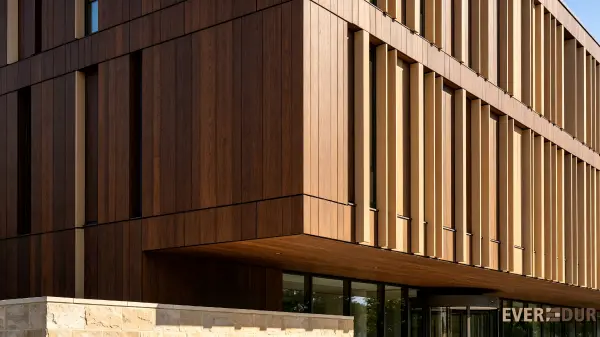
How Do WPC Wall Cladding Panels Handle Thermal Expansion and Contraction?
Why WPC Moves With Temperature
Like wood, plastic expands as it gets hot and this is also the case with WPC wall cladding. The WPC has a faster expansion rate than lumber because of the plastic composition in the board. Studies of co-extruded boards have shown that the expansion rate, known as the linear coefficient of thermal expansion (LCTE), is influenced by the design of the shell and core. The shell may be lowered using glass-fiber reinforcement. The message is easy for you. Think of each board as a piece that expands in summer and contracts in winter. Then ask the provider for the measured LCTE of the particular profile you are going to purchase.
A Worked Example for Gap Design
Here's the maths. The change in length is the expansion rate times the board length times the temperature fluctuation. Let's choose an illustration rate of 5 × 10⁻⁵ per °C, which is a sampling figure and not Everdur data. A board of 3.6 m heated up at 40 °C will expand by around 7.2 mm. A 2.2 m board will expand roughly 4.4 mm. Those figures are why end gaps and sliding clips aren't optional. Just substitute the measured sample rate from your supplier's report and your joint design will still be honest.
Fixings That Let the Board Move
Good fasteners retain the board against wind but allow it to move with heat. Most designs allow the clips to float, however one locks at the center of each board. Leave end gaps free of sealant and debris. Don't screw through the face at both ends of a board. That traps movement and bends the panel. Newer interior/exterior wall panels products from Everdur are lighter, stronger and have less thermal movement. Obtain the statistics to support this. If you have the time, try it out on your mock-up wall in the summer sun.SEND INQUIRY
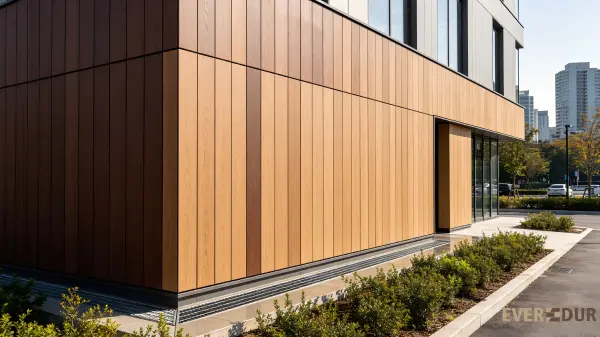
Are WPC Wall Cladding Panels Suitable for High-Rise Building Exteriors?
Wind Suction and Concealed Clip Strength
High walls wrapped with WPC wall cladding are subjected to high wind suction which pulls the boards off the frame. Your structural engineer defines design load. The provider must show that the clips, boards and rails can safely handle that load. Be sure to ask for pull-out or wind-load test results for the precise clip and profile, and suggested spacing. Also inquire about removing a broken board. Hidden system, where you have to open half the wall to change one board will cost you later. Select clips that will keep each board distinct without bothering your neighbors.
EN 13501-1: Reading the Right Fire Class
There are various WPC wall cladding applications that fail fire review. EN 13501-1 classifies building items in classes A1 to F. It also includes the ratings of smoke (s1 to s3) and burning droplets (d0 to d2). A marking such as B-s1,d0 signifies extremely low contribution to fire, very little smoke and no flame droplets. The standard separates apart flooring and flooring classes are suffixed with fl. Thus a decking report cannot support a wall submittal. Even older national classifications, like Germany's B1, don't hold up to recent appraisals. Request the EN 13501-1 report for the wall profile as installed.
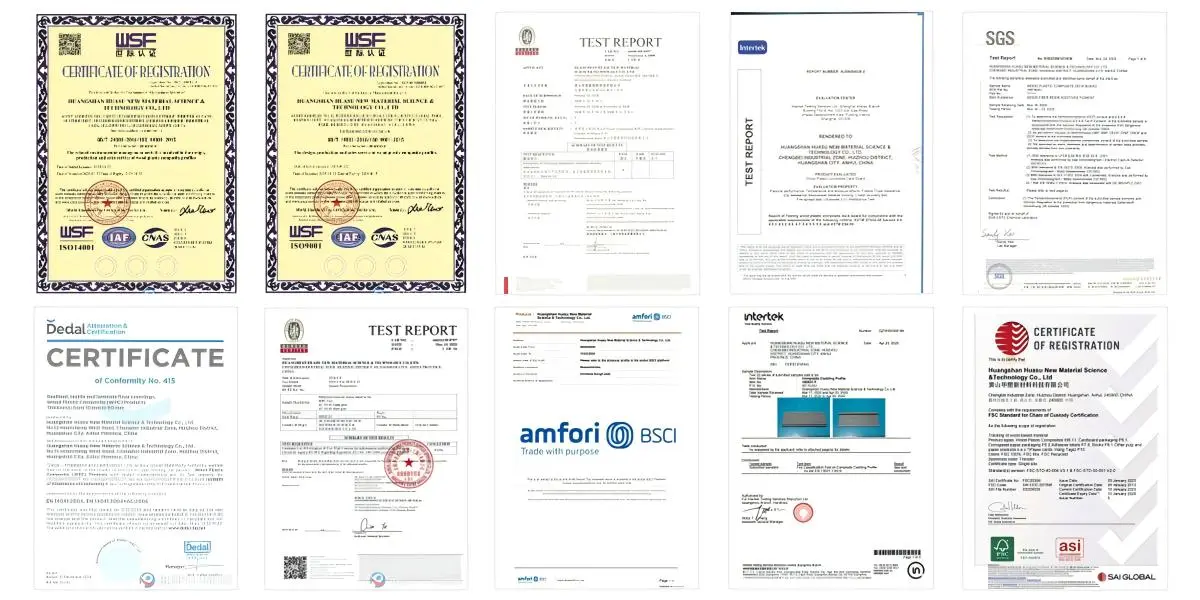
Everdur is ISO 9001, CE, FSC, REACH, RoHS, SGS and Intertek certified. In this post, we do not mention a facade fire class since classes are dependent on the profile, color and mounting arrangement. Please provide us your desired class and facade build-up. Our staff will get back to you with the exam documents available for your series. If a document does not exist yet, we will let you know and you may incorporate testing into your timetable. Combustible cladding rules for tall structures vary across countries, so consult your fire engineer early on to check the restrictions.
Maintenance Access on Tall Walls
Think about year ten when you create year zero. Hotels and companies clean their façade from cradles or elevators. Sometimes a board breaks after impact and requires repair. WPC resists decay and insects and it requires no repainting, so most of the care is washing. But save extra boards from the same batch, and spare clips. Keep them inside the building in a dry place. 5 years later it's impossible to match a hue without a spare. The batch of pigment and aging alters the tone.SEND INQUIRY
What Causes Color Variation in WPC Wall Cladding Panels?
Four Common Sources of Color Difference
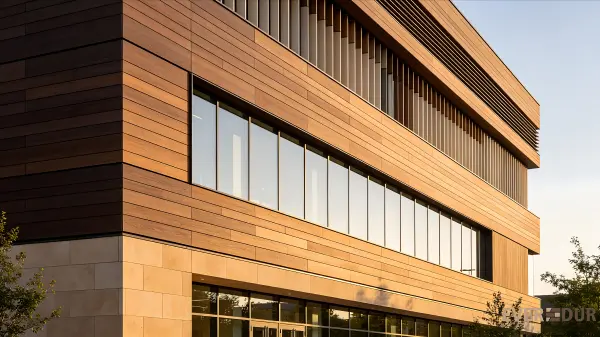
Color differences in WPC wall cladding come from four places: natural variation in wood fiber, differences between pigment batches, extrusion heat, and early weathering. Wood fiber changes with each supply lot, so a perfect match across months is never guaranteed. Heat in the extruder can also darken a batch slightly. After installation, new boards often shift tone as the surface weathers in. Light angle adds to the effect. A facade seen at noon looks different from the same facade at dusk, which is why designers judge samples outdoors.
How to Control Color on Site
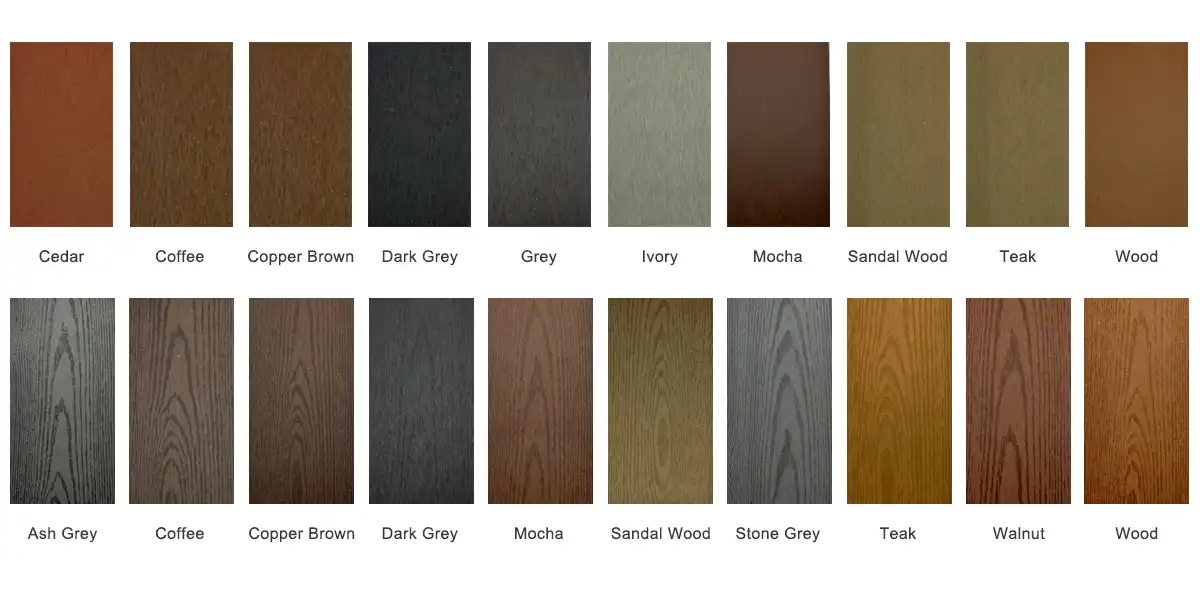
Control starts at the order. Ask the supplier to ship each project phase from one production lot and to label every pallet with the lot number. On site, mix boards from several pallets as you install, so small differences spread out instead of forming stripes. Agree a color tolerance in writing, usually stated as a delta-E value, which is a numeric color difference. Then approve a mock-up wall in daylight. Everdur offers standard colors such as Ash Grey, Cedar, Teak, Walnut, Stone Grey, and Dark Grey, plus custom colors beyond the standard card.
Real Sample Books for Designers
Designers trust what they can hold. A screen image cannot show grain depth or true color. Ask your supplier for a physical color card and a texture sample book that covers every finish you may specify. Everdur's surface options include wood grain, brushed, grooved, and 3D embossed finishes. When architects write one color into a specification, the contractor can then order against a fixed reference. That single step prevents most color disputes at handover.SEND INQUIRY
How Do Different WPC Wall Cladding Profiles Affect Facade Design?
Profile Families and Their Visual Effect
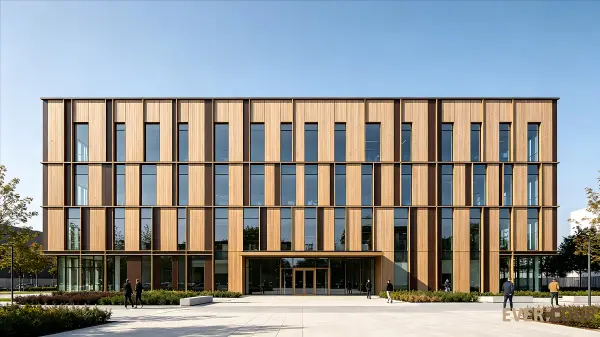
Profile shape sets the look of WPC wall cladding. Flat boards give a calm, modern face. Grooved boards add shadow lines that mimic timber slats. Deep 3D embossed boards add a rich grain you can see from the street. Wide boards of 200 mm or more read as bold planes, while narrow boards of 100 mm read as fine lines. Direction matters too. Vertical boards stretch the building, and horizontal boards widen it. Ask for photo renders on your own elevation before you commit to a profile.
Visible Versus Concealed Fixing
Visible fixing uses screws or face-mounted clips and gives a traditional look. Concealed fixing hides the hardware behind the boards for a clean, seamless face. Both systems work with ventilated facade designs. Concealed systems cost more in clips and need careful alignment, but many hotels and offices choose them for appearance. Visible systems are easier to inspect and repair. Request node drawings for both options, in section and elevation. Your consultant can then compare joint details, cavity depth, and board removal steps side by side.
Where These Profiles Work Best
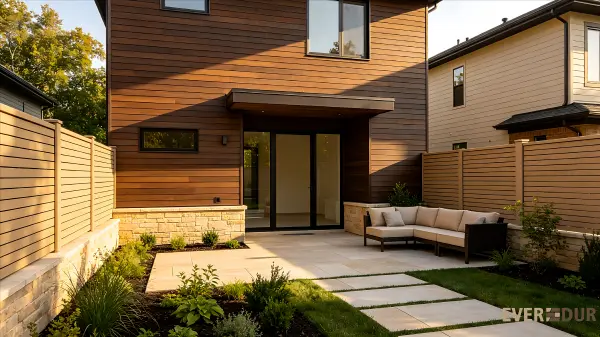
Three scenarios show the range. On a boutique hotel, grooved solid boards in Teak or Walnut create a timber-slat feel with concealed fixings. On an office retrofit, wide flat boards in Stone Grey cover old render quickly and need little upkeep. On a villa or garden wall, 3D embossed boards in Cedar match the deck beside them. Everdur's decking, fence, and cladding share the same palette, so designers can run one color story from terrace to wall.SEND INQUIRY
What Technical Specifications Should Buyers Compare Before Ordering?
Specification Table for Side-by-Side Quotes
Use the table below to compare WPC wall cladding suppliers on equal terms. It lists what Everdur publishes for its WPC wall cladding panels and WPC wall board and what you should request in writing.
| Item | What Everdur lists | What to request |
|---|---|---|
| Width and thickness | 100–220 mm wide, 15–40 mm thick | Tolerances, straightness limit |
| Length | 2.2 m, 2.9 m, 3.6 m | Cutting plan, custom lengths |
| Material | Wood fiber, Grade A recycled HDPE, additives | Formulation range, cap thickness |
| Surface | Embossed, brushed, sanded, wood grain, grooved, 3D | Sample book, lot-based color card |
| Color stability | Minimal fading after 2,000+ hours UV | Test method and report |
| Fire class | Test documents depend on series and setup | EN 13501-1 wall end-use report |
| Expansion | Newer lines target lower movement | Measured LCTE of exact profile |
| Warranty | 5–10 years Classic/3D; 15–20 years co-extrusion | Written terms by series |
| Order terms | MOQ 100 SQM; FOB Shanghai or Ningbo | Lead time, batch call-off plan |
Tables like this keep the discussion factual. Fill the right-hand column with the supplier's answers, then score each reply. Gaps in the answers show you where the risk sits before any money moves.
Five Questions Every Facade Team Should Send
Send these five questions in writing before you shortlist anyone:
- Which fire document applies to my build-up? Ask for the EN 13501-1 report that covers the wall profile, color, and mounting setup. Reject flooring classes and older national labels. If the report does not exist, ask for the test plan, the lab name, and the expected date. Then place that date inside your submission schedule.
- What are the measured expansion and warpage figures? Request the linear expansion rate for the exact profile and the board straightness limit in millimeters per meter. Then ask what end gap and clip layout the supplier recommends. Numbers and drawings give your consultant what they need to approve joint details. Ask for both before you shortlist any supplier.
- How do concealed clips perform under wind suction? Ask for test data on clip pull-out, board retention, and recommended rail spacing. Also ask how a single board is removed and refitted. A good answer comes with a drawing, not only a sentence, and it names the tested rail material. Ask the supplier to repeat the test if your rail type differs from the tested one.
- Can you supply from one lot in batches? Describe your phases and ask how many weeks of stock the factory can hold. Confirm that each pallet carries a lot label. This protects color match across a facade that is built over many months. Ask what happens if a lot runs short mid-project, and how the factory then matches color.
- Which project references exist for facades? Ask for photos, system build-ups, and contact details where the owner agrees. A supplier with facade experience can show them. A supplier without it should say so, and then offer a mock-up wall so you can judge the product yourself. Visit a finished facade if the owner allows it.
These five answers separate suppliers who work with facade teams from suppliers who only sell boards. Score the replies for speed, detail, and honesty. A clear “this document is not ready yet” is far more useful than a vague “yes.”
Supply Planning for 2,000 to 20,000 SQM
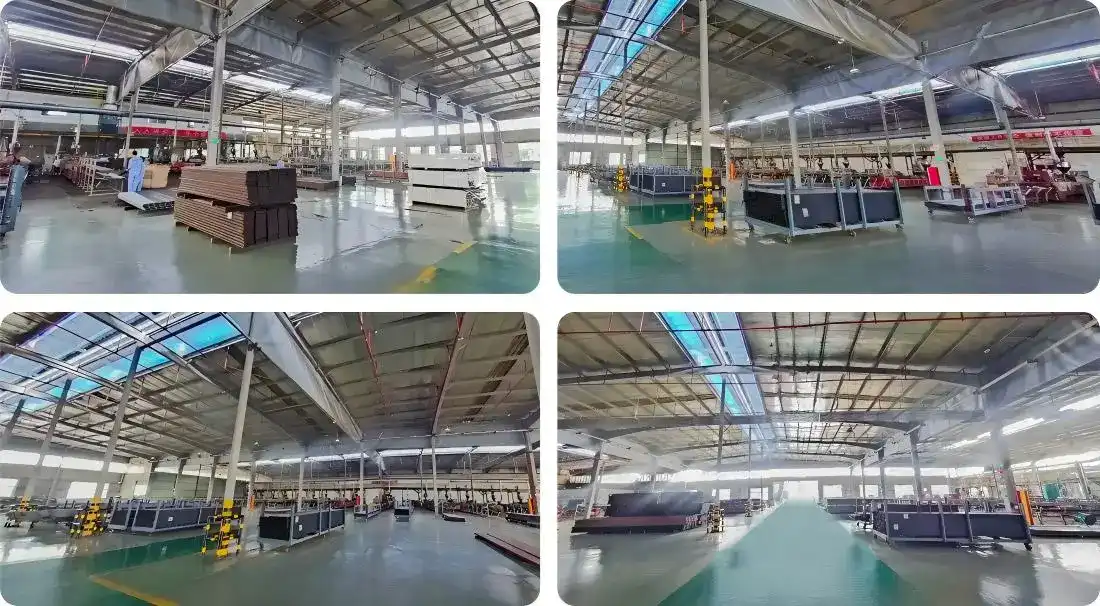
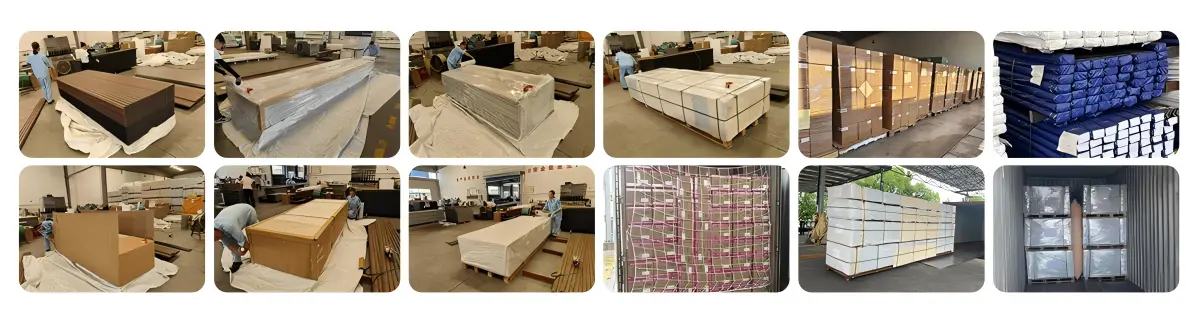
Large projects need a delivery plan, not just a price. Everdur's standard MOQ is 100 SQM, so a phased call-off is possible. We run 50+ WPC lines with an annual capacity of 30,000 tons, and we ship from Shanghai or Ningbo. Panels travel wrapped in PE film on wood pallets. Share your phase dates and quantities, and we will propose a shipping schedule. Typical review cycles run 4 to 8 weeks for samples and documents. Full projects run 6 to 15 months from technical review to final delivery.
System Suppliers and Private Label Programs
If you sell a complete facade system for interior/exterior wall panels, your questions go further. You need ODM profiles, private-label packaging, and documents you can co-sign. Everdur offers ODM and OEM services, including custom profiles, colors, and surface patterns. Ask any partner about confidentiality, supply to competing brands, and how warranty duties split between factory and system owner. Put those terms in the contract. Our team can discuss NDA and exclusivity terms before development starts, so your system keeps its own identity.
Why Contractors and Brands Work With Everdur
Credibility comes from scale and records. Everdur has 16 years of WPC production experience, and more than 50 production lines. We export to over 60 countries and serve 225 customers, with more than 100 active. About 80 percent of our output goes abroad, and our customers include building-material chains such as Lidl, Hagebau, Hornbach, Hellweg, and Globus. We hold ISO 9001 and ISO 14001, and we run strict on-site 5S management. You can verify product details at wpcsupplier.com.SEND INQUIRY
How Can Contractors Reduce Installation Errors With WPC Wall Cladding Panels?
Six Mistakes to Prevent on Site
Most WPC wall cladding failures trace back to a handful of habits. Brief your crew on these before the opening rail goes up:
- Blocking the cavity. Insulation, trim, or insect mesh pushed into the gap stops air from moving. Without airflow, the wall cannot dry, and the benefit of the ventilated system disappears. Check vent openings at the base and the head of every wall section, and photograph them before you close each area. Keep those photos in the project file.
- Skipping end gaps. Boards butted tight in winter push against each other in summer and bow outward. Use the gap from your expansion calculation, set it with spacers, and keep sealant out of it. Boards pushed tight in cold weather leave no room for summer growth. Check gaps again when the temperature changes by more than 15 °C during the job.
- Fixing both ends rigidly. A board screwed down at both ends cannot slide, so it bends. Lock one point near the middle and let the clips at the ends float. Train every installer on this detail with a short demonstration at the mock-up wall. Spot-check clips during the job, since habits drift when schedules tighten.
- Mixing color lots at random. Boards from different lots can differ in tone. Keep lots together by facade section, and blend pallets within each section. Never finish one wall with leftover boards from a different shipment. Record lot numbers on a simple chart so you can trace any mismatch later. Share the chart with the supplier if a tone question appears.
- Installing on uneven rails. Rails that are out of plane show as waves in the finished face, especially on long boards in raking light. Check rail flatness with a string line, then pack or shim the low points before boards go on. Recheck after every few rails, since fixings can pull rails out of plane.
- Storing boards badly. Boards stacked unsupported can sag and keep that set. Store them flat on level supports, covered but ventilated, and keep the PE film on until needed. Never walk on stacked boards. Rotate stock so older pallets go up on the wall before newer ones, and log each pallet.
Each of these mistakes is cheap to prevent and costly to repair. A one-page checklist at the site office, signed off by the foreman per section, keeps all six under control.
Build a Mock-Up Wall Before Bulk Supply
A mock-up wall settles WPC wall cladding and WPC wall board arguments early. Build a panel of 3 to 5 meters with the real rails, clips, boards, trims, and corner details. Invite the facade consultant, the fire engineer, and the owner. Judge color in morning and evening light, check joint lines, and test removing a board. Approve the mock-up in writing, then use it as the reference for all later deliveries. Most sample approvals take 4 to 8 weeks, so start the mock-up as soon as the technical documents clear review.
Training Crews and Keeping Records
Short training pays back fast. Spend an hour on the mock-up wall showing gaps, clip placement, and cutting. Give each foreman a laminated detail sheet. Keep a simple log of lot numbers, temperatures at fixing, and photos of each section before it is closed. If a question comes up two years later, that log answers it in minutes. Everdur's technical team can supply WPC wall cladding installation guidance and product consultation to support your crew from the opening pallet.SEND INQUIRY

Conclusion
WPC wall cladding gives facade teams a timber look with less upkeep, a ventilated build-up, and a lighter board than many alternatives. Success depends on documents and details. Ask for the right EN 13501-1 report, measured expansion data, clip test results, and lot control. Plan end gaps, keep the cavity open, and build a mock-up wall before bulk supply. Brand owners can add ODM profiles and private labels to turn the board into a system. Teams that prepare these items early move through technical review faster and install with fewer surprises.SEND INQUIRY
FAQ
Q: What is WPC wall cladding made of?
A: It combines wood fiber, HDPE plastic, and functional additives, shaped by extrusion. Everdur uses Grade A recycled HDPE and wood fiber. Co-extruded versions add a protective cap layer around the core for better weather protection.
Q: Is WPC wall cladding fire rated?
A: It depends on the profile, color, and mounting setup. EN 13501-1 classifies products from A1 to F. Ask for the report that covers your wall build-up, and never accept a flooring class for a facade submission.
Q: Can WPC wall cladding be used in a ventilated facade?
A: Yes. Both visible and concealed fixing systems work with ventilated facade designs. Keep the cavity open at the top and bottom, and ask your supplier for rail and clip details that match your wall.
Q: How much expansion gap do WPC cladding boards need?
A: It depends on the measured expansion rate, the board length, and the temperature swing. As an illustration, a 3.6 m board grows about 7.2 mm over a 40 °C swing. That uses a sample rate of 5 × 10⁻⁵ per °C. Use your supplier's real figure.
Q: Should I choose visible or concealed fixing?
A: Choose visible fixing for easier inspection and lower clip cost. Choose concealed fixing for a clean face and a modern look. Ask for node drawings of both and compare how each one allows single-board removal.
Q: What warranty does Everdur offer on wall cladding?
A: Classic and 3D panels carry 5 years on hollow profiles and 10 years on solid profiles. Co-extrusion panels carry 15 years on hollow and 20 years on solid profiles. Request the written terms for your series.
Q: What are the MOQ and shipping terms?
A: The standard MOQ is 100 SQM, and goods ship FOB from Shanghai or Ningbo. Large projects can use phased call-offs. Send your phase dates, and we will propose a delivery schedule.

Ready to Send Your Facade Details to Everdur?
Everdur is your WPC wall cladding supplier for ventilated facades, renovations, and private-label systems. Email violet@wpcsupplier.com with your drawings, fire class target, color choices, and phase dates. Our team will reply with profile options, sample boards, and a batch delivery plan. Visit wpcsupplier.com for specifications and certificates, then request your sample set today.
References
1. NETZSCH Analyzing & Testing (2025). EN 13501: Fire classification in Europe and how NETZSCH supports compliance.
2. BTTG (2026, accessed November 2026). Reaction to Fire: Part 1, Classification using data from reaction to fire tests.
3. CEN, via NSAI/SAI Global (2014). EN 15534-5:2014, Composites made from cellulose-based materials and thermoplastics: Specifications for cladding profiles and tiles.
4. BioResources (2013). Huang et al., Co-extruded wood-plastic composites with talc-filled shells: Morphology, mechanical, and thermal expansion performance, BioRes. 8(2), 2283–2299.
5. Metal Construction Association (2022). Understanding Rain Screen Wall Systems.
6. Mordor Intelligence (2026). Europe Wood-Plastic Composite (WPC) Market, size and share analysis.
About the author. Violet is the manage at Everdur, a WPC manufacturer with 16 years of production experience, 50+ extrusion lines, and customers in more than 60 countries. She works with facade contractors, system suppliers, and design consultants in Europe and the Gulf on profiles, fixing details, and test documentation.
Send Inquiry
Related Industry Knowledge
- 2026 Top Residential WPC Decking Options for Balconies & Gardens
- Landscape WPC Decking: Elevate Your Outdoor Landscape Design 2026
- Co-extruded vs regular WPC decking: what's the difference?
- Why Wood Plastic Composite Fence Panels Are Better Than Wood Fencing
- Anti-Slip Traditional WPC Decking: Safe for Families & Pets
- Composite Screen Fencing Installation: Create Privacy & Style
- WPC Composite Fencing for Residential Properties: Stylish & Secure
- Grooved WPC Decking: Anti-Slip Flooring for Poolside & Walkways
- Anti-Slip Residential WPC Decking: Safe for Kids & Pets at Home
- Top WPC Composite Fencing Manufacturers in 2026