_1777451497595.webp)
How to Choose the Right Residential WPC Decking for Your Budget
2026-10-14 22:55:47
Choosing the right outdoor decking material is rarely straightforward, especially when balancing aesthetics, performance, and cost. Residential WPC decking — made from a blend of wood fiber and high-density polyethylene — has earned genuine traction among homeowners in Europe and North America precisely because it sidesteps many of the headaches that come with natural timber. But not every composite board is priced the same, and not every price point delivers the same value. Before you commit, it helps to understand what separates a well-made composite plank from a mediocre one, and where your budget is genuinely protecting you versus where it is simply paying for marketing. This guide walks through the cost structure of WPC outdoor flooring, the performance differences across product tiers, and practical strategies for matching your specific project scope to an appropriate spending range — so you can make a confident, well-reasoned purchase rather than guessing at the showroom floor.SEND INQUIRY
How Should Your Budget Shape a Residential WPC Decking Choice?
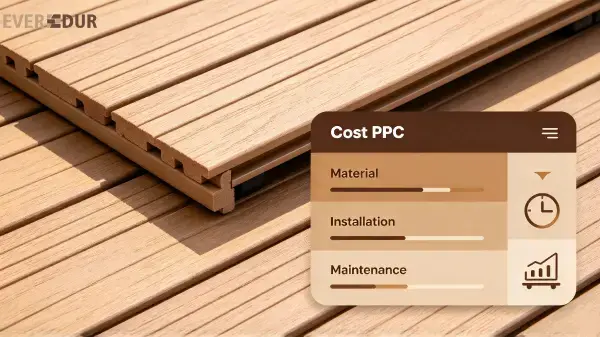
The budget isn't just a limit; it's also a filter. When you set a price limit for outdoor composite flooring, you limit the types of surface patterns, core technologies, guarantee lengths, and materials that are available. That isn't always a bad thing, but it is a problem when buyers only look at price as a variable, rather than seeing it as one of many factors that affect each other.
Putting the total cost of the project into three separate groups can help you get started: the material itself, the labor and substructure for installation, and the upkeep that will be needed for as long as the product lasts. A lot of homeowners only look at the price per square meter of the board, which can make them underestimate how much they will need to clean or fix the substructure, hidden fastener systems, and other things over time.
Basic composite planks, which usually have hollow cores and a basic raised surface, cost less up front, but they may need tighter joist spacing to keep them from bending, which raises the cost of the foundation. Solid or co-extruded boards in the middle price band usually have a capped top shell that is better at keeping out stains, fading, and water. On the higher end of the residential market, you can find co-extruded hollow boards that save weight while still being strong and come with longer manufacturer warranties.
This means that a smaller budget might be fine for a private patio in a warm climate, but if you live near the coast or in an area with a lot of UV rays, you should spend more on UV-stabilized, water-resistant materials, even if they cost more at first. It is cheaper in the long run to match the product level to the specific environmental needs of your area than to just choose the cheapest choice.
Residential WPC Decking Costs: Materials, Installation, and Maintenance
To get a full idea of how much outdoor WPC flooring costs, you need to look beyond the board price on a product sheet. In Europe and North America, the price of composite decking materials ranges from about €15 to €60 per square meter for a board. The exact price depends on the profile design, core technology, and surface treatment. At the top of that range are co-extruded profiles with a secure polymer shell. At the bottom are basic extruded hollow boards with home WPC decking.
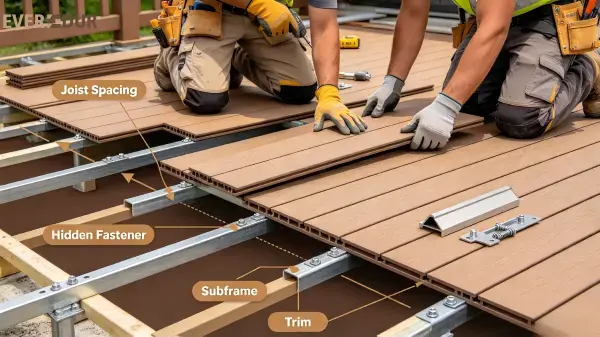
Installation is a big part of the cost. Professional installation in Western Europe costs around €20 to €45 per square meter for just the work. This does not include the base made of treated or aluminum wood, end caps, and trim pieces that are needed for a properly finished deck. Installing WPC decking yourself can save you a lot of money on labor costs because most systems are designed to be easily installed with clip-and-groove or screw-fix methods. However, you need to be comfortable using basic woodworking tools and know how far apart the joists need to be.
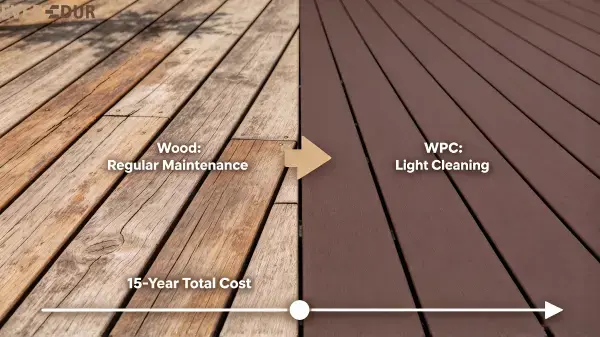
When it comes to upkeep, plastic outdoor planks really do beat pressure-treated wood. In northern European regions, wooden decks usually needs to be cleaned, re-oiled, or re-staining every year or every other year. This adds up to a lot of ongoing costs over ten years. A properly installed home WPC floor, on the other hand, only needs to be washed with light soap and water every so often. There is no need to seal or paint every year, and there is also no need for specialized preservative treatments.
When you look at the total cost of ownership over fifteen years, composite decking often costs less than wood when you add in the time and money needed for maintenance. Instead of putting that long-term math off until later, you should talk about it when you first talk about your spending.SEND INQUIRY
Can Residential WPC Decking Deliver Better Long-Term Value?
Performance Durability Over Time
After five years of being outside, the difference in stability between real wood and composite decking gets much bigger. Solid or co-extruded composite planks don't check, split, or cup like wood does when the moisture changes. In places where seasonal temperature changes are big, like Central Europe and the northern United States, dimensional stability is useful because it lowers the number of times that things need to be fixed or replaced.
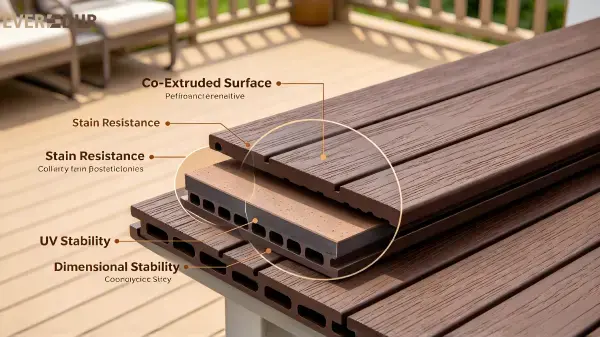
When compared to extruded profiles that don't have a cap, co-extruded boards have significantly lower rates of staining, mold growth, and surface erosion. This is because the polymer cap layer is fused to the composite core during manufacturing. This difference in structure is important for long-term value because one of the main reasons people replace decking before it's supposed to last is that the surface wears down.
Environmental Credentials as a Value Driver
European and North American homes are thinking more and more about sustainability when they decide what to buy. When HDPE and certified wood fiber are recycled to make home WPC board, the goods naturally have a lower embodied carbon footprint than new wood from non-certified sources. For the wood fiber part, look for goods that are FSC approved and made with environmental management systems that are ISO 14001 certified. These qualifications can be checked out and mean something; they're not just marketing promises.
Aside from the cost of the raw materials, composite decking has a long life span—usually between ten and twenty-five years, depending on the product level and the quality of the installation. This means that it will need to be replaced less often and less waste will be sent to landfills over the life of the property.
Resale and Aesthetic Longevity
A well-kept wood deck makes a house look better in measured ways. Real estate agents in the UK and Germany have noticed that outdoor living spaces finished with long-lasting, low-maintenance materials tend to get more interest from buyers than those finished with wood that looks like it has been used for a long time. Color stability is very important here. High-quality composite boards that have been tested for more than 2,000 hours of rapid UV exposure will keep their look, but cheaper profiles may start to chalk or white within three to five years.
Residential WPC Decking Profiles and Features at Different Budget Levels
Entry-Level Composite Decking
Composite outdoor boards that are easy to use usually have a hollow body and are extruded shapes that don't have a top layer. They can be used on sheltered, low-traffic areas, like a small balcony or a garden path in a mild climate. At this level, buyers should carefully check the joist spacing requirements because hollow profiles usually need tighter support gaps to keep the floor from bouncing. Most of the time, this level of warranty lasts between five and ten years. Most of the time, you can only choose from a few stock colors, and the surface textures are simple emboss designs instead of deep wood-grain finishes.
Mid-Range Composite Decking
In Europe, the most popular type of residential composite is in the mid-range profile range. Most of the time, these boards have a solid core or a co-extruded empty design with a secure cap on top. At this level, you can choose from a lot more surface options, such as brushed finishes, sanded textures, and more detailed wood-grain embossing. Packages that protect against UV light are stronger, and warranties usually last for fifteen years. This level is good for most household uses, from garden terraces in villas to roof decks in cities. It has a good mix between initial cost and long-term performance.
Premium Composite Decking
Premium composite decking for homes is characterized by co-extrusion technology, longer guarantees that last fifteen to twenty years, and better production tolerances that make sure all boards are the same size throughout an installation. At this level, advanced polymer cap formulas make them more resistant to heavy foot traffic, chemical exposure by the pool, and UV loading that is very high. At the premium level, you can usually get customization options like custom colors, surface textures, and non-standard profile sizes. This makes it a good choice for high-end residential projects designed by architects or villa builds with strict requirements where standard catalog products are not enough with home WPC plank.SEND INQUIRY
How to Match Residential WPC Decking With Your Project Budget
Assess Your Environment First
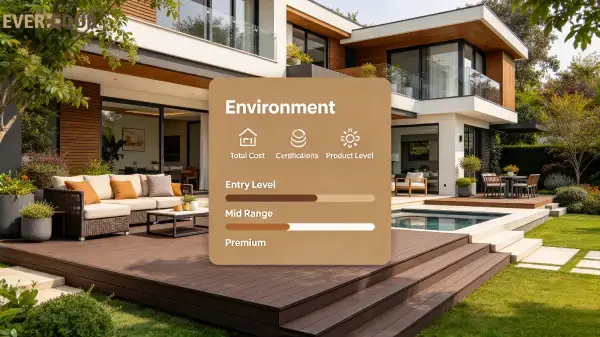
Before you set a price on a product, you should think about the things that will be hard on your deck. Installations near the Atlantic Ocean in France, Ireland, or the Pacific Northwest of the United States need to be more resistant to water and salt air than a garden in Stuttgart or Colorado. Roof terraces in places with a lot of UV light, like southern Spain, California, or the Mediterranean in France, need to be able to keep colors stable and keep heat in than ground-level patios that face north. If you match the product specs to the conditions at the site, you won't make the common mistake of buying a board that looks good on paper but doesn't work well in real life.
Calculate Total Project Cost, Not Just Board Price
When talking about the budget, if you only talk about the board price per square meter, you will always get wrong cost figures. Aluminum joists are more expensive up front, but they don't rot. You should also think about the subframe, secret fastener clips, perimeter trim and end caps, and any drainage material that needs to be put under the deck. On a typical 30-square-meter residential terrace, 30 to 40 percent of all the money spent on materials can go to accessories and substructure. Including this in the budget model from the start keeps things from going wrong during procurement.
Prioritize Certifications and Traceability
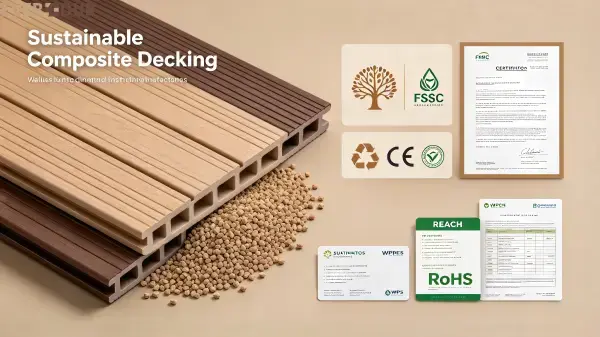
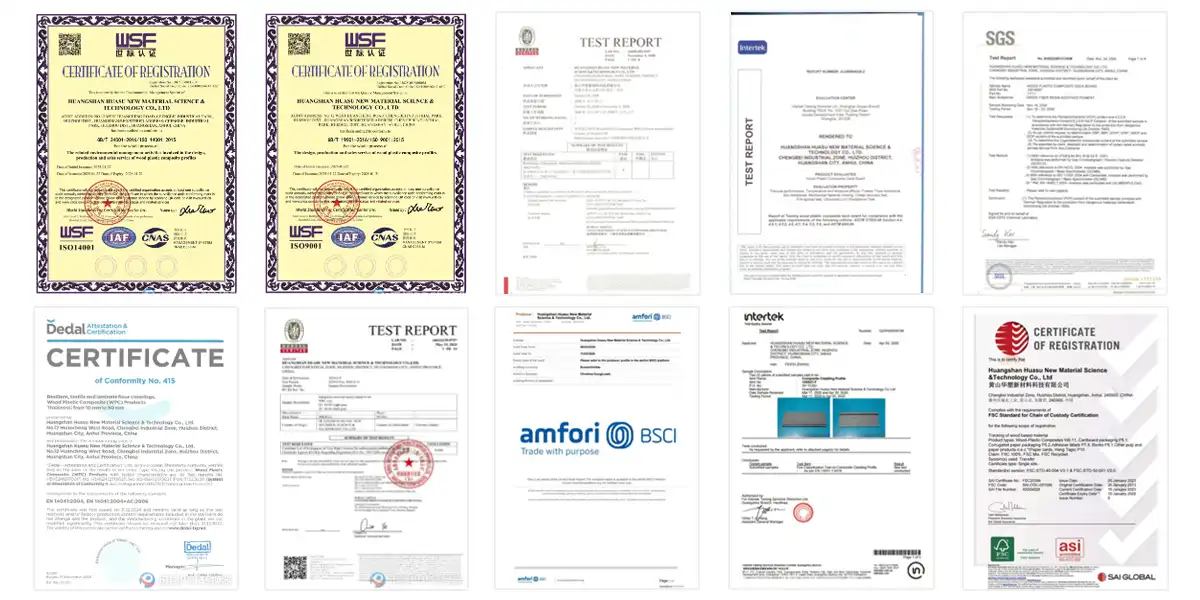
No matter how much money you have, buying composite outdoor flooring with third-party certifications that can be checked is an easy way to lower the quality risk. Certifications like CE marking, FSC chain-of-custody, REACH compliance, and RoHS conformity are more than just paper; they show that a product has been tested and found to work properly. When asked, manufacturers who can provide test results and licensing paperwork show a level of process discipline that is linked to consistent product quality across batches.
Conclusion
When picking the right outdoor composite decks, you need to balance three factors: the surroundings, the expected performance, and the total cost of ownership. It's not enough to just find the best one. There are times when entry-level boards are appropriate, but in demanding situations, premium co-extruded profiles are the better choice with residential WPC decking. Getting correct information, checking the manufacturer's credentials, and asking for samples before agreeing to a big order are the most reliable ways to get a good result.SEND INQUIRY
FAQ
Q: What is the typical lifespan of a residential WPC decking board, and what affects it most?
A: Most composite outdoor boards deliver between ten and twenty-five years of serviceable life. The primary factors are core technology (co-extruded profiles outlast basic extruded ones), installation quality (correct joist spacing and ventilation beneath the board), and site conditions (coastal, high-UV, or high-traffic environments accelerate wear). Boards with polymer cap layers consistently show longer surface life than uncapped alternatives.
Q: How do I know whether a composite decking manufacturer's certifications are genuine?
A: Request the actual test reports and certification documents, not just logos printed on a brochure. Legitimate certifications such as CE, FSC, REACH, and RoHS are issued by accredited third-party bodies and carry certificate numbers that can be cross-referenced. A manufacturer who declines to share documentation on request is a meaningful red flag.
Q: Can I install composite outdoor decking myself, or do I need a professional?
A: Most residential composite decking systems are designed to accommodate competent DIY installation. Hidden clip systems and pre-grooved board edges make alignment straightforward. That said, the subframe design — particularly joist spacing, leveling, and drainage slope — does require attention to manufacturer specifications. For roof terraces or large complex layouts, professional installation reduces the risk of costly errors.
Get a Tailored Composite Decking Solution From Everdur
Get a free design advice and material suggestion based on your outdoor area and the weather where you live if you are a homeowner or private buyer. The technical team at Everdur can help you with everything from choosing a profile to setting it up, so your project gets off to a good start.
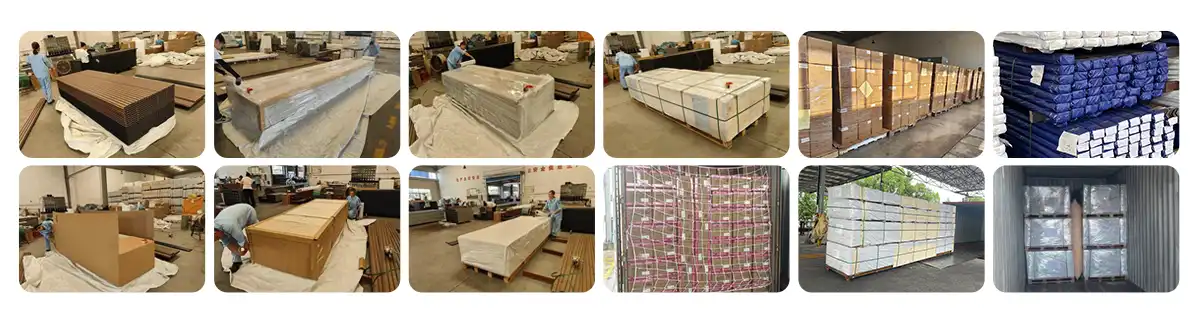
For people who buy and sell building products in bulk: Get access to cheap wholesale prices, consistent batch quality across 50 production lines, and personalized account support. You can get sample sets to help you look good when showing the whole range to your customers.
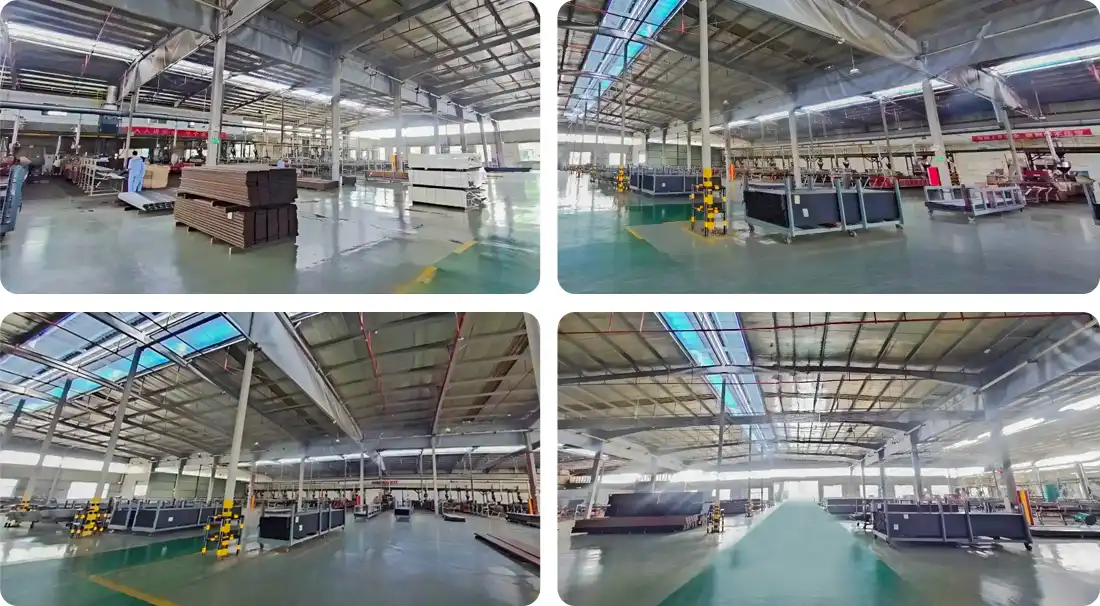
For building companies and project workers, Everdur offers ODM and OEM customization, which includes choosing your own colors, surface textures, and profile sizes. It also has certifications that can be checked, such as the EU CE marking, the US ASTM D7039, and the China GB/T 24137 standards. Our products also have FSC chain-of-custody certification and recycled-content credentials that meet E0 environmental standards. This gives your projects the proven sustainability profile that clients in North America and Europe are looking for more and more.
Everdur's residential WPC decking manufacturer team is ready to help you with your purchase from the time you ask for a sample until you receive the bulk order via FOB Shanghai or Ningbo. This is true whether you are looking for a villa terrace in Germany, a beachside deck in California, or a large residential development with many units.
Contact our team at violet@wpcsupplier.com to talk about the needs of your project, get samples, or get a full product information sheet.
References
1. European Plastics Converters (EuPC). Wood-Plastic Composites in the European Market: Material Trends and Regulatory Considerations. Brussels: EuPC Technical Publications, 2022.
2. American Society for Testing and Materials. ASTM D7032: Standard Specification for Establishing Performance Ratings for Wood-Plastic Composite Deck Boards and Guardrail Systems. West Conshohocken: ASTM International, 2021.
3. Forest Stewardship Council. FSC Chain-of-Custody Certification: Guidance for Manufacturers and Retailers. Bonn: FSC International, 2023.
4. BRE Group. Durability and Service Life of Composite Decking Materials in Northern European Climates. Watford: BRE Trust Research Report, 2021.
5. Cai, Z., and Ross, R. J. (eds.). Wood Handbook: Wood as an Engineering Material. Madison: USDA Forest Products Laboratory General Technical Report, 2021.
6. European Committee for Standardization. EN 15534: Composites Made from Cellulose-Based Materials and Thermoplastics — Test Methods and Performance Requirements. Brussels: CEN, 2020.
7. Ho, M. P., Lau, K. T., Wang, H., and Hui, D. "Characteristics of a Cellulose Fiber Reinforced Polymer Composite and Its Implications for the Use of Composite Structures." Composites Part B: Engineering, 93, 209–217, 2016.
Send Inquiry

Related Industry Knowledge
- Tips and Tricks for Perfect WPC Solid Decking
- How to Install WPC Fence Easily: Step-by-Step Guide for Beginners
- Wood Grain Grooved WPC Decking: Stylish & Functional Outdoor Flooring
- Why Exterior WPC Cladding Is Better Than Vinyl for External Walls
- WPC Villa Fence: Luxury Fencing for Villas & High-End Properties
- WPC Landscape Walls for Public Parks: Safe & Sustainable
- WPC Decking vs Wood Decking: Which Is More Durable and Cost-Effective?
- Composite Screen Fencing for Patios & Gardens: Privacy & Aesthetics
- Co Extrusion WPC Decking vs Regular WPC: Which Saves You More Money?
- High-Quality WPC Decking for Poolside: Waterproof and Anti-Slip Solutions