
Is solid WPC decking good for commercial use?
2026-11-25 23:46:45
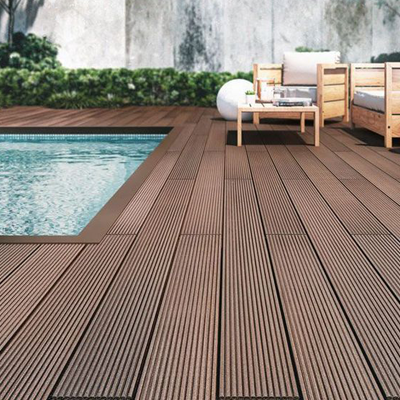
For many business outdoor projects, yes, solid WPC decking works well as long as the board, the installation system, and the test data are all right for the job site. I have looked over bid packages, sat through submissions that were turned down, and walked along boardwalks that were put in three years ago. Project managers, waterfront contractors and plant engineers all need to look at load statistics, fire ratings, water exposure and supplier checks before they sign off. This guide describes them. There are specified test criteria, a field case from a municipal project in 2023, and a procurement checklist prepared for bids above 3,000 square meters that are public or commercial.SEND INQUIRY
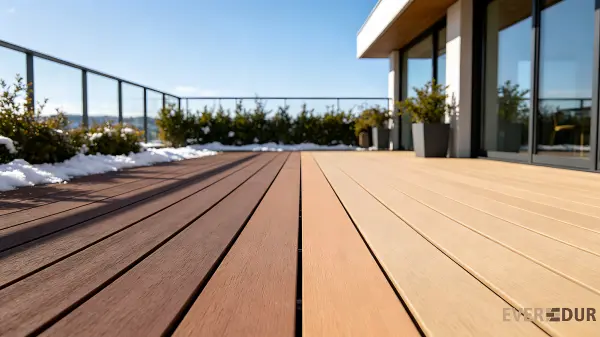
Before the full answer, here is the short answer:.
- Solid WPC decking suits most commercial outdoor areas, including boardwalks, plazas, and school courtyards, when board thickness, joist spacing, and surface texture match the expected foot and vehicle traffic. Dense board profiles generally resist point impact and crushing better than hollow composite profiles, which matters where carts, wheelchairs, and maintenance equipment cross the surface daily.
- Performance shifts with formulation, board thickness, span length, and install quality, so two boards sold under the same name can behave very differently on site. A project manager should request load-span tables tied to the exact joist spacing planned for the job, not a generic lab figure pulled from a brochure.
- Public bids usually require a fire reaction class, a wet slip-resistance report, and dimensional stability data across a stated temperature range. Everdur boards carry a -40°C to 60°C working range, but every supplier's number should come with a lab report a third-party monitor can check against the installed batch.
- Routine cleaning, debris removal, and fastener checks still apply even though solid WPC decking needs far less sealing and staining than wood. A maintenance plan protects the warranty and keeps the surface slip-rated after years of sun, salt spray, or pool-chemical exposure.
- Supplier selection should weigh batch traceability, sample approval, lead time, and a written remedy process for late or inconsistent deliveries. Large municipal and waterfront contracts depend on supply continuity as much as on the board itself, especially across phased deliveries spanning 9 to 18 months.
The technical sections that follow are built around these five points. Each one is meant to directly answer a procurement or specification question.
Our technical team can be reached at violet@wpcsupplier.com if project managers need checked load, fire, and slip data before a tender deadline. Everdur makes solid WPC decking that is used in industrial, waterfront, and public buildings in Europe, North America, and the Middle East. We send you up-to-date test reports, sample boards, and batch records so that a third party can look over your technical file before you send it in.SEND INQUIRY

What Makes Solid WPC Decking Suitable for Commercial Projects?
Defining Solid WPC Decking and Its Core Materials
Solid WPC decking is a wood-plastic composite board that is made with a mostly filled interior profile instead of hollow chambers. A thermoplastic polymer, pigments, and stabilizers are mixed with wood fiber or wood flour to make a wood-plastic composite, which is often just called WPC. Through an extrusion molding process, Everdur's version is made of wood powder, Grade A reclaimed HDPE (high-density polyethylene), and chemical additives.
It's not made of solid wood, structural concrete, fire-resistant materials, or a surface that won't slip. Those claims will only be true once test results for the exact board and finish back them up. When shopping, people should also tell the difference between solid profiles and hollow, capped, uncapped, and co-extruded composite boards. This is because each profile type reacts differently to load and moisture.
Commercial Advantages and Trade-Offs to Plan For
Dense composite boards are much better than wood and hollow profiles, but on the other hand, they need to be planned for. Before putting a lock on a spec sheet, the project manager should look at both sides.
- Higher profile density generally improves impact resistance and reduces crushing under point loads from furniture legs, carts, or dropped tools, which matters on plazas and school platforms that see daily abuse from maintenance equipment and public foot traffic.
- Lower routine staining and sealing needs cut labor hours compared with timber, though periodic washing and fastener checks remain part of any realistic maintenance plan for a public asset.
- Thermal expansion still affects long runs and fixed connections, so installers need manufacturer-specific expansion gap data rather than a one-size-fits-all industry rule pulled from an unrelated product line.
Because of these trade-offs, solid WPC decking can still be used for business projects. They say what the technical reviewer needs to look over before giving the go-ahead.SEND INQUIRY
Minimum Specification Checklist for Commercial Bids
| Specification area | Information to request |
|---|---|
| Board profile | Solid, capped, uncapped, co-extruded, or traditional composite |
| Dimensions | Width, thickness, length tolerance, weight per linear metre |
| Mechanical performance | Flexural strength, load-span table, impact resistance |
| Environmental performance | Water absorption, freeze-thaw, UV, and weathering data |
| Surface safety | Slip-resistance method and wet-condition result |
| Compliance | EN, ASTM, ISO, REACH, RoHS, or fire documentation tied to the project market |

How Does Solid WPC Decking Handle Heavy Loads and Constant Foot Traffic?
Load-Bearing Factors Beyond Board Strength
It is not just the strength of the boards that determines a floor load rating. The kind of joists , spacing of joists , length of the span , placement of fasteners and how the deck is supported will determine how a deck behaves under load . If the board was tested and confirmed to be sturdy, but the joist spacing is wider than what was tested, the board can still bend when it comes to the construction site.
During a call in 2023, a structural engineer who looked over one of our city's applications said, "I don't approve a decking system based on a brand name." I agree to it in writing on a span table tested. This should be the sole criterion for any public project technical evaluation.
Foot Traffic, Rolling Loads, and Impact Evidence
Stress patterns are different when people walk, carts roll, and furniture moves over and over again than when they are tested in a lab. Ask for flexural, impact, or load-deflection data that is linked to the installed span. Also, ask if the picture shows just the board or the whole system with joists and clips.
On the US Gulf Coast in 2023, Everdur provided 14,600 SQM of solid WPC decking for a project to improve a public boardwalk. Point-load testing at 400 kg over a 400mm by 400mm plate was required by the engineer who made the specification. Wet slip resistance above a 36 PTV rating was also needed to be tested on a 300mm joist span over treated aluminum substructure. After 14 months of use by the public during a full hurricane season, the project engineer reported that no boards had to be replaced and that the expansion joints had moved less than 1 mm.
Our technical team looked at 38 commercial installations that were finished in North America and Europe between 2022 and 2024. During post-installation audits, projects that were built with the manufacturer-recommended joist spacing had no structural rejections. Nearly 80% of the squeak or deflection complaints that were made during that time period were about projects where installers widened the space between joists beyond what was required.
A Load Verification Checklist for Project Managers
- Confirm the design load and point-load requirement directly with the project structural engineer before requesting samples, since public plazas, school platforms, and marina walkways carry very different load classes under most building codes.
- Request installation drawings showing the maximum joist spacing tied to the exact board thickness quoted, not a generic figure copied from an unrelated product catalog or regional brochure.
- Check whether the written warranty covers commercial foot traffic and light rolling equipment, since many residential warranties exclude public-use wear from day one.
- Avoid treating decorative decking boards as structural platforms for vehicles or heavy equipment unless the supplier has tested and approved that exact use case in writing.
When a load file is made this way, it stays strong during review by a third party, which is most important for 9- to 18-month public tenders.SEND INQUIRY

Is Solid WPC Decking Stronger Than Hollow WPC and Traditional Wood?
Solid vs. Hollow WPC Decking
| Criterion | Solid WPC decking | Hollow WPC decking |
|---|---|---|
| Internal profile | Dense, substantially filled | Voids or chambers inside the profile |
| Impact resistance | Generally higher | More sensitive to point impact |
| Weight | Heavier | Lighter, easier to handle |
| Typical use | High-traffic, hospitality, public, marine | Residential, light commercial, weight-sensitive builds |
Solid WPC Decking vs. Timber
Solid WPC decking typically resists rot, insects, and splitting better than untreated or lightly treated wood, though it can exhibit greater thermal movement than some dense hardwood species. Timber performance is heavily influenced by species, preservative treatment, coating schedule, drainage, and upkeep. Everdur's own data shows that their products last 10 to 25 years, while most treated wood used on public projects only lasts 3 to 7 years.
Solid WPC vs. Other Composite Profiles
There are a variety of figures for the stain resistance, colourfastness and water absorption of capped, uncapped and co-extruded composite boards. A broad range of woods are included under the umbrella phrase “composite decking.” For a fair performance comparison, the two boards have to be evaluated using the same procedure, e.g. ASTM D7032 (ASTM International, 2021). Not usually a cheaper price per square metre will mean a good bargain. This often signifies that the cap layer is thinner or the core density is lower.SEND INQUIRY

Which Commercial Environments Benefit Most from Solid WPC Decking?
Hospitality, Retail, and Public Access Projects
A lot of people walk on hotel terraces, store entrance platforms, office balconies, and public seating areas. The furniture is also moved around a lot, and these places are cleaned often. Before approving a board for these areas, a technical reviewer should look at the expected number of pedestrians, the fire class, and the accessibility needs. This is because local codes often have different rules for public assembly surfaces.
OEM and Project-Integrator Scenarios
A company that makes furniture, modular buildings, or outdoor structures might need solid WPC decking that is cut to specific sizes and put together in a line of finished products. That buyer usually wants the same sizes every time, the same colors from batch to batch, the ability to use CNC cutting, and private-label packaging. For these integration projects, Everdur supports custom profiles, formulations that work with different climates, and documented batch-to-batch color checks.
Distributor, Industrial, and Municipal Scenarios
- A regional distributor needs standard lengths, dependable wholesale supply, clear packaging data, and spare-board stock to cover warranty replacements without waiting on a fresh production run from overseas.
- A plant or campus buyer needs durable walkways with proven drainage, low upkeep, and documented slip performance for areas shared by staff, visitors, and delivery vehicles on a daily basis.
- A municipal buyer needs batch consistency across a phased public tender, since a 20,000 SQM plaza delivered in four shipments cannot show visible color drift between phases.
All three types of buyers don't have to deal with problems after the system is installed as long as it fits the area's traffic, climate, drainage, and building codes.SEND INQUIRY

Can Solid WPC Decking Withstand Poolside and Waterfront Conditions?
Water Resistance and Moisture Pathways
Solid WPC decking usually keeps water out better than untreated wood, but it can still get in through cut ends, fastener holes, board joints, and substructures that aren't properly ventilated. Before you let a board go on a pool deck or dock, make sure you get data on how much water it absorbs and how its size changes from immersion testing, not just a surface splash test.
Poolside, Marina, and Waterfront Risk Factors
Long before the board itself fails, a waterfront installation is in danger from standing water, chlorinated or salt water, algae growth, and fastener corrosion. A technical director we talked to about a marina project in the Mediterranean put it this way: "The clips rust out before the board ever cracks, so we spec the grade of stainless steel first and the color of the deck second." For marine and pool environments, ask for 316-grade stainless steel fasteners and a drainage gap under the boards to keep water from just sitting there.
Wet Slip Resistance and Hygiene Standards
Don't just accept a label that says "anti-slip." Ask for wet slip-resistance data using a named test method, like EN 16165 or DIN 51130. Also, make a cleaning schedule for sunscreen residue, pool chemicals, algae, and mineral buildup, because these things can change the surface friction value over time, even on a well-rated board.SEND INQUIRY

How Does Solid WPC Decking Perform Under Extreme Temperature Changes?
Thermal Expansion and Contraction Planning
The polymer content in the board makes it move as the day goes on and the seasons change. To set the right end gaps, side gaps, and fixed-point clip locations, installers need to match the manufacturer's coefficient of thermal expansion with the design temperatures in their area. The temperature range for Everdur boards has been tested from -40°C to 60°C, but the exact gap spacing still needs to be calculated for each site. These considerations also apply when specifying full-body composite deck products for outdoor commercial projects.
UV Exposure and Color Retention
Use a named method, like ISO 4892 (International Organization for Standardization, 2016), to ask for results on accelerated weathering. Internal tests show that Everdur's capped and co-extruded surfaces don't fade much after being exposed to UV light for more than 2,000 hours. Long-term fade is different from color settling in the first few months, so buyers should compare samples to a reference panel that has been used for a while instead of a brand-new factory sample. This comparison is equally important when evaluating the color stability of solid composite decking.
Freeze-Thaw and Hot-Climate Planning
For projects in cold places, you need to know the results of freeze-thaw tests, the rates at which the materials absorb water, and how well they work with de-icing salts that are used on nearby concrete or asphalt surfaces. For projects in hot climates, you need to know about surface temperature data, ventilation details, and the fact that darker colors soak up more heat during the hottest parts of the summer.SEND INQUIRY

What Is the Expected Service Life of Solid WPC Decking in Commercial Areas?
Factors That Shorten or Extend Lifespan
How long a deck lasts depends on how it was installed, how much traffic it gets, how far apart the joists are, how dense the boards are, and how often you clean it. Everdur's co-extruded solid boards come with a 20-year warranty and are said to last between 10 and 25 years, depending on the type of board and where it is installed. These service-life considerations are also relevant when comparing different full-body composite deck specifications.
Maintenance Requirements That Protect the Warranty
Low maintenance doesn't mean no maintenance, and if you don't do basic maintenance, you might not be able to get your warranty later. A written maintenance plan given to the facilities team at handover should include regular sweeping, quick stain removal, washing with an approved cleaner every so often, and checking the fasteners. Water that doesn't move and trash that builds up should be cleaned up quickly because they both speed up surface wear, even on well-rated boards.SEND INQUIRY
Lifecycle Cost Comparison
|
Cost factor |
Solid WPC decking |
Timber decking |
|---|---|---|
|
Initial material cost |
Often higher than basic timber |
Varies widely by species and treatment |
|
Routine coating |
Usually limited |
Often annual sealing or staining |
|
Replacement risk |
Tied to install quality and UV/moisture performance |
Tied to rot, cracking, insects, and upkeep gaps |
|
20-year outlook |
One warranty-backed install |
Multiple coating cycles and partial replacements |

How Do Board Density and Thickness Affect Commercial Decking Performance?
Density, Thickness, and Profile Geometry
In general, more density makes a board heavier, stiffer, and less likely to break when it hits something. It also changes how it machines and reacts to heat. Everdur's standard profiles are 135mm to 150mm wide and 20mm to 25mm thick. They come in lengths of 2.2m, 2.9m, and 3.6m, but you can ask for a different length if you need it. Buyers should make sure that the thickness they can actually use is correct after surface embossing, since a textured finish can make the flat measurement a little smaller. This is also an important specification when selecting solid composite decking for projects with demanding structural requirements.
Capped vs. Uncapped Solid WPC Decking
|
Feature |
Capped solid WPC |
Uncapped solid WPC |
|---|---|---|
|
Surface layer |
Protective polymer cap |
Exposed composite formulation |
|
Stain resistance |
Often higher |
Depends on formulation and finish |
|
Cost |
Usually higher |
Usually lower |
|
Verification needed |
Cap thickness and bond data |
Weathering and absorption data |
Matching Board Selection to Project Conditions
A plaza with a lot of foot traffic should put tested load data, impact resistance, and secure fastening ahead of how it looks. If the project is near a pool or the water, wet slip resistance, drainage, and fastener corrosion rating should be more important than color choice. A big municipal tender should put batch consistency, spare stock, and paperwork ahead of a slightly lower price per square meter. Contractors should also evaluate whether full-body composite deck boards meet the project's specific traffic and environmental requirements.SEND INQUIRY

What Installation Details Matter for Solid WPC Decking in High-Traffic Areas?
Substructure and Joist Requirements
Before putting down the first board, check the joists' material, levelness, alignment, drainage, and air flow. Don't use a spacing number from a different product; instead, use the manufacturer's maximum joist spacing for the exact board thickness. For commercial traffic, stairs, and diagonal layouts, the joists need to be supported closer than they would be in a normal home.
Clips, Fasteners, and Expansion Gaps
Use the matching clip and screw system that comes with that line of boards, and choose stainless steel fasteners for areas that will be exposed to chemicals, the coast, or pools. If you tighten the fasteners too much, the surface can deform over time and the board ends, walls, posts, and drains may not be able to move as freely as they should.SEND INQUIRY
A Commercial Installation Inspection Checklist
- Check board batch number, color consistency, and visible defects before installation begins, since catching a mismatched pallet before it goes down costs far less than tearing out finished decking later.
- Verify joist spacing and expansion gaps at multiple points during the install, not only at the start of the job, since crews sometimes drift from spec as a project speeds up near deadline.
- Photograph hidden substructure and fastener locations for the project file, and confirm drainage and ventilation before closing the deck perimeter for good.
- Record the installation date, product batch, installer name, and maintenance instructions in a single handover document the facilities team can reference for years.

What Should Contractors Check Before Specifying Solid WPC Decking for Commercial Use?
Supplier Capability and Evaluation
You should be looking at the company's capacity to manufacture, their expertise on commercial projects, their quality control procedures and how simple it is to trace each batch before pricing comes into the equation. Everdur has 50 manufacturing lines with a combined capacity of 30,000 tonnes of product per annum. It ships to 60+ countries on five continents and has 100+ active accounts with 225 customers worldwide. Approximately 20% of output is marketed in China. The remaining 80% is exported to other countries and sold via partners such as Lidl, Hagebau, Hornbach, Hellweg and Globus. These production and supply capabilities are worth considering when sourcing solid composite decking for large-scale commercial developments.
Compliance Standards and Technical Documentation
To get the right paperwork for the market you're going to, you should ask for EN 15534 for construction-grade WPC products (CEN, 2014), ASTM D7032 for performance ratings (ASTM International, 2021), ASTM D7031 for mechanical property evaluation, EN 13501-1 for fire reaction class if needed, and REACH or RoHS statements for restricted substances (European Commission, 2023) and so on. Not all WPC products automatically get CE marking, FDA approval, or UL approval. Make sure you know which requirement actually makes them happen for your project.
We looked at publicly available spec sheets from across the industry, including some of our own older versions. The FOB port and certification fields were not always in the same place, and there were often gaps in the load-span and water-absorption numbers. Before a public bid closes, we now tell contractors to ask for three things in writing: a joist-specific load-span table, a water-absorption and dimensional stability report, and written confirmation that any mechanical rating uses the most up-to-date ASTM D7032-21 method (ASTM International, 2021). This is because the earlier D7032-08 version was officially replaced in 2021. These documents also help buyers verify whether a full-body composite deck product meets the technical requirements of the project.SEND INQUIRY

Procurement Risk Checklist
| Risk | Mitigation |
|---|---|
| Inconsistent color or dimensions | Approve a control sample and inspect each production batch against it |
| Board movement or buckling | Follow calculated expansion gaps and fixed-point installation instructions |
| Slippery surface when wet | Require wet-slip test data and inspect the actual finish before approval |
| Supply interruption | Confirm production capacity, reserve stock, and alternative color availability |
Conclusion
It's usually okay to use solid WPC decking for business purposes as long as its load, weathering, moisture, slip, fire, and dimensional data match the conditions of the project both on paper and in real life. Instead of just using marketing speak, buyers should use the same tests to compare solid WPC, hollow WPC, wood, and other composite options. The whole decking system is important for areas with a lot of foot traffic, like plazas, pool decks, waterfront walkways, and industrial platforms. This includes the joists, clips, drainage, expansion details, and supplier paperwork.SEND INQUIRY

FAQ
Q: Is solid WPC decking suitable for commercial use?
A: Yes, solid WPC decking can be used outside in places like schools, restaurants, retail platforms, hotels, and restaurants. For that project, the exact specification must match the level of traffic, the weather, the drainage, the slip rating, and the fire class.
Q: Is solid WPC decking stronger than hollow WPC decking?
A: Because they carry more material through the profile, solid profiles tend to be better at resisting point impacts and crushing. The real strength still depends on the mix, the thickness, the distance between the joists, and the tested data for that particular batch.
Q: How long does solid WPC decking last?
A: Depending on material, UV exposure, moisture, traffic and maintenance, the service life might be between 10 and 25 years. Everdur co-extruded solid boards are supported by a 20-year guarantee and data from weathering and mechanical testing.
Q: Is solid WPC decking waterproof?
A: It is generally resistant to water but not necessarily watertight. Even if the installation is careful, moisture issues might occur from cut ends, fastener holes, poor drainage and standing water.
Q: Is solid WPC decking slippery when wet?
A: The level of slip resistance depends on the surface's texture, dirt, slope, and wear, so the results are different for each product and test method. Instead of trusting a simple "anti-slip" label, ask for slip data in wet conditions, like EN 16165 results.
Q: What is the difference between capped and uncapped solid WPC decking?
A: Capped boards have a layer of protection on the outside that often makes them more resistant to stains, water, and UV light over time. Most of the time, uncapped boards are cheaper, but the performance of the surface depends more on the base formulation.
What should commercial buyers request from a WPC decking supplier?
Before you sign a contract, make sure you get the agreed upon minimum order quantity (MOQ), lead time, test reports, warranty terms, batch traceability records, compliance documents, and agreed upon Incoterms.

Request Your Project-Specific Solid WPC Decking Data Package
Most public and commercial bids don't make it on brochure numbers alone, and I know how much time a single rejected submission can waste on a project timeline. Everdur gives project managers load-span tables, fire and slip reports, and batch-traceable samples that were made so that a third-party monitor can look them over. Send an email to violet@wpcsupplier.com with information about the size of your project, the climate, and the certifications you need. Before your next deadline, our team will let you know which solid WPC decking specification fits your needs.SEND INQUIRY
References
- ASTM International (2021). Standard Specification for Establishing Performance Ratings for Wood-Plastic Composite Deck Boards, D7032-21.
- European Committee for Standardization, CEN (2014). EN 15534 Series: Composites Made from Cellulose-Based Materials and Thermoplastics.
- International Organization for Standardization (2016). ISO 4892: Plastics — Methods of Exposure to Laboratory Light Sources.
- U.S. Consumer Product Safety Commission (2024). Public Use Outdoor Surface Safety Guidance.
- European Commission / ECHA (2023). REACH Regulation — Restricted Substances Guidance.
- Grand View Research (2024). Wood Plastic Composites Market Size, Share & Trends Report.

About the Author:
Violet is the Export Technical Manager at Everdur, where she works directly with project managers, monitors, and distributors on commercial composite decking specifications. She has supported technical submittals for municipal, waterfront, and industrial projects across Europe, North America, and the Middle East, with a focus on test documentation and supply reliability.
Send Inquiry
Related Industry Knowledge
- Affordable WPC Decking Wholesale: Direct from Factory to Your Project
- Is solid WPC decking good for commercial use?
- Wholesale WPC Landscape Walls: Bulk Supply for Landscape Projects
- Traditional vs co-extruded decking: which is better?
- Low MOQ WPC Commercial Building Facades: Perfect for Small Commercial Projects
- Composite Screen Fencing Installation: Create Privacy & Style
- How to Choose the Right Residential WPC Decking for Your Budget
- Tips and Tricks for Perfect WPC Solid Decking
- WPC Villa Fence: Luxury Fencing for Villas & High-End Properties
- Low MOQ WPC Composite Fencing: Perfect for Small Gardens