
Traditional vs co-extruded decking: which is better?
2026-10-28 22:16:56
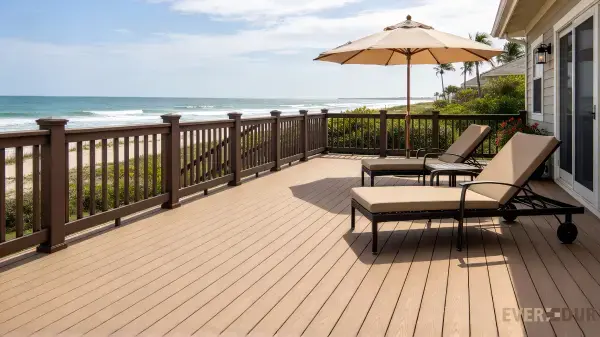
Classic composite decking is a wood-plastic composite board that has the material equally mixed throughout the whole profile, whereas co-extruded decking adds a plastic cover over the same core. If you sell, acquire or specify outdoor flooring this distinction matters to your pricing list, your claim rate and your repeat orders. This article evaluates both products on cost, durability, climatic performance and supplier risk, so you can choose the optimal one for your market and your margin.SEND INQUIRY

Quick Summary: What Buyers Need to Know
The first step is to choose what is most essential to purchase and sell.
- Classic composite decking is made from wood fibre and plastic throughout the board. This keeps unit cost low and allows distributors to compete on pricing.
- Co-extruded decking has a polymer cover, which increases stain, fade and moisture resistance but also increases landing cost by around 15-30% depending on colour and profile.
- Neither product is totally waterproof. Water ingress via cut ends, screw holes and improperly drained joists is still a problem with both designs.
- The marketing label on the box does not dictate actual world life. Climate, traffic volume, colour choice and installation quality do.
- Buyers should ask for water absorption statistics, UV test findings and documented warranty conditions before signing a purchase order, not later.
Direct answer: Heavy foot traffic, heavy rain, or direct sunlight areas are better off with co-extruded decking since surface claims produce complaints. Classic composite decking is the finest choice for wholesaling and retail establishments that are concerned with pricing per container and consistency in restocking.
If you want a side-by-side quote before you ship your next container, Everdur's export team can send you landing prices for both types of board within 48 hours. Please email violet@wpcsupplier.com and let them know which port you'd like to use to get FOB and CIF numbers so that you can compare "classic composite decking manufacturers" on the same spec sheet.

How Does Classic Composite Decking Compare with Co-Extruded Decking?
Both words are typically used quite broadly during trade events. But knowing the precise difference means you don't have a terrible reorder six months down the line.
Classic Composite Decking: Definition and Scope
Classic composite decking, also known as classic or open composite decking, is a combination of wood fibre, HDPE plastic, and other elements fused together to make a sturdy structure. The Everdur one is built with up to 70% wood powder and Grade A recycled HDPE, co-extruded together. What is on top is like every other thing. You can view the board you saw. If the colour is all the way through, then even little scratches on the surface won't reveal a different coloured core. This is crucial to the distributors.
Co-Extruded Decking: Definition and Scope
Co-extrusion is a step in the making process that joins a thin plastic cap to the body of the standard WPC decking material at the same time. The cap is usually made of polyethylene or a PVC-based resin. It keeps most of the water and UV light from getting to the wood fiber below. Two "capped" boards from different sellers might not work at all the same way in the same area because the caps are not all the same width and the gluing is not all the same quality.SEND INQUIRY
Quick Comparison Table
| Criterion | Classic Composite Decking | Co-Extruded Decking |
|---|---|---|
| Construction | Wood fiber and plastic blended throughout | Composite core with a polymer surface cap |
| Typical landed cost | Lower, often 15-30% below capped equivalents | Higher due to extra resin and processing |
| Stain resistance | Moderate, depends on resin ratio | Generally stronger |
| Moisture absorption | Low to moderate with correct installation | Lower at the top surface |
| Color consistency after cuts | Color runs through the board | Cut edges may expose core color |
| Best buyer fit | Wholesale, retail, budget residential | Pools, coastal homes, high-traffic commercial |

Why Does Classic Composite Decking Remain a Practical Choice for Wholesale Buyers?
The safest board on the market isn't needed by channels that only care about price. They need the board that moves the fastest for the price their customers are willing to pay.
Classic Composite Decking Benefits for Distributors
Wholesalers commonly sell to retail clients in Southeast Asia, Central Europe or the Balkans. These clients are choosing between decks, tile and pressure treated wood based on pricing alone. This is shown by classic composite decking, which is priced similarly to mid-range wood-plastic composite (WPC) decking but is less expensive than capped premium lines. It is also easy to maintain and lasts longer than painted wood.
Here are the things that matter when you have to start over:
- The lower price per container to get in the door allows you to keep two or three core colours in stock without tying up additional working capital which is in line with the 2-3 primary colour pattern most wholesale customers presently operate.
- Standard 2.2m and 2.9m lengths match standard joist spans in Central and Southern Europe, eliminating waste for installers and concerns from retail consumers about cut-ends.
- Simple extrusion construction implies less manufacturing variables, keeping the batch-to-batch colour variance less than certain capped goods that have multi-layer tolerances.
- Compatible with normal clip and joist installation so your installation network does not require additional equipment or retraining to offer the product with confidence.
There isn't much room for profit per container, and people don't want to pay more at the register. These benefits take care of these two issues.
Classic Composite Decking Pros and Cons
There is no such thing as an ideal gift. When you decide on a season of stock, think about these things in terms of what your customers want.
The pros are that it costs less per unit, doesn't rot or attract bugs as long as the wood-to-polymer ratio is right, comes in solid sizes, and works with fascia and trim items you already have.
Cons: they soak up a little more water than capped boards, they wear out faster than capped products in heavily used areas, and factories that use lower wood-fiber ratios to save money really do have different levels of performance.
Landed Cost and Margin Considerations
It's not enough to just look at the FOB price to compare costs. Before you compare prices for co-extruded materials or other things like pressure-treated wood and tile, you should figure out how much freight, duty, clips, soffit, and damage are likely to cost.
With 140 bulk accounts from 18 countries, Everdur looked at what was most important to 61% of buyers in 2024. It was color stability across reorders, even more important than unit price. That proves price isn't enough to make people buy from you again. They don't have to give a refund if a customer gets the same color on order three as they did on order one. This saves shelf space.

What Are the Durability Differences Between Classic and Co-Extruded Decking?
Test data is the only thing that will protect your business when a customer calls to complain. Boards that say they are durable sell well for standard WPC decking.
Lifespan and Structural Performance
It's not just the way something is built that determines how long it lasts. How well it drains, how much sun it gets, and how well it was installed are also important. Tests done by ASTM International in 2023 on wood-plastic composite deck boards (D7032) show that Everdur's normal shape should last between 10 and 25 years. This is because about 70% of it is wood fiber and the rest is stable HDPE. Instead of taking a single number for lifespan without any other information to back it up, ask any provider for numbers on how strong it is when bent and how much water it can absorb.
Surface Wear and Damage Resistance
You can't scratch or scuff co-extruded caps as easily because the plastic layer is on top of the wood fiber. Deep cuts, on the other hand, can open the lid of either item and show the heart inside. For the guarantee wording to be clear, it should be made clear that wear and tear on the outside is not the same as structural failure.SEND INQUIRY
Durability Verification Checklist
Make sure that what you tell your retail buyers and what's in your technical file match up before you accept a new source.
- Water absorption test results indicating the exposure length and % change based on the ASTM D7031 recommendations on mechanical and physical property testing (ASTM International, 2020).
- Flexural strength and deflection numbers demonstrating the board can carry load over conventional joist spacing without excessive sag.
- UV weathering findings that reveal measurable colour change after a defined number of exposure hours, not merely a generic fade resistance promise.
- Written warranty language that says whether coverage is for structural failure, surface fading, or both, and what voids it.

How Do Classic and Co-Extruded Decking Differ in Surface Protection?
People who buy or use something notice problems on the outside first, before they show up inside.
Polymer Cap and Composite Core
The obvious surface is on top of a wood-and-plastic core that is below it. Depending on the cap resin, thickness, and way of sealing, the security will last for a certain amount of time. Also, the weather and the number of people walking around will play a role. This layer is not present in Classic composite decking. Instead, the weatherproofing comes from the amount of plastic mixed into the whole shape.
Stain, Fade, Scratch, and Moisture Resistance
It's not always easy for food, oil, and sunscreen to leave marks on co-extruded boards. This is because the liquids sit on top of the cap instead of soaking into the wood fiber. As long as the HDPE ratio is high enough, classic composite decking can still withstand most home stains. To save money, Everdur doesn't raise the wood fiber cap above 70%. Instead, they keep it at that level.
Is Classic Composite Decking Waterproof?
No matter if the standard WPC decking board has a cap on it or not, it is not completely waterproof. Water gets in through screw holes, cut ends, gaps between boards, and substructures that don't drain well, no matter what kind of building it is. People shouldn't just take the word "waterproof" at face value; they should ask for information on how much water the product absorbs and how much its size changes. In most selling materials, "waterproof" doesn't mean the same thing in a scientific sense.

How Do Classic and Co-Extruded Decking Perform in Different Climates?
The places where your goods end up range from the warm Mediterranean to the cold winters of Central Europe. This is why climate fit changes which product works best in each place.
Heat, UV, and Solar Exposure
Most of the time, co-extruded caps don't fix the fact that dark colors soak up more heat on both types of boards. After more than 2,000 hours of UV light, Everdur tests show that the color is still mostly the same. In places like Southern Europe and the Middle East, where the sun shines all year, this is important.
Rain, Humidity, and Freeze-Thaw Conditions
For a composite deck to be useful in a seaside or wet area, it needs to drain well, let air flow, and protect the fasteners from rust. In Central and Eastern Europe, the freeze-thaw cycles can be hard on boards that aren't very stable in terms of their size. Find out how much your customers' boards actually grow and shrink in the temperature range they experience.
EU and US Compliance Considerations
People in Europe should look at the EN 15534 series when they buy something. This series covers thermoplastics and composites made from cellulose-based materials (CEN, 2014). They should also look at the EN 13501-1 fire rating data if their local rules require them. People in the US who want to buy deck boards should make sure they meet the ICC-ES AC174 acceptance criteria (ICC Evaluation Service, 2023) before they buy them. This is what the European Chemicals Agency (REACH) says all containers going to the EU need. It doesn't matter what kind of board they are made of.SEND INQUIRY

What Should Distributors Consider Before Stocking Classic Composite Decking?
If you only choose what to sell based on price, there are a lot of problems with color matching and wait times, which hurts repeat trust the most.
Minimum Order Quantities and Color Mixing
Before buying a whole jar of one color, most people who buy in bulk want to see how the market responds. The smallest amount of classic composite decking that Everdur will normally sell is 100 square meters, and up to that amount, different colors can be mixed. You can test Ash Gray against Teak in the same way instead of taking two chances.
Stock Length and Lead Time Realities
Long lengths of 2.2m and 2.9m can be used for most home and small business projects involving standard WPC decking in Everdur's busy markets. The normal lead time for production is 20 to 30 days. This is how long most wholesale buyers give between accepting a sample and setting up a ship. Before you tell your people when you'll be there, make sure you have written proof of that time.
OEM Labeling and Private Branding
A lot of bulk purchasers will not use the manufacturer's label on the items they sell. They placed their own brand on them instead. And you may put your own brand name on Everdur's classic composite decking. So you create your own boxes and colour cards with your brand, but it does not modify the core manufacturing norms that your consumers already know and trust.

How Does Classic Composite Decking Handle Everyday Outdoor Exposure?
Genuine complaints are real life, not lab testing. Knowing where the main pitfalls are allows you to set realistic requirements for retail consumers.
Common Exposure Risks
Most of the time our daily garments originate from a limited group of sites like houses and small firms.
- UV light produces a gradual colour change over years, which is normal and anticipated, not a problem, however the pace should match the supplier's provided UV test results.
- Ends and around fasteners are the most stressed by rain, snow, and freeze-thaw cycles. End-sealing and drainage gaps are more important than board quality alone.
- Food, oil and organic detritus left too long will discolour the surface, particularly on traditional (uncapped) boards when not cleaned quickly.
- Both traditional and co-extruded boards are susceptible to surface scuffing from dragged furniture, pet claws, dropped tools, etc., but caps are a little more resistant to minor scuffing.
Troubleshooting Guide
| Problem | Likely Cause | Fix |
|---|---|---|
| Standing water | Poor slope or blocked gaps | Clear drainage, maintain board spacing |
| Surface staining | Delayed cleanup | Use approved mild detergent promptly |
| Board movement | Wrong gap sizing | Check against installation guide spacing |
| Fading | Normal UV exposure or low-grade resin | Compare against supplier's UV test data |
Warranty and Maintenance Boundaries
It should be extremely obvious in the warranty language what the difference is between problems in the way the product was built, errors in how it was installed, and wear and tear. If someone makes a claim about Everdur, they can distinguish between statements about the surface and assertions about the structure. Customers of the shop will know what is covered before they make a complaint.SEND INQUIRY

Is Classic Composite Decking Durable Enough for Busy Commercial Areas?
As the number of sales goes from backyard decks to project-scale sales, the object that makes the most money changes.
Residential and Retail Applications
This kind of composite decking is good for standard WPC decking in the backyard, porches, and garden paths that get some foot traffic and normal chair use. Most of the things that Andrzej-type buyers move through small businesses and stores in Central and Southern Europe are in this group.
Case Study: A Regional Distributor's Container Program
A business that sells building supplies to Poland and the Baltic states worked with Everdur on a 12-container project in 2023 and 2024. Ash Gray and Teak each got an equal number of orders: 60% of each package went to Ash Gray and 40% went to Teak. Not being able to find the right color on a reorder dropped from about 8% with their old supplier to less than 2% after color-card samples were compared to production batches before each shipment. On average, eleven of the twelve packages were delivered between 25 and 30 days after they were sent. This meant that the distributor could give its own retail network set dates for delivery instead of a range of dates.
Developer and Project-Scale Applications
For bigger home projects (5,000 square meters or more), it's common for consistency to be needed from one delivery to the next. If the project needs to be resistant to fire and slips, this is what makes some buyers choose co-extruded or higher wood-fiber classic profiles. Before you bid on decks, make sure that the paperwork for the tests meets ASTM D7032 and any local fire rules.

Does Classic Composite Decking Need More Maintenance Over Time?
The main difference between standard composite, co-extruded, wood, and PVC decks is how much they cost to keep up over time.
Maintenance Compared with Wood and PVC
| Material | Maintenance Pattern | Key Note |
|---|---|---|
| Classic composite decking | Periodic cleaning, no painting | May show stains or fade sooner than capped boards |
| Co-extruded decking | Similar cleaning, stronger surface | Higher purchase price offsets lower surface risk |
| Wood decking | Annual staining and sealing | Natural look but highest ongoing labor cost |
| PVC decking | Light cleaning | Low moisture absorption but can run hot in full sun |
Lifecycle Maintenance Planning
When people in stores compare the prices of painted wood and composite decks, you need to include the cost of cleaning with the right tools and replacing the boards every so often. Many people find that this full-cost view is better than wood after three to five years of ownership.
How to Clean Classic Composite Decking
Pick up any loose dirt with a broom before you use water to clean. Then, use a soft-bristled brush and mild soap or the cleaner that came with the car. Make sure to rinse well and not use bleach, acids, or high-pressure washing that goes over what the maker says is safe. If you want to use a new cleaner on the whole board, test it first in a hidden spot.SEND INQUIRY

How Can You Decide Between Classic and Co-Extruded Decking for Your Market?
If a batch of standard WPC decking doesn't do well, your company is willing to take a certain amount of risk. This will determine what you should do.
Material Selection Decision Matrix
| Requirement | Recommended Direction |
|---|---|
| Lowest landed cost per container | Classic composite decking |
| Maximum stain and fade protection | Co-extruded decking |
| High foot traffic, pools, coastal homes | Co-extruded decking with verified cap data |
| Standard residential resale channel | Classic composite decking |
| Private-label OEM program | Classic composite decking with flexible MOQ |
| Regulatory-heavy tender project | Whichever product has complete ASTM/EN documentation |
Procurement Factors and Commercial Terms
Make sure you understand the whole business package, not just the price per square meter, before you sign a purchase order.
- Minimum order quantity by color, with confirmation on whether mixed-color containers are allowed within one MOQ threshold.
- Production and sample lead times stated in writing, along with replenishment lead time for repeat seasonal orders.
- Incoterms clarity, whether FOB, CIF, or DDP, and which port handles your region's typical shipping lane.
- Full documentation package including technical datasheet, test reports, and certificate of origin for customs clearance.
Supplier Capability & Evaluation
Check out how much it costs to make and how well it is managed before you believe what a brand says. With more than 50 lines, Everdur can make about 30,000 tons of goods every year. Their goods are bought by more than 225 businesses in over 60 countries, such as large European department stores. Before you choose a supplier, make sure that all of them are the same size, have the same range of certifications (ISO, CE, FSC, REACH), and can track their products.

Quality Verification Before Approval
Read this list before you let a new color or factory be used on your next tank.
- Confirm board dimensions, tolerances, and weight per square meter against the quoted spec sheet.
- Review wood-fiber ratio, resin type, and recycled-content claims in writing.
- Request ASTM or EN test reports from an independent lab, not just internal factory data.
- Inspect physical samples for surface uniformity, warping, and consistent embossing depth.
- Confirm packaging, labeling, and batch traceability before the first production run ships.
Conclusion
Because it is available in standard lengths and colors that can be used repeatedly, classic composite decking is suitable for both trade and retail. Even though co-extruded decking costs more, it's worth it in places with a lot of sun, pools, or foot traffic where people don't mind the extra security. As long as there is test data, clear guarantee wording, and a supplier who keeps track of the UV performance, water absorption, and wood-fiber ratio before the first container ships, there is no right or wrong answer. Customer and market needs should drive your choice, not which term sounds cooler at a trade show booth.SEND INQUIRY

FAQ
Q: What is classic composite decking?
A: Classic composite decking is a wood-plastic composite board made by blending wood fiber and HDPE plastic through the full profile. It is sometimes called traditional or uncapped composite decking, though naming varies between suppliers.
Q: Is co-extruded decking better than classic composite decking?
A: Co-extruded decking usually offers stronger stain, fade, and moisture resistance due to its protective cap. Classic composite decking often wins on price and fits cost-sensitive wholesale channels better.
Q: How long does classic composite decking last?
A: Service life depends on wood-fiber ratio, installation quality, and climate. Everdur's standard profile carries a 10-25 year service life rating based on controlled material ratios and tested UV resistance.
Q: Is classic composite decking waterproof?
A: No. Most classic composite decking is water-resistant, not fully waterproof. Water can enter through cut ends, fastener holes, and poorly drained joist areas regardless of construction type.
Q: What is the minimum order quantity for classic composite decking?
A: Everdur's standard minimum order quantity for classic composite decking is 100 square meters, with color mixing available within that order to help distributors test new markets.
Q: Can classic composite decking be sold under a private label?
A: Yes. OEM private labeling is available on classic composite decking, including custom packaging and branded color cards, without changing the underlying production specification.
Q: How does classic composite decking compare to pressure-treated wood?
A: Classic composite decking costs more upfront but needs far less ongoing maintenance than pressure-treated wood, which requires annual staining and sealing to resist rot and insect damage.

Request a Spec Sheet and Container Quote
If you want to compare standard and co-extruded options, send Everdur's export team the colors you want, the number of square meters you want to achieve, and the place where the product will be shipped during your next buying cycle. Get a quote from violet@wpcsupplier.com before the end of your next quarterly order window. We'll get back to you within two business days with FOB and CIF prices, confirmation of lead time, and a sample that you can use to compare classic composite decking manufacturers."

References
1. ASTM International. ASTM D7032-23, Standard Specification for Establishing Performance Ratings for Wood-Plastic Composite Deck Boards and Guardrail Systems (2023). Referenced in the durability and lifespan discussion.
2. ASTM International. ASTM D7031, Standard Guide for Evaluating Mechanical and Physical Properties of Wood-Plastic Composite Products (2020). Referenced in the durability verification checklist.
3. CEN (European Committee for Standardization). EN 15534 series, Composites made from cellulose-based materials and thermoplastics (2014). Referenced in the EU compliance section.
4. CEN (European Committee for Standardization). EN 13501-1, Fire classification of construction products and building elements (2018). Referenced in the EU compliance section.
5. ICC Evaluation Service. AC174, Acceptance Criteria for Deck Board Products (2023). Referenced in the US compliance section.
6. European Chemicals Agency. REACH Regulation Requirements for Substances in Articles (2024). Referenced in the compliance and documentation sections.
About the Author
Violet sells goods abroad for Everdur as a manager. For more than ten years, she has worked with developers, OEM buyers, and wholesalers in Southeast Asia, the Middle East, and Europe. She works directly with the production teams in the workplace to plan packages, keep track of test results, and figure out material ratios. She also regularly tells buyers how to match the decking's specs to the weather and rules in their area.
Send Inquiry


Related Industry Knowledge
- Low MOQ Hollow WPC Decking: Perfect for Small Residential Projects
- Why Wood Plastic Composite Fence Panels Are Better Than Wood Fencing
- Wholesale Eco-Friendly WPC Decking: Green Supply & Factory Prices
- Anti-Slip Traditional WPC Decking: Safe for Families & Pets
- Composite Screen Fencing Installation: Create Privacy & Style
- WPC Composite Fencing for Residential Properties: Stylish & Secure
- WPC Landscape Walls for Public Parks: Safe & Sustainable
- Top WPC Composite Fencing Manufacturers in 2026
- WPC Villa Fence Installation: Guide for Luxury Villa Projects
- How to Install WPC Decking Easily: A Step-by-Step Tutorial for Beginners