_1777451497595.webp)
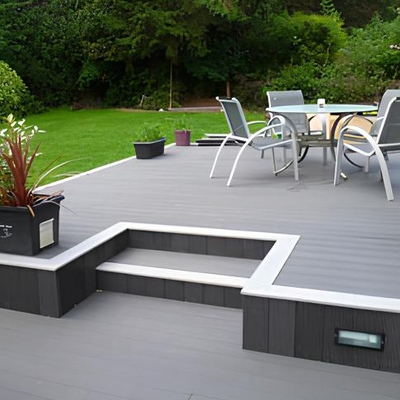
Solid WPC Decking: Heavy-Duty Flooring for High-Traffic Areas
2026-10-12 16:38:01
If you have an outdoor area that gets a lot of foot traffic, heavy furniture placement and you never know what the weather is going to be like then choosing the right material for flooring is quite important. Architects, builders and project developers all throughout Europe and North America trust solid WPC decking, or wood-plastic composite boards with a totally thick, hollow-free core. Solid composite deck boards don’t have hollow profiles and transmit the weight equally throughout the full cross section, decreasing the likelihood of surface deflection or structural fatigue over time. This kind of outdoor flooring is made from recycled HDPE and sustainably obtained wood fibre, performing and being environmentally responsible at the same time. When designing a seaside promenade, rooftop terrace, resort walkway or business pool deck, knowing what makes solid outdoor WPC a practical option will help you select the proper material with confidence. In this post we will be looking at the structural benefits, surface choices, applications and long-term durability of solid WPC composite decking boards. We will be using verifiable technical data and real-world installation situations to paint a clear and honest image for you.SEND INQUIRY
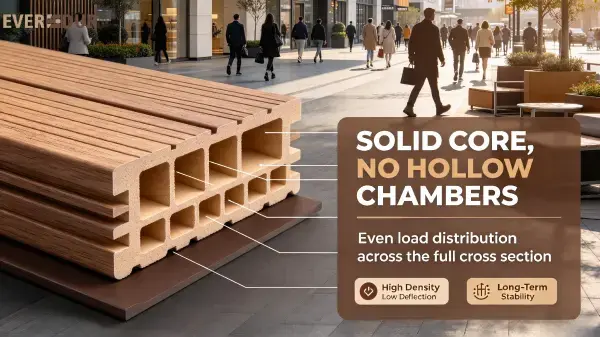
Why Is Solid WPC Decking Suitable for High-Traffic Areas?
It all comes down to density. There are no empty spaces inside a fully solid board, so when people walk on it, heavy equipment rolls over it, or heavy furniture is moved around, the compression forces are spread out across the whole material instead of being focused on the thin walls that are hollow. Because of this structural feature, solid composite decking works especially well in places where loads change a lot and are hard to predict.
In addition to density, the composition of the material is also important. Solid WPC boards of the highest quality are made from wood powder, Grade A reclaimed HDPE, and chemical stabilizers that have been carefully chosen. The wood fiber part gives it shape stability, and the HDPE part keeps water out and keeps the temperature stable. This makes a board that doesn't bend, swell, or chip along the edges, even when put under long-term mechanical stress.
When it comes to upkeep, places with a lot of foot traffic need materials that don't need to be resurfaced or treated with a protective coating all the time. Commercial walks that use traditional wooden decking usually need to be oiled, stained, or sealed once a year to keep the surface from wearing down. Solid WPC boards, on the other hand, can keep their surface in good shape by washing them with mild soap and water every so often. This trait lowers upkeep costs over the course of a property's life, which is important for building managers and property owners who own a lot of properties.
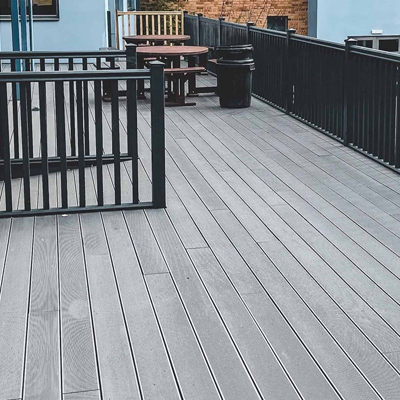
It's also important to think about safety. For pedestrian safety, the surface should be the same all over in public places like plazas, hotel decks, and seaside promenades. Solid composite boards keep bolts in place, don't split on the surface, and keep their shape even when the temperature changes with the seasons. Because of these features, they make sense as a specification choice for public and commercial outdoor projects that must meet strict safety standards.
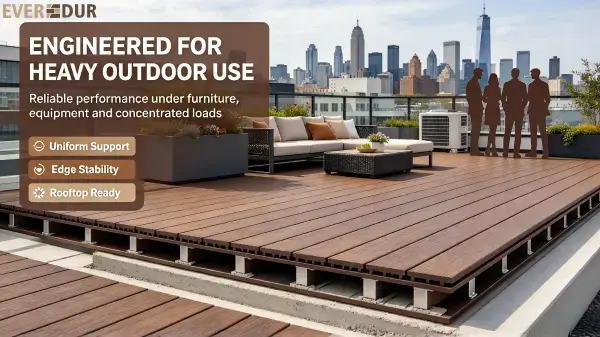
Solid WPC Decking Load-Bearing Strength for Heavy Outdoor Use
When business outdoor flooring is being chosen, load-bearing ability is one of the most closely looked at factors. Deflection standards are used to test solid composite deck boards to see how much they move when a steady load is put on them. It is possible for solid WPC profiles to handle a lot more weight than hollow-core alternatives because their cores are fully integrated.
In real life, this means that solid WPC boards can hold the weight of groups of outdoor furniture, repair vehicles, and big groups of people without the surface deforming in a way that can be seen. For example, planters, HVAC units, and seating arrangements often put a lot of weight on rooftop installations, which is an area where hollow boards may not last as long as they should.
It's also worth mentioning how well solid boards finish their edges. Since the material is the same from the outside to the inside, cut edges and routed curves keep their shape without showing open spaces. This is important for border designs that people can see, stair nosings, and special profile work that needs to look good.
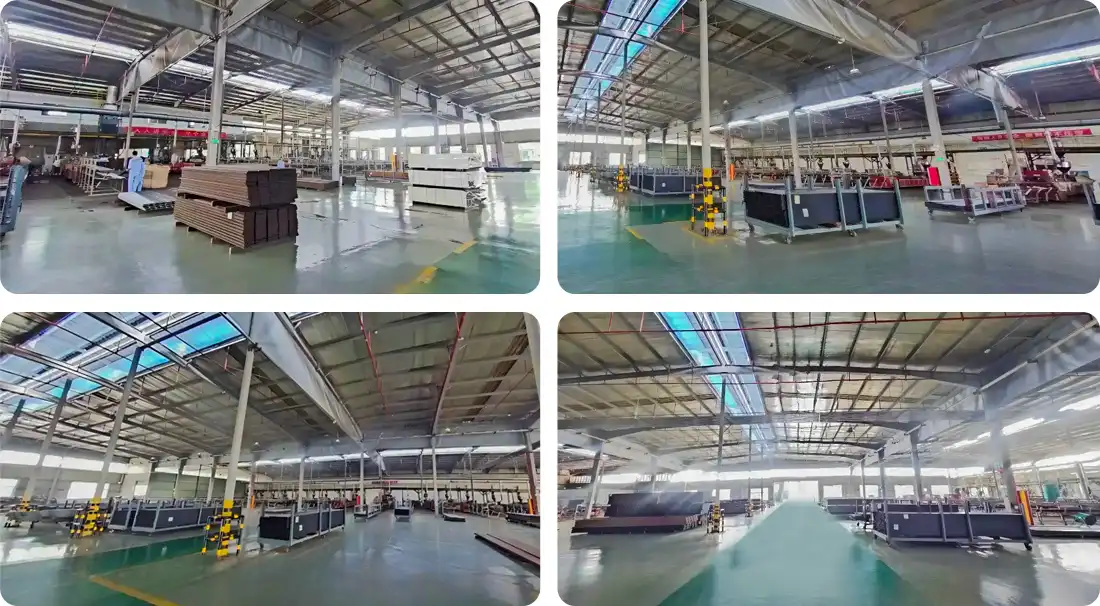
Everdur makes solid WPC boards on 50 dedicated production lines that can each produce 30,000 tons of boards every year. This lets them keep quality control high even when working on a lot of projects at once. With 5S on-site quality management and extrusion molding, dimensional tolerances are managed to make sure that every board meets the same structural requirements. This is an important detail to keep in mind when buying materials for a large installation, where board-to-board consistency affects both the accuracy of the installation and the look of the finished product.SEND INQUIRY
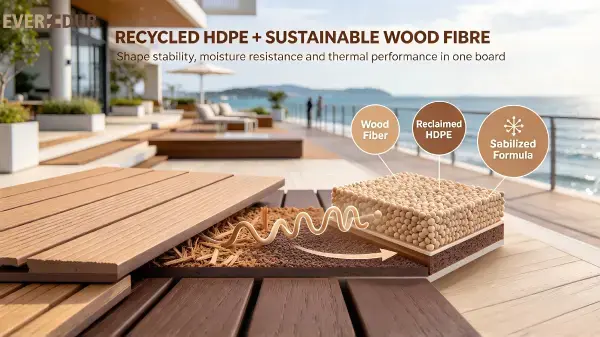
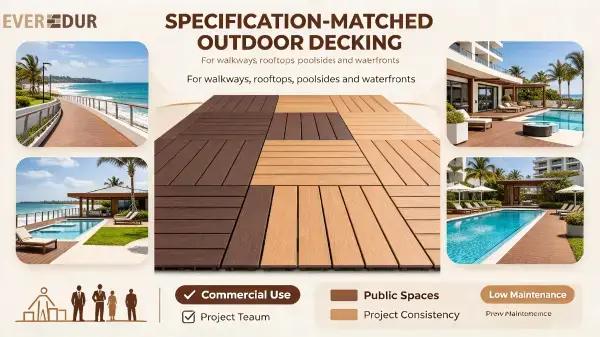
Solid WPC Decking for Walkways, Rooftops, Poolside, and Waterfronts
Solid outdoor WPC boards have been successfully installed in a lot of different outdoor settings. Each setting puts a little bit of a different strain on the material. By knowing how the product works in these situations, buyers can better match the product's specs to the needs of the project.
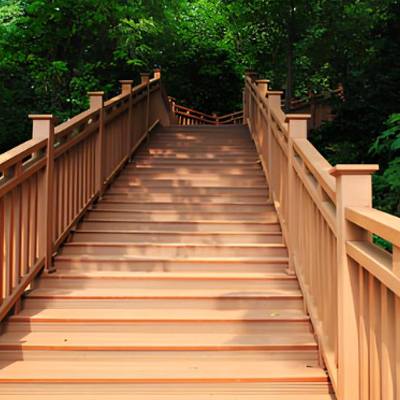
Walkways are often used by people and are exposed to rain, mud, and UV rays, whether they are in city parks, hotel grounds, or resort corridors. Solid WPC boards work well with this mix because their dense core keeps water out and UV stabilizers in the surface keep the colors from fading over time when they are exposed to the sun. Controlled tests have shown that colors stay stable after more than 2,000 hours of UV exposure. This is a good starting point for figuring out how well something will work outside.
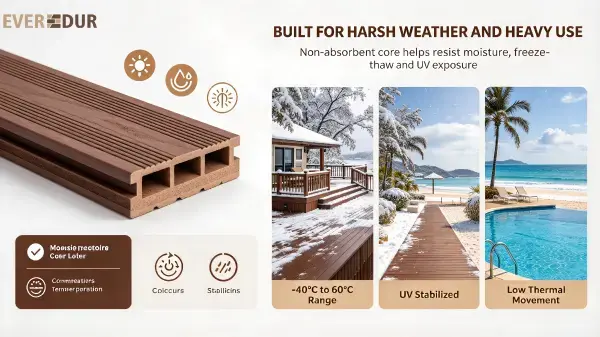
Rooftop decking has to deal with different problems, such as high temperatures, wind, and limits on how much weight it can hold. Solid composite boards have been tested to work in temperatures between -40°C and 60°C, which is the temperature range that most building sites in Europe and North America will be in. Because they don't change size when the temperature changes, the expansion gaps that were set at installation will still work in all seasons. This lowers the chance of boards buckleing or joints compressing.
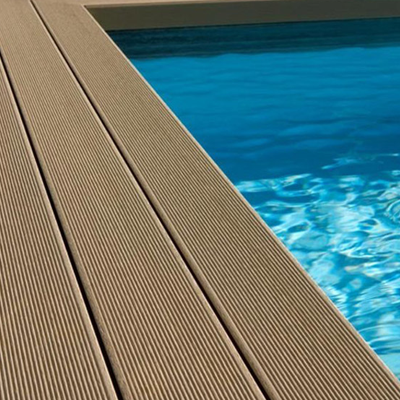
Installations by pools and the water expose people to long periods of wetness and, in coastal areas, salty air. The core of solid WPC boards is made of recycled HDPE, which doesn't absorb water and doesn't rust in salty settings. Because of this, solid composite boards are a good choice for marina decks, platforms by lakes, and the areas around swimming pools, where wood would need strong preservatives to last as long.
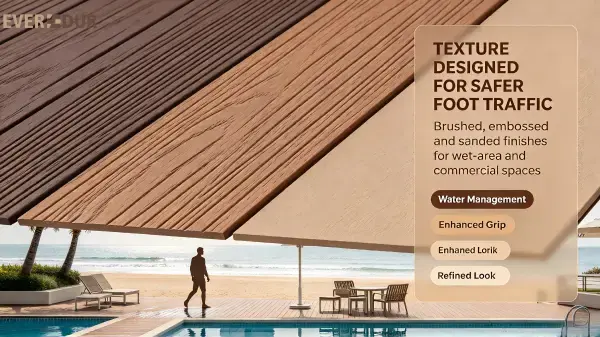
Solid WPC Decking Surface Options for Safer Foot Traffic
Texture on a surface isn't just about how it looks; it also has a direct effect on how slippery it is, which is a legal worry in public outdoor areas across the EU and North America. There are different surface treatments for solid WPC composite boards, each of which is better for different performance and look needs with solid outdoor WPC.
Brushed surfaces make fine, straight lines across the face of the board. These lines move water away from the walking surface and make it easier to walk on when it's wet. A lot of people choose this treatment for areas by pools and the ocean where people often have wet feet.
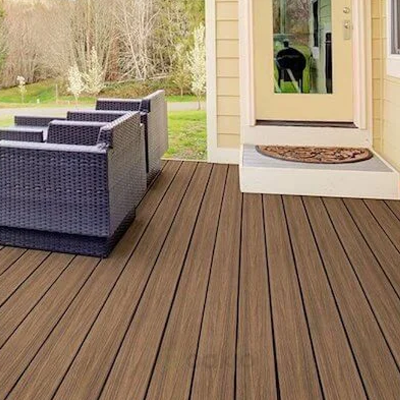
Embossed surfaces look like the natural grain relief of wood, giving them a warm look and a textured grip profile. People often choose this choice for resort patios, hotel gardens, and other places where the way the space looks is important for business reasons.
Sanded surfaces have a smoother, more refined finish that works well in places that want a more modern look to the materials. It looks the most natural when wood grain surfaces are used. They have pressed grain designs that look a lot like the feel of real wood without the upkeep.
All surface choices come in a normal color range that includes Ash Gray, Cedar, Coffee, Copper Brown, Dark Gray, Ivory, Mocha, Sandal Wood, Stone Gray, Teak, Walnut, and other colors made just for certain projects. There are also climate-adapted material formulas for projects that will be done in places with very low temperatures, high UV levels, or high dampness.SEND INQUIRY
Solid WPC Decking Durability Under Heavy Use and Harsh Weather
Outdoor flooring companies often make claims about how long their products will last, but these claims need to be backed up by specific conditions in order to be useful. It has been shown that solid WPC composite boards can last between 10 and 25 years, but this depends on the type of board, where it is installed, and how well it is maintained. Co-extrusion solid boards have a 20-year warranty because they are made with a protective outer shell that is bonded to the core during production. This shows that the company trusts the performance of the material.
Several properties of the material work together to make solid WPC last even when it's used a lot. Impact fracture is less likely to happen with high-density HDPE than with lower-grade polymers. The wood fibers in the board make it stiffer while lowering its thermal mass. This keeps the surface from getting too hot in direct sunlight, which is an important safety and comfort factor for barefoot use in warm climates.
Weather cycling, or going back and forth between wet and dry, hot and cold, is one of the main reasons why outdoor materials break down too soon. Because their closed-cell polymer core stops water from absorbing, solid composite boards don't change much in size over these rounds. Solid WPC stays the same size, unlike wood, which grows when it gets wet and shrinks when it dries. This means that the installation pattern and the fastening system will work well for as long as the product is used.
Another factor that matters in some areas is how resistant the material is to pests. Termites and other wood-boring insects can't eat synthetic polymer composites. This makes solid WPC boards better in tropical and subtropical conditions, where wood decks needs to be treated with chemicals to keep it from breaking down biologically.
Conclusion
In conclusion, solid WPC decking offers a practical and durable flooring solution for high-traffic areas. Its combination of strength, moisture resistance, low maintenance, and long-term stability makes it suitable for commercial spaces, public areas, and busy outdoor environments. Compared with traditional wood, solid WPC decking can provide consistent performance with less upkeep, while its attractive appearance adds aesthetic value. For projects that require reliable flooring capable of handling frequent use and changing weather conditions, solid WPC decking is a strong and versatile choice.SEND INQUIRY
FAQ
Q: What is the difference between solid and hollow WPC decking for high-traffic applications?
A: Solid boards contain a fully dense core with no internal chambers, which gives them higher load-bearing capacity, better edge stability, and a more substantial underfoot feel. Hollow boards are lighter and can be cost-effective for residential use, but their thinner walls make them less suitable for environments with sustained heavy loads or impact risk.
Q: Can solid WPC composite boards be used on rooftop terraces with structural load restrictions?
A: Yes. Solid WPC boards are available in profiles with widths of 135mm to 150mm and thicknesses of 20mm to 25mm, and they can be paired with lightweight aluminum or composite joist systems to manage the total dead load of the installation. Material selection and joist spacing should be confirmed with a structural engineer for specific rooftop conditions.
Q: How do solid outdoor WPC boards perform in freeze-thaw climates common in Northern Europe and Canada?
A: Solid WPC boards are tested to perform within a temperature range of -40°C to 60°C. The non-absorbent HDPE matrix prevents water from penetrating the board, which eliminates the freeze-thaw cracking mechanism that affects porous materials like timber and natural stone. Climate-adapted formulations are available for installations in particularly demanding cold-weather environments.
Get a Decking Specification That Matches Your Project
For building companies and project developers, Everdur offers scientific datasheets, formulations that are better for different climates, and stable bulk supply across 50 production lines. This helps with the whole specification process, from design to purchase.
For decking installers and contractors, we can make custom lengths, profiles, and surface textures, and our lead times are competitive. Samples can be set up to help with site mock-ups and demos to clients.
For people who buy and sell building materials in bulk: You can get priority sample programs and special wholesale pricing structures. Get in touch with us to talk about private label and volume pricing.
End users who are planning outdoor projects can get free design advice and help with installation. Our staff can help you choose the right board size, color, and surface roughness for the outdoor space you have in mind.
The solid WPC decking goods made by Everdur meet the requirements for EU CE certification, US ASTM D7039 structural performance standards, and China GB/T 24137 wood-plastic composite specs. Environmental credentials include E0 environmental standards for formaldehyde emissions and Recycled Content certification. These help green building projects meet the requirements of major certification frameworks like LEED and BREEAM.
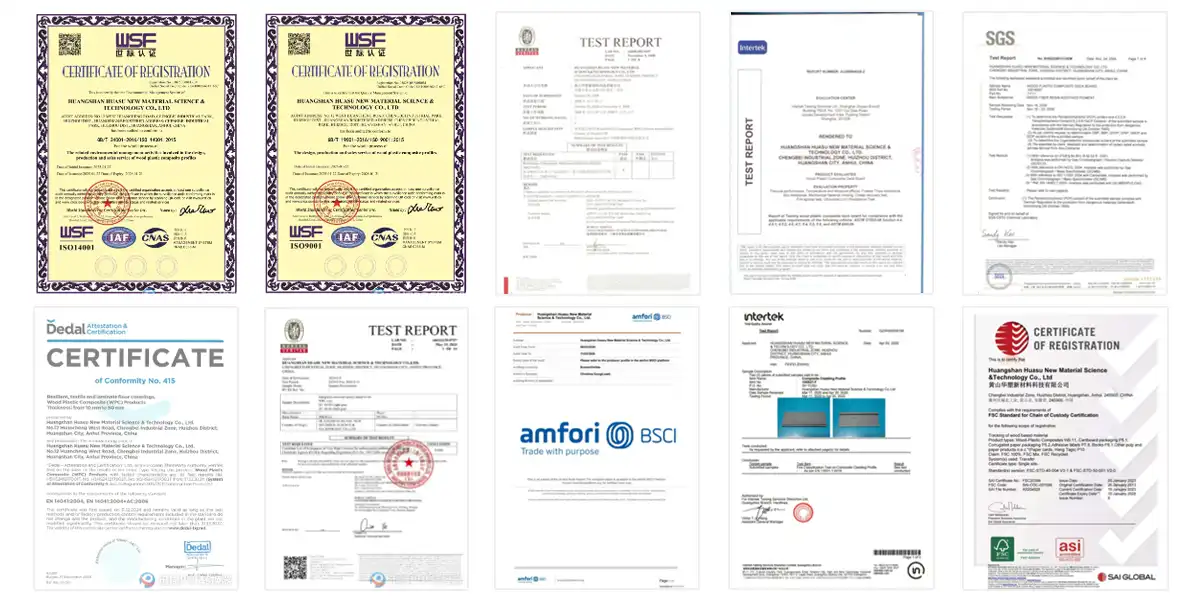
Everdur is a dedicated solid WPC decking maker with active clients in more than 60 countries and 225+ global accounts. They have the production capacity, quality infrastructure, and ability to customize to support projects of all sizes and levels of difficulty.
Send an email to violet@wpcsupplier.com to get in touch with our product team and ask for samples, specs, or a project review.
References
1. Clemons, C. M. (2002). Wood-plastic composites in the United States: The interfacing of two industries. Forest Products Journal, 52(6), 10–18.
2. European Committee for Standardization. (2012). EN 15534-1: Composites made from cellulose-based materials and thermoplastics (wood-polymer composites or natural fibre-polymer composites). CEN.
3. ASTM International. (2011). ASTM D7032: Standard specification for establishing performance ratings for wood-plastic composite deck boards and guardrail systems. ASTM International.
4. Klyosov, A. A. (2007). Wood-Plastic Composites. John Wiley & Sons.
5. Morrell, J. J. (2004). Protection of wood-based materials. In Handbook of Wood Chemistry and Wood Composites. CRC Press.
6. Construction Products Regulation (EU) No 305/2011. Laying down harmonised conditions for the marketing of construction products. European Parliament and Council.
Send Inquiry
Related Industry Knowledge
- Affordable WPC Decking Wholesale: Direct from Factory to Your Project
- How to Install WPC Fence Easily: Step-by-Step Guide for Beginners
- WPC Landscape Walls for Public Parks: Safe & Sustainable
- Best WPC Cladding Designs for Villa and Luxury Residential Projects
- How to Choose WPC Cladding: Material, Design and Installation Tips
- 3D Composite Decking: Elevate Your Outdoor Space with Textured Flooring
- WPC Villa Fence with Wood Grain: Enhance Your Villa’s Aesthetics
- How to Choose High-Quality Co Extrusion WPC Decking for Your Garden
- Waterproof WPC Cladding: Perfect for Coastal and Rainy Areas
- Top Benefits of WPC Decking for Residential and Commercial Use in 2026