
Top Commercial WPC Decking Manufacturers in 2026
2026-11-26 23:55:51
It is never easy to choose a trusted decking partner for a major project. Across Europe and North America, architects, contractors and procurement teams are seeking suppliers that can provide consistent quality at scale, while still meeting demanding regional construction regulations. Low-maintenance and weather-resistant materials are preferred for outdoor construction, making commercial WPC decking the go-to option for hospitality venues, waterfront boardwalks, and public infrastructure projects. This article will guide you through finding a reputable manufacturer, the technical differences between solid, hollow and co-extruded decking profiles and how this material performs in the real world. Whether you're seeking a hotel renovation or a municipal park makeover, these essentials will assist you in making a confident, well-informed buying decision in 2026.SEND INQUIRY
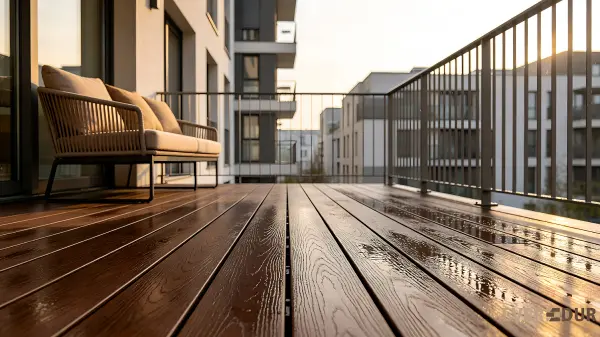
What Makes a Reliable Commercial WPC Decking Manufacturer in 2026?
Sourcing decking for a commercial construction is a long term investment not a one off buy. More often than not, a supplier's history, manufacturing discipline, and readiness to adapt to project-specific demands will trump a showy product catalog. This year, customers looking at manufacturers are focusing more on track record, scalability and capacity to assist projects after the deal closes.
Manufacturing Experience and Industry Track Record
Sixteen years of unbroken manufacturing experience means more to a corporation than simply longevity on paper. It is the end product of a gathered knowledge of raw material behavior, climate specific formulation changes and the hard fought lessons of thousands of completed installations. Companies that have made it through several product generations tend to fix problems quicker and anticipate regional performance difficulties before they become expensive complaints. If you're a buyer looking for commercial WPC decking, you should question how long a manufacturer has been operating under its present management and quality structure, since frequent ownership changes may affect consistency.
Global Export Reach and Client Base
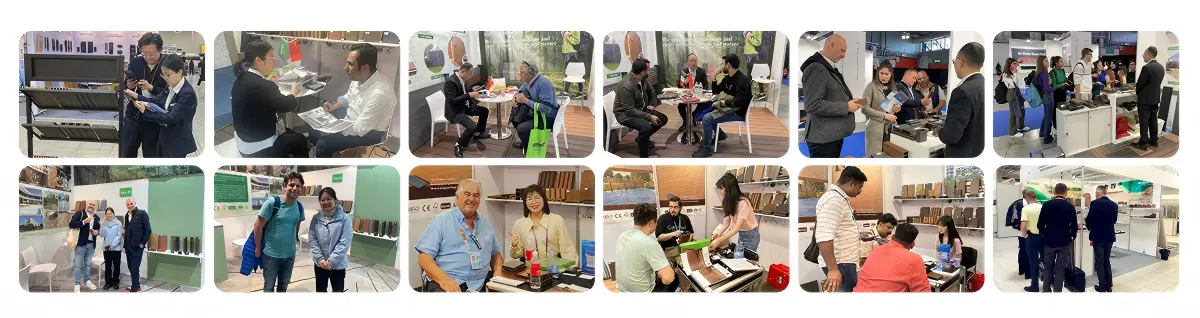
A manufacturer's export footprint indicates how the items perform in diverse climates and regulatory contexts. Shipping to more than sixty nations on five continents means a manufacturer has previously faced customs, extremes of humidity, freeze-thaw cycles and construction regulations of all sorts. With a current customer base of over 225 organizations, more than 100 of which are repeat purchasers, these partnerships are founded on solid performance, not one-offs. However, a provider who ships to both Germany and coastal Florida, for example, undoubtedly has modified its formulations to satisfy the differing temperature requirements between both regions.
Commitment to Innovation and Product Development
The material science behind composite decking has not been stagnant. The second generation of co-extrusion technique creates a protective shell over a core of wood fiber and recycled HDPE, a big improvement over prior generations of composites that had problems with moisture absorption and surface fading. Manufacturers are investing in new product lines like lighter boards with less thermal expansion because they are preparing for future code needs, not because they are relying on outdated formulas. A manufacturer's ongoing research and development investment is a realistic predictor of long-term sustainability as a supply partner.
Taking these three criteria into consideration, a buyer is less likely to be taken by surprise by only selecting a supplier solely on unit pricing. Often the greater expense up front from a recognized manufacturer translates to fewer warranty claims, more consistent lead times and decking that still looks acceptable 10 years later.SEND INQUIRY
Commercial WPC Decking Manufacturing Capacity, Certifications and Quality Control
Serious manufacturers are distinguished from the smaller firms that can barely get a major order out the door on time by their production capacity and established quality processes. And for an architect working on a multi-phase hotel project or a municipal contract with a hard deadline, these operational intricacies translate into actual money.
Production Scale and Supply Reliability
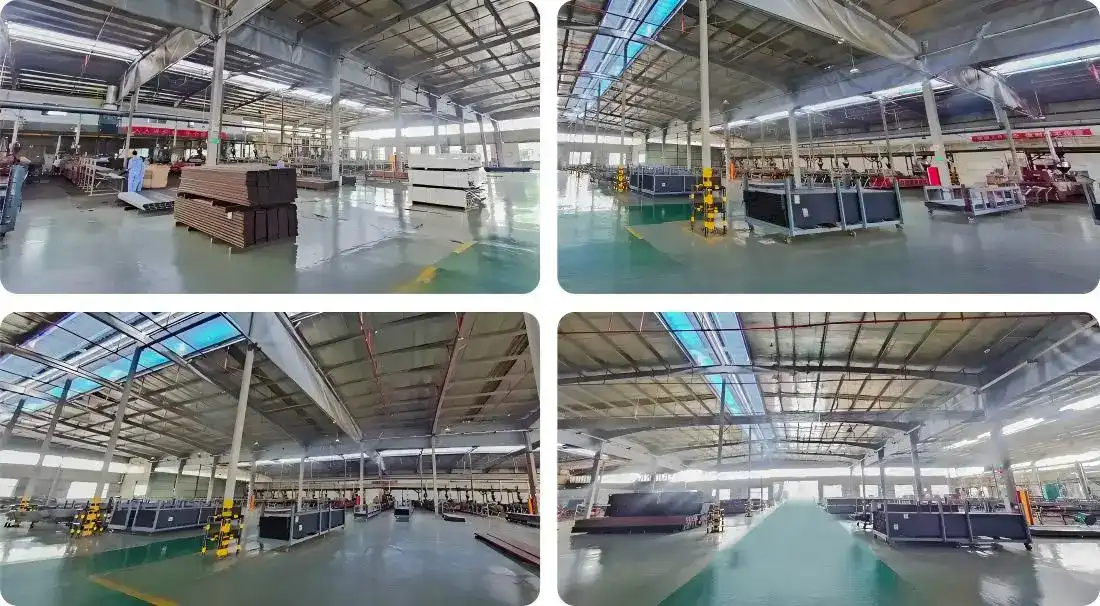
A plant with fifty manufacturing lines and a production capacity of around 30,000 tons per year can meet huge purchase orders without requiring customers to wait extended periods of time. If a firm is shipping over 1,500 containers a year, that means they've had the logistical infrastructure, from raw materials procurement to port scheduling, to handle commercial scale timeframes. Smaller workshops could provide comparable samples, but often fall short when a hotel chain has to supply several thousand square meters in a tight restoration timeframe. It's not only the quality of the sample, but the consistency of the supply that decides whether a project is on budget and on time.
International Certifications That Matter
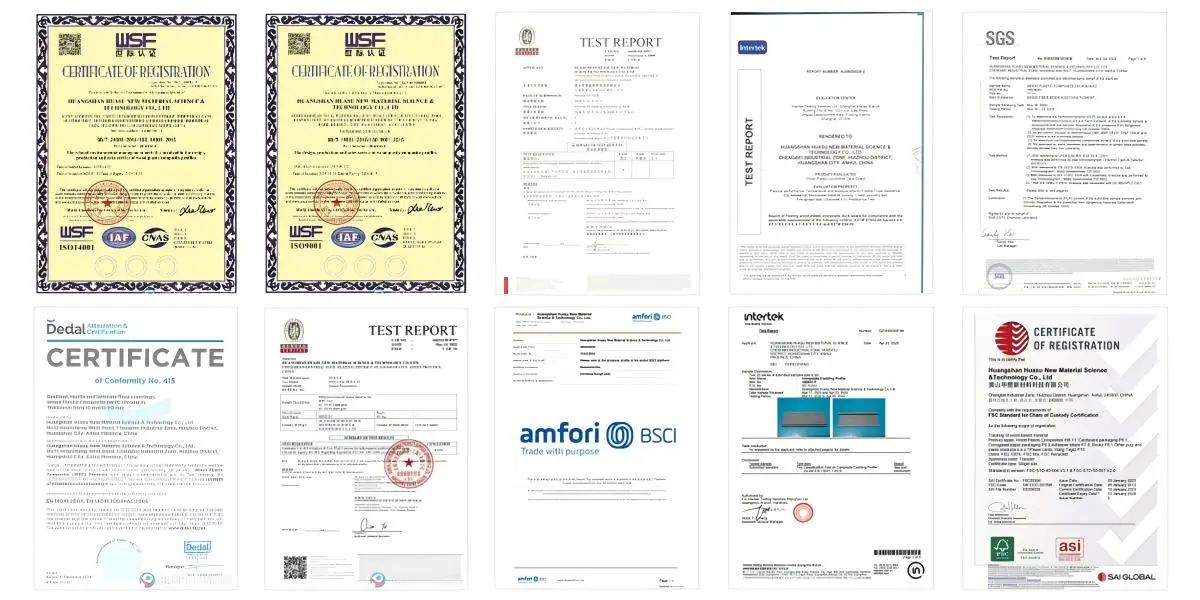
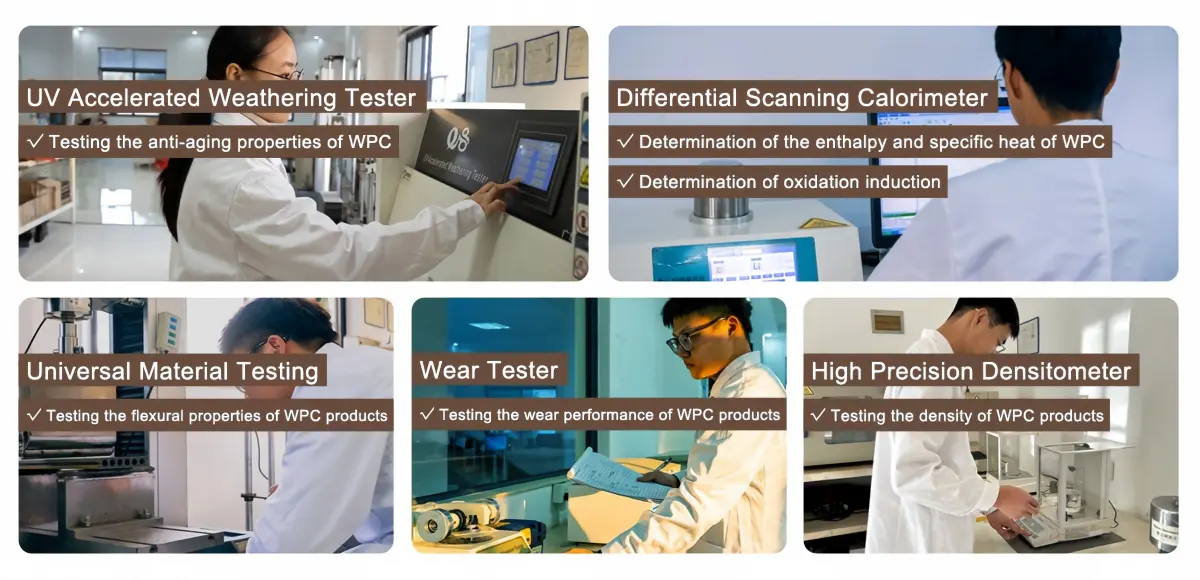
Certifications are a shorthand for trust when buyers aren't on the ground to observe a production floor. Commonly recognized markings, such as ISO 9001 for quality management, ISO 14001 for environmental management, CE marking for the European market, and testing validations from SGS and INTERTEK provide procurement teams with verifiable evidence that a product has been benchmarked against and meets recognized standards. FSC accreditation also ensures that wood fiber inputs are harvested from well managed forests, something that's increasingly relevant for green building certifications like LEED or BREEAM. A legitimate commercial weatherproof WPC manufacturer should be able to give test results on demand, not simply advertising promises.
On-Site Quality Management Systems
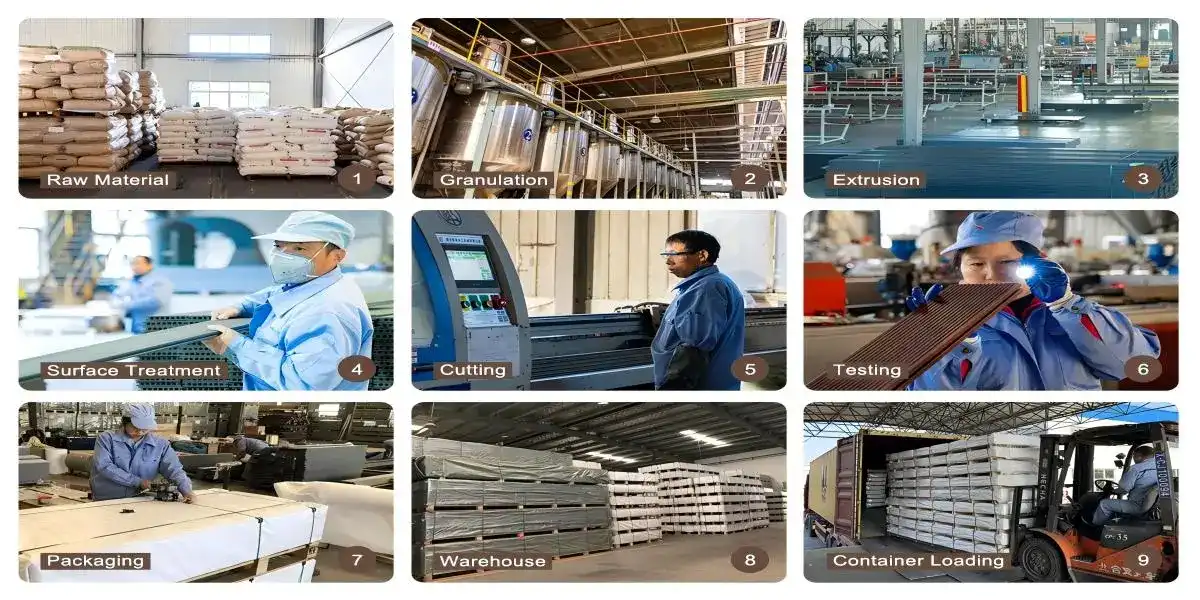
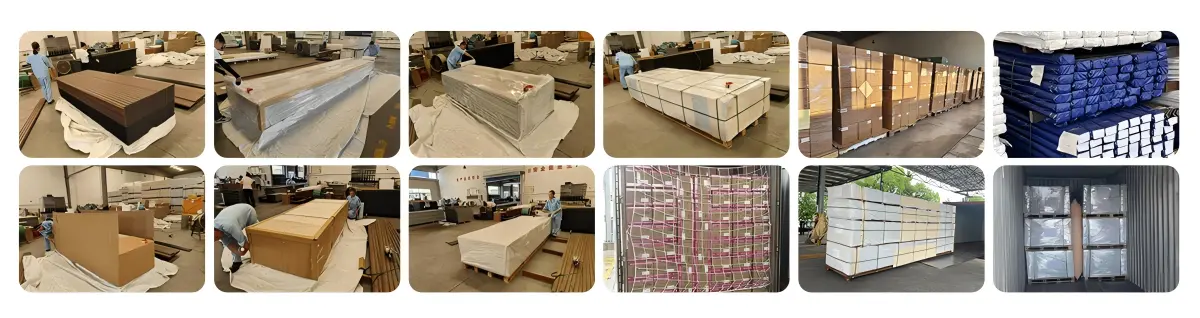
Certifications are the floor, but it's the day-to-day industrial discipline that keeps the floor, batch after batch. First class 5S on site management (methods of sort, put in order, shine, standardize and sustain) guaranties contamination risk is removed and consistent production variables from shift to shift are ensured. Every production lot should be tested to pre-determined criteria before it leaves the warehouse, detecting dimensional deviations, color inconsistencies or density problems before they arrive at a project site. When a consumer visits a facility from far away, via video chat, they may determine within minutes whether the firm takes these processes seriously, by observing how raw materials are handled and how completed boards are wrapped for delivery.
The procurement teams who ask for paperwork on production capacity, certification validity dates and current quality audit results are the ones that generally avoid nasty surprises at container inspection. Scrutiny up front takes little time but avoids expensive rework later in a project timeline.SEND INQUIRY
Solid vs. Hollow vs. Co-Extruded Commercial WPC Decking: Which Performs Better?
Not all corporate projects need the same kind of board structure. "By understanding the structural tradeoffs of solid, hollow and co-extruded profiles, specifiers are able to match the ideal product to their budget, weight limits and expected foot traffic.
Solid Profile Decking for Maximum Strength
Solid boards are made as one solid cross-section, with no internal voids. This design has the largest load-bearing capability of any composite alternative and is ideal for regions that suffer concentrated weight, such as commercial kitchen patios, loading zones near hospitality events, or boardwalks that support maintenance trucks. The density that gives the solid profiles their strength also gives them weight, which may mean higher transportation costs and demands stronger substructure design. This is why many manufacturers provide guarantees of up to twenty years on solid co-extrusion profiles – they dependably maintain their structural integrity during long service periods.
Hollow Core Decking for Lightweight Efficiency
The hollow profiles shave off material from the interior of the board, but leave the load-bearing ribs that are vital for structural stability. This reduces material cost and shipping weight which is significant for large area projects such as large hotel terraces or multi-story rooftop installations where structural load limits are a design consideration. The tradeoff is a little less point load resistance than solid boards, thus specifiers need to ensure that hollow decking can handle predicted traffic needs before making large orders. For many mid-traffic commercial applications, hollow profiles provide a logical balance between performance and project costs.
Co-Extrusion Technology for Long-Term Durability
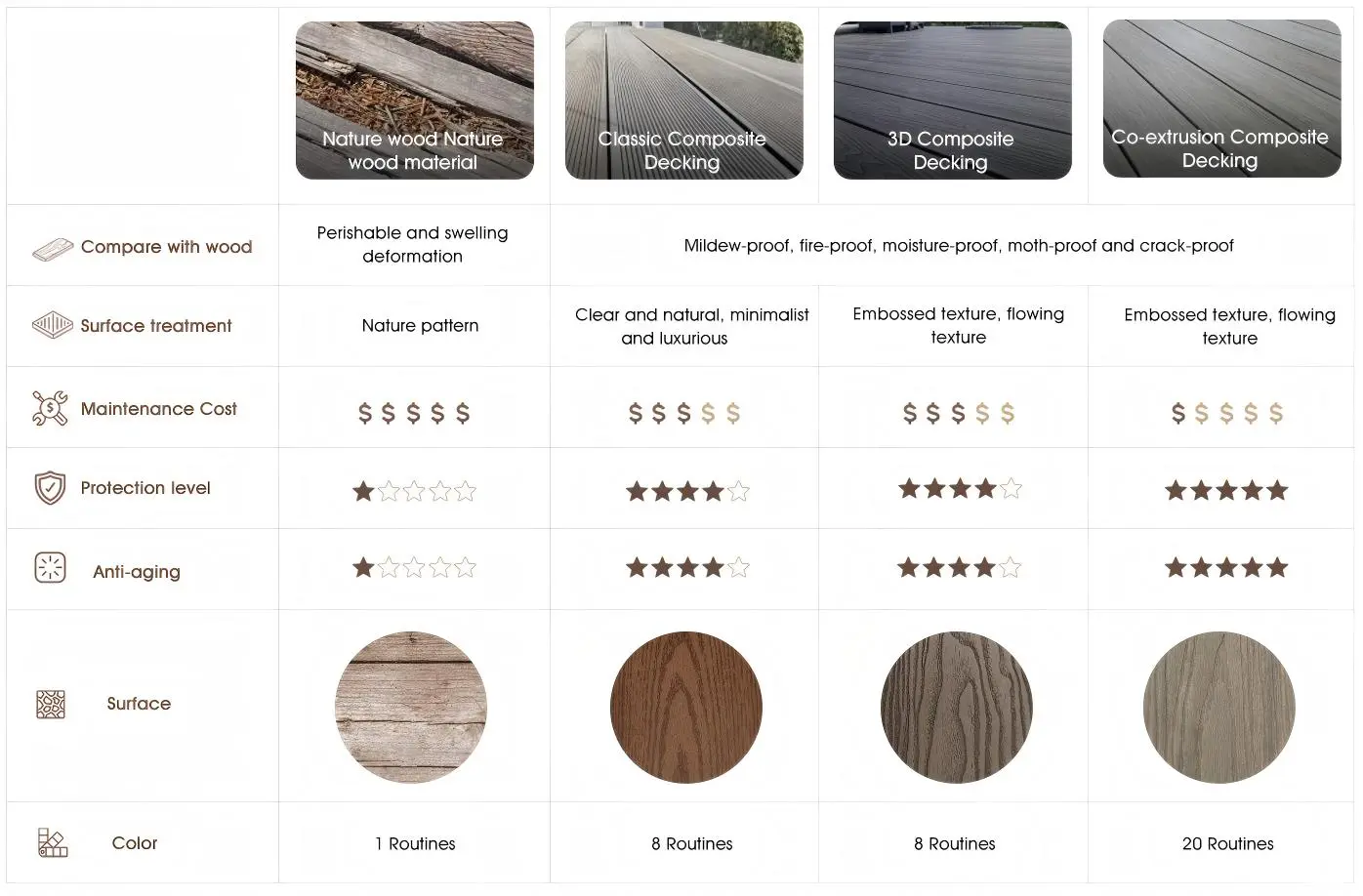
Co-extrusion is a method of adding a protective polymer coating around the composite core during fabrication to protect it against moisture absorption, UV degradation and surface discoloration. This technology eliminates the major difficulties with first-generation composite decking, which would expand, develop mildew and fade prematurely under continual humidity or high light. Co-extruded decking panels tend to retain their color better than non-coated panels after years of exposure outdoors, since the shell avoids the surface chalking that is a concern for non-coated composites. This design is offered in solid or hollow cores enabling specifiers to use the benefits of durability with weight or budget limitations.
Finally, the choice of these three types of structures is conditioned by the needs of a certain project. A boutique hotel rooftop with minimal foot traffic may be okay with hollow co-extruded boards, but a public promenade with large pedestrian circulation and occasional vehicle access is better served by solid co-extruded profiles despite the greater weight and expense.”SEND INQUIRY
How Does Commercial WPC Decking Withstand Heavy Foot Traffic and Outdoor Weather?
Commercial facilities set demands on flooring materials that are seldom imposed onto residential decks. The constant flow of foot traffic, exposure to pool chemicals, salt air from the seaside, and seasonal freeze-thaw cycles all tax a material's structural and esthetic boundaries over the years.
Load-Bearing Capacity for High-Traffic Areas
Footsteps, and sometimes equipment, such maintenance carts or furniture being dragged over the surface, pass public parks, hotel pathways and boardwalks dozens of times a day. Commercial-grade composite decking is made with a heavier wood fiber and HDPE mix than residential-grade products so it can withstand indentation and surface wear under constant pressure. This load tolerance means less frequent plank replacement, a benefit to venues that can't afford prolonged closures for maintenance. Hotels and municipal institutions that operate with constrained budgets discover that less frequent replacement results in lower lifespan costs.
UV Resistance and Color Stability
Many outdoor products degrade with prolonged exposure to sunlight, producing fading, chalking and ultimately brittleness. Tests reveal negligible fading after more than 2,000 hours of accelerated UV exposure, providing a quantitative standard for specifiers to know how a product would likely function over a number of seasons of actual sunshine. The coextrusion shell is of great importance here, since it provides a barrier that absorbs UV radiation before it hits the wood fiber core. Keeping a constant color on a commercial WPC deck helps preserve the look and feel of a property, which is important for hospitality businesses as curb appeal impacts the guest's perspective.
Moisture Resistance and Slip Safety
Pool decks, seaside boardwalks and rooftop terraces are often exposed to standing water, rain and humidity changes. Wood decks absorb moisture and ultimately warp, splinter and decay, meaning boards need to be replaced at a considerable expense. It is difficult for water to enter into a composite material with an exterior sealed layer and it remains dimensionally stable even if it is repeatedly wetted. Surface treatments like embossed, brushed or wood grain patterns may enhance slide resistance, an essential safety issue for public venues worried about liability for wet weather occurrences. Moisture resistance is a key element in flooring for pool areas or coastal attractions, facilities managers say, but slip performance is just as important.
Traffic tolerance is not working in isolation but rather in tandem with weather resilience. If a board is not subject to UV fading but is not structurally dense, it will still exhibit wear patterns under high pedestrian usage, hence specifiers should consider both areas of performance rather than just one feature.SEND INQUIRY
Commercial WPC Decking Suppliers for Hotels, Boardwalks and Public Infrastructure Projects
Decking suppliers must satisfy a wide variety of criteria in commercial applications, from the need for visual coherence in hospitality applications to the need for structural robustness along public waterfronts. Knowing these application-specific needs helps buyers make a decision if a manufacturer can really serve their sort of commercial decking panel project.
Hospitality and Resort Applications
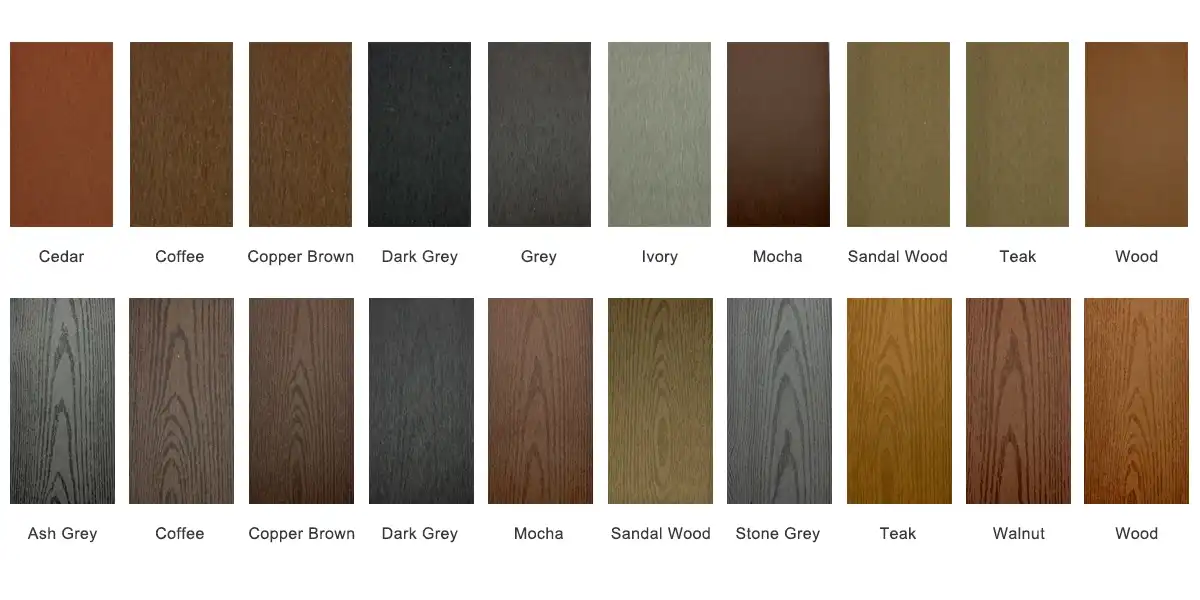
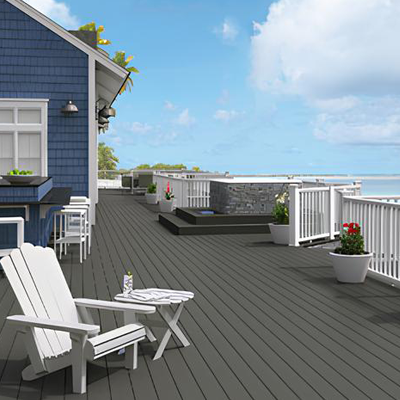
Pool surrounds, rooftop lounges and al fresco eating spaces in hotels and spas typically use outdoor decking where esthetics directly affect the visitor experience. In these places, major projects need uniform decking because paying visitors would immediately notice any mis-matched color or uneven texture. Hospitality designers have additional choices to align branding ideas or architectural designs with suppliers who enable color customization beyond basic catalog choices. The minimum maintenance required is also of great value in this context, since hotel operations teams rarely have the personnel capacity for regular re-sealing or board-replacement during high seasons.
Public Parks and Waterfront Boardwalks
Public projects face all sorts of pressures, including tighter public finances and increasing scrutiny for publicly backed infrastructure. Boardwalks and park paths need decking that can handle significant and unexpected foot traffic, exposure to standing water, and minimal continuing maintenance costs. In this market, producers are usually concerned with structural endurance and slide resistance rather than decorative variety, since public safety requirements are placed before esthetic customization. Sometimes municipal planners utilize lengthy service life forecasts of ten to twenty-five years depending on construction type to justify up-front material costs against decades of less maintenance investment.
Commercial Building Exteriors and Mixed-Use Developments
Decking is also utilized for entryways, courtyards and elevated paths in office buildings, retail complexes, and mixed-use projects that boost the overall professional image of a facility. These projects often need custom lengths, color matching to the building facades or particular surface textures to integrate within the architect's overall design objective. The manufacturer provides the opportunity to modify unique models and adjust surface textures, allowing developers to meet design needs without having to accept generic catalog goods. Here consistency across big order quantities is particularly vital, since commercial structures sometimes stage development over months and need material batches that match, provided regularly throughout the project.
Each of these application categories benefits from working with a supplier with expertise across several project types, as lessons gained from hotel installations frequently drive enhancements that subsequently benefit public infrastructure customers, and vise versa.SEND INQUIRY
Conclusion
In 2026, your choice of commercial WPC decking manufacturer will hinge on proven manufacturing capabilities, certified credentials, and a track record of success in high-stakes commercial settings. Solid, hollow and co-extruded profiles all meet distinct structural and economic requirements, while UV resistance and moisture protection play a role in how well a deck will work years down the road. Hotels, public parks and commercial buildings have individual needs, but the key criteria of durability, consistency and a dependable supply are identical for all project types. Those buyers who take the time to think about these things before placing an order are the ones who avoid expensive errors and develop long-term relationships with manufacturers who support their projects long beyond the first shipment.SEND INQUIRY
FAQ
Q: How long does commercial WPC decking typically last?
A: Service life generally ranges between ten and twenty-five years, depending on the structural profile chosen and the specific climate conditions at the installation site. Solid co-extrusion profiles tend to carry longer warranty periods due to their denser construction.
Q: Is commercial WPC decking suitable for pool areas and waterfront projects?
A: Yes, the material's resistance to moisture absorption makes it a practical choice for pool decks, rooftop terraces, and boardwalks, provided the chosen profile includes a protective co-extrusion layer for added water resistance.
Q: What certifications should I look for when sourcing commercial WPC decking?
A: Look for ISO 9001 and ISO 14001 quality and environmental management certifications, along with CE marking for European compliance and ASTM testing validation for structural performance benchmarks.
Everdur Commercial WPC Decking Supplier: Get Your Project Quote Today
Everdur has spent sixteen years refining second-generation co-extrusion technology, supported by fifty production lines capable of delivering more than 1,500 containers annually to clients across sixty countries. Our commercial WPC decking products carry EU CE certification, meet US ASTM D7039 testing standards, and comply with China's GB/T 24137 specification, giving procurement teams documentation that satisfies regulatory review across regions. Everdur decking also holds Recycled Content certification and meets E0 environmental standards, supporting sustainability goals without compromising structural performance. Whether your project calls for solid profiles built for heavy traffic or lightweight hollow boards for budget-conscious installations, our team can customize color, texture, and dimensions to fit your specifications. Reach out to our team at violet@wpcsupplier.com to request samples, technical datasheets, or a formal quote for your next commercial build.SEND INQUIRY
References
1. American Society for Testing and Materials International. ASTM D7039: Standard Test Method for Flexural Properties of Wood-Plastic Composite Decking Boards.
2. American Society for Testing and Materials International. ASTM D7032: Standard Specification for Establishing Performance Ratings for Wood-Plastic Composite Deck Boards and Guardrail Systems.
3. International Organization for Standardization. ISO 9001:2015 Quality Management Systems — Requirements.
4. International Organization for Standardization. ISO 14001:2015 Environmental Management Systems — Requirements with Guidance for Use.
5. Forest Stewardship Council. FSC Chain of Custody Certification Standards for Wood-Based Building Materials.
6. Freedonia Group. World Decking Market Report: Wood-Plastic Composite and Traditional Wood Decking Demand Trends.
Send Inquiry
Related Industry Knowledge
- Wholesale 3D Composite Decking: Custom Patterns & Low MOQ
- Low MOQ Landscape WPC Decking: Perfect for Small Landscape Projects
- Custom WPC Decking: Tailored Flooring for Your Unique Outdoor Space
- WPC Wall Cladding: Tailoring Solutions for Homes and Businesses
- Low MOQ Co-Extrusion WPC Cladding: Perfect for Small Projects
- 2026 Guide to Commercial WPC Decking: Hotels, Malls & Public Areas
- 2026 Brushed WPC Decking Trends: Stylish & Durable Options
- Top Traditional WPC Decking Manufacturers for Quality Products
- Composite Screen Fencing: Privacy & Decorative Screen for 2026
- High-Quality WPC Decking for Poolside: Waterproof and Anti-Slip Solutions