
Wholesale 3D Composite Decking: Custom Patterns & Low MOQ
2026-11-17 20:29:07
Sourcing outdoor decking materials at wholesale scale often means choosing between cost, customization, and reliable supply. 3D composite decking addresses all three concerns in a single product category. Unlike flat-profile boards, this format uses inline embossing technology applied during the extrusion process itself, producing grain depth and surface texture that genuinely replicates the look of timber — without the upkeep that timber demands. For buyers across Europe and North America, the appeal is practical: durable outdoor boards made from recycled HDPE and wood fiber, available in multiple profiles, colors, and surface finishes, with a minimum order quantity accessible enough for both project-based purchases and large-volume wholesale contracts. Everdur's manufacturing capacity supports consistent supply across more than 60 countries, with active partnerships spanning residential developers, commercial contractors, and building materials distributors. Whether you need a standard stocked profile or a custom-engineered solution, the combination of low MOQ entry points and full OEM/ODM capability means you can source exactly what your project requires — without over-ordering or compromising on design intent. This guide covers patterns, specifications, applications, and how to move forward with a wholesale inquiry.SEND INQUIRY
What Custom Patterns Can You Choose for 3D Composite Decking?
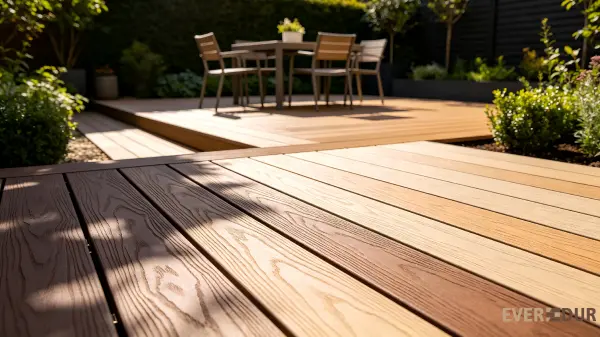
One big reason why 3D WPC decking is better than regular composite boards is that it can have a lot of different surface patterns. The grain lines have real structural depth because the roughness is pressed into the board during the molding stage and not added as a second coat. When you run your hand across the surface, you can feel the ridges instead of just seeing them.
There are four main surface techniques that Everdur offers: wood grain, embossing, brushed, and grinding. Each one gives a different feeling and look. Deepest relief can be found in embossed profiles, which have clear grain lines that naturally spread light and lower surface glare in direct sunlight. Brushed surfaces are better for modern building styles because they are softer and more matte. Sanded finishes tend to be uniform, which is why they are often chosen for commercial spaces where it's important that the look of a large deck area is consistent. Wood grain surfaces try to look like real wood as much as possible, with random patterns that keep the boards from looking too much like each other.
Not only can the surface be treated, but the design itself can be changed. Everdur's technical team can create custom grain patterns for OEM and ODM clients that are in line with their project briefs. This is useful for hospitality developments, branded store settings, or building plans that have clear material palettes. There is also a dual-surface option, where each side of the board has a different texture. This gives installers more choices for how to install it and how it looks.
Pattern choice isn't just about looks. Deeper patterning gives the walking surface more micro-grip, which makes it much less likely that someone will slip on wet outdoor areas. This is especially important for places like pools, homes near the coast, and outdoor areas that get wet. So picking the right surface pattern is part of planning the structure, not just a matter of taste.SEND INQUIRY

3D Composite Decking Sizes, Colors, Textures, and Surface Options
For bulk buyers who work on a variety of project types, specification freedom is a must. The 3D printed composite boards that Everdur makes come in sizes from 135mm to 150mm and thicknesses from 20mm to 25mm. Standard lengths are 2,200 mm, 2,900 mm, and 3,600 mm. For projects that need cuts that aren't standard, custom lengths can be made with 3d WPC decking.
Cross-sectional shapes like 90x25, 120x20, 135x25, 138x23, 140x20, 140x25, 145x25, and 150x25mm are very popular. This range has different widths of boards for different structural needs. Narrower boards are better for decorative pathways, while wider shapes are better for business terracing that gets a lot of foot traffic.
Along with Ash Gray, there are also Cedar, Coffee, Copper Brown, Dark Gray, Gray, Ivory, Mocha, Sandalwood, Stone Gray, Teak, Walnut, and Wood tones. In addition to this scheme, Everdur can also change colors to fit the needs of a particular project. The UV-resistant formula helps keep the color stable; independent tests show that after 2,000 hours of UV exposure, there is only mild noticeable fade.
Grade A recycled HDPE is mixed with wood fiber and useful additives in all shapes to make the material. This method keeps the dimensions stable even when the temperature changes, which is useful for Northern Europe and North America, where seasons change a lot. The boards don't let water in, mold grow, or pests get on them without any surface treatments. During the service life, which ranges from 10 to 25 years depending on the type of product and installation situation, there is no need to paint, stain, or seal it.
Because there are so many profiles to choose from, distributors and wholesalers can manage a wide range of stock from one supplier. This means they don't have to buy from different manufacturers for each product line.SEND INQUIRY

How Does 3D Composite Decking Support Outdoor Decking, Fences, and Railings?
Outdoor Decking Applications
In the 3D profile group, composite deck boards work well on balconies, rooftop platforms, garden patios, house perimeter decking, and public exercise areas. Different load and sound needs are met by the hollow and solid core options. Solid boards are better at insulating sound and giving you more density underfoot, which is important for installations on rooftops above living spaces. Hollow profiles are lighter, which lowers the load on the structure and the cost of labor for installation, especially on decks that are higher than the ground.
With joist and clip installation methods, the process of laying is the same over big areas. The clip-based hidden fixing method leaves a clean surface without any visible fasteners, which is preferred in home and business projects where the look of the surface is important. Boards are shipped on wood crates that are wrapped in PE film to protect the finish during shipping and storage.
Fence Applications
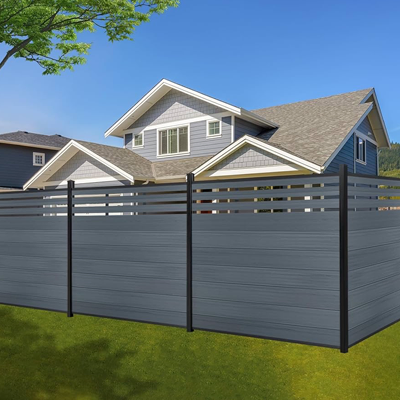
When it comes to outdoor fencing projects, composite boards really do perform better than wood palings and vinyl panels in harsh conditions. The material doesn't bend, split, or need to be painted over the course of the year, which is helpful for fence contractors who work in coastal or high-humidity areas. Everdur's outdoor fence products are only meant to be used outside, where air flow, moisture, and changes in temperature are constants. The UV-stable pigmentation keeps the color from fading or chalking over time, which happens to untreated wood fences. The shape-stability of WPC profiles makes them useful for both privacy screens and boundary fences. These profiles keep their shape even in the changing temperatures of North America and Europe.
Railing Applications
Using 3D-profile components in composite railing systems makes the structure of the railings match the deck surfaces, giving an outdoor area a consistent material language. Everdur's boards are fire-resistant, which makes them useful for railings on raised decks and balconies. In many European countries, building codes require non-combustible or fire-resistant perimeter structures. The process that makes the surface less slippery naturally stretches to the horizontal rail caps, which can get wet. Railing posts and infill panels made from the same composite formula make sure that the color aging is uniform throughout the installation. This means that after several seasons of use, the deck surface and perimeter railings will not have weathered in the same way.SEND INQUIRY

Low MOQ 3D Composite Decking for Residential and Commercial Projects
Accessible Entry Points for Smaller Orders
Smaller contractors and area distributors who can't always commit to full-container amounts can buy in bulk as long as they place an order for at least 100 square meters. This level is low enough to support small yard or house projects, but high enough that buyers can check the quality of the product before buying in bulk. The low MOQ structure means that material can be bought in stages that match the progress of building for home builders working on phased housing plans with 3d patterned composite.
Scaling for Commercial Developments
More often than not, hotels, resorts, restaurant patios, and retail outdoor areas need more and need it delivered more quickly. Everdur's production system, which includes more than 50 WPC lines, allows for steady production on a large scale. The annual production capacity is more than 30,000 tons, which means that buyers who are managing multi-phase or multi-site procurement can be sure that the goods they need will be available. Partnerships with building materials store groups all over Europe show that it is possible to keep supplies steady at distribution center volume.
Pricing Structure for Wholesale Buyers
There are different levels of wholesale prices based on the size of the order, and prices are given FOB from Shanghai and Ningbo ports. For buyers in Europe, this fits well with well-known shipping routes to Hamburg, Rotterdam, and Felixstowe. Direct route choices are good for North American buyers who get their goods from ports on the West Coast. Buyers can ask for sample boards before making a bulk order. This lets them see the surface smoothness, color accuracy, and board weight in person before committing to a large order.SEND INQUIRY

OEM and ODM 3D Composite Decking for Custom Outdoor Construction
OEM Services for Branded Product Lines
Distributors and resellers of building materials who need products with their own brand names can use Everdur's OEM manufacturing service. This includes labels, packing, and paperwork that are all made to match the buyer's brand standards. No matter what brand the product is sold under, the certifications, quality controls, and production process are always the same. This route gives distributors setting up private-label product lines in the European or North American market a safe way to get goods made without having to spend money on production facilities.
ODM Engineering for Project-Specific Profiles
Architects, garden designers, and construction companies that have very specific needs for materials can work with Everdur's ODM team to create profiles, colors, or building designs that aren't in the standard list. The composition of materials can be changed to fit different climates. For example, boards made for high-UV environments in southern Europe can have better UV stabilizer packages added. Profile geometry can be designed to meet the load estimates for business decks that are higher up. You can choose the surface texture and grain level to match reference samples or mood board images that design teams send you.
Quality and Certification Coverage
The following certifications cover all products, whether they are from a standard catalog or a custom-made order: CE, FSC, ISO 9001, SGS, ROHS, REACH, INTERTEK, and ASTM. This level of certification is necessary for buyers who want to sell in regulated markets. More and more, European building projects need proof of safety and environmental compliance during the material selection stage. Commercial projects in North America that have to follow ASTM performance standards need test data that has been checked, not just maker promises. A lot of paperwork can be taken out of the buying process if all the necessary certifications are in place before the order is made.SEND INQUIRY

Conclusion
There are more factors to consider when buying 3D composite decking in bulk than just finding the cheapest price per unit. Pattern depth, color stability, profile range, minimum order requirements, and approval coverage are some of the things that can help you figure out if a provider can meet your needs. With more than 50 production lines, the ability to produce 30,000 tons of material annually, and active supply to more than 225 customers in more than 60 countries, Everdur's manufacturing setup makes it a stable place for buyers of all sizes, from small project contractors to large distributors.SEND INQUIRY

FAQ
Q: What is the minimum order quantity for wholesale 3D composite decking?
A: The MOQ is 100 square meters. This applies to both standard catalog profiles and custom-specified orders, making it accessible for single-project purchases as well as stocking orders.
Q: Can the surface pattern and color be customized for a specific architectural project?
A: Yes. Color customization beyond the standard palette and bespoke grain pattern development are both available through the ODM service. Material composition can also be adjusted for specific climate or performance requirements.
Q: What certifications cover Everdur's composite decking products?
A: Products are certified to CE, ASTM, ISO 9001, FSC, REACH, RoHS, and INTERTEK standards. Environmental compliance includes Recycled Content certification and E0 environmental standards, supporting green building documentation requirements in both European and North American markets.

For Construction Firms, Fence Contractors, Resellers, Building Materials Wholesalers, and End Customers
Everdur is a real company that makes 3D composite decking. They have CE, ASTM D7039, GB/T 24137, FSC Recycled Content, and E0 environmental standards approval. Our products meet the performance standards for building materials in the EU and North America, as shown by tests done by a third party.
For construction companies and fence builders, we can provide you with volume pricing, technical datasheets, and project-specific samples if you ask. For planning submissions, our team can help with specification documents.
For people who buy and sell building materials in bulk: special trade prices, help with OEM and ODM branding, and free sample boards to look at before making bulk orders.
For end users, your question comes with a free design advice and application guide. We'll help you choose the right profile, color, and fixing system based on the size and location of your project.
Email violet@wpcsupplier.com to talk about your needs.

References
1. European Committee for Standardization. EN 15534: Composites Made from Cellulose-Based Materials and Thermoplastics (Wood-Polymer Composites). CEN, Brussels.
2. ASTM International. ASTM D7032: Standard Specification for Establishing Performance Ratings for Wood-Plastic Composite Deck Boards and Guardrail Systems. ASTM International, West Conshohocken, PA.
3. Forest Stewardship Council. FSC Standard for Chain of Custody Certification. FSC International, Bonn.
4. European Chemicals Agency. REACH Regulation (EC) No 1907/2006: Registration, Evaluation, Authorisation and Restriction of Chemicals. ECHA, Helsinki.
5. International Organization for Standardization. ISO 9001:2015 Quality Management Systems — Requirements. ISO, Geneva.
6. Construction Products Regulation (EU) No 305/2011. Laying Down Harmonised Conditions for the Marketing of Construction Products. European Parliament and Council, Brussels.
7. U.S. Green Building Council. LEED v4.1 Building Design and Construction: Materials and Resources Credit — Building Product Disclosure and Optimization. USGBC, Washington, D.C.
Send Inquiry
Related Industry Knowledge
- WPC Composite Fencing: The Low-Maintenance Choice for Property Owners
- Wood Grain WPC Decking Installation: Achieve a Natural Wood Look
- Is hollow composite decking waterproof?
- Anti-Slip Landscape WPC Decking: Safe for Public Landscape Areas
- Wood Plastic Composite Fence Panels Installation: Step-by-Step Guide
- Low MOQ Commercial WPC Decking: Perfect for Small Commercial Projects
- Wholesale Swimming Pool WPC Decking: Hotel & Resort Bulk Supply
- 2026 Guide to WPC Landscape Walls: Designs & Installation Tips
- 3D Composite Decking vs Regular Composite: Which Is More Stylish?
- How to Choose High-Quality Co Extrusion WPC Decking for Your Garden