
Wood Grain WPC Decking Installation: Achieve a Natural Wood Look
2026-11-09 15:49:49
Getting a natural wood look from composite materials is more achievable than most people expect — provided the installation is done correctly from the start. Wood grain WPC decking combines the visual warmth of timber with the structural reliability of engineered composites, making it a practical choice for outdoor patios, villa gardens, pool surrounds, and commercial landscape projects across Europe and America. Unlike traditional timber, this type of decking resists moisture, UV exposure, and pest damage without requiring annual sealing or staining. However, the final appearance — whether it reads as genuinely wood-like or looks clearly synthetic — depends heavily on how the boards are laid, spaced, and finished. The grain alignment, color selection, and gap management all contribute to the overall aesthetic. This guide walks through each stage of a standard installation: preparation, joist layout, fixing methods, edge detailing, expansion gap management, and the finishing touches that pull the natural look together. Whether you are a contractor managing a large residential development or a homeowner refreshing a backyard terrace, the steps below will help you install composite decking with confidence and achieve an outdoor space that genuinely resembles natural wood.
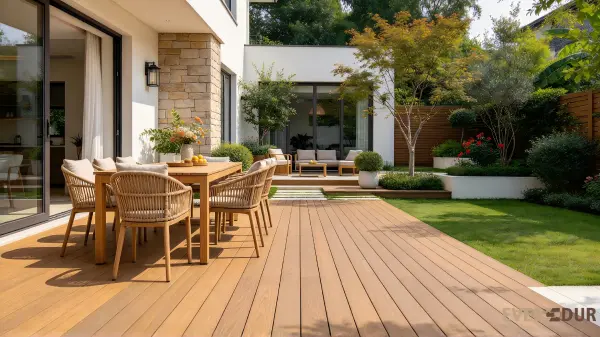

What Should You Prepare Before Installing Wood Grain WPC Decking?
If the installation was clean and lasts a long time, it will be different from one that warps, gaps unevenly, or fades too soon. Before you put down a single board, you need to check three things: the base, the supplies, and your toolbox. The most important thing is an estimate of the substructure. Above the decking, the ground must be level, stable, and able to drain water well. This is true whether the base is made of concrete, soil, wood sleepers, or steel. In damp places under wood grain WPC decking, biogrowth speeds up. This can damage clip systems over time. Leave at least a 1–2% slope for water to flow if you are putting something on the ground. When building a raised deck, make sure that the current joists or bearers are strong and spaced out properly for the thickness of the boards you want to use.
Getting used to the material is often skipped, which is often missed. It's not as much of a difference between solid wood and wood grain WPC decking when the temperature changes. Before they are put in place, the boards should be kept flat on a flat surface at the job site for at least 48 hours. In this way, the material can reach a temperature balance with the air around it. When boards are brought from a warm storage area and then put outside, they can shrink a lot. This step is especially important in northern Europe, where it gets colder.
As a general rule, you will need a cordless drill, a rubber mallet, a tape measure, a chalk line, a spirit level, stainless steel screws, and the secret clip system that the maker suggests. A circular saw or mitre saw with a fine-tooth blade (at least 60 teeth for clean cuts) is also needed. It is important to use the right kind of blade. To get the look of natural wood, you should not use blades made for soft wood on composite materials. They will tear the edges and leave a rough finish.
Finally, before you start, look over the technical information that came from the maker. Space between joists, growth gaps, and load values are all different for solid and hollow shapes. If you check these things ahead of time, you won't have to make pricey changes during installation.

Wood Grain WPC Decking Joist Layout and Spacing Requirements
The deck's strength depends on how the joists are laid out, and the spacing between them needs to be just right. For most 20–25 mm thick wood grain WPC decking designs, the center-to-center joist spacing for field boards is 300–400 mm. This drops to 200–250 mm around the sides and at any board end joints.
A board end joint is made when two boards meet along their length. Double joists need to be close to each other so that each board end has enough support. The ends of the boards can bend when people walk on them if you don't do this. This makes a small but visible bump that takes away from the smooth, even look of a natural wood floor with wooden WPC decking.
Steel, aluminum, or pressure-treated wood should be used for the joists, depending on where the project is being done. In places with a lot of salt air, aluminum or hot-dip galvanized steel subframes are better than raw wood subframes. Aluminum joists are lighter and easier to work with on high decks, but steel framing can handle big loads in factories.
Watch out for how high and level the joists are. Wood grain WPC decking boards stay flat when they are held up. So much as 5 mm difference in height between shafts will make the board move. Before you screw the joists in place, change their height with a long spirit level and shims or a pencil. Pedestals that can be adjusted in height give you exact control and let water drain easily below the deck when they are set on concrete bases.
The joists should be lined up across from the way you want to lay the boards. If your terrace or garden isn't a straight line, plan this ahead of time because it's a lot of work to change the direction of the joists in the middle of a project.

How to Fix Wood Grain WPC Decking With Joists and Clips
Because they hide the screws, hidden clip systems are the best way to connect wood grain WPC decking. This makes the deck look clean and natural. Stainless steel screws hold the clips to the joist below, which goes through the bent edges of each board. These parts hold the board in place while letting the boards next to it grow and shrink safely.
Installing it is done in steps. First, attach the perimeter board with face screws that are countersunk into the edge of the board. In the end, the fascia trim will cover these screws. Put the first row of clips into the hole in the border board, leaving space between each one where a joist crosses it. Press down hard on the next board after putting it on top of the clips. Make sure the boards are lined up right with a chalk line before moving on. Push boards into place with a rubber mallet so you don't damage the slot shape.
Density of the clips is important. People often use fewer clips than they need to in order to save time. This makes the board move and make noise when you walk on it. Every joist should have one clip per board slot; don't skip any joists.
Cut the board's ends off straight with a fine-tooth blade. Then, smooth out any rough edges before putting the pieces together. Having a clean cut at the ends of the boards and the right amount of space between them is one of the things that looks most like a hardwood floor that was installed by a professional.

Wood Grain WPC Decking Edge and Expansion Gap Installation Tips
For technical reasons that come from studying materials, expansion gaps are needed. As the weather gets warmer, wood grain WPC decking gets longer. They shrink when it gets cold. These changes depend on the length of the board, the material it's made of, and the temperature difference between when it was put down and when it's the hottest in the summer.
As a general rule, leave 5–8 mm between the ends of the boards and 3–5 mm between the sides of the boards and anything that is solid, like a wall, post, or fascia board. For boards longer than 3.6 meters, find out how much space you need by looking at the manufacturer's specific heat expansion rate. When laying boards in northern Europe in the winter, they need a bigger end gap than when laying boards in the south on a warm summer afternoon.
Use fascia trim boards or edge profiles that match to finish the edges around the outside of the deck. The subframe and clip system should be hidden by these, but air should still be able to move under the deck. A well-done fascia turns the perimeter from a visible building detail to a finished, furniture-like edge that looks like it was meant to be there instead of being an exposed structure.
To fill in expansion gaps, don't use caulk or sealant. It's hard to move around with these things, and during the warmer months, they can make boards break.

How to Create a Seamless Natural Look With Wood Grain WPC Decking
Putting the tech together is only half the battle. Visual design is the other part. This is what you do to make the deck look like an outdoor space or just a grid of boards connected together.
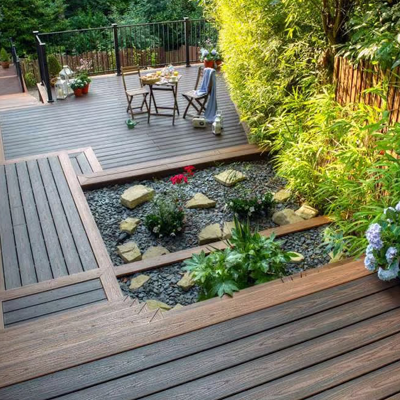
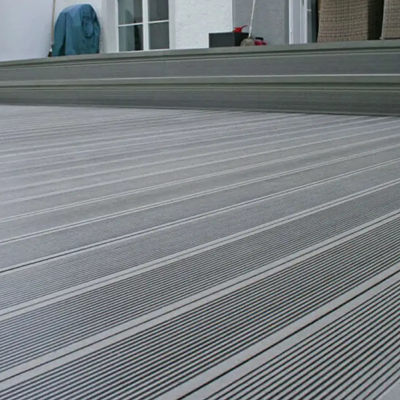
Grain direction consistency is the most important visual factor. There should be a grain design that draws attention to the room's main feature, which is usually a view of a garden or pool. All of your boards should go in the same way. Even if you don't mean to, changing the direction of the board breaks the flow of the picture and makes the surface look uneven with wood grain composite deck.
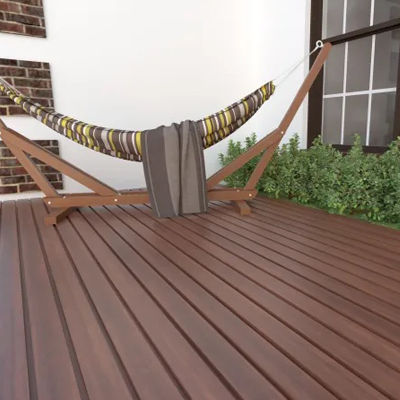
Color selection has a measurable impact on how real something appears. Shades like Teak, Walnut, Cedar, and Sandal Wood look most like wood because they are in the same color group. It's easy to make the colors look like real wood without doing any extra work on the surface. Just switch between two tones, like a warm brown and a cooler gray-brown.
Finishing details determine whether the installation looks finished or not based on the finishing touches at the edges, transitions, and steps. On the sides of the steps, use stair nosing shapes that match. Also, make sure the fascia boards are the same color as the floor boards and cover or cap any cut ends. It's not necessary to add much to these parts, but they make a big difference in how things look in general.
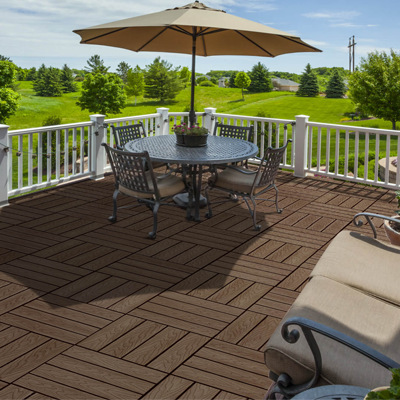
It looks like better work was done if the joint spacing is kept the same throughout the installation, not just at the start. This is also true for fine wood flooring that is brought outside.

Conclusion
It takes careful planning, the right frame layout, the right way to place it, and paying close attention to how it looks to get a wood grain WPC decking installation that really does look like real wood. Any cuts made at any point will show up in the end because this process builds on the last one. If you use good boards and follow the right steps, your outdoor space will last at least ten years and not need much maintenance.

FAQ
Q: What is the recommended expansion gap for wood grain WPC decking in cold climates?
A: In places that are cooler, like northern Europe or Canada, boards are generally put down when it is cooler. In the summer, they will expand significantly. Leave at least 5 mm of space along fixed sides and 6 to 8 mm of space between board ends. Because formulations are different from one product to the next, you should always look at the thermal expansion data that the company that made your board gives you.
Q: Can wood grain WPC decking boards be cut at angles for diagonal or herringbone layouts?
A: You can cut composite boards at any angle with a fine-tooth circular saw or mitre saw. There is about 10–15% more waste with diagonal and herringbone plans than with a straight lay, so keep that in mind as you figure out how much you need. To make it stronger, put all of the cut ends over the joists.
Q: How do I maintain the natural wood appearance of my wood grain WPC decking over time?
A: To keep up, just use mild soapy water and a soft brush to wash the surface twice or three times a year. Pick up the leaves and other organic matter quickly to keep the surface from getting stained. Like wood, it doesn't need to be oiled, stained, or sealed. The color of good composite boards doesn't fade much after being outside for a long time because the pigments are UV-stable.

Get Your Wood Grain WPC Decking Project Started With Everdur
Everdur can help you with any job, whether you're planning a landscape for a large business, taking care of a residential building, or making changes to a private garden deck.
For construction firms and contractors: Prices for construction firms and contractors that depend on the size of the job, technical installation documentation, and dedicated account management to keep your schedules on track.
For resellers and building materials wholesalers: If you sell or distribute building materials, we offer special wholesale deals, free samples, and OEM/ODM services to help you add more goods to your line.
For end customers: We offer free planning help and installation tips to end users to help them make the outdoor place they want.
All Everdur wood grain WPC decking products comply with EU CE certification, US ASTM D7039 standards, and China GB/T 24137. Environmental credentials include Recycled Content certification and E0 environmental standard compliance, verified through ISO 9001, ISO 14001, FSC, REACH, and RoHS testing protocols.
Contact our team directly at violet@wpcsupplier.com to request samples, pricing, or project-specific technical advice.

References
1. EN 15534-1:2014 — Composites made from cellulose-based materials and thermoplastics. European Committee for Standardization (CEN).
2. ASTM D7032 — Standard Specification for Establishing Performance Ratings for Wood-Plastic Composite Deck Boards and Guardrail Systems. ASTM International.
3. BS 8417:2011+A1:2014 — Preservation of Wood. Guidance on the Specification for Glued Laminated Timber and Related Products. British Standards Institution.
4. ISO 14001:2015 — Environmental Management Systems: Requirements with Guidance for Use. International Organization for Standardization.
5. Forest Stewardship Council (FSC) — Chain of Custody Certification Standard. FSC International Standard FSC-STD-40-004.
6. European Chemicals Agency (ECHA) — REACH Regulation (EC) No 1907/2006: Understanding SVHC Restrictions for Construction Materials.
7. GB/T 24137-2009 — Wood-Plastic Composite Products. Standardization Administration of the People's Republic of China (SAC).
Send Inquiry

Related Industry Knowledge
- Does traditional WPC decking need sealing?
- Does 3D composite decking fade?
- Traditional vs co-extruded decking: which is better?
- Wood Grain Balcony WPC Decking: Elevate Your Balcony’s Aesthetics
- Weather Resistant Swimming Pool WPC Decking: Durable in All Seasons
- Wholesale Traditional WPC Decking: Affordable & Reliable Supply 2026
- Eco-Friendly Co Extrusion WPC Decking: Sustainable Outdoor Solution
- How to Choose WPC Cladding: Material, Design and Installation Tips
- How to Install WPC Decking Easily: A Step-by-Step Tutorial for Beginners
- Top Benefits of WPC Decking for Residential and Commercial Use in 2026