
Wood Grain Balcony WPC Decking: Elevate Your Balcony’s Aesthetics
2026-10-27 22:07:31
Your balcony is not just a ledge outside your window, it is a personal refuge, a morning coffee location or a silent evening escape. But many outdoor spaces have worn, fractured or weather-beaten flooring, ruining the whole experience. Create something really inviting out of that unused area with balcony WPC decking with wood grain finish offering a sensible solution. Wood-plastic composite decking uses recycled wood fiber and high-density polyethylene (HDPE) to mimic the look and feel of wood without the disadvantages that come with the material – no rotting, no warping, no yearly re-staining. If you're a homeowner in Europe or North America and you want a balcony that looks thought-out and can survive Atlantic winters or Pacific Northwest rainy seasons, wood grain composite decking is a logical compromise between esthetics and durability. What makes the wood grain finish so compelling? What surface textures and colors work well with diverse design visions? Why do composite materials earn their position over traditional hardwood in outdoor settings? This essay examines these questions and more.SEND INQUIRY


How Does Wood Grain Balcony WPC Decking Improve Outdoor Aesthetics?
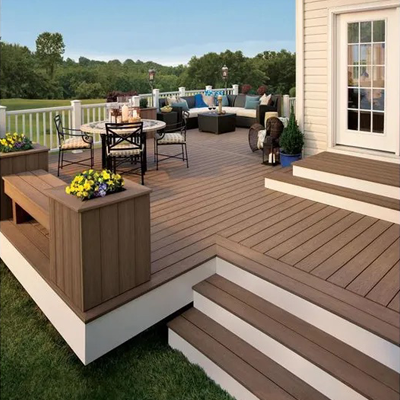
There's just something so comforting about the natural wood grain beneath your feet. The grain patterns, the subtle depth, the organic irregularity express warmth and beauty. This sensory appeal can be achieved with the wood grain balcony WPC decking by the method of precision embossing and co-extrusion molding to create a surface that replicates the character of timber without the fragility .
The cosmetic enhancement is at the surface level. A good wood grain emboss will generate light and shadow over the face of the board, giving the decking a visual dimensionality that flat painted surfaces just cannot duplicate. Through glass doors, a wood grain composite balcony appears unified and thoughtful from across a room—an intended design choice, not a utilitarian afterthought.
Another very important factor is color retention. For instance, untreated timber will become silver and gray in just one season outside, but composite boards, formulated with UV-resistant chemicals, retain their original color for thousands of hours of sun exposure. Everdur's formulation shows no color shift after more than 2,000 hours of UV testing, which means the warm cedar or deep walnut tone you chose on day one is unmistakable years later.
The dimensional regularity of composite boards also helps to give a cleaner visual result. Natural wood absorbs moisture and hence expands and contracts unevenly, which creates gapping, cupping and uneven surfaces over time. Composite decking, especially hollow profile boards, is more predictable in terms of thermal movement, retaining straight board lines and uniform joint spacing. A clean, level surface speaks of care and thoughtfulness—just a small but important detail in the overall look of the outdoors.
This mix of texture, color stability and dimensional accuracy works as well in balcony spaces in urban flats and suburban houses. The outcome is an outdoor floor that enhances the perceived quality of the whole outer area.

Balcony WPC Decking With Wood Grain and Embossed Surfaces
Surface texture is where balcony decorative WPC either makes or breaks its visual credibility. A wood grain finish looks believable because of the depth and consistency of the embossed pattern during the production process. Embossing that is close, shallow and repeated might look mechanical and unconvincing. The deeper, more diverse grain patterns, especially those that simulate knots and cross-grain characteristics, hold up under scrutiny in a way that really enhances outdoor furniture and architectural finishes.
Everdur's outdoor composite range comes with a variety of surface treatments, such as the brushed finish that exposes a linear grain direction, sanding textures for a matte, tactile feel, embossing patterns simulating the raised grain of aged hardwood, or specific wood grain profiles for the maximum visual realism. Every finish has its own design intention.
For a Scandinavian or coastal feel, choose for a brushed ash gray or stone gray board with a linear grain that pops within the palette. Teak or cedar grain finishes in the warmer brown tones go beautifully with terracotta, rattan and wrought iron settings for Mediterranean or garden style terraces. The embossed surface also serves a secondary practical purpose: micro-texture grip underfoot, providing traction on damp mornings without the need for extra anti-slip strips.
Everdur's second generation composite decking is produced using a technology called co-extrusion. The board's core is surrounded by a protective outer shell in one continuous extrusion process. That molecular bonding means the design is part of the board, not a covering that can peel, split or delaminate in freeze-thaw cycles. This structural strength is important for balconies in Northern Europe or the upper United States where winter temperatures can vary greatly.SEND INQUIRY

Choosing Balcony WPC Decking Colors for Outdoor Balcony Design
Choosing a color for your outdoor composite decking is more than just what appeals to you. The balcony's direction, the materials of the surrounding structure, the quality of light that is typical in the area, and the mood the space is meant to evoke all help influence the tone that looks right when placed in the finished setting.
Lighter composite tones like ivory, sandalwood and stone gray reflect heat and light, making tight urban balconies feel more open and airy. Lighter boards also feel cooler underfoot in the hotter southern European climes with their intense summer sun - another practical advantage of boards for barefooting. These tones pair beautifully with white render, pastel brick and minimalist furniture in aluminum or light timber.
Deeper tones: walnut, mocha, dark gray, copper brown — visually anchor a balcony and provide a sense of enclosure and proximity. They are perfect for larger terraces, roof terraces and villa gardens where the decking becomes part of a larger landscape picture. A dark walnut grain board provides a consistent material palette to contrast with dark gray aluminum balustrades or weathered steel planters.
Everdur also provides color customization beyond its standard card for project specific needs from architects and developers working on residential schemes where brand palettes or facade material relationships dictate the tone of the decking. The practical advantage of being able to match an existing color scheme without being forced to compromise with a limited palette is a great boon in renovation projects.

Why Choose Balcony WPC Decking Over Natural Wood Flooring Outdoors?
It's a very beneficial comparison to make, composite vs. real wood outdoor flooring, and the answer isn't just “composite is always better.” Natural hardwoods, such ipe, teak and cumaru, are beautiful and durable. The honest case for composite decking on balconies is about a cluster of practical issues particular to that use.
Thermal cycling stresses are concentrated, and many of the balconies are closed on many sides trapping moisture and restricting air circulation. Such conditions accelerate the deterioration of natural wood, including the growth of mildew in joints, the absorption of standing water into end grain, and the expansion-contraction cycle that loosens fasteners over time. The microenvironment is more favorable for composites, especially those with hollow profiles and co-extruded moisture barriers.
The maintenance needs of five year olds are very different. Often natural wood decking has to be cleaned, sanded and oiled one or two times a year to maintain its beauty and strength. Balcony WPC flooring is easy to clean with light detergent and water every now and then - a few minutes, not days. If you live in an apartment or own a property without outdoor storage for maintenance equipment, this is a major material quality of life concern.
Weight is another practical variable. The balconies are designed to the structural load limits and the composite hollow-profile boards are much lighter per square meter than equivalent solid hardwood planks. A lighter decking material will assist you pass structural inspections. This is especially true in the case of renovations where the slab was initially intended for a lighter finish.SEND INQUIRY

Wood Grain Balcony WPC Decking for Modern Outdoor Living Spaces
In residential architecture, the interaction between interior and external design has become much stronger during the past 10 years. Floor-to-ceiling glazing in open plan living areas makes the distinction between inside and outside ambiguous, and the floor of a balcony is simply a visual extension of the interior layout. WOOD GRAIN COMPOSITE DECKING IS PART OF THIS CONTINUITY DISCUSSION IN A WAY THAT PAINTED CONCRETE OR CERAMIC TILE CAN NOT.
A walnut grain composite board on a balcony next to an oak engineered wood interior floor provides a material echo that is visible and pleasurable. The tones are related, the grain directions can be aligned, the overall effect is one of a single thought space extending outwards. This combination of design formerly only attainable with natural lumber, at considerable cost and upkeep commitment.
For architects and interior designers working on residential projects in Germany, France, the Netherlands or the United States, composite wood grain decking has now earned a credible place in the material palette – not as a substitute for something better, but as a material with its own genuine merits. It is specifiable, defensible and has a confirmed service life of 10–25 years with dimensional stability, available colors and custom profile dimensions (135–150mm width, 20–25mm thickness, lengths up to 2.9m).
Wood grain composite's low maintenance and quality of design is especially valuable for urban outdoor living spaces. For the renter of a city apartment balcony who has no garden hose, no pressure washer, and no place to store anything outdoors, a surface that looks well-maintained without requiring upkeep isn't a luxury; it's a logical functional requirement.

Conclusion
The real dilemma in outdoor design is balcony WPC decking with wood grain balcony. The demand for the warmth and character of natural timber, but the necessity for a surface that will last without the need for continual care. Composite decking is a good-looking outdoor flooring that can meet the special demands of balcony microclimates. Co-extrusion technology, UV stable coloring and deliberately planned grain embossing play a significant role in current home construction. It is this mix of visual attractiveness and material resilience that makes wood grain WPC decking a genuine candidate for everything from a small city balcony renovation to a villa terrace surface specification.SEND INQUIRY

FAQ
Q: How long does wood grain balcony WPC decking typically last outdoors?
A: How long does composite decking last on a balcony? A: Composite decking used on balconies will normally last 10 to 25 years with proper installation and maintenance. The life expectancy depends on the quality of the co-extrusion shell, the UV resistance of the pigment system and the drainage efficiency of the installation method. Good ventilation of the sub-frame helps hollow profile boards to perform in the top end of that range.
Q: Does wood grain composite decking get slippery when wet?
A: Composite boards come with embossed and brushed surface patterns that provide actual grip in the wet. The micro-texture developed in the embossing process enhances the amount of friction under foot and reduces the chance of a slip on wet mornings or after the light precipitation. This naturally occurring traction is a practical safety concern for homes with small children or elderly occupants and does not need extra anti-slip enhancements.
Q: Can wood grain WPC decking be installed over an existing concrete balcony surface?
A: Yes, composite decking boards are put over concrete substrates in a pedestal joist system or fixed aluminum or composite subframe. The subframe forms a vented air gap which facilitates drainage and stops moisture build-up between the underside of the board and the concrete. This technique also permits slight leveling of uneven slab surfaces with no concrete work needed to make repairs.

Connect With Everdur — Get a Tailored Balcony Decking Solution
For Construction Firms & Developers Everdur provides large-scale project requirements including bespoke profile measurements, project matched color development and documentation packages that include CE (EU), ASTM D7039 (US) and GB/T 24137 (China) compliance. We can coordinate bulk orders and schedule containers.
For Building Materials Wholesalers & Resellers Qualified distributors can access competitive wholesale price structures, unique regional supply agreements, and free sample kits. Our composite decking carries FSC, Recycled Content and E0 certifications for environmental benefits to help you meet your customers' green building needs.
For Homeowners & End Customers: Each request includes a free design consultation and installation guidance. Whether you dream of a weekend balcony facelift or a complete terrace transformation, our specialists can guide you to the perfect board profile, surface texture and color for your particular location.
Everdur is a professional manufacturer of balcony WPC decking, with over 16 years of production experience, 50 manufacturing lines and a well-established customer network in more than 60 countries. Our goods fulfill EU CE standards, US ASTM D7039 test requirements and China GB/T 24137 criteria. We have FSC chain-of-custody, Recycled Content and E0 environmental certifications.
Send your balcony dimensions, design preferences, or project brief to violet@wpcsupplier.com and receive a response within one business day.

References
1. Clemons, C. M. (2002). Wood-Plastic Composites in the United States: The Interfacing of Two Industries. Forest Products Journal, 52(6), 10–18.
2. European Committee for Standardization. EN 15534: Composites Made from Cellulose-Based Materials and Thermoplastics (Wood-Polymer Composites). Brussels: CEN.
3. Wolcott, M. P., & Englund, K. (1999). A Technology Review of Wood-Plastic Composites. Proceedings of the 33rd International Particleboard/Composite Materials Symposium, Washington State University.
4. American Society for Testing and Materials. ASTM D7031: Standard Guide for Evaluating Mechanical and Physical Properties of Wood-Plastic Composite Products. West Conshohocken: ASTM International.
5. Klyosov, A. A. (2007). Wood-Plastic Composites. Hoboken, NJ: John Wiley & Sons.
6. Schirp, A., & Wolcott, M. P. (2005). Influence of Fungal Decay and Moisture Absorption on Mechanical Properties of Extruded Wood-Plastic Composites. Wood and Fiber Science, 37(4), 643–652.
Send Inquiry
Related Industry Knowledge
- WPC Cladding: The Ultimate Solution for Durable and Stylish Building Exteriors
- Anti-Fade Decorative Composite Fencing: Long-Lasting Beauty
- Weather Resistant Brushed WPC Decking: Perfect for All Climates
- Anti-Slip Traditional WPC Decking: Safe for Families & Pets
- How to Choose the Right Residential WPC Decking for Your Budget
- Top Residential WPC Decking Suppliers for Homeowners 2026
- How to Choose WPC Landscape Walls for Your Garden or Park
- Low MOQ Traditional Cladding: Ideal for Small Traditional Projects
- Eco-Friendly WPC Decking: Sustainable Choice for Modern Outdoor Spaces
- Top Benefits of WPC Decking for Residential and Commercial Use in 2026