
Weather Resistant Garden WPC Decking: Durable in Garden Environments
2026-11-25 23:46:53
Your garden should feel like a haven, not a maintenance chore. But many homeowners find conventional wood decking fades, warps or splinters after a few seasons of rain, light and frost. This is where garden wpc decking changes the game. It's made of wood fibers and recycled plastic, created as a composite that can withstand the swings of an outdoor environment, and retain its form and color for years to come. In this article, we take a look at the real weather a garden deck is exposed to, the material science underlying co-extrusion technology and how moisture, UV rays and seasonal fluctuations effect long-term performance. If you're a distributor looking for suppliers or a project owner exploring decking choices this article takes you through what makes weatherproof composite decking a sensible choice for outdoor living areas.SEND INQUIRY
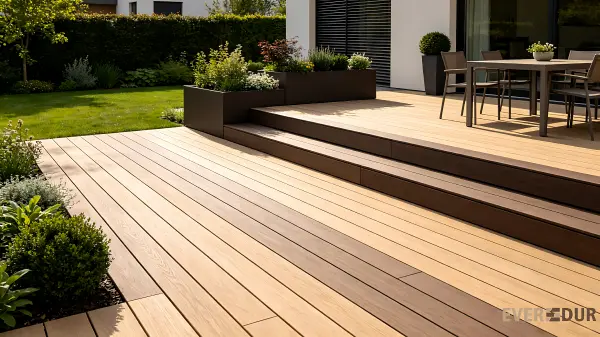
What Weather Conditions Should Garden WPC Decking Withstand in Outdoor Gardens?
A garden deck stays outdoors all year, so it takes everything the sky throws at it. Before you start comparing goods, it's useful to know the real stress factors a deck board goes through in various regions in Europe and North America. Garden weatherproof wpc boards are manufactured to meet these situations rather than one “ideal” weather scenario.
Rainfall and Prolonged Moisture Exposure
Gardens in temperate locations get frequent rain and in some places there are weeks of wet, cloudy weather in spring and autumn. This water is absorbed through the grain of wood decking causing it to expand, cup and finally decay. Composite boards act a little different . The plastic ingredient does not let the board absorb much moisture . However, not all composite products manage standing water equally well, thus examining a supplier's water absorption test results counts more than relying on marketing promises alone.
Temperature Swings From Summer Heat to Winter Frost
Outdoor temperatures in many target markets can range from summer highs above 35°C to winter lows well below freezing. This swinging makes the materials expand and shrink . Over and over . If a deck board cannot tolerate this movement, it may either loosen from its fasteners or develop apparent gaps between boards. A stable polymer mix in composite decking will limit expansion and contraction to a small range, protecting the fastening system and overall surface alignment for many seasons.
Wind, Snow Load, and Seasonal Debris
Coastal and open gardens are constantly vulnerable to wind and northern locales get snow in the winter months. The deck should be structurally strong enough to support snow without sagging between the joists and the surface should enable water to drain off rapidly when the snow melts. The holes between the boards enable leaves and other organic material to fall in and accumulate, which may feed mold if the deck is not adequately dried off. A decent board profile does not just evaluate one single weather incident but all three factors.
Moisture, temperature cycling, and physical load from wind or snow are the three stress categories that together provide the foundation for any major outdoor decking material. The next sections describe the practical responses to each of these difficulties in terms of material composition and surface engineering.SEND INQUIRY

Co-Extrusion Technology and Recycled HDPE: The Material Structure of Garden WPC Decking
The effectiveness of composite decking begins with how the material is constructed, not simply what it is constructed from. Co-extrusion technique has established a benchmark of excellence in the composite decking industry and dictates how a board performs outside throughout the course of its life.
What Co-Extrusion Means for Board Protection
Co-extrusion is a manufacturing process in which a wood plastic composite core is coated with a protective polymer shell during the production process. “Think of a thin, tight covering wrapped around the inner structure. That shell shields the wood fibers within the board from direct exposure to moisture or UV rays. Co-extruded boards often have lower water absorption and better surface fade resistance than single layer composite boards manufactured using prior extrusion technologies. First they hit the outer layer before they can get to the center.
The Role of Recycled HDPE in Structural Stability
HDPE (high density polyethylene) is a widely recycled plastic that is robust and resistant to chemical degradation. The HDPE that is reprocessed into the composite decking has dimensional stability so the board will not change shape with temperature variations. Recycled plastic also reduces dependency on virgin petroleum-based materials which many consumers are increasingly requiring for environmental reasons in building goods. The HDPE part is mixed with the wood fiber part to balance flexibility and rigidity so the board won't crack under pressure or bend too much when you step on it.
Wood Powder and Additive Blend for Balanced Performance
The wood powder gives the composite decking a natural look and a bit of surface texture. Chemical additives aid in binding the wood particles into the plastic matrix. Additive packages often include coupling chemicals to improve the uniformity of the bond between the wood and the plastic, and stabilizers to reduce deterioration from sunlight exposure. The proportion of wood powder and HDPE has a vital role in the look and characteristics. Generally, the more plastic, the better the moisture resistance, but a good ratio of wood component will provide a surface that feels more like real hardwood to the foot.
The structural basis for garden wpc flooring to withstand numerous wet and dry cycles is this layer make-up of a co-extruded shell, recycled HDPE core and a calibrated wood polymer mix. Knowing what the composite is made of also helps you understand why not all composite decking is created equal when built outside . The quality of each layer depends on manufacturing consistency and material sourcing .SEND INQUIRY

How Does Garden WPC Decking Resist Rain, Moisture and Mold in Garden Settings?
Moisture control is the single largest difference between a deck that will last for decades, and one that will fall down in a few short years. Gardens are naturally wet places. A humid microclimate is created around the surface of the deck by soil moisture, plant watering and rainfall.
Water Absorption Rates Compared to Traditional Timber
If you leave solid wood deck boards out in the rain or humidity, they will soak up water. That's why untreated timber expands, cups and finally splinters. Co-extruded composite decking absorbs far less moisture, since the outer polymer layer acts as a barrier and not as an open conduit through which water may travel. It requires less water, thus it has less dimensional change. The boards will remain flat and tight the length of them instead of warping out at the edges.
Mold and Fungal Resistance in Humid Garden Settings
Mold needs three things to grow: moisture, organic matter and temperature. All three of these occur naturally with wood decking, particularly once the surface sealer wears off and water begins to penetrate the grain. The plastic in composite decking minimizes the amount of moisture that may reach the wood fibers inside the board, minimizing this hazard. Its smooth co-extruded surface doesn't trap biological detritus as readily as the exposed grain of real wood. Mold, however, may grow on any outdoor surface if you allow leaves, debris, or standing water sit for long periods of time, so frequent cleaning is still part of responsible deck ownership, regardless of materials.
Drainage-Friendly Board Profiles
Along with the material, the shape of the board has a role in how fast the water leaves the surface. The hollow-core profiles also include internal passages so water drains from below the deck rather than pooling on the joists. A grooved or slightly textured surface treatment may aid water in running off rather than pooling in flat areas. If boards are spaced and installed with a little slope away from the house, the water will drain even better and the surface will be wet for a shorter period of time after a rain shower. The material resistance, along with the creative design of the profile, guaranties the durability of the garden wpc decking even in locations with frequent rain like much of Northern Europe or the Pacific Northwest of the US.
Addressing moisture at the material and structural design stages provides outdoor decking a realistic prospect of a lifespan of ten to twenty-five years, the range most manufacturers estimate for excellent composite materials when properly installed and maintained.SEND INQUIRY
UV Resistance and Color Stability of Garden WPC Decking Under Direct Sunlight
UV radiation is frequently forgotten as a stress source among the key reasons for outdoor materials losing their look over time. A deck that still looks the same color and has the same surface integrity after years in the sun is worth far more in the long run than a deck that fades in one summer.
How UV Exposure Affects Composite Decking Color
This process is called photodegradation, when UV radiation breaks chemical bonds in polymers and pigments, scientists say. It manifests itself as a fading, chalking or a dull washed out appearance on untreated materials. Composite decking with UV stabilizers will absorb or reflect some of the UV rays before it reaches the pigment layer, and so reduce this damage. The co-extruded outer shell also has a role to play here, since it is the first touch with sunlight and protects the wood fiber core from direct damage.
Testing Standards Behind Color Stability Claims
Buyers should not accept color stability on trust. The accelerated weathering test simulates years of outside exposure in a shorter amount of time by subjecting decking samples to focused UV light for a defined number of hours. If the boards don't exhibit any color change after this testing for 2,000 hours or more, they are typically dependable for outdoor usage for an extended period of time. A test result like this is a quantifiable baseline, not a nebulous promise. This is the kind of paperwork that purchasers should be requesting from suppliers before they purchase a lot of merchandise.
Choosing Colors That Hold Up Outdoors
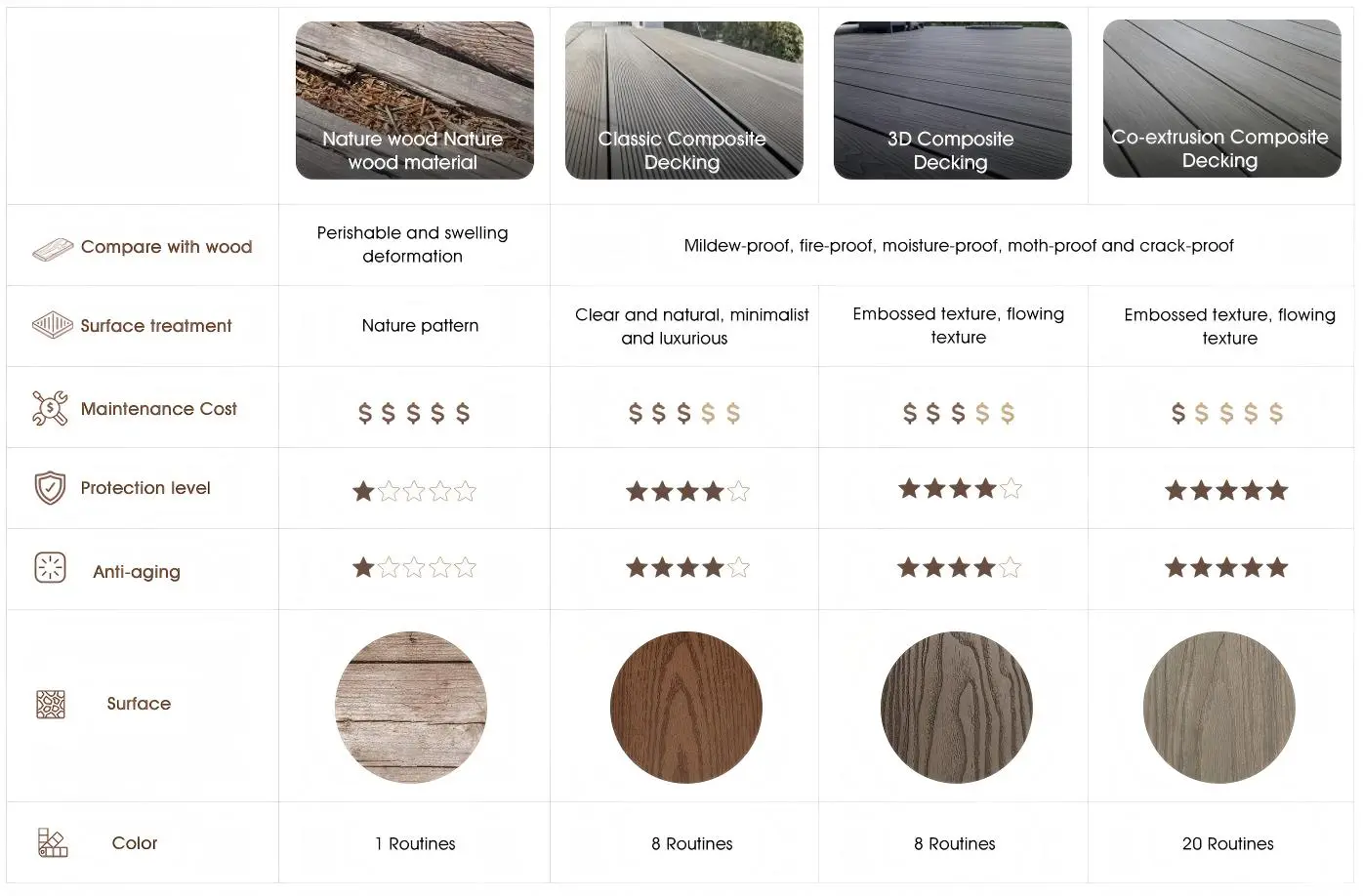
Darker colors like walnut, coffee or dark gray absorb more heat and UV radiation and may speed up temperature changes on hot days. Lighter colors like ash gray, ivory or sandal wood reflect more sunlight and fade less significantly over time, since there is less contrast between the original and faded color. When choosing colors for a project, buyers should consider their esthetic inclinations but also the practicality of long-term solar exposure in their location, particularly in gardens with inadequate shadow protection. A full product range allows designers a good choice of colors to accent architectural projects without compromising on weather performance.
In hot sunny places such as Southern Europe, California, etc. UV protection and color preservation are especially crucial. In these projects, garden weatherproof wpc boards with documented UV test results provide a more predictable end outcome than decking with no stated weathering data.SEND INQUIRY
Garden WPC Decking Maintenance and Long-Term Durability Across Changing Seasons
Even the most weather-resistant decks still require a little of attention each week. The good news is that composite decking requires far less care than traditional wood, and the remaining maintenance tasks are simple enough for most homeowners to do themselves without calling in a professional.
Seasonal Cleaning Routines That Actually Matter
The two times of year when you're most likely to see your debris build up to its greatest levels are spring and autumn, when pollen, fallen leaves and dirt settle into the board gaps. Generally, a quick spray with the garden hose and a little brushing on the difficult places can clean the surface without the need for harsh chemicals. As winter sets in, snow has to be cleared before it turns to ice, and ice scrapers may damage the surface if handled incorrectly. Summer is usually the simplest maintenance time as you only need to wash it occasionally to brush off dust and pollen before it bakes into the surface in the sun.
Signs of Wear to Watch For Over the Years
Even the best decking will start to show its age, and knowing what to look for may help a homeowner see tiny problems before they become big ones. Surface scuffing is cosmetic, anticipated with furniture movement and often has little influence on structural function. More revealing indicators include loose fastening clips, small gaps between boards, or any soft areas indicating that moisture has entered a damaged area. Catching these problems early, typically with a fast yearly walk-through, helps save tiny concerns from becoming large remedies.
Expected Lifespan Compared to Wood Alternatives
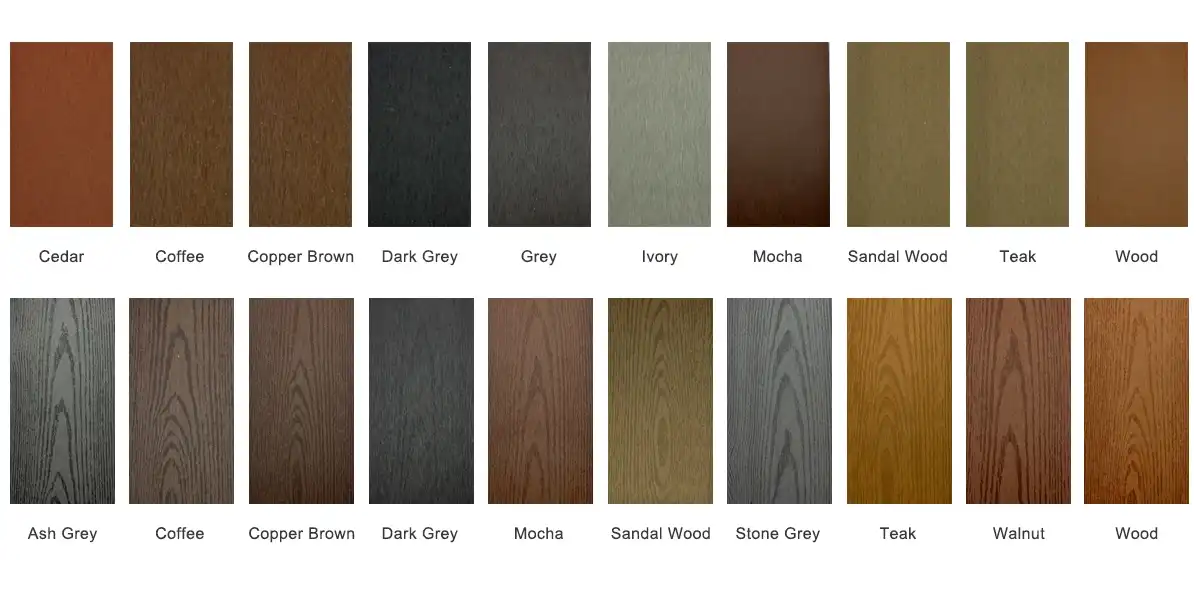
In temperate zones wood decks need to be re-stained or sealed every year or two . Many wood decks may need to be partially replaced after ten to fifteen years because of decay or insect damage . Composite decking, which uses co-extrusion technology and comes with a written guarantee, usually lasts between 10 and 25 years depending on the precise kind of board and the quality of the installation. robust profiles are more robust and stronger. This is also the reason why solid co-extrusion decking comes with a 20-year warranty while hollow-core co-extrusion decking comes with a 15-year warranty. Most buyers think about the cost of ownership and not only the cost of the materials and the longer service life and reduced yearly maintenance expenses frequently are the determining considerations.
Garden WPC flooring is not a periodic maintenance activity that has to be carried out in all the four seasons but a long term investment that combines durability and little maintenance.SEND INQUIRY
Conclusion
Material science and practical design have come together to provide us weather resistant outdoor decking. Co-extrusion technology, recycled HDPE content and UV stabilized pigments combine to provide a board that can take rain, temperature swings and sun exposure without the maintenance demands of typical wood. When selecting the correct composite decking, it's important to go beyond color and cost and consider confirmed testing, warranty terms and production uniformity. Gardens need something that can hold up to season after season, and knowing the material that goes into garden wpc decking helps customers make a more educated and confident choice before installation even starts.SEND INQUIRY
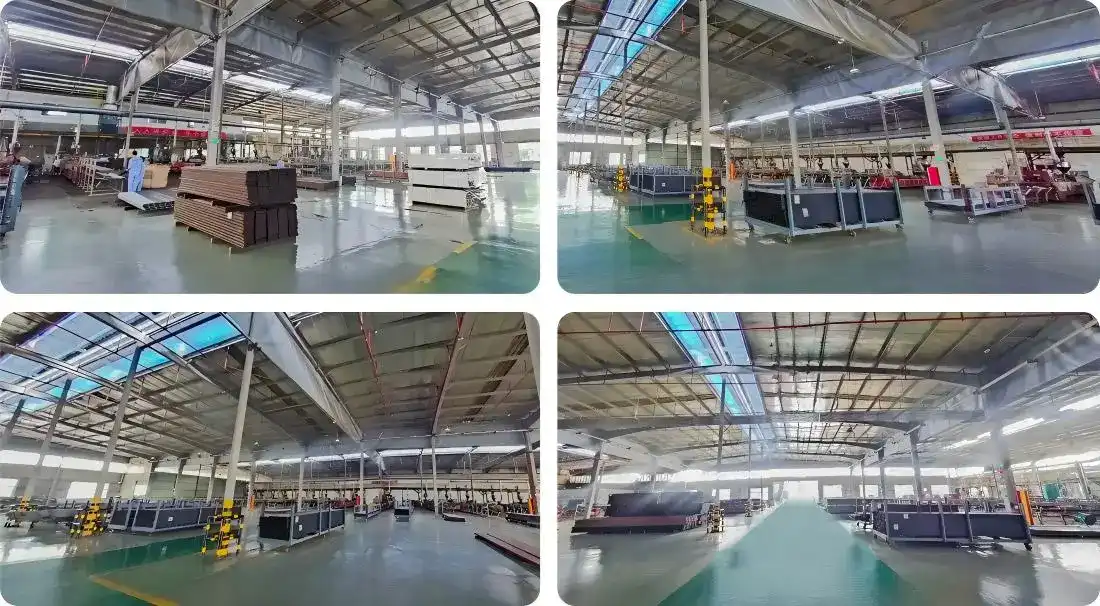
FAQ
Q: Does garden WPC decking get slippery when wet?
A: Most composite decking has a textured or emboss finish to the surface that is meant to provide better grip in wet circumstances but frequent cleaning preserves the traction long term.
Q: Can garden WPC decking be installed directly on soil?
A: No, composite decking should be installed on a proper joist and clip system with adequate ventilation underneath to allow airflow and prevent moisture buildup against the boards.
Q: How long does garden WPC decking typically last outdoors?
A: Depending on the board type and climate conditions, quality composite decking generally lasts between ten and twenty-five years, supported by manufacturer warranties on hollow and solid profiles.
Choose Everdur for Reliable Garden WPC Decking
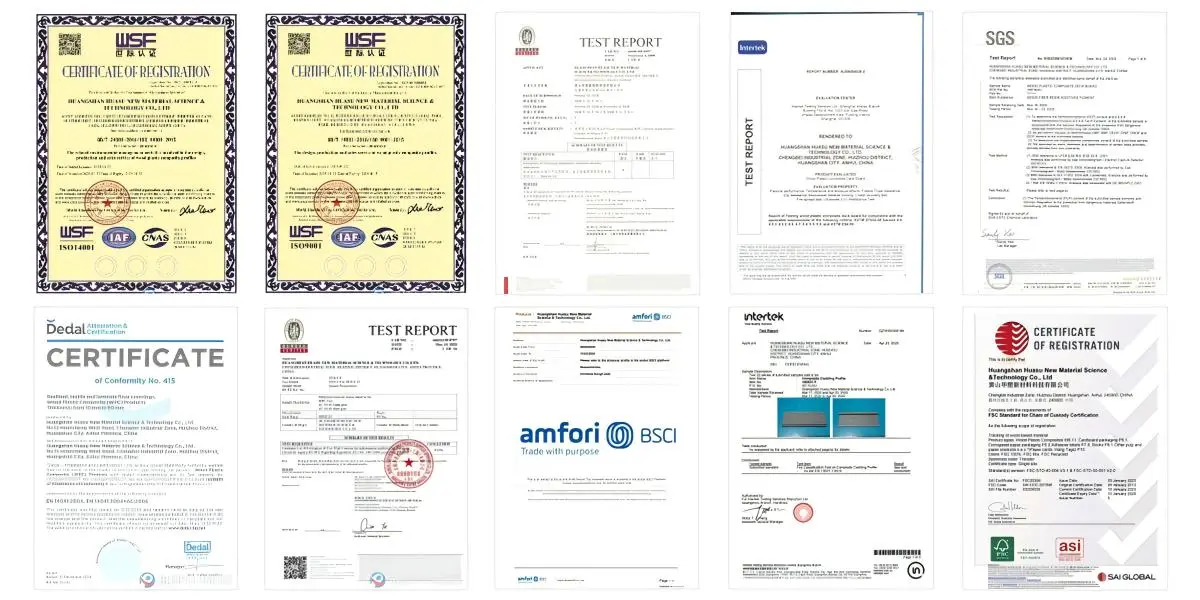
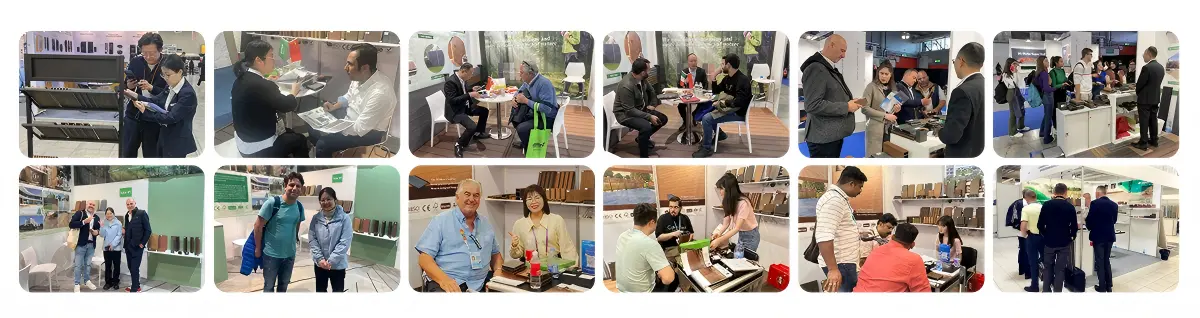
Everdur has spent sixteen years manufacturing composite decking for garden and outdoor applications, supported by more than fifty production lines and a steady annual output shipped to over sixty countries. Our second-generation co-extrusion garden wpc decking is tested for UV stability and moisture resistance, giving project owners and distributors a dependable material backed by real performance data rather than vague promises. We offer OEM and ODM customization, including color matching, surface texture, and special sizing, so your project gets the right fit rather than a generic standard. As a trusted garden wpc decking supplier, Everdur's products comply with international standards including EU CE, US ASTM D7039, and China GB/T 24137, alongside Recycled Content certification and E0 environmental standards for low-emission building materials. Reach out to our team at violet@wpcsupplier.com to discuss samples, pricing, or a custom order for your next garden project.SEND INQUIRY
References
1. American Society for Testing and Materials. (2021). Standard Test Methods for Determining the Flexural Properties of Polymeric Composite Materials Used for Outdoor Decking.
2. International Organization for Standardization. (2015). ISO 14001 Environmental Management Systems — Requirements with Guidance for Use.
3. European Committee for Standardization. (2013). EN 15534 Composites Made from Cellulose-Based Materials and Thermoplastics (Usually Called Wood-Polymer Composites or Natural Fiber Composites).
4. Forest Products Laboratory, United States Department of Agriculture. (2010). Wood Handbook: Wood as an Engineering Material.
5. Intertek Group plc. (2020). Testing, Inspection, and Certification Guidelines for Building and Construction Materials.
6. Standardization Administration of China. (2018). GB/T 24137 Wood-Plastic Composite Panels for Outdoor Flooring Applications.
Send Inquiry

Related Industry Knowledge
- Anti-Rust Wood Plastic Composite Fence Panels: Long-Lasting Fencing
- Eco-Friendly Residential WPC Decking: Sustainable Home Flooring
- Can WPC decking tiles be used in coastal areas?
- Top Waterproof WPC Decking Manufacturers in 2026
- Garden WPC Decking Installation: Create a Beautiful Garden Patio
- WPC Wall Cladding: Tailoring Solutions for Homes and Businesses
- Low MOQ Co-Extrusion WPC Cladding: Perfect for Small Projects
- Low MOQ Commercial WPC Decking: Perfect for Small Commercial Projects
- Eco-Friendly Co Extrusion WPC Decking: Sustainable Outdoor Solution
- How to Install WPC Decking Easily: A Step-by-Step Tutorial for Beginners