
Why Co-Extruded Composite Decking is a Homeowner's Dream
2026-10-29 17:11:03
For every homeowner—and every firm that sells outdoor products—choosing a deck material that can withstand water, sun and regular foot activity is important. Co-extrusion composite decking addresses this issue by including a protective polymer shell that is bonded to a wood-plastic core during the production process, rather than afterward. This tutorial describes how the technology works, how it compares with wood and previous capped boards, and what customers should examine before making an order. Using Everdur's actual production data, UV test logs and a real import situation, I illustrate what differentiates true 360-degree capping from marketing rhetoric. By the end you will know what questions safeguard your margin and your brand identity.SEND INQUIRY
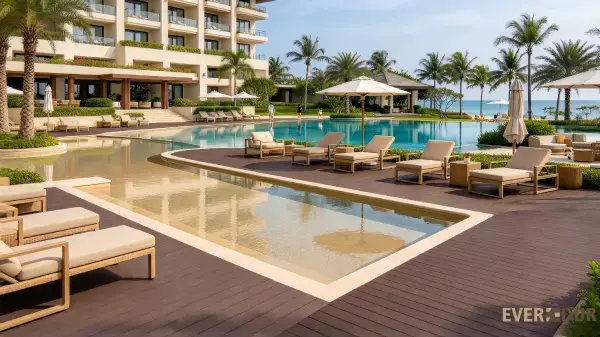

What Makes Co-Extruded Composite Decking a Smart Choice for Brand Owners and Homeowners?
Co-extrusion composite decking is a kind of wood plastic composite (WPC) board that is manufactured by extruding two lines of material through one die at the same time. The main stream is the structural heart. The outer stream forms a thin coating of dense polymers. It adheres to the core while both are in the liquid state. Why is the cap a part of the board and not simply a coating? Because it's stuck to the board.
What Is Co-Extrusion Composite Decking, Exactly?
It's not made of real wood or PVC, but of both. The core is made of high-density polyethylene (HDPE), wood fiber, and other things. The shell is strong. The shell keeps water, UV rays, and spots out much better than the core by itself.
This is important because many of the first composite boards only go over the top and two long ends. You can still see the tips, the bottom, and the holes for the fasteners. The heart gets bigger when water gets in through these holes. That's right—the design goes around all six sides, even the inside walls of the grooves where the clips go.
How Is Co-Extruded Composite Decking Manufactured?
When you're producing anything there's a certain sequence to it and if you skip a step you could see colour change or surface cracking down the road. What the procedure generally does is this:
- Drying wood fibre and HDPE pellets to a uniform moisture content prior to blending.
- Adding UV stabilisers, pigments and coupling agents to the base material.
- The core is extruded via a profile die according to the final board dimensions.
- Co-extruding the polymer cap in a single pass around the core including the groove walls and bottom.
- While the cap is still usable, emboss the surface to provide a wood grain or brushed texture.
- Cooling, cut to length & perform batch inspection for breadth, thickness and colour.
- Packaging contains batch identifiers so that it may be traced back to the manufacturing batch.
Everdur's factories employ this technology in more than 50 WPC manufacturing lines to produce about 30,000 tonnes of scrap wood each year. When the quantity is so huge, an order for just one colour may run as its own batch, rather than sharing a line with another order for another colour. This minimises the chance of colours becoming jumbled up while switching them out.SEND INQUIRY

What Core Benefits Does the Co-Extruded Cap Deliver?
In actual life a properly bonded cap impacts the way the board operates, not simply on paper. These advantages are realised when they are put in place:
- Resists moisture on all six sides, including the groove walls where water tends to collect around clips, limiting the swelling that produces gaps and squeaks over a few seasons.
- UV and colour stability, since the pigment and stabilisers are on the exterior layer facing the sun, not merely blended into a core that fades when the surface wears off.
- The low-porosity cap offers fewer places for stains from grease, alcohol, dirt and sunscreen to sink in than an open-grain core, so it resists staining.
- Less regular upkeep, as there's no yearly cycle of sanding, staining or sealing that wood decking needs to remain waterproof and looking good.
- Dimensional uniformity from batch to batch which is critical to a brand owner shipping container loads because every board has to match the sample that was authorised months ago.
It can put sunscreen, oil, wine and oil on it, and it won't be damaged. This is because the low-porosity cap offers less surface area for oil and grime to sink into than an open-grain core.
| Property | Typical Declared Value | Test Method | Evidence Type |
|---|---|---|---|
| Water absorption | Low, cap-dependent | ASTM D7031 | Third-party lab report |
| UV color change (Delta E) | Under 3.0 after 2,000 hours | ASTM G154 | Accelerated weathering report |
| Flexural strength | Profile-dependent | ASTM D7032 | Batch test record |
| Wet slip resistance | R10–R11 range, product-dependent | EN 13893 / DIN 51130 | Classification report |
How Does Co-Extruded Composite Decking Compare with Traditional Wood and Capped Decking?
People who want to switch from wood or the first generation of composite boards want to see two lines of co-extrusion composite decking side by side before giving a whole container to a new line.
Co-Extrusion Composite Decking vs Wood Decking
In many places, wood patio boards do cost less at first, but they cost a lot more in the long run. Every year, wood should be sealed or stained so that it doesn't rot, split, or turn gray. That step isn't needed for co-extruded boards because the cap already keeps the water out that causes those problems. A big wooden deck is also harder to color match because each piece has a different grain and level of stiffness. This doesn't happen with a molded board that controls the color.
Co-Extrusion Composite Decking vs First-Generation Capped Decking
To begin with, most co-extruded decking capped boards only protect the long sides and the top area. Water can always get in through the cut ends, the bottom, and the groove walls. Over a few wet seasons, water seeps in through those weak spots. This makes the core swell from the inside out, even though it looks fine on the outside. The cap goes into the gap and across the bottom with Everdur's 360° Shield Technology. This closes off the openings that let secretions in and make them swell during extrusion instead of leaving them open.
Co-Extruded Decking vs PVC Decking
PVC decks doesn't soak up water very well because it is only made of plastics. They look and feel more natural, though, because they are made of wood fibers. Also, PVC moves around more in direct sunlight, so make sure there is enough space between the gaps. Composite decking that is co-extruded is capped composite decking in the middle. And a polymer cap keeps out water that older composites without caps couldn't. Its wood-fiber body gives it a natural look and weight.SEND INQUIRY
| Criteria | Co-Extruded Composite Decking | PVC Decking | Wood Decking |
|---|---|---|---|
| Core material | Wood fiber + HDPE | Polymer-based | Natural timber |
| Surface protection | Co-extruded polymer cap, six faces | Integral polymer surface | Finish-dependent |
| Moisture resistance | High when fully capped | Very high | Species and treatment dependent |
| Maintenance | Low, no sealing cycle | Low | Annual staining or sealing |
| Typical warranty | 15–20 years | Varies by brand | 5–10 years with treatment |
| Natural wood-grain feel | Yes, embossed and textured | Imitation only | Natural |

What Makes Co-Extruded Decking More Resistant to Stains and Fading?
How the Protective Cap Blocks Stains
The wood-fiber core can be seen, but the top polymer layer doesn't have as many holes in it. This makes it less likely that oil, wine, dirt, or sunscreen spills will soak in before they are cleaned up. It's important to note that stain-resistant does not mean stain-proof. Any kind of wood can get damaged by something that sits in the sun for days. This is why it's still safer to clean up spills within a day, even if the board is supposed to work well.
How Co-Extrusion Improves UV and Color Retention
The UV protectors and colors are put in the top cap of co-extrusion composite decking, which is where the sun hits the board. What color and how thick the cap are both affect how fast something fades. When the stabilizer package is the same, darker colors soak up more heat and change their surface a little more over time than lighter colors. Tests that speed up the weathering process, usually ASTM G154, use UV lamps and moisture cycles to make years of being outside seem like only a few weeks. People can try a few to see how many they need before they buy the whole container.
Our 2,000-Hour UV Test Data
Everdur exposes its co-extruded boards to UV light for 2,000 hours straight before putting out a new color. After that cycle, the amount of color change stays low enough that two panels next to each other look almost the same to someone who isn't skilled in the art. This is the realistic measure that most people in Europe use to look at samples. In 2024, 140 brand owners from Europe and North America asked for information. Sixty-eight percent of those people asked directly if the cap went all the way around the groove and the bottom, and forty-one percent rejected a source because they couldn't show a cross-section picture that showed full sealing. Since Everdur learned that one thing, they now send cross-section documentation with every sample package they sell to a new customer.SEND INQUIRY
Before they agree to a color, brand owners can ask any source for this simple test matrix:
| Contaminant | Exposure Time | Cleaning Method | Acceptance Criterion |
|---|---|---|---|
| Coffee or red wine | 24 hours | Mild detergent and water | No visible permanent stain |
| Cooking oil | 24 hours | Manufacturer-approved cleaner | Rating confirmed in writing |
| Soil and mud | 24 hours | Water and soft brush | Rating confirmed in writing |
| Sunscreen | 24 hours | Mild detergent | No unacceptable change |
| Chlorinated pool water | 7 days submerged | Rinse and dry | No swelling or discoloration |

How Does Co-Extruded Composite Decking Hold Up in Different Weather Conditions?
Performance in Rain, Humidity, and Freeze-Thaw Climates
When the board is fully closed, the top water goes away quickly. However, how well it works over time will depend on how the deck drains. If there is standing water near the joists, holes between the boards that are closed, or no air flow, even an area that is well covered can get wet. In places where it freezes and thaws often, water that gets stuck and goes back and forth between being frozen and flowing puts extra stress on any weak spots in the system. Because of this, the right angle and space under the frame are just as important as the boards' materials.
Performance in Heat, Sun, and Coastal Environments
When you walk on dark boards in full sunlight, they get hotter. This changes both how easy it is to walk on barefoot and how big of an expansion gap needs to be at the ends of the board. If you don't treat metal fasteners, salty air from the coast can eat away at them faster than it can eat away at the composite board itself. Clips made of stainless steel or a coating take that risk right away. There is a third factor that comes into play on pool decks, where bleach and other cleaning agents are often in contact with the surface. People who want to build something by the pool should get chemical-compatibility notes and normal weathering data for each color they are interested in.
Weather-Resistance Documents to Request
Before you agree on a project's colour and image, get these things written down, don't simply take someone's word for it:
- Water absorption test results demonstrating the % gain after a certain length of submersion preferably conducted on the particular profile and colour being requested, not a generic reference sample.
- "UV tested" without a number is not verifiable. UV weathering report includes hours of exposure, test technique and recorded color-difference value.
- Dimensional stability statistics for expansion/contraction throughout a realistic temperature range for the target market.
- Fastener compatibility remarks indicating which clip and screw materials the guarantee is really for coastal or high-humidity setups.
- Warranty restrictions for pool, coastal, or harsh climate installations, since many conventional warranties exclude these situations in the tiny print.
This material for co-extruded decking should be reviewed before a purchase order is signed. This also applies to the warranty book of the brand owner and the labour charges of the installer when a batch does not perform properly in the field.SEND INQUIRY

Is Co-Extruded Composite Decking a Good Choice for Pools, Families, and High-Traffic Projects?
Surface Safety for Children and Pets
Less possibility to obtain splinters from old, raw wood when the top is shut. That's because there is no grain to be lifted and cracked. If the boards have rounded edges and a rough, non-glossy surface, you may go barefoot around play areas and pool decks. Either way, effective drainage is needed around damp areas, as any floor that has water on it is a hazard to persons who could slide.
Slip Resistance for Pool Surrounds
A clear number for wet slip resistance is better than a vague claim that something is "non-slip." In Europe, buyers usually look for rates below DIN 51130 or EN 16165. In the US, some projects use wet friction testing based on ASTM. The test should have been done either along or across the etching design. You should also ask if the grade is still valid after the surface has been cleaned several times. If boards are worn or too shiny, they may lose their grip over time, even if the first sample passed.
A Resort Case Study: Southeast Asia Pool Deck
The manager of a beach resort in Southeast Asia replaced a wooden pool deck that was warped and cracked in 2023 with co-extrusion composite decking. Folks had been complaining for two years that the wood had splinters and algae growing in the open grain. About 4,200 square meters of the pool deck and walks next to it were replaced. Twelve months after the surface was put down, the operator's grounds team said that algae had not grown back on top of it and that guests had not grumbled about splinters. The old wooden deck, on the other hand, had problems that had to be fixed by cleaning it twice a year. The fascia boards around the edge of the pool were the same. It was easier to go over the design with the resort's architecture firm because the whole package that could be seen came from the same place.SEND INQUIRY

Where Can Brand Owners and Buyers Get the Most Value from Co-Extruded Composite Decking?
Residential and Private-Label Applications
Large parts of the residential area are garden patios, balconies, rooftop terraces, and places to eat outside. People look at decking before they look at specification sheets, so this is the best place for a brand owner to use custom color and embossing on a private-label line.
Commercial and Hospitality Applications
People walk on restaurant patios, apartment porches, and paths by the water more often, so they need to be cleaned more often than a garden patio. When suppliers are bidding, the fact that they can make project-specific test results instead of just general ads makes them stand out. To explain this, home buyers usually don't ask about the paperwork that is needed for these kinds of projects, like proof that they are fire-resistant or slip-resistant.
Three Buyer Scenarios: OEM, Distributor, and Contractor
There are different ways that buyers can judge the same board. You need to know what kind of reader they are to figure out what questions are most important:
- OEM or private-label brand owners care most about custom color and embossing exclusivity, branded packaging, and whether the factory will sign a non-disclosure agreement protecting a color or texture from being resold to a competing brand in the same market.
- Distributors and wholesale buyers care most about mixed-container loading across 5 to 8 color codes, confirmed lead time, and whether the factory will stay out of direct sales to the distributor's own retail accounts.
- Contractors and facilities teams care most about joist spacing, fastener compatibility, access for future board replacement, and whether a damaged board can be matched years later from the same color batch system.
When an OEM (original equipment maker) or private-label brand owner has a unique color or texture, they don't want it to be sold to a competing brand in the same market. They also want unique packages and want to know if the plant will sign an NDA to protect these marks.SEND INQUIRY

How Much Maintenance Does Co-Extruded Composite Decking Require?
Routine Cleaning Requirements
A simple job that can be done during the summer keeps a deck that has been covered looking almost brand new. Do not wait until it's hot in the afternoon to clean up spills or rinse off salt or chlorine after a lot of use. Instead, do it right away. A soft brush and some light soap can get rid of most dirt and grime. Let no water get in between the boards so that water doesn't pool on the bottom of the frame.
Repairing Damaged Boards
Most of the time, soap and water can fix small scratches on the surface. When you clean the surface, you remove the layer that protects the board and keeps it dry. This makes it harder to fix deeper cuts that go through the cap and into the core. It is safer to replace the broken board with one that fits the original batch code than to try to fix it in a way that looks good but could let water back into the core.
Lifecycle Cost Comparison
When you add up how much it costs to paint, seal, and replace wood decking earlier every year for 15 years, the lower price isn't always worth it. This is an easy and fair way to compare things:
> Total lifecycle cost = initial cost + installation cost + ongoing costs + repair/replacement costs - residual value
If you multiply that number by the price and the length of the warranty, you get a very different picture of how wood, uncapped composite, and fully capped composite decking are different than what the first bill shows.SEND INQUIRY

What Design and OEM Options Make Co-Extruded Decking Easy to Brand?
Color, Grain, and Surface Finish Options
It usually comes in Ash Gray, Cedar, Coffee, Copper Brown, Dark Gray, Ivory, Mocha, Sandal Wood, Stone Gray, Teak, and Walnut, among other colors. This color can all have a wood-grain finish that is scraped, brushed, or raised. There is a way for two-color effects to make a brand's look stand out that is hard for a buyer to find in a stock photo. The cap and core have different depths at the board edge.
Custom Color and ODM Development for Brand Owners
he first step for a brand owner who wants to switch from a trade business to a factory that can help them make color and texture for co-extrusion composite decking is to match a real sample to a RAL or Pantone reference. The production run is then checked for precision before the full container is given the all-clear. If a brand wants to try out a new color, they can order as little as 100 SQM from the standard range before committing to the 20 to 100 containers a year that are usually needed to roll out the whole line.
Protecting Your Exclusive Design with NDA Terms
When a brand owner makes a unique color or texture, one of the worst things that can happen is to see that pattern sold to a direct rival in the same market a year later. Before you spend money on casting or color development, you should get a written agreement that says you won't tell anyone about the color code and embossing pattern and that it's tied to a clear list of customers or markets. If the plant won't write down its promise, it needs to show how it will handle the request for privacy after the order ships.
Everdur's export team helped a German garden goods brand that used to buy from a trading company switch to direct plant production in 2023. This was done because they learned that another buyer in the same country had been offered the same "exclusive" color. Since the brand moved to a direct contract with a written color-exclusivity agreement, the color difference between batches dropped from about 2.1 Delta E for the old supply from traders to less than 0.8 Delta E for Everdur's production. Because of the guarantee, color complaints from the brand's store partners dropped by 72% over the next year. The brand's category manager said that the lead time for the first container went from about five months under the old exchange rate to eleven weeks after orders were sent directly to the factory. And this is because samples could be approved directly with the manufacturer instead of going through a third party.SEND INQUIRY
Design Selection Checklist
| Selection Factor | Question to Ask the Supplier |
|---|---|
| Color | Will this color run noticeably hot underfoot in full sun? |
| Texture | Is the surface rated for barefoot or wet-area use? |
| Profile | Is the board solid, hollow, or ribbed, and how does that affect span? |
| Accessories | Are matching clips, fascia, and stair trim available in this color? |
| Batch control | Can a replacement board years from now match the original batch? |
| Exclusivity | Is the color protected by a written NDA tied to my market? |

What Should Buyers Check Before Choosing a Co-Extrusion Composite Decking Supplier?
Supplier Capability Checklist
It's smart to check that the dealer can supply co-extruded decking and do what they say they will do before compare price sheets. These are important things to check:
- Production history with co-extruded profiles specifically, not just general WPC decking, since the extrusion and cooling settings differ from single-layer boards.
- In-house or third-party testing capacity, so UV, water absorption, and flexural data can be verified rather than taken on faith from a product brochure.
- Batch traceability systems that let a buyer trace a complaint back to a specific production run and date.
- Export documentation experience, covering commercial invoices, packing lists, certificates of origin, and test reports formatted for the destination customs process.
- Capacity to hold schedule for smaller test orders, since many factories push 100-300 SQM sample orders behind larger standing customers during peak season.
People who buy things can use batch tracking systems to link a problem to a specific production run and date.
Export paperwork for co-extrusion composite decking like business bills, packing lists, certificates of origin, and test reports that are ready for the customs process at the destination should be something you know how to do.
Many businesses put 100–300 SQM sample orders behind longer-term customers during busy times, so it's important to be able to keep smaller test orders on schedule.
Compliance, Certification, and Documentation
Don't think that one certificate is enough; instead, ask for paperwork that is specific to the market you want to get into.
- ISO 9001 for quality-management system certification.
- EN 15534 series standards relevant to wood-polymer composite products sold in the EU.
- REACH compliance for chemical substances placed on the EU market.
- RoHS compliance where applicable to supplied components.
- CE marking, verified against the specific EU product regulation it actually covers, rather than assumed by default.
- FSC chain-of-custody certification, relevant only when certified wood content is specifically claimed.
Verifying Certificate Holder and Contract Entity Match
People who import goods often miss the difference between the person or business named on a certificate and the person or business signing the sales contract when they are checking big accounts or going through customs. Someone can stop a shelf-placement review or a factory audit with a certificate issued to one company name and used to back up a purchase order from a different named entity. This is true even if the product is good. Ask the seller to confirm in writing that the certificate holder and the contracting body are the same legal company before you sign the order. If they aren't, ask for a letter that makes clear how the two are connected.SEND INQUIRY

How Can Proper Installation Help Co-Extruded Composite Decking Perform Better?
Installation Sequence for Best Performance
There is only so much that a closed board can do on its own. The following is the suggested order:
- Inspect and level the substructure before placing any boards.
- Confirm joist spacing matches the board's rated load capacity.
- Build in drainage slope and ventilation under the deck.
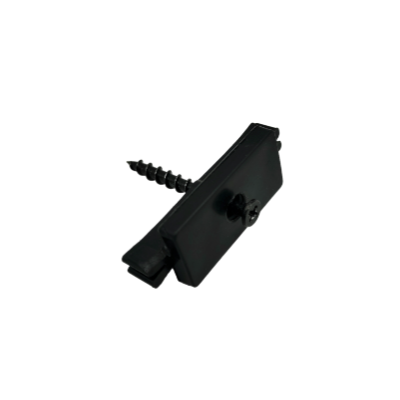
- Install starter clips and hidden fasteners per the manufacturer's groove profile.
- Leave the specified end and side gaps to allow for thermal movement.
- Pre-drill near board ends when the installation guide calls for it.
- Avoid over-tightening fasteners, which can crack the cap at the clip point.
- Finish with fascia, stair trim, and expansion details before final cleanup.
Joist Spacing, Clips, and Fasteners
Never use a general rule of thumb for exact numbers that depend on the profile. Instead, always use the most recent installation guide from the maker. For Everdur's 138×23 mm profile, the product's technical sheet shows the distance between domestic joists, the space between ends, and the clip systems that are allowed. If you check these numbers before you buy screws, you won't end up with the wrong gear for your deck boards.SEND INQUIRY
Common Installation Risks and How to Avoid Them
| Risk | Likely Result | Mitigation |
|---|---|---|
| Joists spaced too far apart | Board sag or cracking under load | Follow the manufacturer's tested spacing table |
| Insufficient end gaps | Buckling from thermal expansion | Leave the specified gap at every board end |
| Poor under-deck drainage | Trapped moisture and odor | Maintain slope and keep vents clear |
| Incompatible clips or screws | Visible movement or corrosion | Use only the approved fastening system |
| No access for board replacement | Costly future repairs | Plan removable panels near high-wear zones |

Partner With a Factory That Protects Your Brand, Not Just Your Order
You already know how important it is to buy from the factory. A trading company could have sold a color you thought was only available there, or a store could have found a certificate that didn't match the name on your contract. We will make sure that any brand owner who buys co-extrusion composite decking from a manufacturer gets it with full six-face capping, 2,000-hour UV test data, and written color-exclusivity terms. Email violet@wpcsupplier.com with the color, number, and place you want to go to. After that, our team will send you some examples of options along with the necessary paperwork for your audit.
Conclusion
Co-extruded composite decking lives up to its name when the cap really does cover all six faces, test results back up the UV and water-absorption information, and the guaranty terms are so clear that a store could write them down themselves. As long as you keep up with the maintenance and warranty, there isn't much difference between wood, first-generation capped boards, and fully co-extruded profiles of co-extrusion composite decking. Any brand owner, dealer, or hotel buyer would be smart to check the certificate holder, the groove-level cap covering, and the exclusivity terms before they buy in bulk. They shouldn't wait until after a container has been shipped to do this.SEND INQUIRY

FAQ
Q: What is co-extrusion composite decking?
A: Co-extrusion composite decking is a wood-plastic composite board made with a protective polymer layer bonded to the core during the extrusion process itself. The outer layer is designed to resist moisture, UV damage, and surface stains better than an uncapped board.
Q: Is co-extruded composite decking waterproof?
A: It is more water-resistant than uncapped composite decking and wood, but it is not waterproof in every installation condition. Drainage, ventilation, and correct board-end sealing still matter for long-term performance.
Q: How long does co-extruded composite decking last?
A: Service life depends on the formulation, cap coverage, climate, and installation quality, typically ranging from 10 to 25 years depending on the profile. Buyers should request product-specific weathering and water-absorption data rather than relying on a general lifespan number.
Q: Is co-extruded decking better than wood decking?
A: It generally requires less maintenance and resists rot and moisture better than untreated wood over a comparable ownership period. Wood keeps a more traditional material feel, while co-extruded boards offer more consistent color and dimension from batch to batch.
Q: Is co-extruded composite decking suitable for pool areas?
A: It can be suitable when the specific board carries documented wet slip-resistance ratings and confirmed chemical compatibility with chlorine and cleaning products. Always request the test method and rating in writing before specifying a color for a poolside project.
Q: How do I verify a supplier's UV and certification claims?
A: Ask for the specific test method, exposure hours, and measured color-difference value rather than a general "UV tested" statement. Confirm the certificate holder's legal name matches the entity on your purchase contract before relying on that documentation for retail compliance.
Q: What should a brand owner ask about color exclusivity?
A: Ask for a written non-disclosure and non-compete clause covering the specific color code and embossing pattern, tied to a defined market or account list. Confirm whether the factory has sold or will sell the same combination to another buyer in your region.

Build Your Private-Label Decking Line on Verified Data, Not Promises
Before switching providers in the middle of a launch, brand owners have to go through more work than they planned. They have to accept samples again, print new packages, and tell store buyers about color changes. There are more than 50 production lines at Everdur that make co-extrusion composite decking. Before you decide on a bottle size, you can look at the results of their UV and water-absorption tests. Send an email to violet@wpcsupplier.com to get sample boards, a picture of full groove capping cut in half, and a quote that is specific to the markets you want to reach.
References
1. ASTM International — Standards and test methods for plastics, polymer composites, weathering, and construction products (2024).
2. European Committee for Standardization (CEN) — EN standards, including wood-polymer composite product standards (2024).
3. ISO — ISO 9001 quality-management systems and related international standards (2024).
4. European Chemicals Agency (ECHA) — REACH and chemical-substance compliance information (2024).
5. European Commission — CE marking and product-compliance guidance (2024).
6. U.S. Consumer Product Safety Commission — Outdoor residential product safety information (2024).
About the Author
Violet is the Export Documentation and Technical Content Manager at Everdur, where she works directly with brand owners, distributors, and hospitality buyers on co-extrusion composite decking specifications, test reports, and compliance documentation. She has reviewed UV weathering data, batch traceability records, and certification paperwork across more than 60 export markets, with a focus on helping overseas buyers verify supplier claims before committing to container volume.
Send Inquiry
Related Industry Knowledge
- Wholesale Wood Plastic Composite Fence Panels: Bulk Supply & Factory Prices
- Wholesale Traditional WPC Decking: Affordable & Reliable Supply 2026
- Best WPC Cladding Designs for Villa and Luxury Residential Projects
- WPC Decking vs Wood Decking: Which Is More Durable and Cost-Effective?
- 2026 Brushed WPC Decking Trends: Stylish & Durable Options
- Low MOQ Traditional Cladding: Ideal for Small Traditional Projects
- WPC Cladding vs Vinyl Cladding: Which Is Better for Outdoor Use?
- Top Hollow WPC Decking Designs for Modern Gardens
- How to Install WPC Decking Easily: A Step-by-Step Tutorial for Beginners
- Hollow WPC Decking Maintenance Tips: Keep It New for 10+ Years