
WPC Commercial Building Facades vs Glass: Which Is More Cost-Effective?
2026-11-24 17:50:08
The correct façade material will determine a building's budget, maintenance schedule and long term worth. When developing commercial developments, property developers and architects typically evaluate wpc commercial building facades versus glass curtain walls. Each material has unique cost structures, performance characteristics and esthetic qualities. Glass provides transparency and a clean, contemporary style, while wood-plastic composite panels lend warmth, durability and less maintenance. This article presents the economical and functional differences between these two common facade systems. We will discuss installation costs, long-term maintenance, energy efficiency, when composite materials make the most economic sense, and more. Whether you're managing a retail complex, office tower or hotel project, knowing these variables allows you to make a confident, budget-conscious choice for your next development.SEND INQUIRY
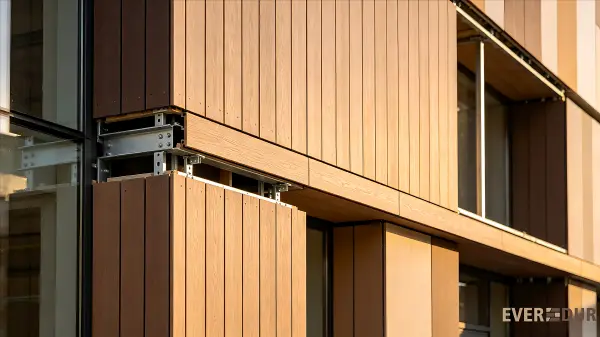
WPC Commercial Building Facades vs Glass: How Do Initial Material and Installation Costs Compare?
Budgeting begins with knowing what you spend before you start. The raw materials, production complexity, and labor needs for glass curtain walls and composite panels might vary greatly.
Material Pricing Breakdown
Tempering, laminations and occasionally low emissivity coatings are required for glass panels, especially commercial grade glass panels. These techniques increase expense per square meters on top of wood-plastic composite materials. In general, composite panels produced from recycled HDPE and wood fiber are cheaper per unit area as they are produced using extrusion molding rather than multi-stage glass treatment. Wpc commercial exterior facade builders usually have more predictable pricing. That is because the composite manufacturing process is not subject to the supply chain interruptions that are frequent in the glass sector, which have been prevalent in recent years owing to raw silica sand shortages and energy demanding furnace operations.
Labor and Installation Complexity
Installing glass requires expert workers who are trained to handle huge, delicate panes. Cranes, suction lifts, precise alignment equipment, etc. are typical needs, which adds significantly to labor expenses. Composite decking and facade panels, in contrast, are attached to joist and clip systems, which makes installation simple. Composite commercial ornamental facades may be installed by crews acquainted with regular building procedures without significant specialized training. This decreases project schedules and labor costs, especially on mid-sized commercial buildings where labor costs constitute a large amount of the overall project cost.
Structural Support Requirements
Glass curtain walls are heavy and need a strong steel or aluminum frame to sustain the weight and handle thermal expansion. This structural need raises both the material and technical expenses. Wood-plastic composite panels are lighter and hence decrease the strain on substructures and perhaps reduce total construction costs when structural reinforcing is not required. Often projects that use concealed anchoring techniques with composite panels may achieve a comparable visual purity to that of glass facades without the additional structural strain, and therefore the up-front expenditure might be more palatable for developers with limited capital budgets.SEND INQUIRY

What Factors Influence the Total Cost of WPC Commercial Building Facades and Glass Curtain Walls?
Initial price is not the whole story. The final price of the project relies on various factors other than the cost of materials and basic installation.
Climate and Regional Conditions
Buildings situated in coastal locations, places with significant humidity or areas with dramatic temperature variations need particular materials. Glass is good in terms of UV exposure but may have concerns with condensation and thermal stresses breaking in changing conditions. The composite panels are treated with chemicals that make them weather resistant and they usually cope well with humidity and temperature changes without warping or splitting. Choosing wpc commercial building facades that fit regional climatic conditions may help save expensive repairs down the road, especially in places with freeze-thaw cycles or salt air near the coast.
Design Complexity and Customization
Curved facades, or special color schemes or textured treatments increase the cost for both materials. Glass customisation, such as curved panels or customized tinting, can come with bespoke fabrication runs adding to lead times and expenses. Composite panels, including wpc commercial exterior facades, may be obtained with surface textures such as embossed, brushed and wood grain finish without the production complexities of glass. For architects looking for distinct esthetics, composite solutions might provide more flexibility for projects that need special model customisation or non-standard proportions.
Transportation and Logistics
Glass panels are delicate and need to be packed carefully which sometimes results in greater shipping costs and increased risk of breakage during transit. Composite panels packed with PE film and wood pallets are more resistant to transportation circumstances. For multinational projects using goods from abroad producers, this variation in shipping endurance may have a considerable impact on overall landing cost. When you look at a project where facade materials are being sent in from other continents, you have to consider in breakage rates and insurance costs when comparing glass versus composite options.
Code Compliance and Certification Costs
Both materials have to comply with local construction laws, fire safety standards, and environmental restrictions. Typically, glass facades are fragile and heavy, and may need further certification to ensure structural safety. Composite facade materials certified in ISO, FSC, CE and ASTM standards make the paper work easier for multinational projects. Standardized certification methods, currently in place with composite manufacturers in many countries, help builders in those nations reduce administrative expenses and project delays associated with regulatory clearance.SEND INQUIRY

WPC Commercial Building Facades: How Do Maintenance Requirements Affect Long-Term Expenses?
Maintenance costs are incurred throughout the life of a structure and can surpass original construction costs. This section looks at the differences in long-term maintenance required for composite panels versus glass.
Cleaning and Surface Care
Glass facades need frequent washing to keep them transparent and looking good. Dust, pollution residue and water stains build up rapidly, particularly in metropolitan surroundings. Recurring expenditures are incurred throughout the year for professional cleaning services that typically need scaffolding or specialized equipment for high-rise structures. Composite panels for wpc business exterior facades applications withstand staining and do not need as much expert cleaning. A simple wash with water is enough to keep their looks, dramatically cutting recurring maintenance expenses over glass.
Repair and Replacement Costs
Glass panels may break from impact, heat stress, or structural settling. Because of the matching requirements of tempered glass specs and the specialist nature of the installation personnel, one broken panel may be expensive to replace. Composite façade panels are more impact resistant and do not shatter, decreasing emergency repair issues. If damage does occur, composite panels can usually be changed using normal installation equipment, thus repair costs are cheaper and project downtime is reduced compared to the processes involved in replacing glass panels.
Protection Against Decay and Pests
Wood-plastic composite materials resist deterioration and insect infestation, a big plus over conventional wood facades and a non-issue for glass. However, glass facades have long-term issues of their own, such as the failure of seals in insulated glass units, leading to fogging between panes and expensive replacement of the unit. Composite panels are solid or co-extruded constructions, with no internal deterioration, as there are no sealed air spaces that may fail in time.
Warranty Coverage and Risk Management
The long-term financial risk for building owners is lowered by manufacturers' longer warranties. Solid co-extrusion constructions with composite facade warranties of 10 to 20 years enable facility managers to plan costs reliably. Warranties for glass curtain walls usually protect the structural structure, but generally do not cover glass breakage from external force or temperature stress, leaving building owners vulnerable to sudden replacement expenses. This warranty gap is an important consideration in the budget for decades of building operation and should be included in any long term cost comparison between the two facade materials.SEND INQUIRY

Energy Performance and Building Function: Comparing WPC Commercial Building Facades with Glass
Energy efficiency has an influence on both operating cost and environmental footprint. This section considers the impact of each material on the thermal performance and general functionality of a structure.
Thermal Insulation Properties
Even with developments in low-emissivity coatings and double or triple glazing, glass remains a rather poor insulator compared to solid composite materials. Heat transmission via glass facades may raise cooling needs in summer and heating demands in winter which increases energy bills for building owners. The solid wood fiber and HDPE makeup of composite panels provides higher natural insulation, which may decrease the strain on HVAC systems and minimize energy expenses during the lifespan of a building's operation.
UV Resistance and Color Stability
Long-term exposure to the sun deteriorates many construction materials over time. Composite panels developed for color stability show negligible fading after 2000 or more hours of UV exposure testing, according to manufacturer testing requirements. Glass does not fade, but the frame materials and interior furnishings next to the glass may be affected by UV damage from direct sunlight through unshaded glass surfaces. Wpc commercial building facades may assist buildings to eliminate the internal UV exposure and keep the same outside look from year to year.
Natural Light and Transparency Trade-offs
Glass facades provide unparalleled transparency, enabling natural light to enter interior areas and saving expenditures for daytime illumination. This is still the most obvious practical benefit of glass over solid composite panels. But large expanses of glass may cause glare problems and raise cooling demands, especially in buildings that are directly exposed to the southern or western sun. Today many commercial projects are of the type hybrid glass-section (for light access) and composite-panel section (for thermal management) fulfilling both functional requirements.
Noise Reduction and Acoustic Performance
Commercial buildings in metropolitan areas are challenged by noise pollution from adjacent traffic and activities. Solid composite panels, including composite commercial decorative facades, are better at damping sound than glass, which is more likely to transmit noise unless properly laminated or reinforced for acoustic reasons. There are acoustic glass alternatives but they add additional expense to normal windows. Composite façade solutions may reduce sound without the need for expert acoustic engineering, making them a viable choice for buildings located near roads, airports or congested business areas.SEND INQUIRY

When Are WPC Commercial Building Facades a More Cost-Effective Choice for Commercial Projects?
Knowing the exact project cases makes it easier to understand when composite panels have superior financial results than glass installations.
Mid-Rise Commercial and Retail Buildings
Composite facade solutions are frequently the best choice for business centers, retail complexes and hotel buildings under ten stories in height. These buildings don't need the sheer transparency that skyscrapers occasionally utilize for branding reasons, making composite panels a viable alternative that combines look with financial management. Composite commercial ornamental facades are perfect for shopping malls and hotels that need a modern architectural style without the need of continual maintenance. They also fit well within operating budgets.
Projects in Harsh or Variable Climates
Composite materials are resilient in buildings located in coastal areas, places with severe rainfall, or sites which experience considerable seasonal temperature fluctuations. Glass facades in these situations generally need more engineering and maintenance effort to deal with condensation, thermal stress and seal integrity. Composite panels are resistant to moisture and temperature-induced warping, so they don't require specialist climate adaptations, reducing construction and maintenance costs during the building's service life.
Renovation and Retrofit Projects
Many older commercial buildings that are being retrofitted with a new façade have structural limits that would preclude the installation of massive glass curtain wall systems without extensive reinforcing work. Lightweight composite panels can be more readily integrated into existing structures without the need for major structural improvements. This makes composite facade retrofitting a more cost efficient alternative for property owners wishing to upgrade building appearance without the capital outlay of comprehensive structural rehabilitation work required for glass curtain wall retrofits.SEND INQUIRY

Conclusion
The economic efficiency of wpc commercial building facades vs glass is very dependent on the kind of project, climate and long term maintenance goals. Glass provides dramatic transparency and natural light advantages but comes with greater installation, maintenance and energy expenses over time. For many commercial applications, composite panels are an economical solution that also provides durability, cheaper maintenance and greater thermal performance. Architects and developers need to carefully consider their individual project objectives, financial limits and area climatic conditions. Wood-plastic composite facades are a solid option that warrants a careful consideration for projects looking for long-term value, low maintenance and consistent performance.SEND INQUIRY

FAQ
Q: Are wpc commercial building facades more affordable than glass curtain walls over time?
A: Yes, composite facades are cheaper to maintain and repair throughout the life of a structure, even if the initial expense is equivalent to some glass projects.
Q: Can composite facades achieve the same modern look as glass buildings?
A: Composite panels are available in a variety of colors, textures and treatments, such as wood grain and embossed finishes. This allows architects to design buildings with a modern look, without being limited to using just glass.
Q: Do wpc commercial exterior facades require special installation tools?
A: Composite panels lend themselves nicely to standard joist and clip installation methods, simplifying installation and frequently making it quicker than specialist glass curtain wall mounting techniques.

Get Expert Guidance From Everdur
Choosing between glass and wpc commercial building facades should not be intimidating. Everdur has 16 years of expertise in manufacturing, 50 production lines and a solid track record servicing 225 customers in 60 countries. We provide facade solutions that meet international standards like EU CE, US ASTM D7039, and China GB/T 24137, with certification for Recycled Content and adherence to E0 environmental norms for sustainable construction. We assist architects and developers realize durable, beautiful façade solutions that meet their project objectives with guarantees up to 20 years and a wide range of customisation choices for color, texture and structure. Are you looking for a dependable wpc commercial building facades Supplier? Contact our staff at violet@wpcsupplier.com and let's talk about your project needs now.

References
1. Ashrae. "Thermal Performance Standards for Commercial Building Envelopes." American Society of Heating, Refrigerating and Air-Conditioning Engineers, 2021.
2. Falk, Robert. "Wood-Plastic Composites in Building Construction: Performance and Applications." USDA Forest Products Laboratory Research Report, 2019.
3. Glass Association of North America. "Curtain Wall Systems: Design and Maintenance Guidelines." GANA Technical Publications, 2020.
4. International Organization for Standardization. "ISO 9001:2015 Quality Management Systems Requirements." ISO Publications, 2015.
5. National Institute of Building Sciences. "Building Envelope Design Guide: Facade Systems Comparison." Whole Building Design Guide, 2022.
6. Smulski, Stephen. "Wood-Based Composites and Panel Products." Forest Products Society Publication, 2018.
Send Inquiry

Related Industry Knowledge
- Affordable WPC Decking Wholesale: Direct from Factory to Your Project
- Co-Extrusion WPC Cladding Installation: Step-by-Step Guide
- Top 5 WPC Cladding Benefits for Commercial Buildings in 2026
- Anti-Slip Landscape WPC Decking: Safe for Public Landscape Areas
- Custom WPC Decking: Tailored Flooring for Your Unique Outdoor Space
- Tips and Tricks for Perfect WPC Solid Decking
- Eco-Friendly 3D Composite Decking: Sustainable & Aesthetically Pleasing
- Wholesale Traditional WPC Decking: Affordable & Reliable Supply 2026
- Top Residential WPC Decking Suppliers for Homeowners 2026
- Exterior WPC Cladding for Commercial Buildings: Bulk Discounts Available