
Anti-Slip 3D Composite Decking: Safe & Stylish for Poolside Areas
2026-11-25 23:46:58
Pool decks are abused everyday by splashing water, sunscreen residue, bare feet, and continual sun exposure. Wood decks are slippery, disintegrate in damp conditions and fade after a few seasons, causing safety concerns and expensive maintenance. Homeowners, hotel owners and landscape designers are discovering 3D composite decking is a safer, longer-lasting choice around pools. This kind of decking provides a textured, non-slip surface while retaining the inherent warmth of wood grain, providing outdoor areas a stylish appeal without compromising safety. This study examines the traction benefits of deep embossed textures, the resistance of the material to pool chemicals and humidity, and the most important installation factors near water. From backyard pool deck repairs to resort-style outdoor spaces, these elements may help you chose decking that remains safe, appealing and durable season after season.SEND INQUIRY
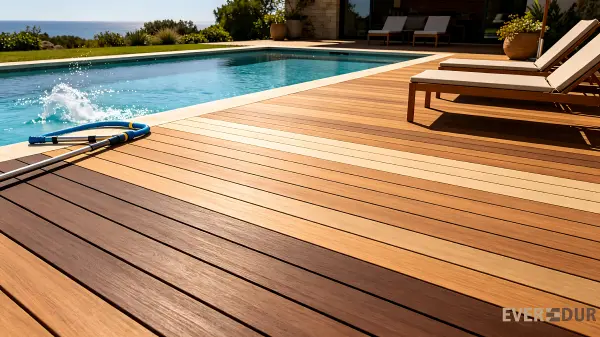
How Does 3D Composite Decking Improve Slip Resistance in Wet Poolside Areas?
Water that pools around a swimming pool is one of the most typical risks in any backyard or resort environment. Wet, smooth, polished surfaces generate slippery zones, and regular wood decking is no exception. Instead, 3D composite decking solves this issue on the manufacturing level, not an added coating that wears off after a season or two of heavy usage.
Deep Embossed Surface Texture Creates Natural Traction
The embossing procedure involves pressing the wood grain design directly into the board while it's still warm from the extrusion. This creates ridges and grooves on the walking surface so wet shoes and bare feet have something to grab onto. The embossed texture disrupts the thin film of water that would normally lay on top and induce slipping (unlike a flat composite board). It's stamped into the material, so it doesn't rely on a surface coating that may peel off or wear away from repeated contact with pool chemicals, sand and foot traffic.
Co-Extrusion Technology Locks in Grip Over Time
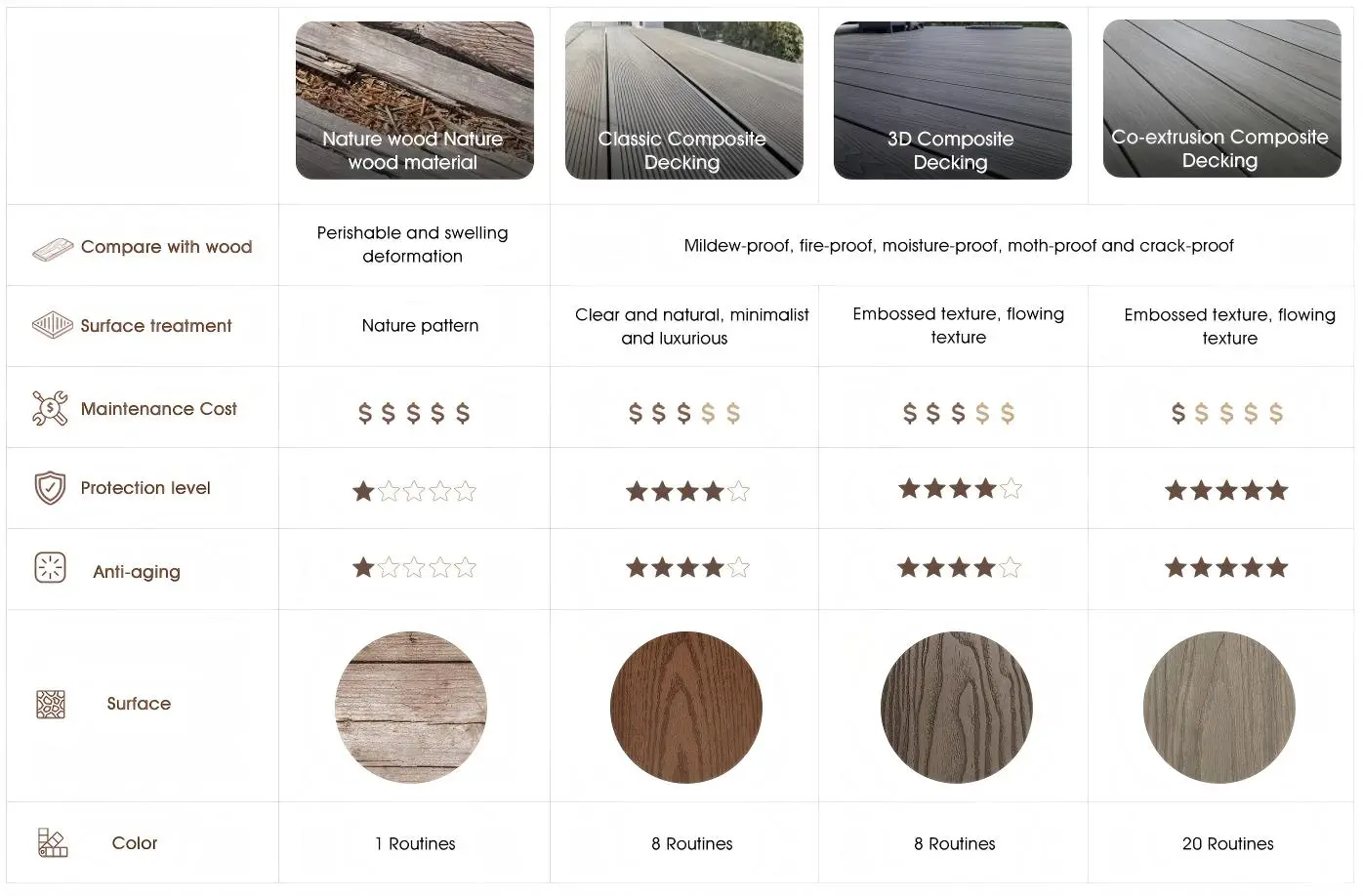
Many composite boards have a textured thin top layer that may wear down fast near pools when sunscreen, chlorine and sand act as a mild abrasive. Co-Extrusion Technology for 3D Composite Decking The grain depth is in the board structure, not a surface treatment. The texture pattern is formed in the extrusion process itself. The anti-slip texture lasts for years, particularly on pool stairs, lounge areas and walkways to the water where the most traffic occurs.
Slip Resistance Ratings and Safety Standards
The coefficient of friction test is often used to determine the slip resistance of outdoor flooring. ASTM D2047 is one of the standards used to test the wet-surface friction performance of composites. Generally boards with a deeper embossed pattern will perform better in wet grip tests than a smooth composite or painted wood surface. When pool owners, hotel operators and landscape architects choose for a 3D anti-slip deck which has been tested in wet conditions, they are getting a measurable way to reduce injury risk, not just a marketing claim. Property owners will have additional piece of mind viewing third-party testing results before installation, knowing the decking will perform safely with water, sunscreen and bare feet part of regular use. This documented performance is particularly significant in commercial settings, such as hotels and public swimming pools, where liability risks are larger and inspection requirements are generally higher than in a family garden.SEND INQUIRY

3D Composite Decking with Deep Embossed Wood Grain for Barefoot Comfort
There's no other outdoor surface that receives as much bare foot traffic as a pool deck, so comfort is as important as safety. The feel of a deck under bare feet affects how a space is really used. Composite decking was developed in part to fight the splinters and rough spots of old wood.
Smooth Grain Lines Without Sharp Edges
The grain pattern on the 3D composite decking is smooth to the touch, yet gives traction when wet. Natural wood may splinter or elevate rough fibers as it weathers, while composite boards maintain their embossed pattern constant since the wood fiber and HDPE combination does not shatter the way solid timber does. You can run your hand or foot over the board and see the distinct grain lines, which remain rounded at the edges after embossing, so they won't scrape into your flesh or snag on your swimsuit.
Cooler Surface Temperatures Compared to Traditional Wood
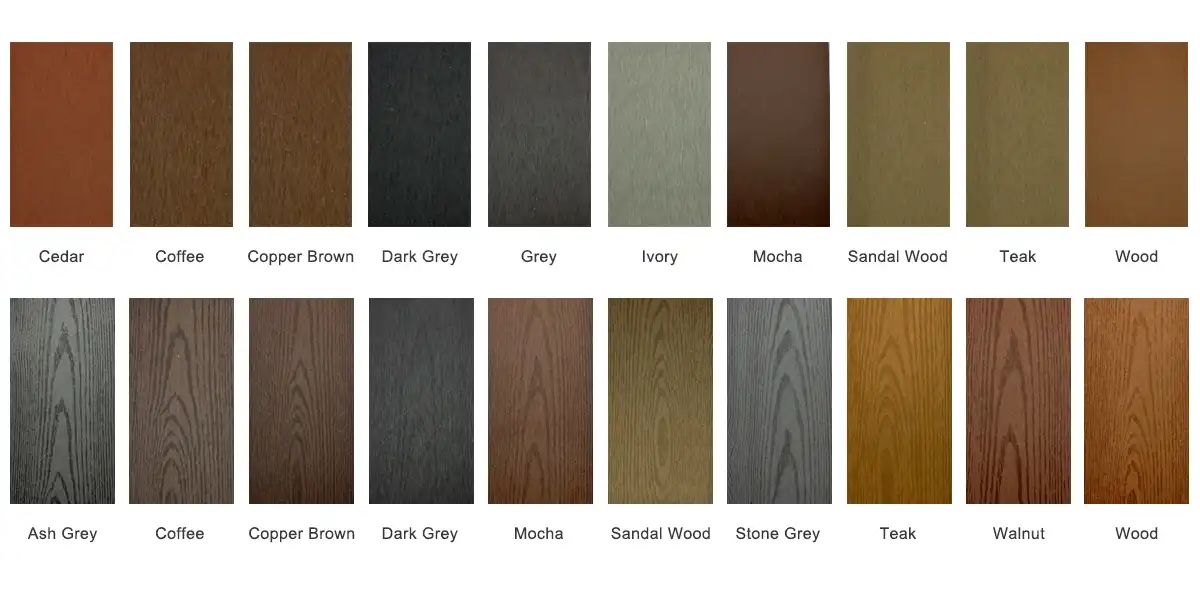
Dark smooth surfaces around a pool are very hot in direct sun and bare feet notice immediately. 3D WPC decking has a textured surface that creates more surface area and shadowing than a flat board, which helps keep the top layer cooler during the hottest part of the afternoon light. Composite materials don't remain cool forever in the bright sun, however, and lighter options such as ivory, stone gray or sandal wood are more pleasant underfoot than darker hues. Pool owners have a practical consideration when picking colors for sun-exposed sections around the water.
A Natural Wood Look Without Splinters
But homeowners often steer clear of composite decking because they're concerned it will seem fake next to genuine wood. We invented deep embossed 3D composite decking to fill that need. The design is deep and has shading so you can see the actual wood grain, not a flat printed texture. The decking looks like actual wood from a distance. The material is made from recycled wood fiber and HDPE, not solid timber, so it won't have the loose grain, knots and splintering that genuine wood acquires after many wet and dry cycles around a pool. Maybe the difference between this and regular wood decking is that blend of visual warmth and physical comfort, particularly for families with small kids or visitors who like to pad about bare-footed.SEND INQUIRY
Can 3D Composite Decking Resist Pool Water, Moisture and Mold?
Because of splash-out, humidity and periodic cleaning, pool surfaces stay wet far longer than normal backyard areas. Decking materials that absorb moisture will swell, get warped and grow mold, all of which shorten the decking's life and create slip hazards of their own.
Waterproof Core Materials Prevent Water Absorption
3D Composite Decking is an extrusion-molded mix of wood fiber and Grade A recycled HDPE plastic. The HDPE component surrounds the wood fiber instead of exposing it thus the board absorbs less water than solid wood. Unlike raw timber that gets wet, the boards don't expand and they will keep their shape and spacing even after being splashed on repeatedly during the length of a swimming season. This dimensional stability will also help avoid gaps and raised edges that might form in wood decking after a few years of wet and dry cycles near water.
Mold and Mildew Resistance in Humid Environments
Warm and humid areas under lounge chairs, next to pools, or in shady spots are perfect for mold and mildew. The HDPE jacket makes it harder for moisture to reach the fiber, meaning composite decking is more resistant to the formation of mold than untreated wood. Mold need moisture to develop. But if you hose it off with water regularly, the surface will appear clean, without the sealants, stains or chemical mildew treatments that wood decking sometimes need every year or two.
Chlorine and Chemical Exposure Tolerance
Pool decks are exposed to chlorine splash out, salt water residue and cleaning chemicals, which over time may discolor and break down untreated wood. This sort of chemical exposure is not an issue with 3D composite decking, since the HDPE and wood fiber composite is immune to it. Performance is not dependent on a painted or stained surface that chlorine may strip away. This makes it a feasible option for the residential pool and for commercial pool decks in hotels and resorts where chemical exposure and frequency of cleaning is higher than a usual backyard setting. For property managers, composite decking needs just periodic cleaning, as opposed to the chemical-based refinishing schedule of wood decking year after year.SEND INQUIRY
3D Composite Decking for UV Resistance and Long-Term Outdoor Durability
Pool decks get solar exposure for the majority of the day during the warmer months. This constant UV stress can well be having an effect on the surface material. Materials not intended for prolonged exposure to the sun will normally fade, corrode and become brittle when used outside.
Color Stability Under Constant Sun Exposure
3D composite decking combines HDPE and wood fiber with UV-stabilising chemicals to help the surface resist fading, which may be an issue with painted wood and lower-grade composites. After over 2000 hours of accelerated UV testing, you will see very little color change, meaning you'll have a deck that looks the same for many pool seasons, instead of one that lightens or yellows significantly in the first year of usage. It's important for things surrounding pools that need to be color matched, such as deck surrounds with tile borders or outdoor furniture, to keep this consistency so that the entire look is a purposeful design choice and not a mismatch over time.
Resistance to Cracking, Warping and Fading
Many outdoor materials will expand and contract over and again as they heat and cool. And eventually they snap. 3D WPC decking is dimensionally stable, meaning that the boards won't bend and shatter as the actual wood does when it dries out in the sun. The co-extrusion structure also helps to prevent surface chalking, a powdery deposit that occurs on lower grade plastics during long-term UV degradation. The anti-slip grain pattern is part of the board structure and not a surface treatment therefore UV rays will not harm it as with a painted or stamped finish on other materials.
Service Life Expectations for Poolside Installations
Life expectancy of composite decking around pools is usually 10 to 25 years depending on the kind of board. Solid decking is more on the high end of that spectrum, hollow profiles are more on the bottom end. This difference is sometimes reflected in the guarantee, which is longer for solid co-extrusion boards than for hollow profiles. A basic hollow profile may cost less up front but a solid or co-extrusion board is often a better long-term investment in spaces such as pools where you are exposed to a lot more light and chemicals than you would be on a covered patio.SEND INQUIRY

3D Composite Decking Installation Around Pools: Board Spacing, Joists and Hidden Clips
Not taking into account drainage, water exposure and structural support in the pool's vicinity will not make the most durable decking material perform properly. The intricacies of installation are as crucial as the material itself for long term safety and appeal.
Proper Board Spacing for Drainage and Expansion
The planks of the pool deck must be spaced evenly so water may drain through the gaps instead of pooling on top The gap between boards on composite decking is from 5 to 8 millimeters. This is for drainage and to allow for a little amount of thermal expansion when the temperature changes. If they are too close together, water and debris may get caught between the boards, extending the drying time and increasing the likelihood of algae developing in the damp grooves around the edge of the pool. If the gap is too wide it might be a tripping hazard or feel uneven underfoot. Follow the manufacturer 's advised gap when installing for a little extra care .
Joist Selection and Layout Near Water Features
Composite decking is often put atop a joist and clip system rather than directly to a concrete pool deck. Joists constructed of rot-resistant materials or composite joist products will last longer than normal untreated timber in regions near water, since they are exposed to moisture like the decking boards themselves. The spacing of the joists is normally based on the board manufacturer's recommendations, often between 300 and 400 millimeters apart. Closer spacing of the joists in heavy activity areas such as pool stairs or the edges of platforms gives further stability and decreases flex underfoot.
Hidden Clip Systems for a Clean Finish
Each board is held in place by secret clip systems that attach to the side of the board, not the top face. This keeps the walking surface free of visible screw heads that might corrode or create sharp edges near bare feet. This method of connecting also allows for simple removal of single boards for maintenance or inspection without disturbing the rest of the deck, which is important in areas where pool equipment access points or skimmer lines are located. With the correct spacing between the boards, a solid configuration of the joists and a hidden clip installation, the pool decking has a clean, continuous look, but still preserving the anti-slip function built into the embossed surface.SEND INQUIRY
Conclusion
If you are looking for decking for a pool area then you need to balance safety, comfort and long term durability and 3D composite decking delivers on all three with one product. The deeply embossed surface gives traction in wet circumstances without feeling rough underfoot and the HDPE and wood fiber make-up resists water absorption, mold and chemical exposure substantially better than typical woods. The boards include UV-stable chemicals to help them maintain their color and shape for many pool seasons. The system is intended to function around water, and is finished off with proper installation, spacing, joists and concealed clips. 3D composite decking is a practical choice for pool restorations and new construction for house owners, hotel operators and landscaping experts, providing reduced slip risks and upkeep, while retaining the true wood look at the water's edge.SEND INQUIRY
FAQ
Q: Is 3D composite decking actually slip-resistant when wet?
A: Yes. The deep embossed grain pattern is hammered into the board at the moment of production to give texture that breaks up surface water and helps the grip for bare feet and wet shoes around pools.
Q: Does 3D composite decking get too hot to walk on near a pool?
A: Lighter colors are often cooler underfoot in direct sun than darker colors. The textured surface also helps to reduce flat, direct heat retention of smooth composite boards.
Q: How long does 3D composite decking last around a swimming pool?
A: Boards last 10-25 years depending on the profile. High exposure pools often find solid co-extrusion decking outlasting hollow profiles.

Get Safe, Stylish 3D Composite Decking From Everdur
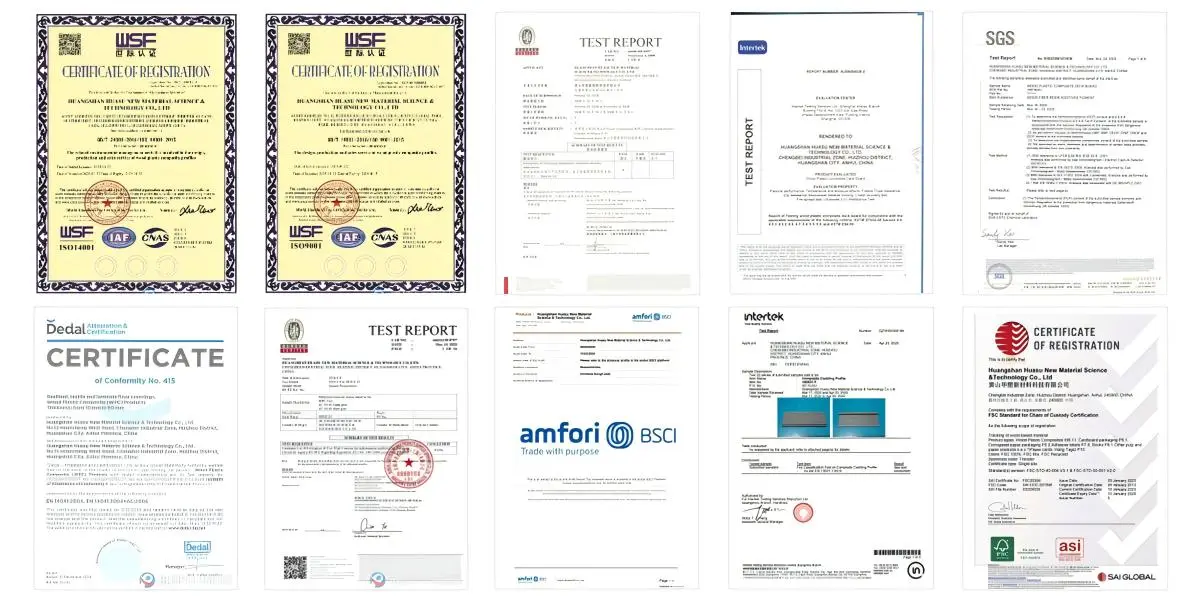
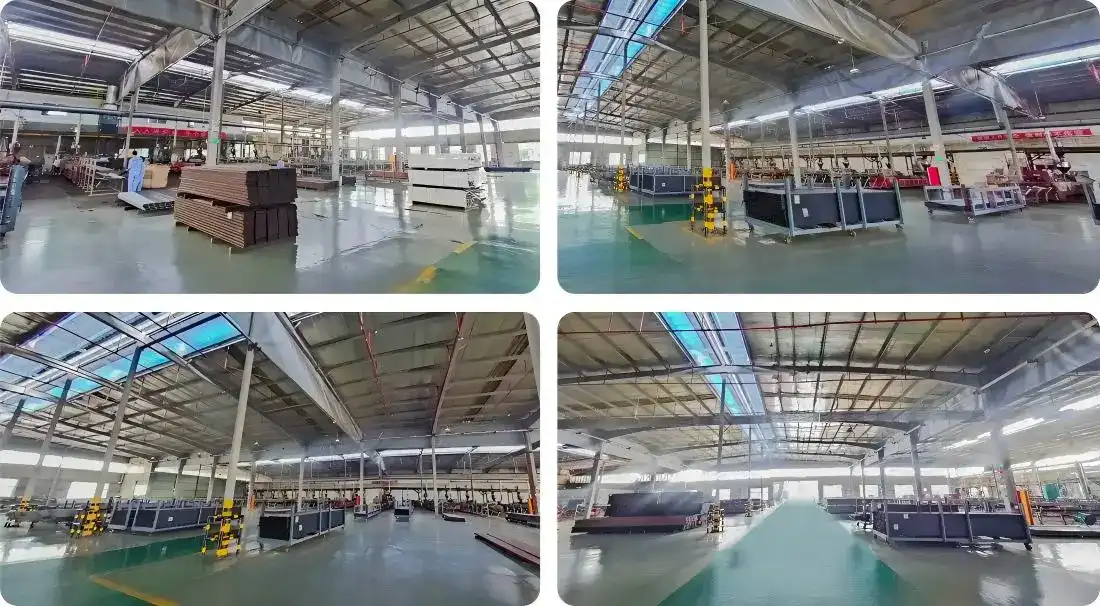
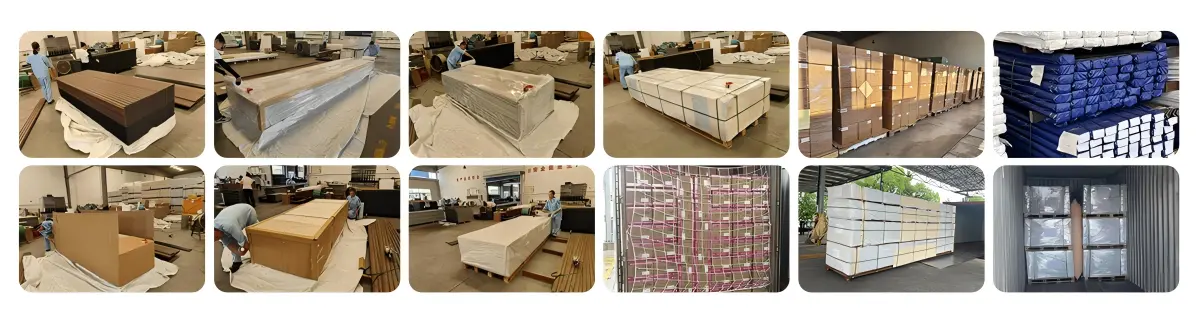
Pool areas deserve decking that holds up to water, sun, and daily foot traffic without compromising on style. Everdur manufactures 3D composite decking using Grade A recycled HDPE and wood fiber, backed by more than 50 production lines and years of manufacturing experience. Our boards meet recognized international standards, including EU CE, US ASTM D7039, and China GB/T 24137, and our materials carry Recycled Content certification along with E0 environmental compliance for low chemical emissions. As an experienced 3D composite decking Supplier, we support residential pool projects as well as larger hospitality and commercial developments with custom colors, textures, and sizing. If you are planning a poolside renovation or new build, reach out to our team at violet@wpcsupplier.com to request samples, technical data sheets, or a project quote.SEND INQUIRY
References
1. ASTM International. ASTM D7032, Standard Specification for Establishing Performance Ratings for Wood-Plastic Composite Deck Boards and Guardrail Systems.
2. ASTM International. ASTM D2047, Standard Test Method for Static Coefficient of Friction of Polish-Coated Flooring Surfaces as Measured by the James Machine.
3. U.S. Consumer Product Safety Commission. Pool Safely: Simple Steps Save Lives, National Water Safety Campaign.
4. Centers for Disease Control and Prevention. Healthy and Safe Swimming Program, Drowning Prevention and Pool Safety Guidelines.
5. International Code Council. International Residential Code, Deck and Guardrail Construction Provisions.
6. National Association of Home Builders Research Center. Durability and Performance Evaluation of Wood-Plastic Composite Decking Products.
Send Inquiry


Related Industry Knowledge
- WPC Cladding: The Ultimate Solution for Durable and Stylish Building Exteriors
- Top 5 WPC Cladding Benefits for Commercial Buildings in 2026
- WPC Wall Cladding: Tailoring Solutions for Homes and Businesses
- Low MOQ WPC Commercial Building Facades: Perfect for Small Commercial Projects
- Wholesale Swimming Pool WPC Decking: Hotel & Resort Bulk Supply
- Eco-Friendly 3D Composite Decking: Sustainable & Aesthetically Pleasing
- Hollow WPC Decking Installation Cost: How to Save Big in 2026
- 2026 Brushed WPC Decking Trends: Stylish & Durable Options
- WPC Villa Fence Installation: Guide for Luxury Villa Projects
- Composite Screen Fencing: Privacy & Decorative Screen for 2026