
Solid WPC Decking for Commercial Projects: Bulk Discounts Available
2026-11-17 20:28:47
When a hotel terrace, public boardwalk, or retail plaza needs outdoor flooring that holds up under constant foot traffic, weather exposure, and the scrutiny of building inspectors, solid WPC decking consistently earns its place at the specification table. Unlike hollow-core alternatives, solid wood-plastic composite boards carry a high-density core made from recycled HDPE and sustainable wood fibers — a combination that delivers genuine structural reliability across demanding outdoor environments. For commercial buyers sourcing at volume, the math also works in your favor: larger order quantities translate directly into reduced unit costs, more predictable lead times, and a supply relationship built for repeat procurement cycles. Everdur operates 50 production lines with a combined annual output of 30,000 tons, which means bulk project orders are handled without the capacity bottlenecks that smaller manufacturers routinely encounter. Whether you are a construction firm planning a waterfront resort deck, a landscape contractor specifying poolside surfaces for a municipality, or a building materials wholesaler expanding your composite flooring portfolio, this article walks you through exactly what to expect — from board specifications and customization options to supply logistics and long-term procurement arrangements.SEND INQUIRY
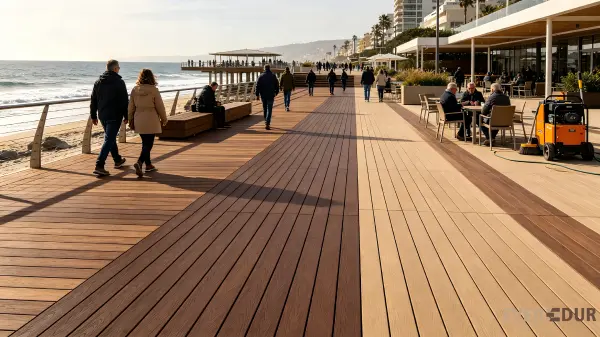
What Makes Solid WPC Decking Suitable for Commercial Projects?
Conditions for commercial outdoor spaces are different from those for residential decks. Every day, thousands of people walk along a beachfront boardwalk. During the busy season, a hotel rooftop deck has to be able to hold patio chairs, planters, and lots of people. In northern Europe, a public square needs to be able to handle the freeze-thaw cycles that would break normal wood in just a few winters.
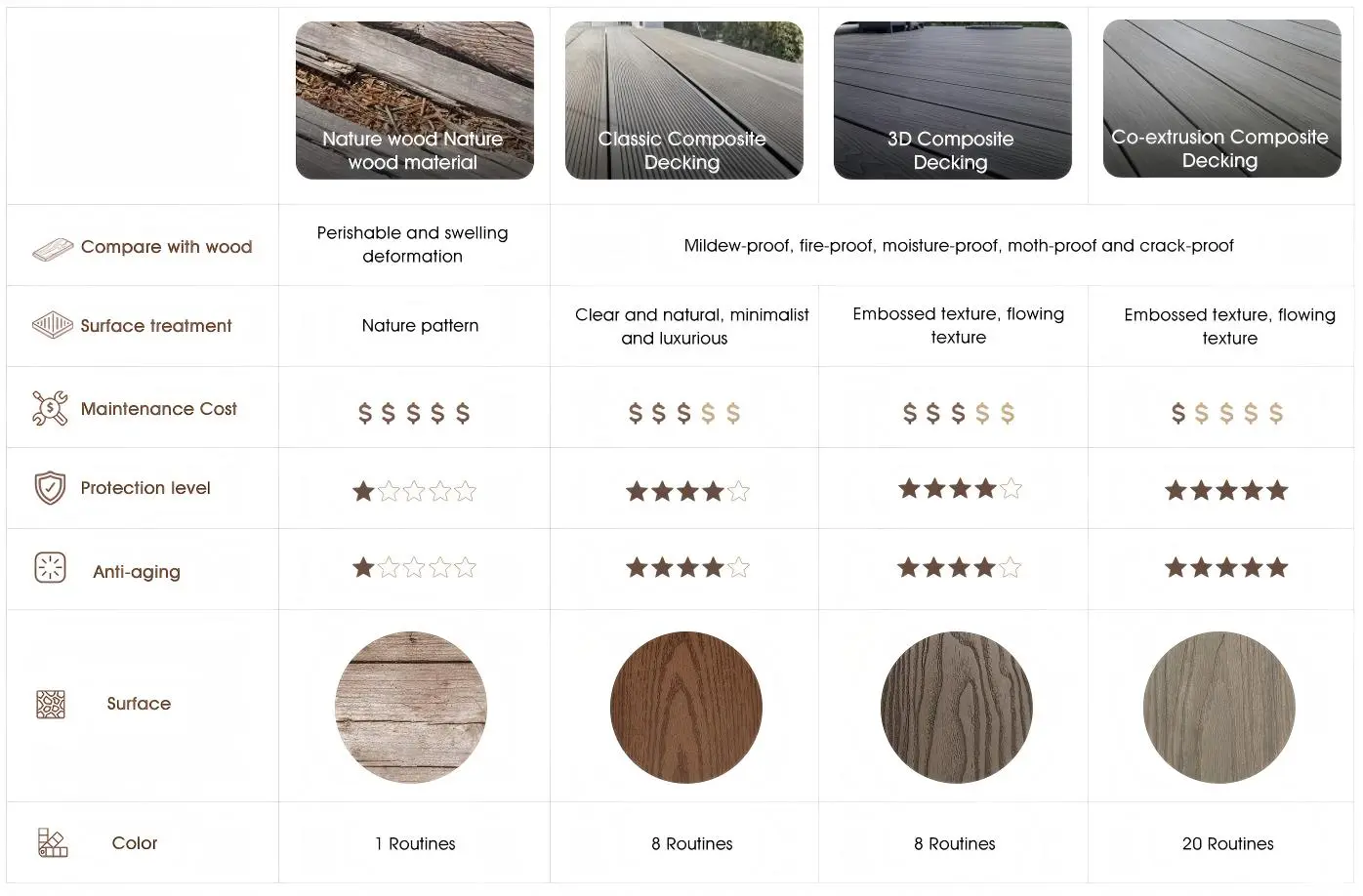
Solid composite decking meets these needs because of the way its materials are made, not because of coats on the surface or chemical treatments done on a regular basis. Extruding a mix of wood powder, Grade A recycled HDPE, and chemical additives into a cross-section that is fully merged means that there are no weak spots, air pockets, or voids inside the boards. Point loads are spread across the whole board width by this structure, which is important when big outdoor furniture or care tools sit on the surface for a long time.
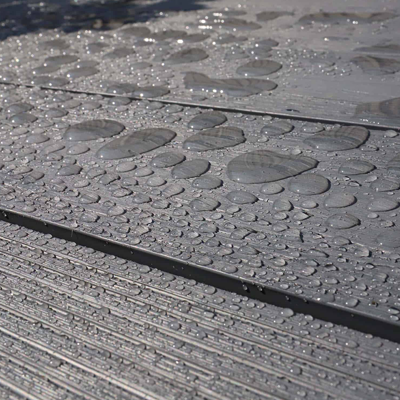
Another reason specifiers keep coming back to this material is that it doesn't break down easily. All of the wood fibers in the composite are surrounded by polymer, which blocks the moisture pathways that cause natural wood to rot. Also, pests can't get in, which is a common reason why plants need to be replaced too soon in tropical and subtropical climates.
Solid wood-plastic composite boards don't need to be painted, stained, or sealed every season, which saves money on maintenance costs. Most of the time, facility managers clean them with water and mild soap, which doesn't require any special skills. This means that over a service life of 10 to 25 years, depending on the product standard, it saves money compared to pressure-treated wood, which usually needs to be treated every year and replaced every 3 to 7 years in the same circumstances.
The tested temperature range is from -40°C to 60°C, which includes almost all of Europe and North America's climate zones, from the cold winters of Scandinavia to the hot summers of the Mediterranean. For business projects where replacing parts would cost a lot and stopping activities would cost a lot, this heat resilience is a real benefit, not just a marketing claim.
The operating temperature range — tested to perform between -40°C and 60°C — covers virtually every climate zone in Europe and North America, including Scandinavian winters and Mediterranean summers. For commercial projects where replacement costs are significant and disruption to operations is expensive, this thermal resilience is a practical advantage rather than a marketing claim.SEND INQUIRY
Solid WPC Decking Sizes and Profiles for Large-Scale Projects
Standardized board sizes make it easier to buy things, plan installations, and figure out how much waste there is on big sites. The solid boards made by Everdur come in sizes between 135 mm and 150 mm and thicknesses between 20 mm and 25 mm. There are standard lengths of 2.2 m, 2.9 m, and 3.6 m that cover the most popular joist spacings used in industrial building in Europe and North America.
Having said that, big projects rarely follow catalog measurements exactly. A beach property might need boards cut to odd lengths to keep waste to a minimum on an uneven deck plan. For example, a city waterfront project might need a certain thickness profile to fit within the tolerances of the existing substructure. Everdur's ODM and OEM services can make custom widths and profiles. Specifications are approved at the order stage to make sure that the dimensions are the same throughout the shipment.
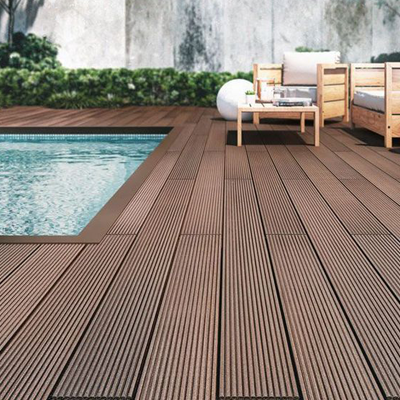
Surface treatments, such as brushed, embossed, sanded, or wood grain, change how slippery the deck is and how it looks. When it comes to poolside and waterfront areas where wet-surface safety is a worry, the surface standard should be matched with the project's safety requirements during the planning phase, not as an afterthought for looks.
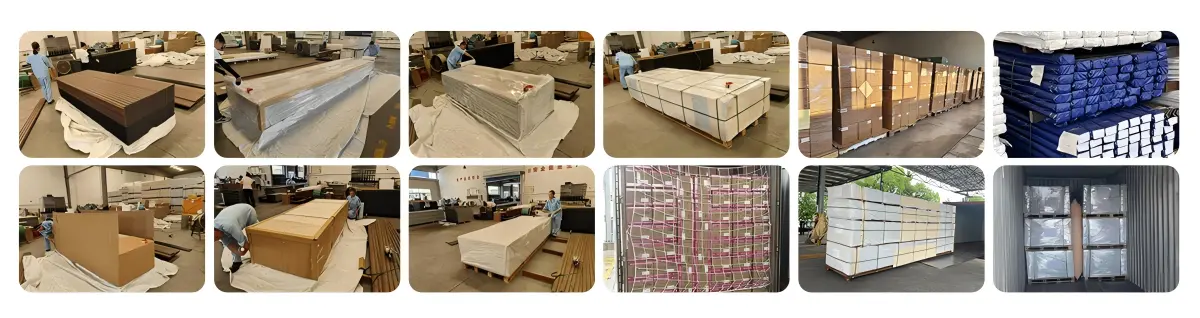
A joist-and-clip method is used for installation, which professional installers in Europe and North America already know how to use. This makes it easier for people on the job site to learn. Boards are shipped on wood boards that are wrapped in PE film. This is a good way to package them so they can be loaded into containers and stored on-site without any extra safety measures.
The smallest amount that can be ordered is 100 square meters, which is more than enough for most business projects. FOB shipping is offered from Shanghai and Ningbo, and lead times are guaranteed at the time of order based on how production is currently planned.SEND INQUIRY

Custom Solid WPC Decking Colors, Textures, and Lengths
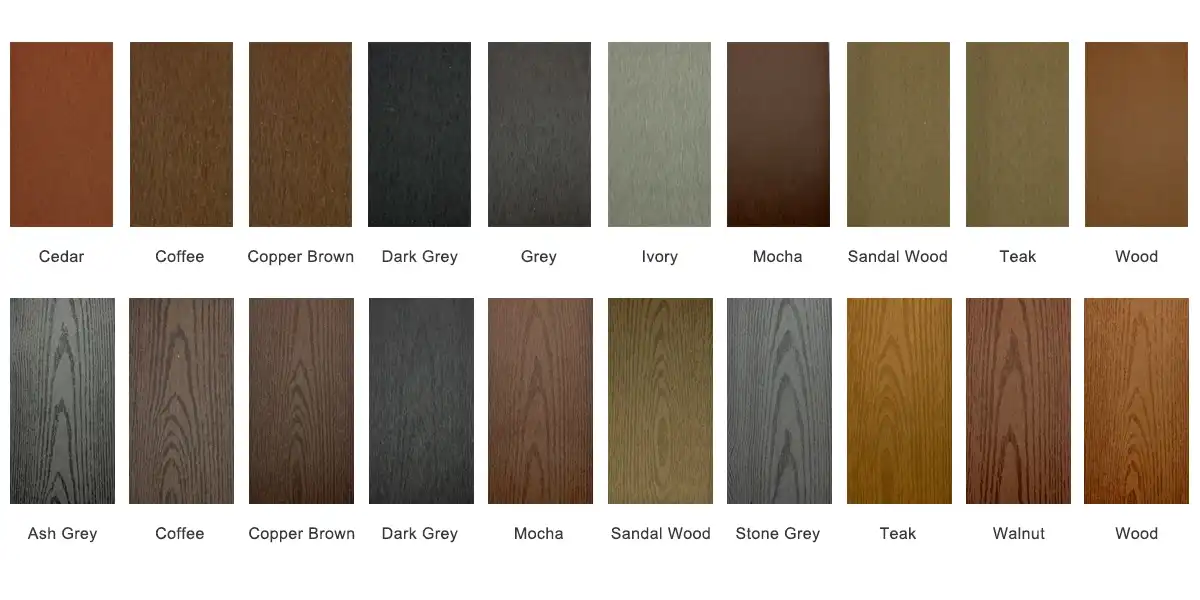
If you need a standard color for an architectural project, we have Ash Gray, Cedar, Coffee, Copper Brown, Dark Gray, Gray, Ivory, Mocha, Sandal Wood, Stone Gray, Teak, Walnut, and natural Wood tones. UV stabilization is built into the material instead of being applied as a top coat. This means that even after 2,000 hours of UV exposure, the color stays the same, unlike untreated wood or lower-quality composites.
Custom color matching can be asked for by projects that need to follow branding or design rules that don't fit into the standard palette. This is especially important for resort chains, city building projects, and retail areas where the outdoor surface needs to match a well-known look. Customizing the texture of a surface works the same way. For example, brushed finishes look good in modern cities, while thick wood grain embossing looks warmer and more natural in vacation or hotel settings.SEND INQUIRY
Solid WPC Decking Supply Capacity for Bulk Project Orders
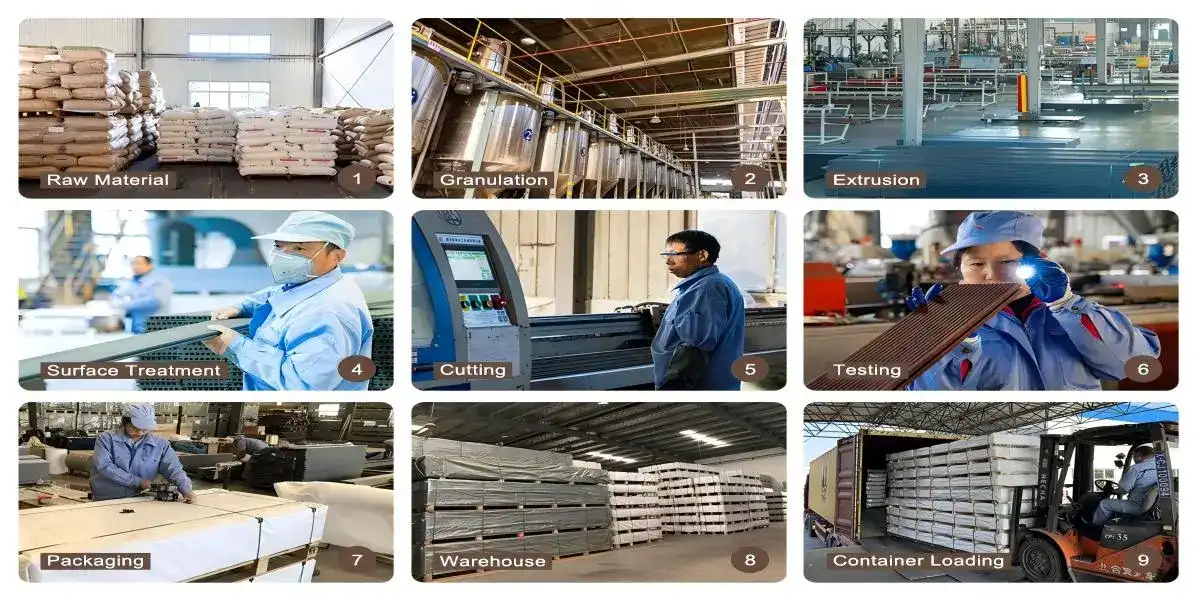
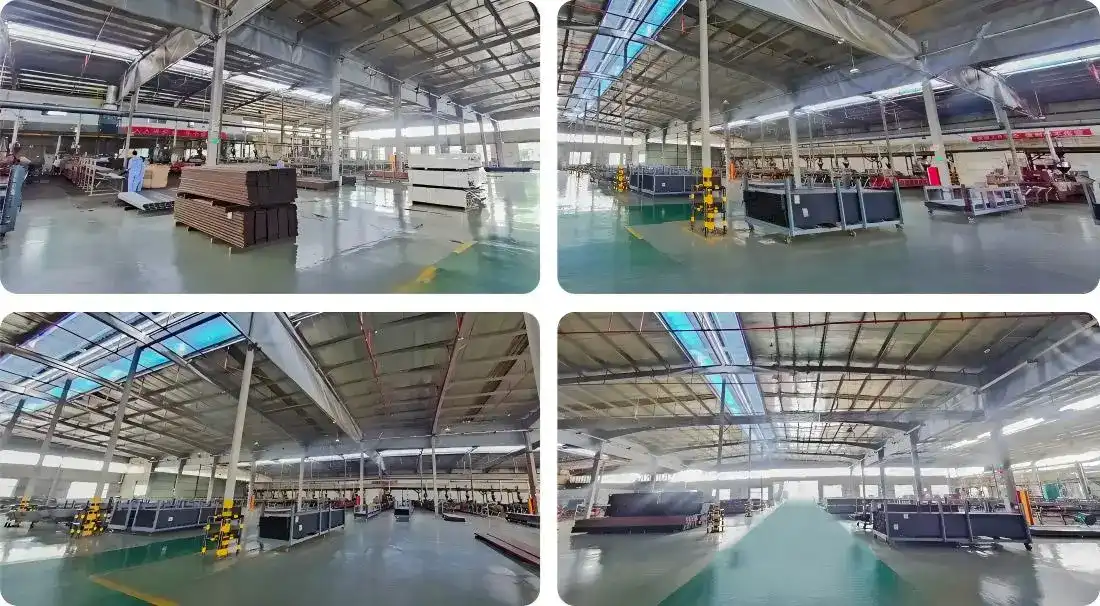
Fifty production lines and 30,000 tons of output per year are real numbers that matter when a procurement manager is planning the delivery of materials at different stages of a project. Contractors who have dealt with batch variation from suppliers working at lower capacity often worry about supply continuity, which means getting the same board dimensions, color accuracy, and surface quality across different shipments with solid commercial WPC.
Everdur uses 5S on-site management methods for quality control, and inspections are built into every step of the production process instead of being done at the end. This means that for bulk orders, the fifth container in a shipment should be the same as the first one in every way that can be measured.
The company's export history—goods sent to over 60 countries on five continents, and over 100 busy customers, including well-known building materials stores around the world—shows that they can reliably send goods over a long period of time, rather than just doing big deals every once in a while.SEND INQUIRY
Solid WPC Decking for Long-Term Commercial Project Procurement
Instead of treating each order as a separate transaction, contractors and developers who are in charge of multi-phase projects or yearly purchases do better when they build relationships with suppliers. Everdur works with construction companies, landscapers, wholesalers of building materials, and resellers to set up structured purchasing agreements that make sure production schedules are in line with project deadlines.
Long-term buyers are also interested in new product creation. Within a year, a next-generation board that is lighter, physically stronger, and designed to have less heat expansion and contraction will be available. Specificators who are planning projects that will start buying materials soon may change their minds about which materials to choose if they know about this development.
For projects in places with wide temperature differences, a lot of UV light, or constant moisture, there are climate-adapted material formulations that can be used. These formulas change the composite mix to work best in certain environments. This is a choice that should be considered for coastal or high-altitude uses where normal requirements might be too strict.SEND INQUIRY
Conclusion
Solid WPC decking has a high structural density, is resistant to weather, and has low lifetime care costs. It also comes in a format that can be safely bought by businesses. Everdur is a good choice for construction companies, landscapers, and wholesalers who need outdoor flooring for tough jobs because it can be made quickly, can be customized, and has strict quality controls.SEND INQUIRY
FAQ
Q: What is the minimum order quantity for commercial bulk pricing?
A: The minimum order quantity is 100 square meters. Bulk discount structures apply at higher volumes and are confirmed during the quotation process based on project scope and delivery requirements.
Q: Which certifications apply to Everdur's solid composite deck products?
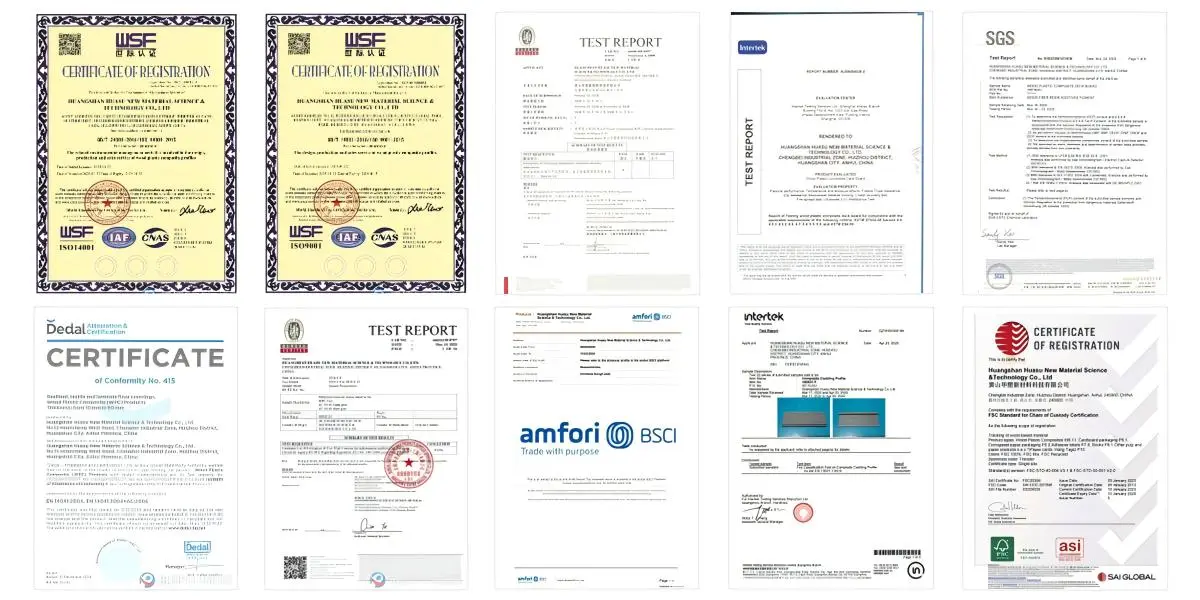
A: Products are certified to ISO, FSC, CE, SGS, ROHS, REACH, INTERTEK, and ASTM standards. Certification documentation is available upon request for project compliance submissions.
Q: Can board dimensions and colors be customized to match project specifications?
A: Yes. Custom lengths, widths, thicknesses, colors beyond the standard palette, and surface textures are available through ODM and OEM services. Specifications are confirmed at the order stage.
Request a Bulk Quote from Everdur — Solid WPC Decking Manufacturer
Volume pricing, climate-adapted material formulations, and consistent batch quality across multi-phase project deliveries are all things that construction firms and landscape contractors can expect. Our team of solid WPC decking manufacturers will work with you to make sure that production times work with your project's schedule.
If you are a wholesaler or reseller of building materials, you can get special wholesale prices, product paperwork sets, and sample boards to help you with your sales.
For end users and project owners: free design help, advice on surface material, and help with installation to help you choose the right board for your outdoor space.
All of our goods meet the requirements set by the European Union (CE), the United States (ASTM D7039), and China (GB/T 24137). Environmental credentials include E0 environmental standards and Recycled Content certification, which can be used as proof for green building applications.
For more information about your project needs, you can email Everdur at violet@wpcsupplier.com.
References
1. European Committee for Standardization. EN 15534: Composites Made from Cellulose-Based Materials and Thermoplastics (Wood-Polymer Composites). CEN, Brussels.
2. ASTM International. ASTM D7032: Standard Specification for Establishing Performance Ratings for Wood-Plastic Composite Deck Boards and Guardrail Systems. ASTM International, West Conshohocken, PA.
3. Forest Stewardship Council. FSC Certification Standards for Chain of Custody and Recycled Content. FSC International, Bonn.
4. Clemons, Craig M. Wood-Plastic Composites in the United States: The Interfacing of Two Industries. Forest Products Journal, Vol. 52, No. 6, 2002.
5. Najafi, S. K. Use of Recycled Plastics in Wood Plastic Composites: A Review. Waste Management, Vol. 33, No. 9, 2013.
6. Brandt, C. W., and Fridley, K. J. Load Duration and Load Configuration Effects on Wood-Plastic Composites. Wood and Fiber Science, Vol. 35, No. 3, 2003.
7. European Commission Directorate-General for Environment. Construction Products Regulation (EU) No 305/2011: Essential Characteristics for Outdoor Decking Materials. Official Journal of the European Union, 2011.
Send Inquiry
Related Industry Knowledge
- Is hollow composite decking waterproof?
- Wood Grain Balcony WPC Decking: Elevate Your Balcony’s Aesthetics
- Low MOQ Wood Grain WPC Decking: Perfect for Small Luxury Projects
- Eco-Friendly 3D Composite Decking: Sustainable & Aesthetically Pleasing
- Wholesale Traditional WPC Decking: Affordable & Reliable Supply 2026
- 2026 Guide to Grooved WPC Decking: Sizes, Styles & Prices
- Top Residential WPC Decking Suppliers for Homeowners 2026
- Grooved WPC Decking: Anti-Slip Flooring for Poolside & Walkways
- WPC Villa Fence Installation: Guide for Luxury Villa Projects
- Top Composite Screen Fencing Manufacturers in 2026