
Weather Resistant Co-Extrusion WPC Cladding: Perfect for External Walls
2026-11-02 18:28:17
If you're looking for a façade material that can withstand rain, sun, salt air and temperature changes without frequent maintenance, then you should have a closer look at co-extrusion wpc cladding. The cladding consists of two layers: a wood-fiber and recycled HDPE core that provides structural support, and a polymer cover that protects the surface from moisture, UV radiation and everyday wear. That's why builders and architects throughout Europe and North America are choosing this material for its ability to hold its beauty for years without the sanding, staining or sealing typical wood requires. It will not split, bend or decay, unlike real wood. The protective outer covering also prevents fading and stains from starting, which is unlike ordinary composite boards. For houses, offices, hotels and seaside assets this cladding provides a realistic blend of appearances, durability and decreased life cycle costs. In the parts that follow we'll go through how this technology holds up against genuine outside circumstances, and why it's become a trusted option for external wall applications.SEND INQUIRY
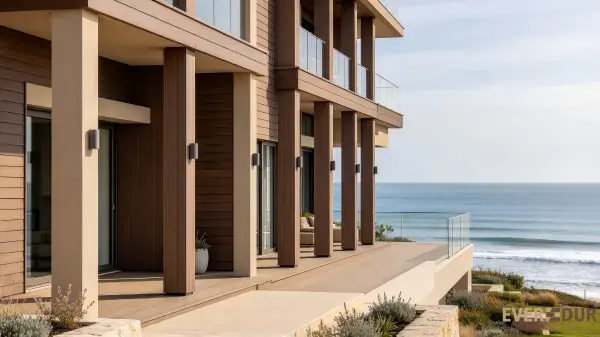

How Does Co-Extrusion WPC Cladding Withstand Outdoor Weather?
The outside walls are subject to a harsh mix of sun, rain, humidity variations, and in many parts of the country, freeze-thaw cycles. Wood composite boards often absorb moisture over time, resulting in swelling, cracking or surface rot. In co-extrusion weatherproof wpc the two layer construction gets over most of this by separating structural purpose from surface protection.
The core layer is a combination of wood particles, Grade A recovered HDPE and chemical additives. This layer gives the boards impact strength and dimensional stability. That core is wrapped in a polymer cover that serves as a barrier against rain penetration, humidity absorption and surface abrasion. The cap layer stops water being absorbed into the wood fibres underneath. This is what causes rot and swelling in typical decking and cladding materials .
Everdur evaluates its cladding in a variety of climates, from wet coastal areas to locations with wide seasonal temperature swings. The idea is to do the same no matter where the project is situated. Profiles are manufactured using extrusion moulding techniques to precise tolerances ensuring panels will fit neatly against joists, clips and concealed attaching systems without any gaps that might let moisture in. The combination of a solid inner core with a sealed outer shell enables this cladding to resist cracking, peeling and bending during long-term external exposure, which is important if you are designing a façade that is intended to survive far beyond a usual maintenance cycle.

UV-Resistant Co-Extrusion WPC Cladding for Exterior Walls
Sun exposure is one of the main issues any outside wall material has. Painted wood fades, chalks or peels after a few years because of the continuous breaking down of pigments and surface polymers due to UV exposure. This is where cladding produced using double layer composite cladding technology handles this. The outer polymer cap is designed to withstand UV deterioration for significantly longer than single layer composite goods.
Tests on Everdur panels for colour stability reveal almost no fading after more than 2000 hours of UV exposure in controlled testing. That type of outcome means facades that don't get chalky or blotchy after a couple of summers in direct sunshine, but instead retain their original tone for numerous seasons. This is especially important for south-facing walls or structures in areas with lengthy periods of strong light, where conventional coatings sometimes break prematurely.
It's not just about looking good, however. Once the protective layer begins to degrade from UV exposure, moisture and grime may more readily infiltrate, leading to faster other types of wear. The cladding also retains its water resistance and texture longer since it preserves the top layer. Architects designing buildings in sunbelt climates or high altitude areas with increased UV exposure sometimes select UV-stable cladding to prevent repainting schedules and their associated labour expenses. That's one of the quieter, but more practical, reasons building owners select coated composite cladding over standard painted wood siding.SEND INQUIRY

Waterproof Co-Extrusion WPC Cladding for Coastal Buildings
Buildings close to seas and big bodies of water are subjected to salt spray, high humidity and frequent rain, all of which accelerate corrosion and degradation in traditional materials. Co-extrusion wpc cladding handles these circumstances well since the outer polymer layer prevents water absorption into the wood-based core and the HDPE content resists the type of chemical degradation that salt exposure may induce in untreated wood or metal panels.
Salt air causes warping and decay very fast, even with frequent sealing, and coastal architects choose not to use solid wood cladding at all. On double layer composite cladding, a seal cap lifts most of that maintenance load, since the core material is not directly exposed to moisture or airborne salt particles. This means panels will preserve their form and their colour will stay the same season after season of exposure.

Wood Grain Co-Extrusion WPC Cladding for Modern Outdoor Facades
Durability is important, but so is design adaptability in most construction projects. Everdur also provides a range of surface treatments including wood grain, brushed, sanding and embossed, allowing architects the ability to match a contemporary facade design or to be able to imitate a more classic timber appearance without the need of real wood. Colour possibilities include natural tones like as Cedar, Teak and Walnut as well as colder tones like Stone Grey and Ash Grey. For projects with special design needs, bespoke colour matching is available. This variation ensures that the cladding may be suitable for modern commercial structures as well as warmer home exteriors.SEND INQUIRY

Low-Maintenance Co-Extrusion WPC Cladding for Long-Lasting Exteriors
One of the most obvious benefits of composite cladding is the lower maintenance compared to painted wood or bare timber siding. The protective top layer repels stains, scratches and moisture naturally, so there is no need for yearly staining, sanding or sealing. Over a service life generally ranging from 10 to 25 years, depending on climate and installation circumstances, the building owner benefits from decreased labour and material costs for maintenance. For property managers with several properties to look after this decreased demand on upkeep generally balances the somewhat higher cost of the initial material.

Conclusion
Exterior walls endure years of sun, rain and temperature fluctuations and the material that covers them must be able to stand up without continual maintenance. Co-extrusion wpc cladding's layered structure, UV-stable surface and water-resistant core provide a practical solution – providing architects and builders with a façade alternative that works well in varied climates. If you're looking at seaside properties or remodelling projects, this cladding provides a combination of looks and long-term durability to help minimize maintenance requirements over time.SEND INQUIRY

FAQ
Q: How long does co-extrusion WPC cladding typically last on an exterior wall?
A: The average service life is 10-25 years depending on climatic exposure, quality of installation and maintenance. The polymer cap layer is important to increase its lifetime by shielding the core from moisture and UV degradation.
Q: Can this cladding be installed in coastal or high-humidity regions?
A: Yes, the sealed outer layer is resistant to salt air and moisture absorption, thus it makes a good choice for coastal structures and humid environments where standard wood siding tends to rot quicker.
Q: Does the cladding require painting or sealing after installation?
A: No further painting or sealing is required under typical circumstances. The protective cover prevents fading, staining and scratching, eliminating the regular care that painted wood siding often demands.

Partner with Everdur for Weather Resistant Co-Extrusion WPC Cladding
For construction companies and project developers, Everdur provides technical specification assistance and bulk order scheduling to help keep project timetables on track. For resellers and building materials wholesalers, Everdur offers tiered wholesale pricing and free sample kits for quality evaluation before larger orders are placed. For architects and property owners, the team provides free design advice and easy installation guidance for new construction and remodeling projects. Everdur's cladding meets EU CE criteria, US ASTM D7039 and China GB/T 24137 standards, along with Recycled Content certification and E0 environmental standards for low-emission materials. If you are considering a co-extrusion wpc cladding manufacturer for your next project, please reach out to our team at violet@wpcsupplier.com for samples, pricing and technical documents.

References
1. ASTM International. ASTM D7032 – Standard Specification for Establishing Performance Ratings for Wood-Plastic Composite Deck Boards and Guardrail/Handrail Systems.
2. European Committee for Standardization (CEN). EN 15534 – Composites made from cellulose-based materials and thermoplastics, test methods and specifications.
3. Forest Stewardship Council (FSC). FSC Chain of Custody Certification Standards for Wood-Based and Composite Products.
4. International Organization for Standardization (ISO). ISO 9001:2015 Quality Management Systems – Requirements.
5. International Organization for Standardization (ISO). ISO 14001:2015 Environmental Management Systems – Requirements with Guidance for Use.
6. National Association of Home Builders (NAHB) Research Center. Durability Studies on Wood-Plastic Composite Decking and Cladding Materials.
Send Inquiry

Related Industry Knowledge
- Anti-Fade WPC Commercial Building Facades: Long-Lasting Aesthetics
- Decorative Composite Fencing Installation: Enhance Your Property’s Aesthetics
- Why Co-Extruded Composite Decking is a Homeowner's Dream
- Anti-Slip Commercial WPC Decking: Safe for Public Commercial Spaces
- Tips and Tricks for Perfect WPC Solid Decking
- WPC Villa Fence: Luxury Fencing for Villas & High-End Properties
- WPC Landscape Walls for Public Parks: Safe & Sustainable
- Traditional Cladding for Residential Buildings: Classic & Reliable
- WPC Decking Maintenance Tips: Keep Your Outdoor Deck Looking New for Years
- Privacy WPC Fence: Perfect for Residential and Villa Outdoor Spaces