
Wood Grain Brushed WPC Decking: Luxury Meets Durability
2026-11-23 17:05:57
Outdoor spaces need materials that look wonderful, but can handle real weather. Wood grain brushed WPC deck is a blend of the natural wood appearance with the strength of modern composite construction. Homeowners and builders in Europe and North America are turning away from traditional lumber because it warps, splinters and requires constant upkeep. Textured composite board, including brushed WPC decking, solves these problems, but still gives you the warm, organic feel that wood lovers crave. In this article we will look at what makes brushed composite decking different, how the surface provides safety in wet conditions and why the materials used inside each board are vital for long term performance. It also includes maintenance tips and answers to commonly asked questions. The idea is to provide you enough information to decide whether this decking is perfect for your next outdoor project.SEND INQUIRY
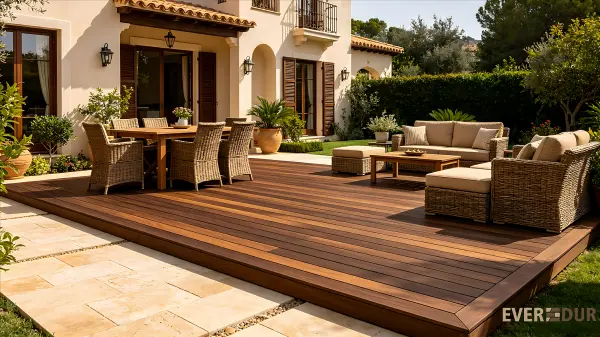
What Makes Brushed WPC Decking Different from Smooth and Embossed Surfaces?
Composite decking has a number of surface treatments that alter the look, feel and performance of the board underfoot. The slick boards seem pristine. Almost plastic. Embossed boards are boards that have a pattern pressed into the surface to provide a textured impression. Not much change in composition of the substance. Brushed boards are a different sort of mechanical processing where the surface fibers are raised to create little grooves and a matte finish that gives the impression of sanded hardwood.
Surface Texture and Tactile Feel
A brushed surface feels quite different from a smooth or embossed one. You can run your hand over it and feel light ridges much as you would on an antique wood board. This texture is not only decorative. It changes how water interacts with the board and how feet adhere to the surface in rain or pool splashes. Wet smooth boards will be slippery, and embossed designs will wear out faster in high traffic areas since the design is closer to the surface layer.
Performance Differences Across Surface Types
Brushed WPC decking is resistant to foot wear differently than other coatings. The brushing process removes a little layer of the outside material, giving a slightly rougher texture that lasts longer than a printed or embossed image. In high traffic commercial settings, the embossed design may flatten out after years of use. Scuff marks show up more easily on smooth boards because there's no texture to cover the small scratches on the surface. Brushed boards hide mild wear easier and this is vital for restaurants, hotel paths and public boardwalks where appearance needs to survive.
Why Builders Choose Brushed Finishes for Outdoor Projects
In commercial settings, contractors like brushed finishes for decks, poolside patios and pathways where appearances and utility are equally important. And the roughness lowers the glare you get on bright days, something embossed and flat surfaces don't accomplish as effectively. Builders also note that brushed boards age well. A printed grain pattern may affect the feel of the surface drastically over years of light and rain. If a project calls for slide resistance to fulfill code, brushed composites will often perform more consistently to those requirements than a smooth option.
Everdur manufactures brushed boards with a second generation co-extrusion process that mixes Grade A recovered HDPE with natural wood fiber on more than fifty manufacturing lines. This production process allows for a continuous supply of more than fifteen hundred containers each year, ensuring architects and distributors that supply will not fall short of demand on bigger projects.SEND INQUIRY
Brushed WPC Decking with Natural Wood Grain for Premium Outdoor Aesthetics
People prefer composite decking because they want all the warmth of wood without the upkeep problems. Getting the appearance perfect is as important as getting the performance right. WPC decking with wood grain brushed is designed to emulate the visual depth of genuine timber and the finished result seems authentic and not manufactured due to the careful mixing of color and details of the surface.
Capturing the Look of Real Timber
Natural wood contains tone diversity, minor streaks and a grain pattern that is never the same. To simulate such on a manufactured board demands an eye to color layering and texture depth. The brushed surface treatment of Everdur's brushed anti-slip WPC boards mixed with the wood grain embossing creates depth that reflects light differently from various angles, much like actual planks. This two-step method eliminates the flat, homogeneous appearance sometimes seen in lower-cost composite goods.
Color Options That Complement Architectural Styles
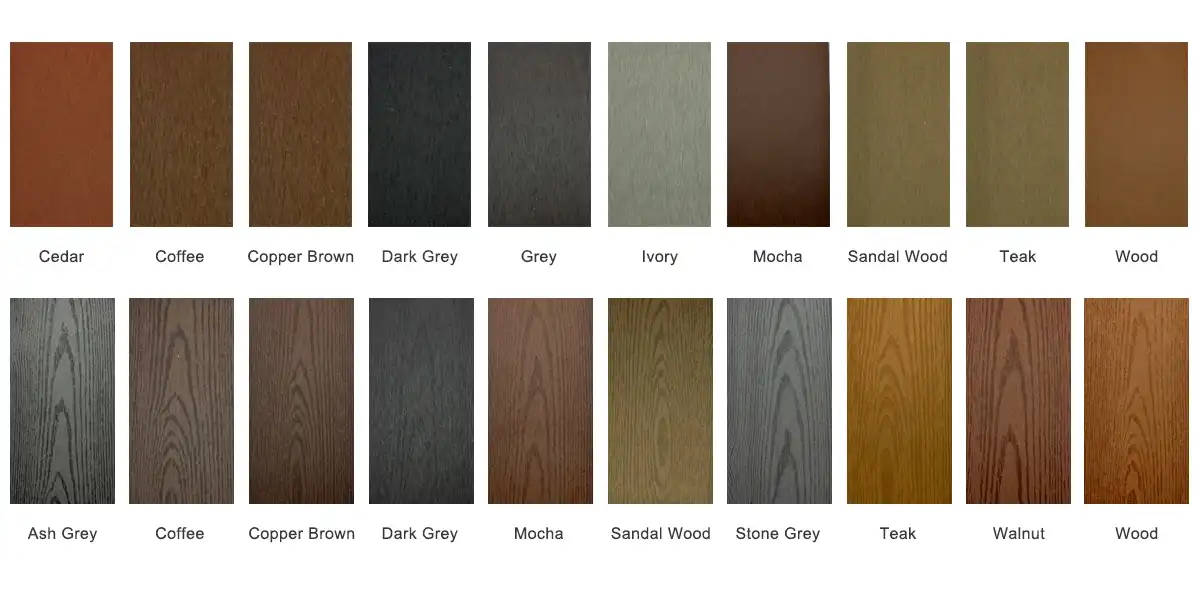
The color you pick is a huge factor in how well the deck blends in with the surroundings. Everdur is available in Ash Gray, Cedar, Coffee, Copper Brown, Dark Gray, Gray, Ivory, Mocha, Sandal Wood, Stone Gray, Teak and Walnut and may be color matched to any hue for the architect who wants a particular color. A beach home may choose brighter colors, such as Ivory or Stone Gray, that reflect the sunshine, but a mountain resort may need darker hues, such as Walnut or Coffee, that mimic the surrounding wood buildings. Color stability is a non-issue, UV exposure studies of over two thousand hours demonstrate that fading is minor - thus the shade you chose won't wash away after a summer, but will remain true for years.
Design Flexibility for Residential and Commercial Spaces
A private garden has different esthetic demands than a hotel patio. Homeowners want something warmer and more natural that complements the garden surroundings. Companies want something contemporary and uniform over vast square footage. That is why brushed WPC decking works for both. The wood grain and surface texture work at every scale. Typical widths are between 135mm and 150mm, with thickness between 20mm and 25mm. Designers could choose dimensions that work best depending on the visual weight of a project from a modest balcony to a vast swimming terrace. The installers may create the board layout and seam location to fit their demands. 2.2 meter, 2.9 meter and 3.6 meter lengths are offered with the possibility of customizable sizes.
Its realistic grain texture, large color palette and dimensional flexibility mean designers seldom have to forgo performance for esthetics. That's part of the reason brushed composite decking is gaining appeal over painted or stained wood options for private gardens and larger commercial builds.SEND INQUIRY
How Does Brushed WPC Decking Improve Grip on Wet Outdoor Surfaces?
A slippery deck is more than just an annoyance. Water on decking surrounding swimming pools, patios and walkways may be a major hazard for falls, particularly for children and the elderly. This safety aspect is one of the key reasons for the popularity of brushed surfaces in outdoor flooring markets.
The Science Behind Anti-Slip Texture
A smooth composite surface will hold a thin coating of water which will decrease the friction between a shoe or a bare foot and the board. This is achieved by brushing the surface, such that small channels are created for the water to drain off, and not sit on the surface of the board. It's a simple design adjustment with a huge impact for a sensation of a firm footing in the rain or immediately after someone gets out of a pool. The brushed, anti-slip WPC finishes increase the surface area between your foot and the board even when wet so you are less likely to slide than on a smooth, glass-like finish.
Safety Benefits for Pool Decks and Walkways
Pool areas are always wet with water, sunscreen residue, and individuals who go back and forth from swimming to resting. There are few areas on a property where slip-resistant surfaces are more vital than this. These brushed composite boards may help reduce slipperiness on tiled or smooth composite surfaces in certain cases. This advantage is also seen on public pathways, and on commercial boardwalks, especially in high rainfall areas, or in humid coastal regions where surfaces seldom remain completely dry.
Comparing Traction to Traditional Wood
New traditional wood decking is a little slippery, but that changes fast as it weathers. Older wooden boards grow algae and moss and deteriorate on the surface, thus it is extremely difficult to foresee or manage where slippery spots will develop. Brushed composite boards do not allow the same biological development since the substance repels the absorption of moisture. The texture will stay the same for the whole life of the board in service, which may be from ten to twenty-five years depending on environment and installation circumstances. This constancy implies that the grip you receive on day one is near to what you get years later, something that typical wood cannot give when the weathering sets in.
That's why builders near lakes, seaside homes or areas with considerable seasonal rain commonly select brushed composite decking. The surface treatment does not remove the danger of sliding, as no outdoor material does, but it makes slippage far less likely than with smooth options.SEND INQUIRY

Brushed WPC Decking Materials, UV Resistance and All-Weather Durability
The top texture attracts people's attention because they can see it and feel it, but the materials underlying decide how long a deck will really endure. The performance of composite decking relies largely on the ingredients in the board and the way it is made.
Composite Structure and Raw Material Selection
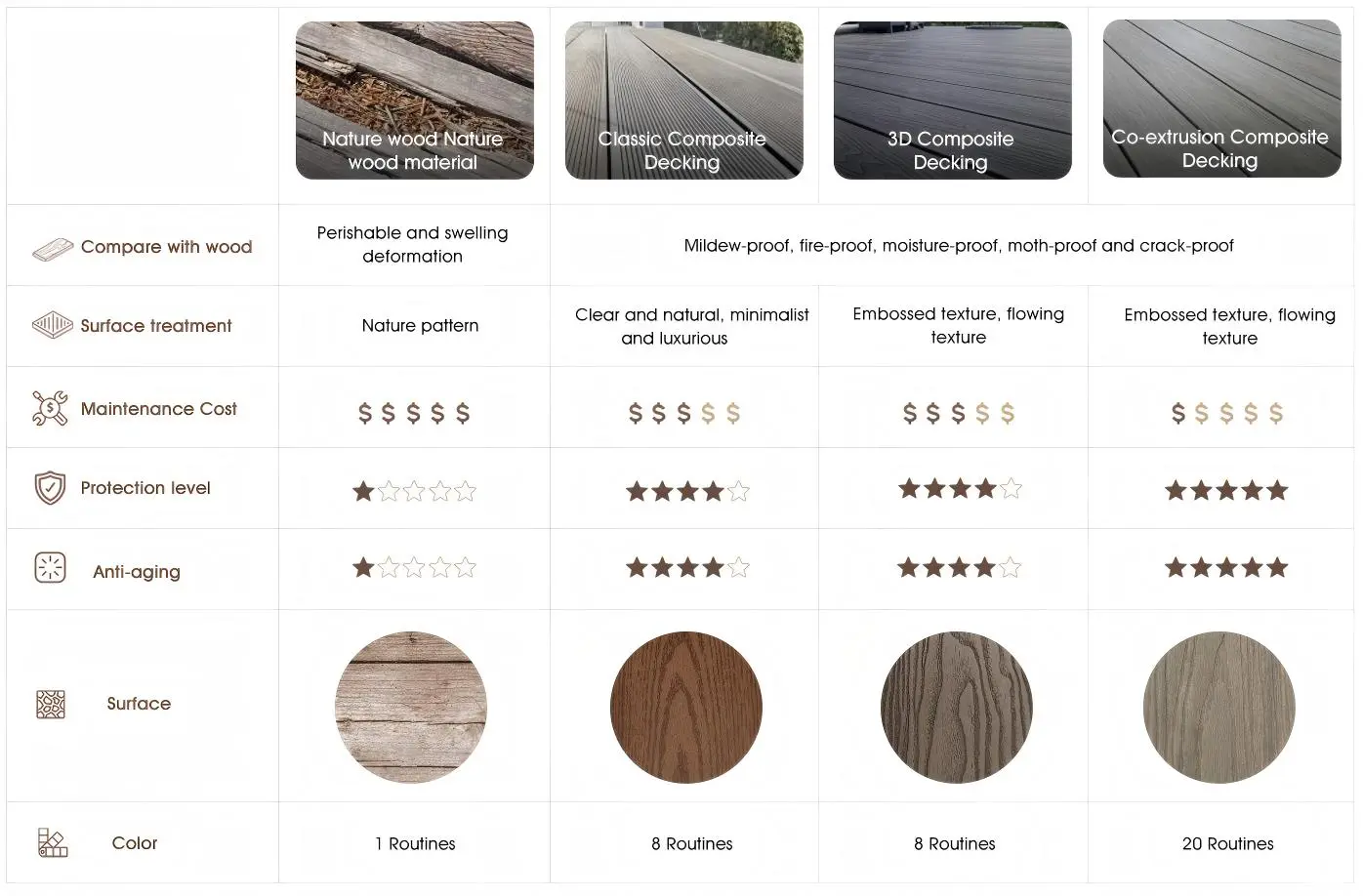
Everdur brushed boards are made by an extrusion molding method using wood powder, HDPE and chemical additives. By using Grade A recovered HDPE instead of virgin plastic, we are able to achieve our environmental aims while still maintaining great mechanical performance. The wood fiber portion offers the natural grain look of the board and helps moderate thermal expansion . The HDPE layer provides a degree of water resistance that raw wood can not . This co-extrusion method is in its second generation and is an improvement over older composite technology in that it provides a protective outer shell that is more resistant to moisture penetration than single-layer composites.
Sun Exposure and Color Retention
Ultraviolet radiation breaks down the color pigments in many outdoor materials, causing them to fade, chalk or discolor unevenly over time. Everdur brushed weatherproof WPC decking has survived over 2000 hours of UV exposure testing with no fading. This is especially important in areas with long summer daylight hours or high altitude sun exposure where poor quality materials may fade significantly in a single season. Consistent color helps safeguard the investment a homeowner or developer makes when they choose a color for their project.
Performance in Rain, Humidity, and Temperature Shifts
To withstand any weather you need a material that can do more than survive sunlight. Outdoor flooring is put under duress from rain, humidity, freeze thaw cycles and temperature changes. Everdur boards are manufactured from HDPE material, which forms a barrier to moisture absorption and hence prevents untreated wood from swelling and decaying. It does not hold water as effectively as wood fiber alone, therefore mold and mildew formation is greatly decreased. It is also resistant to pests, since termites and other wood boring insects cannot eat a composite board as they can solid timber.
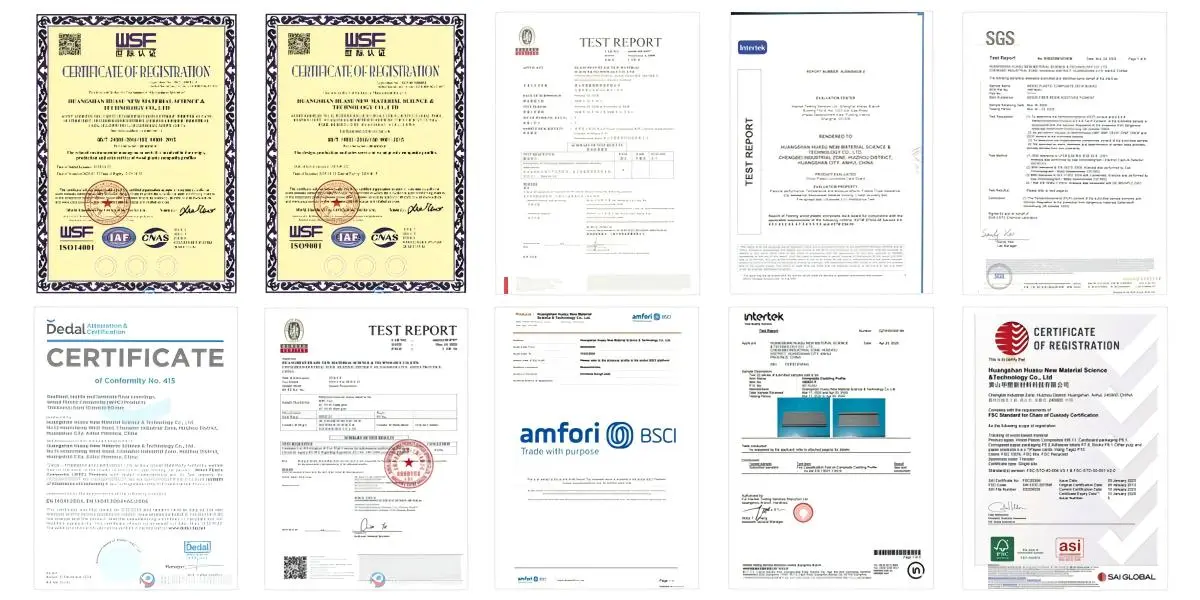
Certifications validate performance claims. Everdur decking is ISO, FSC, CE, SGS, ROHS, REACH, INTERTEK and ASTM certified, providing architects and contractors with documentation to rely on when specifying materials for projects that need to comply with building codes or environmental regulations. These certifications are more than just paper. They are a third party certification that the materials are safe, the buildings will function, and the project is eco-friendly. That's what counts when a consumer or inspector wants verification, not marketing promises.SEND INQUIRY
Brushed WPC Decking Maintenance, Scratch Resistance and Long-Term Appearance
One of the greatest reasons people are converting from wood to composite decking is upkeep. Most homeowners and property managers would rather spend the money and effort it takes to sand, stain and seal a wood deck every year or two on just about anything else.
Everyday Cleaning Routines
Brushed WPC deck requires significantly less maintenance than natural wood. A simple soap and water wash may clear dirt, pollen and other outdoor debris. The composite material is not moisture-absorbing like bare wood, so it doesn't need annual staining or sealing. This is a plus for property managers that manage hotel terraces or restaurant patios since it may lower the labor expenses of deck maintenance and free up maintenance personnel for other tasks. That means homeowners may spend more time enjoying the deck and less time cleaning it.
Resisting Scratches and Surface Wear
The brushed texture also helps to reduce scratching. The surface has already been textured and lightly roughed so that little scratches from foot activity, moving furniture or pet claws blend into the existing pattern rather than stand out. This is not a smooth varnished board on which a scratch on a uniform surface would be quite evident. The brushed boards seem as if they are meant to be that way, not damaged, and becoming more lovely with the years.
Long-Term Value Compared to Wood Decking
The biggest benefit of composite deck over regular timber is service life. Everdur brushed boards have a service life rating of ten to twenty five years depending on installation circumstances and exposure to the environment. Wood decks, even when carefully kept, sometimes have to be partially or completely rebuilt within fifteen years or less because of decay, insect damage and/or structural deformation. Composite decking costs more initially but property owners save money in a long term view of the total cost of ownership including the costs of replacement labor, materials and downtime during repairs. Dimensional stability plays a part here too. They also twist and bend less than solid wood, meaning they will stay level and stable for a longer time and need less adjustments to joists and clips over time.
Brushed composite decking is a wise solution for anybody weary of the never-ending cycle of wood deck care with decreased maintenance needs, greater scratch resistance and extended service life.SEND INQUIRY

Conclusion
Wood grain brushed WPC decking is a useful halfway house between the beauty of genuine wood and the durability that contemporary outdoor spaces need. The brushed surface offers traction in wet situations, the wood grain texture meets esthetic standards, and the HDPE and wood fiber composition underneath resists UV fading, moisture, and pests. Easy maintenance and longer lifespan will save you money on replacement in the long run when compared to standard timber. From a serene backyard patio to a business thoroughfare, this sort of decking solves safety, looks and longevity without forcing homeowners or builders to sacrifice any of the three.SEND INQUIRY
FAQ
Q: Is brushed WPC decking safe for areas around swimming pools?
A: Yes. The textured surface disperses water more effectively than smooth composite boards, which helps reduce slipping around pool decks and other wet zones.
Q: How long does wood grain brushed WPC decking typically last?
A: Depending on climate and installation quality, Everdur's brushed boards carry a service life of ten to twenty-five years, supported by dimensional stability and moisture resistance.
Q: Does the wood grain texture fade or wear away over time?
A: Testing through more than two thousand hours of UV exposure showed only minimal fading, and the brushed texture itself resists flattening better than embossed patterns under regular foot traffic.

Work With Everdur: Your Trusted Brushed WPC Decking Supplier
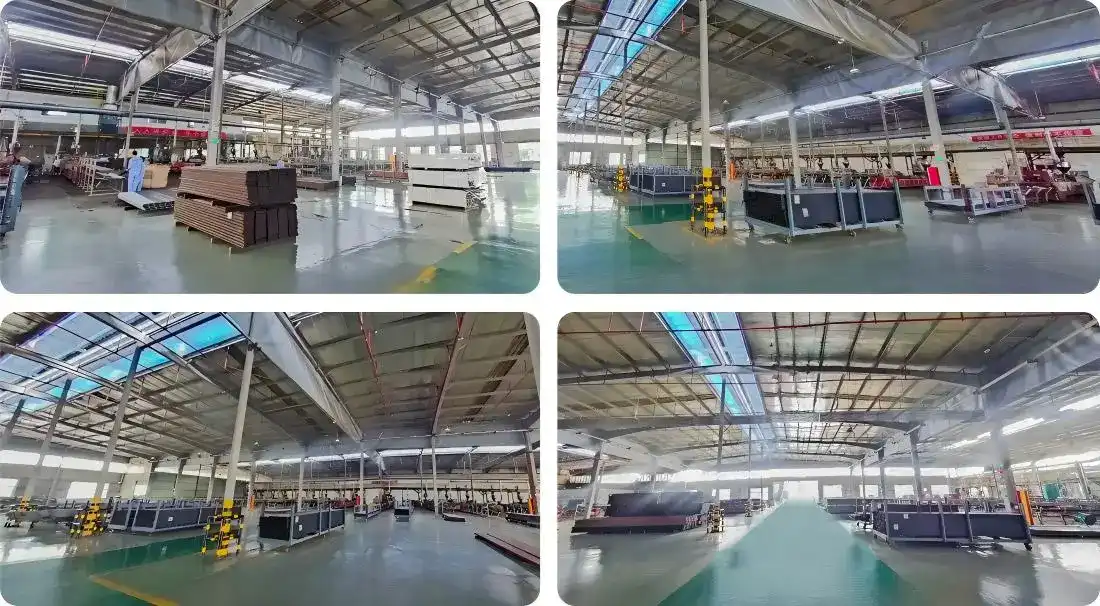
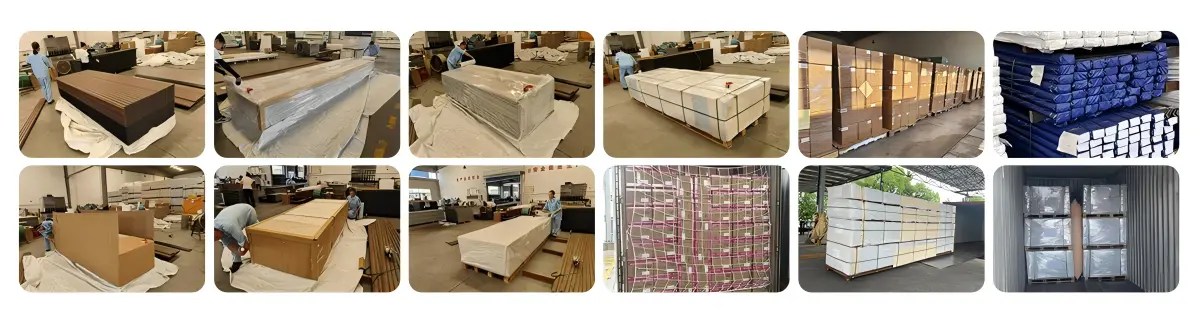
Everdur has spent sixteen years refining composite decking technology, supported by more than fifty production lines and a manufacturing capacity near thirty thousand tons annually. Our boards reach over two hundred twenty-five clients across more than sixty countries, backed by certifications including ISO, FSC, CE, SGS, ROHS, REACH, and ASTM. Our products also align with international compliance expectations such as EU CE standards, US ASTM D7039 performance benchmarks, and China's GB/T 24137 requirements, alongside Recycled Content certification and E0 environmental standard compliance for low chemical emissions. If your project calls for a dependable brushed WPC decking supplier capable of custom colors, textures, and profile sizing, reach out to our team at violet@wpcsupplier.com to discuss specifications and request samples.SEND INQUIRY
References
1. ASTM International. Standard Specification for Establishing Performance Ratings for Wood-Plastic Composite Deck Boards (ASTM D7032).
2. European Committee for Standardization. Composites Made from Cellulose-Based Materials and Thermoplastics – Determination of Characteristics (EN 15534).
3. International Code Council Evaluation Service. Acceptance Criteria for Deck Board Span Ratings and Guardrail Systems for Wood Plastic Composites.
4. United States Forest Service, Forest Products Laboratory. Wood Handbook: Wood as an Engineering Material.
5. Composite Panel Association. Guide to Composite Decking Materials, Installation, and Maintenance Practices.
6. National Association of Home Builders Research Center. Durability and Performance Assessment of Alternative Decking Materials.
Send Inquiry


Related Industry Knowledge
- Wood Grain Swimming Pool WPC Decking: Enhance Your Pool Area
- Does 3D composite decking fade?
- Garden WPC Decking Installation: Create a Beautiful Garden Patio
- Wholesale Garden WPC Decking: Bulk Supply for Garden Projects
- Anti-Fade Decorative Composite Fencing: Long-Lasting Beauty
- Composite Screen Fencing Installation: Create Privacy & Style
- Eco-Friendly 3D Composite Decking: Sustainable & Aesthetically Pleasing
- How to Install Solid WPC Decking for Long-Lasting Durability
- Best WPC Cladding Designs for Villa and Luxury Residential Projects
- Eco-Friendly WPC Decking: Sustainable Choice for Modern Outdoor Spaces