
What is deep embossed composite decking?
2026-11-09 15:48:42
Deep-embossed decking Composite decking that has wood grain pressed into the board while it's still hot by tooling. The grain is thick enough to feel beneath bare feet and to provide true shadow patterns in daylight. There is no adhesive on and no additional finishing process. In this article you'll learn how producers create the texture, and how it compares to regular and 3D embossed boards. It also addresses slip, wear and the cleaning factors that matter most. If you are buying for a brand or a regional store, you also receive a checklist to give to any provider.
Want a texture that no one else can duplicate? Everdur is a deep embossed decking manufacturer with over 50 WPC lines and 16 years export experience. Email your reference photographs or sample board to violet@wpcsupplier.com and our staff will get back to you with a texture suggestion, color possibilities and tooling timeframe. Your artwork will remain secret, and we may negotiate NDA and exclusivity agreements before beginning any work.SEND INQUIRY
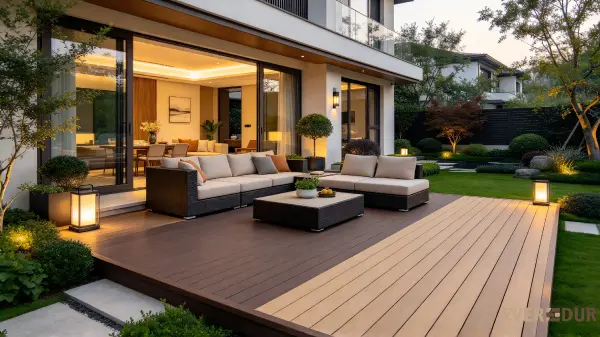

How Is Deep Embossed Composite Decking Manufactured?
Compounding the Raw Materials
Each composite deck board begins as a mix. Wood fiber, HDPE (high-density polyethylene, a strong recycled plastic) and functional additives are fed into an extruder. The Forest Products Laboratory says that making wood-plastic composites is a two-step process: compounding and then shaping. The extruder melts the polymer and mixes in the wood flour and additives in compounding. Everdur 3D Composite Decking is made from Grade A recycled HDPE and wood fiber. This step is watched meticulously because a consistent melt means a stable grain. When the melt drifts, the grain depth drifts with it and customers can see that drift on the pallet.
Forming the Profile and Pressing the Grain
The heated compound is forced through a die by the extruder which forms the board profile after compounding. An embossing tool next to the die crushes the wood grain into the surface. This is what we call inline embossing.The texture is produced on the same line as the board, in one pass. Everdur's inline stamping method produces a deep and realistic grain as the board is extruded, requiring no further processing. The surface skin must be soft enough to accept the pattern. It must also set quickly enough to hold every ridge crisp.
Then cooling. The board goes through a step of calibration and cooling, and that secures the dimension in place and the grain. If the cooling is too slow the ridges become soft. If the surface is running too rapidly it might break in the grain valleys. The skilled operators adjust line speed, die temperature and cooling concurrently, and record the parameters for each texture. That log counts when you rearrange. It allows a firm to reproduce the same deep-embossed decking grain months later. This eliminates a major concern for wholesalers that do seasonal restocking.
Why Inline Embossing Beats Re-Pressing
Some producers stamp a design on a board after it has cooled. That procedure requires warming the surface. warming might leave uneven depth around the edges. Inline embossing eliminates that step. The grain develops just once, in the same heat cycle as the board. So the issue for a brand owner is simple: Where are the join lines? Each roller has a repetition length . The distance before the pattern repeats . A smart design will disguise that link in the wood grain. Order from each provider a three meter length of the completed board.SEND INQUIRY

What Creates the Deep Wood Grain Texture on Composite Decking?
The Embossing Roller and Stamping Tool
The core of the texture is the tool. Usually it is an etched metal roller or a stamping set bearing the negative of the grain. A groove in that tool fits into each ridge on your board. Tool depth, edge radius and surface polish determine the feel of the board. A sharper edge produces beautiful ridges but may retain dirt. Rounder edge is simpler to clean up, but appears softer. Good engineers will work out the balance with you and then test it out on short runs. Everdur also has a range of wood grain designs with deep embossed textures and dual-surface boards with a distinct texture on each side.
How a Grain Pattern Is Designed
Designers start with actual wood. They scan or photograph a board, choose the most natural growth rings, then clean the file into a recurring artwork. Then the art goes to an engraver who cuts it into the tool. There are two things that distinguish natural patterns from artificial ones. Real wood never repeats at short intervals, its knots are of different sizes. Thus a large repetition duration is more realistic. Ask your provider for the repeat length in mm, and a picture of 2 boards end to end. If the pattern leaps at the junction, purchasers will see it.
Why Custom Tooling Protects Your Texture
Many brand owners fear that a texture is merely a catalog mold that's shared. That is a good point. Once the mold is shared, a competitor will be able to offer the same deeply embossed decking grain by the following quarter. This is altered using a special tool. When the roller is cut from your artwork the pattern may be yours Make sure you receive it in writing before you pay a tooling cost. Who owns the tool? How long is your exclusivity? Is your artwork covered by an NDA? Everdur's crew is ready to talk about NDA and exclusivity agreements before tooling commences.
Plan the calendar, too. For most projects, tooling and sampling is 4-8 weeks following artwork and color approval. A trial order follows, and the complete process from opening sample to shelf frequently takes 3 to 6 months. Knowing these dates early allows you to plan launch events, trade exhibitions and catalog printing. Everdur offers ODM and OEM services including custom colors, custom profiles, surface patterns. One crew can handle the whole chain from artwork to loaded container.SEND INQUIRY

How Does Deep Embossing Improve Composite Decking Appearance?
Light, Shadow, and Depth
See a deck at 4 p.m. A flat board reflects light uniformly and appears like a chunk of plastic. A deep furrow divides the light into a thousand little shadows. Your eye sees those shadows as wood grain and growth rings. That's why deep-embossed decking photos well on Instagram and Pinterest, where many design purchasers go to look. The effect also works at walking distance, when a printed or shallow design turns flat. When judging samples, inspect them in daylight – morning and late afternoon, not under showroom lighting only.
Market Pull for Wood Grain Looks
Demand data supports the tendency. The composite decking and railing market is projected to reach $8.19 billion by 2031, according to MarketsandMarkets. In 2025, North America captured 49.4% of the market value. The capped category is anticipated to have the quickest CAGR of 9.1%. The wood grain look is also cited by the corporation as a factor in that increase. For purchasers in Germany, the Netherlands, the Nordics, the UK and North America, that's a hint of an opportunity. It may be filled with boards that appear and feel more like genuine wood.
Color Inside the Grain
The color makes a grain appear deeper. Dark valleys contrast with lighter ridges . Tone-on-tone finishes seem calmer . Everdur also provides basic colors in addition to bespoke colors beyond the standard card: Teak, Walnut, Cedar, Ash Gray and Dark Gray. If distributors are selling railings adjacent to decking they should require color matching within the same manufacturing window so that designers see one palette on the job site.” Request a color card, physical color card and grain sample book. Designers want to work with something they can hold, and a sample book shortens the approval process.SEND INQUIRY

Deep Embossed vs. Traditional Composite Decking: What's Different?
Surface Feel and Look
Usually, traditional composite decking has a brushed, sanded or shallow wood-grain finish. Those surfaces are inexpensive and simple to maintain, but many consumers say they are basic or plastic. Deep-embossed embossed composite decking offers alleviation that may be felt beneath a bare foot. It changes the product from a commodity board to a design feature. This move allows for a greater price per square meter since the board no longer competes on thickness and color alone. It begins to compete on touch. That narrative is used by high-end installers buying from buyers to evade a straight price comparison.
Side-by-Side Comparison
The table below displays what changes from finish to finish. It reflects overall market trends, therefore individual items differ.
| Feature | Brushed or shallow grain | Standard 3D embossed | Deep-embossed decking |
|---|---|---|---|
| Texture relief | Low | Medium, varies by maker | High, specified in millimeters |
| Feel underfoot | Smooth or lightly rough | Noticeable grain | Distinct wood-like relief |
| Visual realism | Plain at close range | Natural at close range | Natural at close and long range |
| Tooling | Standard rollers | Shared or custom | Custom roller recommended |
| Cleaning effort | Lowest | Moderate | Higher, needs a soft-brush routine |
| Price position | Entry | Middle | Upper |
| Brand differentiation | Low | Medium | High when the tooling is exclusive |
The honest trade-off is effort in cleaning. Deeper valleys have more pollen, leaves and dirt. Brand owners who prepare for that earn trust. They provide a care letter and a tested grain shape instead of hoping consumers don't notice. Section 10 deals in length with the cleaning process. If your market prefers touch and realism above the lowest price, deep-embossed decking is worth the trade-off.SEND INQUIRY

Deep Embossed vs. 3D Embossed Decking: Which Looks More Natural?
What “3D Embossed” Means in Practice
Suppliers refer to 3D embossed and deep embossed interchangeably. Both describe boards with a relief you can see, not a flat print. The distinction is in the depth, the diversity of the design and how the board is manufactured. Everdur's 3D Composite Decking features inline stamping to create a deep, natural grain in the extrusion process, producing a 3D effect decking surface. Some other manufactures utilize shallow designs under the same title. So don't purchase on the name. We would also want a cross section picture and a depth measurement in mm at 3 spots throughout the board. Adjectives close the argument slower than numbers do.
Which Looks More Natural?
Naturalness is a function of three factors: depth, variance, and repetition duration. Uneven ridges in deeper grain read like genuine wood. Uniform, shallow ridges read as a textural impression. In daylight inspections designers frequently win with boards with extended repeat and mixed ridge heights. Because the grain is in line the depth is more consistent throughout the full board. Place two specimens on a frame and photograph from a distance of three meters. The board that displays grain in that picture is the one your consumers will remember.
Building a Clear Price Ladder
Distributors need a basic ladder. The usual design is three rungs, a brushed or lightly grained entering board, a capped board in the center coextruded and a decking board with deep embossing on top. Each rung should be a tangible difference a salesman can point out in five seconds. Keep the highest rung to a small portion of your range. Many distributors launch deep-embossed lines at 10 to 20 percent of the category and restock by season. That lowers stock risk and verifies local taste before you make higher volume commitments.SEND INQUIRY

Does Deep Embossed Composite Decking Offer Better Slip Resistance?
What the Standards Measure
Behind the slip claims needs a test. The key U.S. performance standard for wood-plastic composite deck boards is ASTM D7032-21 and it includes a slide resistance test as one of the deck board criteria. EN 15534-4 specifies the properties of decking profiles and tiles for outdoor usage in Europe. Wet grip is checked by pendulum testing. It's the UK Health and Safety Executive's favorite. The Health and Safety Authority in Ireland recommends that specifiers should be looking for a wet Pendulum Test Value (PTV) of 36 or more.
The PTV scale provides you with a risk picture. On level ground, a PTV of 20 gives a roughly 50 per cent probability of a slide. 1 in 20 for a PTV is roughly 24. Those numbers are why 36 is the usual low-slip risk threshold. If you get a number from a provider of embossed composite decking, ask them what standard, slider and surface condition the number was obtained from. A dry outcome tells you nothing about a wet terrace.
Depth Is Not the Same as Grip
Many think that deep-embossed decking always has stronger grip. The truth is more guarded. Grain valleys may help redirect water away. But grip is also a function of the micro-roughness of the ridge tips, and of the formulation. A smooth polished ridge can still skate when wet. That's why we encourage purchasers not to take depth claims at face value and to ask for wet test results on the final production surface. Everdur's 3D Composite Decking has a slip-resistant surface for safety in outdoor settings, and your choice of texture should bear that in mind when you spec it.
How to Request Useful Test Data
Just send a quick request to your provider. Ask for wet pendulum results with both shod and barefoot sliders since pool decks and garden terraces sometimes have bare feet. Ask whether the sample was fresh or worn. Ask for the name of the test lab and the date of the report. Clean and redo the test on a board, since a surface might alter with time. Suppliers that respond in writing within a few days will often test in-house. A ambiguous response is a red flag.SEND INQUIRY

How Does Embossing Depth Affect Decking Wear and Durability?
How Depth Interacts with Wear
Deep-embossed decking is no exception. Foot activity will wear down the high points of any texture. The deeper the grain, the higher the ridges, and the more of the burden they carry. Sharp points of ridges may be polished or rounded off over time. Wear resistance isn't a matter of depth, but of a strong, well-bonded surface. One of the design goals listed by Everdur is greater wear resistance. The surface is designed to remain clean and durable even after years of exposure. Ask any provider for abrasion findings and for images of boards following an aging cycle, not only fresh samples.
Structural and Durability Tests
Surface appearances matter nothing if the board bends beneath the stress. Flexural testing, temperature and moisture impacts, UV resistance, creep-recovery, fastener holding and slide resistance are covered in ASTM D7032-21 for deck boards. The guideline also advises against assuming that wood-plastic composites would act like wood. EN 15534-4 stipulates the parameters of the decking to be fulfilled for European constructions. Deep embossing may lower thickness in the grain valleys, therefore ask your supplier to test the final embossed profile, not a flat lab coupon.
Edge Wrap at Grooves and Bends
Co-extruded boards have a protective cap layer over a core. The grooved edges and tight bends are vulnerable places where the cap may thin down. Cut a sample board across the profile and see how thick the cap is around each corner. The full wrap locks out moisture from the core and keeps the color stable. Everdur's newest co-extrusion decking line is structurally designed for enhanced durability, waterproofing and ease of maintenance. The corporation also anticipates product improvements around every 12 months.
Color Stability and Service Life
Wear is part of color. Everdur 3D Composite Decking displays little fading after more than 2,000 hours of UV exposure. Depending on the series, it has a service life of between 10 and 25 years. Warranty coverage is as high as 20 years on solid co-extrusion boards and 15 years on hollow co-extrusion boards. Always examine the series a warranty covers. Ask about the formal conditions before you publish them in a catalog.SEND INQUIRY

Is Deep Embossed Composite Decking Suitable for Outdoor Environments?
Weather, Moisture, and Temperature
Outdoor boards face sun, rain, frost, and heat swings. Everdur's decking resists moisture, mold, and termites, and it does not rot, crack, or splinter. Its boards are about 20 to 30 percent lighter than solid alternatives, which eases handling and lowers freight per square meter. Thermal movement still exists, so installers should leave expansion gaps and use joists and clips as the system requires. Deep-embossed decking does not change those rules. Treat it as a surface choice, not a structural change.
Residential Terraces and Villa Gardens
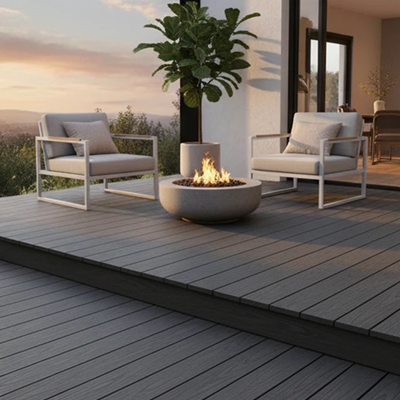
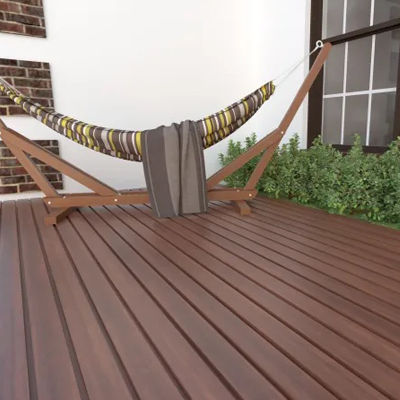
Picture a villa terrace in Bavaria or a backyard deck in Ontario. A popular build uses 140 × 25 mm boards on joists with clips. Homeowners walk barefoot, so wet grip and splinter-free edges matter most. A deep wood grain in Walnut or Teak gives the terrace a timber look without yearly staining. Add a care card to the handover pack, and the owner knows how to keep the grain clean from day one.
Hotels, Restaurants, and Rooftops
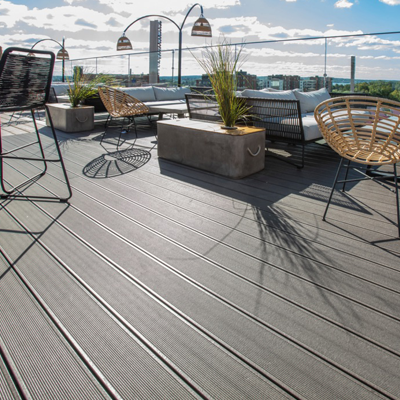
Commercial sites see heavy foot traffic, chair legs, and daily washing. A rooftop restaurant, for example, needs a surface that looks natural in photos yet survives cleaning crews. Deep grain hides light scuffs better than a smooth face. Specifiers should still ask for wet slip data, since spills and rain are routine there. Everdur's decking serves hotels, resorts, restaurant seating, parks, and rooftop platforms, and it comes in 20 to 25 mm thicknesses to match different load needs.
Retail Chains and Distributor Showrooms
Retail is a third scenario. Our export customers include building-material chains such as Lidl, Hagebau, Hornbach, Hellweg, and Globus. These buyers care about repeatable color, packaging that survives transit, and samples that sell the product on the shelf. Distributors with design-led showrooms can use a deep grain board as the hero display. Pallets arrive wrapped in PE film on wood pallets, which protects the grain in transit and keeps the showroom stock clean.SEND INQUIRY

What Should Buyers Check When Comparing Deep Embossed Decking?
Specification sheets rarely tell the whole story. Use the checks below to compare any two deep-embossed decking suppliers on equal terms. They come from the questions brand owners and distributors ask us most often.
Six Checks Before You Approve a Texture
Here are the six checks that matter most before you sign a tooling quote:
- Depth and continuity. Request a depth reading in millimeters at three points across the board, plus a photo of two boards laid end to end. Confirm the grain forms inline, meaning on the extrusion line, and ask where the roller join falls. A clean join means buyers see one long, natural grain instead of repeating blocks. These numbers also let you compare suppliers fairly.
- Exclusive tooling and color. Ask whether a dedicated roller and a dedicated color can be made for your brand. Get the tooling fee, tool ownership, and exclusivity period in writing. Without those terms, you may pay for a mold that a rival can order next month, and your texture advantage disappears. Ask for these terms inside the quote itself.
- Wet slip and wear data. Ask for wet pendulum results on the final production surface, plus abrasion results after aging. Look for a named lab and a report date. Compare the numbers against the 36 PTV benchmark for low slip risk, and ask for a repeat test after cleaning. Wet results matter most for terraces and pool areas.
- Edge wrap and profile integrity. Cut a sample across the profile and inspect the cap layer around grooved edges and bends. Look for gaps, thin spots, or color breaks. Complete wrap protects the core from moisture and keeps the grain looking the same along every edge of the board. Photos of the cut section make a useful record.
- NDA and artwork protection. Share your artwork only after a signed NDA that covers files, samples, and tooling drawings. Ask how long the exclusive period lasts and what happens when it ends. A clear answer shows the supplier has handled private-label textures before and respects brand ownership. Get the answer before you send any files.
- Matching structures and accessories. Confirm that solid and hollow boards can carry the same grain and color, and that railings, fascia, and fence parts match. A single palette across the whole outdoor set lets designers specify one system and lets distributors stock fewer mismatched parts. Request matching samples for each part together.
These six checks turn a vague quote into a comparable offer for embossed composite decking. Send them as a written list, then score each reply. Suppliers who answer every point with data usually run stable lines and documented processes. Suppliers who skip points often hide a weak spot.SEND INQUIRY

The Everdur Texture Scorecard
Scoring helps teams agree on a winner for 3D effect decking. The weights below reflect what most brand owners rank highest: continuity and exclusivity. Adjust them to fit your market.
| Check | Weight | What a strong answer looks like |
|---|---|---|
| Texture continuity | 25 | Inline grain, long repeat, join marks hidden, depth measured in mm |
| Exclusive tooling and color | 20 | Dedicated roller, written ownership, defined exclusivity period |
| Wet slip and wear data | 20 | Named lab, wet PTV on final surface, abrasion results after aging |
| Edge wrap integrity | 15 | Cut-section photos show full cap coverage at grooves and bends |
| Cleanability | 10 | Tested grain shape, written care card, cleaning trial photos |
| Structure and accessory matching | 10 | Same grain on solid, hollow, railing, and fascia parts |
What a Capable Manufacturer Looks Like
Scores matter only if the factory can repeat them. Everdur runs 50+ WPC production lines with an annual capacity of 30,000 tons and ships more than 1,500 containers a year. About 80 percent of output goes abroad to 225 customers in over 60 countries, and more than 100 of those customers order actively. On-site 5S management supports steady quality, and our certifications include ISO 9001, CE, FSC, REACH, RoHS, and Intertek. You can verify product details at wpcsupplier.com.
A Sample-to-Shelf Plan
Here is a plan that works for both buyer types. Brand owners usually move from sample comparison to texture and color approval, then tooling and sampling (4 to 8 weeks), a trial order, and launch. That path takes 3 to 6 months. Distributors move faster, often in 2 to 8 weeks. They request a sample book, send boards to designers, place a small trial order, and restock each quarter. Everdur's standard MOQ is 100 SQM, which suits a small test.
Consider an illustrative case, not a client report. A 60-person brand in the Netherlands buys about 40 containers a year and wants one signature grain. The team scores three suppliers with the table above, orders sample boards, and cleans every sample with the same brush and the same garden soil. The board with the long repeat, full edge wrap, and easiest rinse wins. That simple test cost a few sample boards and saved a tooling fee on the wrong texture.SEND INQUIRY

How Can You Maintain the Texture of Deep Embossed Composite Decking?
Routine Cleaning That Protects the Grain
Deep grain asks for a little more care than a smooth face, but the routine is simple. Everdur's decking needs no painting, staining, or sealing. Here are the three habits that keep the texture sharp:
- Sweep along the grain. Use a soft broom or a leaf blower weekly in autumn and spring. Moving debris along the direction of the grain lifts leaves and grit out of the valleys instead of packing them in. This quick step prevents most of the dirt buildup that customers later report as a surface defect.
- Wash with mild soap and a soft brush. Once or twice a year, wet the deck, scrub with a soft-bristle brush and mild soap, and rinse with clean water. Avoid steel brushes and harsh solvents, because they can scratch ridge tops and dull the grain. If you use a pressure washer, follow the manufacturer's pressure limit.
- Treat spills and stains quickly. Wipe oil, wine, and food spills soon after they happen, using warm water and a mild cleaner. Fast action keeps the stain from settling into the valleys. Let the board dry fully, then check the spot in daylight to confirm the grain looks even again. Avoid scrubbing hard on one spot.
These habits take about an hour for an average terrace and prevent the slow buildup that triggers complaints. Tell your installers and customers about them at handover.
Stopping Dirt from Settling in the Grain
Dirt in the grain is the top complaint about deep-embossed decking, so address it in design. Ask your supplier about valley shape. Rounded valleys release debris more easily than narrow, sharp ones. Run a simple cleanability trial before you approve tooling: spread garden soil and pollen on a sample, let it dry, then brush and rinse. Photograph the result next to a competitor's board. If your sample cleans as well as a lightly textured board, you have a texture that sells and survives.
Give Installers and Homeowners a Care Card
A one-page care card costs almost nothing and removes most avoidable complaints. Keep it short: four lines on sweeping, washing, spills, and tools to avoid. Print it in the local language and tuck it into each pallet or project pack. Distributors can add a QR code that links to a short cleaning video. When customers know the routine on day one, your deep-embossed decking looks better in year five. Your brand then keeps the reputation it built with the texture.SEND INQUIRY

Conclusion
Deep-embossed decking gives brands a way to sell touch, not just color. The grain forms inline, tooling can make it exclusive, and clear tests prove it grips and wears well. The trade-off is cleaning effort, and good design, a tested valley shape, and a care card handle it. Brand owners should score suppliers on continuity, exclusivity, wet slip data, and edge wrap. Distributors should start with a small trial, a sample book, and a clear price ladder. Do those things, and the texture becomes a reason customers choose you instead of a line on a price sheet.SEND INQUIRY

FAQ
Q: What is deep embossed composite decking made of?
A: It uses wood fiber, HDPE plastic, and functional additives, blended in an extruder and shaped through a die. Everdur uses Grade A recycled HDPE and wood fiber. The deep grain is pressed into the surface during extrusion, so the texture is part of the board and not a coating.
Q: Is deep embossed decking harder to clean than smooth decking?
A: Yes, slightly. Deeper valleys hold more debris than a smooth face. Weekly sweeping along the grain, a soft brush, and mild soap handle most dirt. Ask your supplier for a cleanability trial and a care card, so your customers know the routine from day one.
Q: Can I get an exclusive embossing roller for my brand?
A: Yes. Custom surface patterns are possible through Everdur's ODM and OEM services. Before tooling starts, agree on tool ownership, the exclusivity period, and an NDA for your artwork. Put all three in writing, so your texture stays yours.
Q: How long do tooling and sampling take?
A: Plan on 4 to 8 weeks after you approve the artwork and color. A trial order follows, and the full path from sample comparison to shelf often runs 3 to 6 months for brand owners. Distributors who start from an existing pattern can move in 2 to 8 weeks.
Q: What is the minimum order for deep-embossed decking?
A: Everdur's standard MOQ for deep-embossed decking is 100 SQM. Distributors can use that level for a small trial and then restock each quarter. Brand owners planning a custom roller should share expected annual volume, so we can match the tooling plan to your forecast.
Q: Can solid and hollow boards share the same texture and color?
A: Usually yes, but confirm it in writing. Everdur offers solid and hollow structures, plus custom profiles and colors. Ask for matching samples of every board type and your railing or fascia parts, then compare them side by side in daylight.
Q:Which certifications should I request from a decking supplier?
A: Everdur lists ISO 9001, CE, FSC, REACH, RoHS, SGS, Intertek, and ASTM-related testing among its certificates and test reports. Always ask for current copies tied to the exact series and texture you plan to buy.

Ready to Launch a Texture Only Your Brand Sells?
Everdur is your deep-embossed decking supplier for custom grain, exclusive color, and steady container supply. Email violet@wpcsupplier.com with your target market, yearly volume, and reference photos. Our team will reply with sample options, color matches, and a tooling timeline within a few working days. Visit wpcsupplier.com for full specifications, certificates, and product lines, then request your sample board today.SEND INQUIRY

References
1. ASTM International (2021). ASTM D7032-21, Standard Specification for Establishing Performance Ratings for Wood-Plastic Composite and Plastic Lumber Deck Boards, Stair Treads, Guards, and Handrails.
2. CEN, via ILNAS Luxembourg (2014). EN 15534-4, Composites made from cellulose-based materials and thermoplastics: specifications for decking profiles and tiles.
3. MarketsandMarkets (2026). Composite Decking & Railing Market worth $8.19 billion by 2031.
4. Health and Safety Authority, Ireland (2026). Measuring Slip Resistance.
5. Current Forestry Reports (2015). Wood–Plastic Composite Technology (DOI 10.1007/s40725-015-0016-6).
6. USDA Forest Products Laboratory (2004). Wood–Plastic Composites (TechLine COM-1).
About the author. Violet is the manage at Everdur, a WPC decking manufacturer with 16 years of production experience, 50+ extrusion lines, and customers in more than 60 countries. She works with brand owners and distributors in Europe and North America on custom textures, color matching, and test documentation.
Send Inquiry

Related Industry Knowledge
- Wood Plastic Composite Fence Panels Installation: Step-by-Step Guide
- WPC Wall Cladding: Tailoring Solutions for Homes and Businesses
- Can hollow WPC decking be used for balconies?
- Low MOQ Commercial WPC Decking: Perfect for Small Commercial Projects
- Wholesale Swimming Pool WPC Decking: Hotel & Resort Bulk Supply
- Traditional WPC Decking Maintenance: Easy Tips to Extend Its Life
- Brushed WPC Decking: Premium Textured Flooring for Luxury Outdoor Spaces
- Wholesale Traditional Cladding: Bulk Supply for Traditional Buildings
- Top WPC Composite Fencing Manufacturers in 2026
- Traditional Cladding for Residential Buildings: Classic & Reliable