
Why WPC Composite Decking is Ideal for Swimming Pool
2026-11-17 20:28:56
You know the frustration if you've ever seen a poolside deck warp, splinter, or go slippery after one rainy season. WPC decking around swimming pools virtually eliminates the reoccurring issue. WPC (Wood-Plastic Composite) boards are made from a mix of wood fibre, recycled HDPE and performance-enhancing additives, and are designed to withstand continual dampness, UV and high foot traffic – all of which take a toll on genuine lumber very rapidly. Unlike pressure-treated timber, composite pool decking is not water-absorbing, so it won't swell or split, or have surface degradation that shortens a deck's usable life. It also keeps its colour effectively in direct sunshine since UV stabilising agents are added to the substance during manufacture. WPC composite decking has become the material of choice for homeowners, hotel developers and landscape professionals in Europe and America looking for a poolside surface that offers beauty as well as real durability, including swimming pool WPC decking. The next sections examine precisely why this material works so dependably in damp outdoor conditions and what to look for when selecting it.SEND INQUIRY
Why Is Swimming Pool WPC Decking Suitable for Wet Areas?
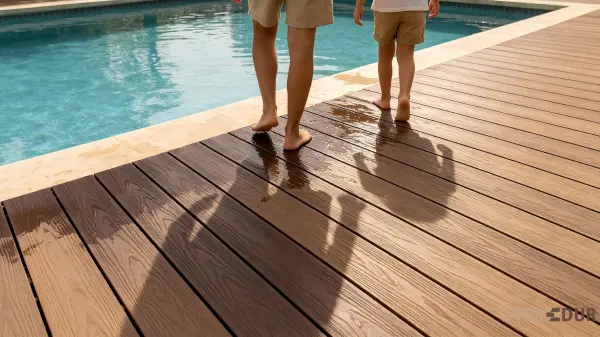
Most types of outdoor floors don't do well in water. Wood that is naturally grown soaks up water, which makes it swell, twist, and even rot. When tile is dry, it stays hard, but when it gets wet, it's very dangerous. Cracks can form in concrete over time because of freeze-thaw cycles. Swimming pool WPC decking doesn't have most of these problems because of how it's made.
It is physically impossible for water to get in when you mix wood fiber with Grade A recovered HDPE and chemical stabilizers. For food and water containers, High-Density Polyethylene (HDPE) is often used because it doesn't soak up liquids. In the extrusion process, this polymer matrix wraps around the wood fibers. This makes a board that doesn't absorb water and still looks like real wood.
This works even better on co-extrusion boards from the second generation. In the manufacturing process, an extra layer of protection is fused to the top of the board. This makes a shell around the board that keeps water, chlorine, and cleaning products from getting inside. This is really important near pools, since boards get splashed, hosed down, and put in water that has chemicals added to it all the time.
The boards are made in a way that makes them good for wet areas, and their shape also helps. When the bottom of a deck is grooved, air can flow under it. This gets rid of the moisture that helps mold grow faster. People forget about this part of the structure, but it has a big effect on how long an installation by the pool stays clean and whole.
Also, since the deck can be used in wet areas, it doesn't have to be cleaned every season. This saves time on upkeep. To keep it in good shape, you don't have to oil, seal, or sand the surface. With warm soapy water, you can clean your pool most of the time, which is great for people who want to save money on daily costs.SEND INQUIRY

Swimming Pool WPC Decking for Safer Barefoot Walking
Be careful when you're near a pool. When your feet are wet and the ground is smooth, you are more likely to slip and fall. When kids, older guests, or people just running to catch a ball are around, this risk goes up. It's not just a matter of style whether or not the deck by the pool has a rough surface; it's also important for safety reasons.
Swimming pool WPC decking is made to look like brushed, etched, or deep-grain wood. This makes them easier to walk on, even when they are wet. Small ridges run across the face of the board because of the brushed finish. These ridges break up the thin film of water that makes smooth surfaces so dangerous. It works the same way, but wood-grain patterns that are raised up make the deck look more natural.
Waterproof pool decking that also provides slip resistance is a balance that composite materials manage well. The texture on a WPC board is formed during extrusion and doesn't go away with normal use or cleaning. This is different from ceramic tile, which needs a separate anti-slip additive added to the surface and may lose its grip over time.
It's also about warm warmth in this talk. Sand and stone floors get very hot when it's hot outside, making them uncomfortable to walk on barefoot. Most WPC boards don't soak up as much heat, but lighter-colored ones like ash gray, ivory, and sandal wood do. In places like the US and Europe that get really hot in the summer, this makes the surface much cooler. This is helpful for places like these where public pools are used a lot.
As part of the rules in many European markets, surfaces next to pools are tested to see how well they don't slip. To meet those standards, pick a board with a tried-and-true rough finish. This also shows that you did your homework when planning the job.SEND INQUIRY

How Does Swimming Pool WPC Decking Handle Water Drainage?
The ground around the pool needs to dry out quickly. As time goes on, the extra weight of the water on the deck makes it more likely that someone will slip and hurt themselves. Because of this, how well a patio material drains water is not just a matter of preference; it is also a matter of engineering.
One way that swimming pool WPC decking deals with this is by having grooved surfaces and a way of installing them that leaves gaps. Long grooves run along the board's face and move water across the deck and off of the top. This keeps the water from pooling. Clip-based methods make small holes between the planks when the boards are put down. This lets water go straight down. Surface channels and holes between boards work together to make passive draining that doesn't need pumps or any other kind of infrastructure.
The frame under the deck is also important. Putting metal or pressure-treated joists far enough apart keeps the boards' bottoms off the ground and lets air flow through them. Water that gets stuck under a deck can lead to mold growth and damage to the structure. This is why wind at the bottom is just as important as pipes on top. It is very important to get installation advice from a supplier who knows a lot about what they are doing.SEND INQUIRY

Swimming Pool WPC Decking Resistance to Chlorine and Saltwater
The water in a pool is alive with chemicals. Things that can't stand chemicals are broken down by both chlorine-treated water from normal pools and the saltwater solution used in saltwater pools. Pool chemicals take off protected layers and speed up the wear and tear on surfaces. This is one reason why natural hardwood needs so much care in these places.
Swimming pool WPC decking that is made from HDPE doesn't mix with chlorine or salt because they are made of the same material. There is no chemical reaction between HDPE and the chlorine and sodium chloride that are in pools, whether they are at home or in a business. Luxury boards have a polymer and co-extrusion cap that goes over the wood fiber part. This keeps it from touching pool water when the boards are being used regularly.
This chemical resistance includes pool cleaners that are used all the time. Bleach solutions that have been watered down are often used to clean up surfaces outside that have algae or mildew on them. They don't damage the board or make the colors fade faster when used in the right amounts. This makes it easier to clean the deck often and lessens the chance that you'll damage it while doing maintenance.
This strength is very important for places near water that get a lot of salt spray, like hotels, beachfront villas, and terraces with water views. Metals can rust and wood that hasn't been cleaned can lose its finish due to salt buildup. Because WPC boards don't change shape or look in these conditions, they are often used in North American and European hotel projects near the sea.SEND INQUIRY

Swimming Pool WPC Decking for Low-Maintenance Pool Surrounds
It is easier to clean up composite materials used for pool walls, which is a big reason why landscape architects and homeowners like them. Natural wood decks around pools usually need to be sanded, oiled, or stained again once a year. Boards also need to be replaced when they wear out. It takes a long time to do these jobs and costs a lot of money with poolside WPC plank.
A swimming pool WPC decking cover takes care of most of this for you. To keep the surface in good shape or keep water out, it doesn't need to be cleaned, painted, or sealed. As long as water and a light cleaner are used to clean the deck every so often, it will look nice. For companies like hotels, spas, and leisure centers, this lower cost of care work means lower costs over the life of the asset.
Based on the type of board and how it was put down, a good WPC pool deck can last anywhere from 10 to 25 years. The higher end of the standard range of co-extrusion boards come with longer performance guaranties. This is because the capped surface layer makes them more durable. Natural wood, on the other hand, might need to be replaced every 5 to 10 years in a pool area if it isn't taken care of extremely well.
While we're on the subject of low maintenance, we should also talk about color stability. By adding UV-stabilizing chemicals during production, the fading that would happen from being in the sun for a long time is stopped. Independent tests are used to measure how much color changes over time. These tests are usually done after simulating UV exposure for 2,000 hours. These tests show that boards that do well keep their original look for longer. This means that owners don't have to fix or replace the deck as often to keep up with design standards.SEND INQUIRY

Conclusion
It's important to think about safety, durability, looks, and long-term cost when choosing a floor for a pool surround. Swimming pool WPC decking, which are made of different kinds of materials and have different surface engineering and structure designs, can meet all of these needs. Being near a pool means they are constantly exposed to water, chemicals, and UV light, but they don't need as much upkeep as real wood options. WPC pool decking is something that people in Europe and the US who care about quality and reliability should really think about for private and business projects.SEND INQUIRY

FAQ
Q: How long does WPC decking last around a swimming pool?
A: This depends on the type of board used and how well it was put together. Swimming pool WPC decking can last between 10 and 25 years. Most of the time, co-extrusion boards that have a protected cap cover last longer and are guarantyd to work better for longer. You can get to the top of that range by installing the subframe correctly and cleaning it often.
Q: Is composite decking safe to walk on barefoot when wet?
A: Yes. Wood-grain, brushed, or pressed surfaces are used to make swimming pool WPC decking. These rough surfaces make them easy to hold on to even when they're wet. This deck's natural roughness won't go away with normal use or cleaning, so it will stay safe that way for a long time.
Q: Can WPC decking withstand chlorine and saltwater exposure?
A: Yes, swimming pool WPC decking made from HDPE can handle both the chlorine levels in normal pools and the saltwater levels in saltwater pool systems. One more thing that keeps pool chemicals from getting inside luxury boards is the co-extrusion cap. The material will look good and last longer this way.

Get in Touch with Everdur — Swimming Pool WPC Decking Manufacturer
- For Construction Firms and Landscape Contractors: Everdur offers project-specific advice, technical plans, and a steady supply. They can handle large orders thanks to their more than 50 production lines. FSC, ISO 9001, ISO 14001, REACH, RoHS, and SGS have all given their approval to our products. They also follow the rules set by the EU CE, the US ASTM D7039, and China GB/T 24137. It is important to us that all of our WPC goods are eco-friendly and use recycled materials.
- For Building Materials Wholesalers and Resellers: You can trust Everdur as a purchasing partner because they have reasonable wholesale prices, sample programs, and regular wait times. You can depend on our supply chain because we have over 100 long-term partners in over 60 countries.
- For End Customers: That way you can be sure of your plans for the pool surround, you can get free help with design and installation with swimming pool WPC decking. Our team will help you pick the right materials, colors, and profile sizes based on your project's size and temp.
Ready to look at the different ways you can do your project? If you email our team at violet@wpcsupplier.com, a committed expert will get back to you with information about the product, whether samples are available, and prices that are ideal for your needs.

References
1. Clemons, C. M. (2002). Wood-plastic composites in the United States: The interfacing of two industries. Forest Products Journal, 52(6), 10–18.
2. European Committee for Standardization. EN 15534: Composites made from cellulose-based materials and thermoplastics (usually called wood-polymer composites or natural fibre composites). CEN, Brussels.
3. ASTM International. ASTM D7032: Standard Specification for Establishing Performance Ratings for Wood-Plastic Composite Deck Boards and Guardrail Systems. ASTM International, West Conshohocken, PA.
4. Klyosov, A. A. (2007). Wood-Plastic Composites. John Wiley & Sons, Hoboken, NJ.
5. Forest Stewardship Council. FSC Certification: Keeping our forests alive. FSC International, Bonn, Germany.
6. U.S. Consumer Product Safety Commission. Deck Safety: What You Should Know Before You Build or Buy. CPSC Publication, Washington, D.C.
7. International Organization for Standardization. ISO 14001: Environmental Management Systems — Requirements with Guidance for Use. ISO, Geneva, Switzerland.
Send Inquiry
Related Industry Knowledge
- Anti-Fade WPC Commercial Building Facades: Long-Lasting Aesthetics
- Decorative Composite Fencing Installation: Enhance Your Property’s Aesthetics
- Traditional vs co-extruded decking: which is better?
- 2026 Guide to Commercial WPC Decking: Hotels, Malls & Public Areas
- Anti-Slip Traditional WPC Decking: Safe for Families & Pets
- How to Choose the Right Residential WPC Decking for Your Budget
- Brushed WPC Decking: Premium Textured Flooring for Luxury Outdoor Spaces
- 2026 Guide to WPC Landscape Walls: Designs & Installation Tips
- Best WPC Cladding Designs for Villa and Luxury Residential Projects
- How to Choose High-Quality Co Extrusion WPC Decking for Your Garden