
Wood Grain Custom WPC Decking: Custom Patterns for Your Style
2026-10-29 17:10:26
With its wood grain unique design, WPC decking delivers you the warmth of genuine timber with the durability of engineered composite material. This decking solution gives homeowners and project planners the opportunity to make their outdoor areas seem authentic while avoiding the care that real wood requires. This decking design uses embossing and co-extrusion processes to mimic the grain patterns, texture and tone of woods such as teak, walnut or cedar so the final board has visual depth but is still resistant to moisture, pests and fading. If you're looking at composite possibilities, custom wpc decking is unique in that the pattern, colour and surface texture may be customized to suit a particular design idea, rather than settling for a generic plank off a shelf. Everdur has partnered with manufacturers, builders and distributors who need decking to operate in many conditions but also have a unique, polished look. This article will review how wood grain patterns are made, what embossing possibilities are available, which colours tend to work well for certain design objectives and how to pick the proper board for a particular outdoor situation. By the end you should know a little better which pattern and finish combo is right for your project.SEND INQUIRY
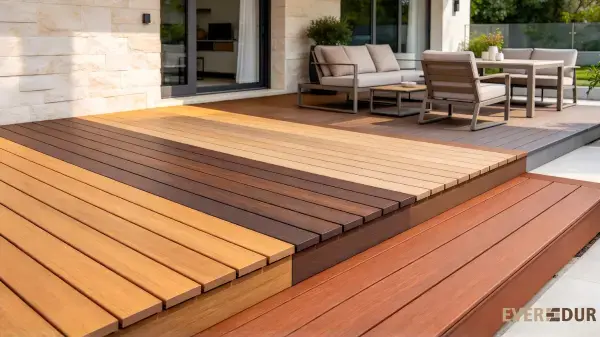

Wood Grain Custom WPC Decking for Natural Outdoor Designs
Natural wood grain texture is one of the primary reasons homeowners choose to composite decking in the first place. People want the appearance of a wood deck but don't want to worry about splintering, cupping or annual sealing.” This is accomplished by a manufacturing process of wood fibre and recycled HDPE that is combined and pressed using textured rollers or moulds that resemble the uneven lines of genuine timber in custom wood grain wpc boards. The result is a surface that seems organic in sunshine and shadow rather than flat or synthetic appearing.
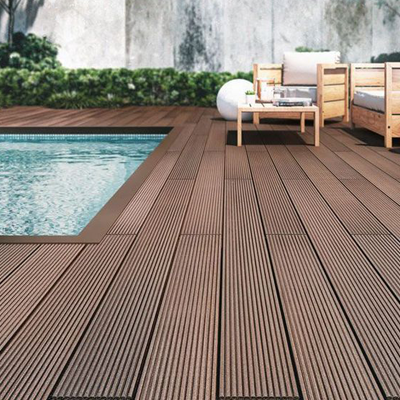
This is particularly suitable for villa gardens, residential patios and private yards, since the decking must be in keeping with the existing landscaping, stone walkways or wooden pergolas. A board with a little variance of grain often sits better next to these natural materials than a smooth, homogeneous plank. Also, the grain depth may be set to suit the project requirements, whether a rustic, textured finish or a cleaner, more modern line pattern is preferred.
The grain texture is not only aesthetic but also functional on the outside. A little surface variety helps to disperse water and prevent it from pooling, helping slip resistance around pool decks or shaded garden walkways. Because the design is moulded into the board rather than painted on, it won't wear away as a stained wood surface would after a few seasons of foot activity and weather exposure.

3D Embossed Custom WPC Decking for Realistic Wood Textures
3D embossing goes beyond wood grain imitation by creating an actual depth to the surface instead of just a flat printed texture. Instead of a single pass, the embossing die pushes many layers of detail into the board, producing ridges and grooves that catch light much like genuine wood fibres. This becomes more important outside, where the decking is seen from all angles and throughout the day as the sun moves across the sky.
The combination of 3D embossing with custom grooved wpc profiles is common for two reasons. The grooves also help create drainage channels so that rainfall travels swiftly off the surface, and they enhance the illusion of real wood planking. Some commercial projects may need a double-sided board, one side being heavily grooved for high-traffic areas, and the other side being more lightly embossed for places where foot comfort is a priority.
It also demands closer control of temperature and pressure throughout the extrusion process. If the embossed area cools unevenly , the texture may be flattened before it sets . This consistency is maintained over huge runs and is critical for commercial customers purchasing decking for hotels, restaurants or public walkways where every board must match, thanks to Everdur's manufacturing process. If you're a buyer comparing providers, ask for real samples, not just images. The embossing depth and texture quality may vary quite a bit across manufacturers, even when the specs appear comparable on paper.SEND INQUIRY

Custom WPC Decking Patterns in Teak, Walnut, and Cedar Colors
Colour selection is the way a deck reads visually, and if you can link that colour to an identifiable wood species, you've given designers a shortcut to the aesthetic they're after. Teak tones are warm, golden, and are great for seaside houses or places with a lot of natural light. Walnut stains are darker and cooler and are commonly used in contemporary constructions or environments where the decking has to stand out against lighter cladding or stone. Cedar is midway in the middle, with a reddish cast that looks well in a mountain or forest environment.
Everdur's basic colour card has Ash Grey, Cedar, Coffee, Copper Brown, Dark Grey, Grey, Ivory, Mocha, Sandal Wood, Stone Grey, Teak and Walnut, although consumers are not restricted to these. When a project requires anything beyond the normal spectrum, custom dye formulas may be created to match a particular paint swatch, brand or geographical preference.
For a big order, colour constancy is as important as the hue itself. And boards made in separate production runs must be visually similar enough that a completed deck will not have noticeable seams between portions placed months apart. It is regulated by metering the pigment at a known rate throughout the extrusion process, and by routinely checking the colour against a standard reference, ensuring that huge commercial orders appear consistent from the first plank to the last.

How to Choose Wood Grain Custom WPC Decking for Outdoor Spaces?
When choosing the correct board, it is more about a few practical considerations than how it looks. Climate is a huge factor . If the area has a lot of rain or humidity , then the core needs to be a little more thick and the coextrusion layer has to be thinner to prevent moisture from seeping into the board over time . A coastal home exposed to salt air could need a different addition package than a mountain chalet subjected to freeze-thaw cycles.
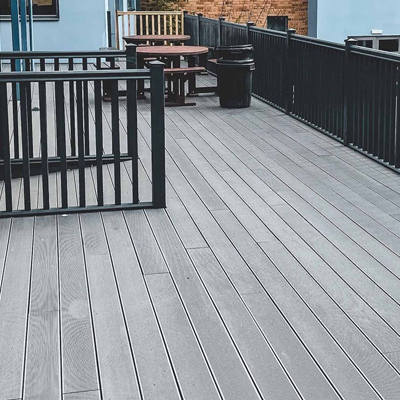
The amount of foot traffic affects too. A normal hollow-core board will generally do the trick for a private backyard deck, but a hotel terrace or retail sidewalk gets enough daily wear that a solid or reinforced core would last longer over the years. This links in closely with the choice of thickness, which may range from 15 mm to 40 mm depending upon load needs and the spacing of the joists.
Custom wpc decking consumers should also consider installation technique early in the design stage. Joist and clip systems are popular and allow for concealed fasteners which provide a clean appearance but spacing must fit the board profile selected. Another consideration to balance with maintenance expectations is the surface finish; a brushed or sanded texture often shows less dust and pollen accumulation than a glossy finish; important for homeowners who don't want to do a lot of cleaning.
And last verify if the product has certifications such as ISO, FSC or CE when appropriate to the location of the project, since government or commercial buildings may typically demand proven conformity before sanctioning the use of a material.SEND INQUIRY

UV-Resistant Wood Grain Custom WPC Decking for Lasting Color
Sun exposure is one of the biggest challenges any outdoor decking material will encounter. Composite boards without enough UV stabilizers will fade after a year or two, resulting in a powdery, washed-out surface that no longer matches the colour card sample from the original. This is solved by custom wood grain wpc boards with UV-stable colours mixed in directly with the material during the extrusion process, rather than a surface coating that may wear off.
Everdur measures colour retention during long-term UV exposure. The boards exhibited no fading after more than 2000 hours of accelerated testing. This testing condenses years of outdoor sun exposure into a short period, offering a good forecast of how a board would hold up in diverse regions, from the harsh light of the desert to the cooler temperatures of the north.
The co-extrusion layer is an additional level of defence. That outer shell surrounds a core of wood fibres, providing protection from direct UV exposure, as well as boosting water resistance. Without this layer , boards are more susceptible to surface chalking as they age because the wood fibre composition is more exposed to weathering . When customers are considering alternatives, asking for UV test data and sample boards from a supplier that have been exposed to actual outside circumstances delivers a more credible picture than just trusting marketing promises.

Conclusion
The combination of wood grain patterns, embossing depth and colour match all help to make custom wpc decking seem realistic and convincing, while maintaining the practical qualities that make WPC decking worthwhile in the first place. If a project requires a teak-toned home patio, or a grooved, slip-resistant business walkway, the proper mix of texture and finish is a matter of knowing climate, traffic and maintenance needs before ordering. With a 225+ client history of manufacturing experience in 60+ countries, buyers have a fair basis for buying decking that can handle these real-world needs.SEND INQUIRY

FAQ
Q: Does wood grain WPC decking fade the same way real wood does?
A: Not exactly. Real wood greys and weathers unevenly as it loses its natural oils. UV-stable WPC decking is intended to withstand substantial colour change, however some slow mellowing may still occur over many years outdoors.
Q: Can I request a custom grain pattern that isn't on the standard sample card?
A: Yes, bespoke embossing dies may be made as a match to a certain grain reference. This, however, usually needs a minimum order quantity to justify the tooling expense.
Q: Is embossed or grooved decking harder to clean than a smooth board?
A: The textured surfaces are able to trap a little more dirt in the grooves but a normal rinse with water takes care of it with ease. The roughness also in itself helps avoid sliding in wet circumstances.

Ready to Order Wood Grain Custom WPC Decking? Contact Everdur
For Construction Companies: Volume pricing & technical drawings for project parameters; For Fence Contractors: harmonizing grain and colour between decking and fence lines for consistent project aesthetics; For resellers and construction materials wholesalers: unique wholesale rates, plus free samples for your display; For end customers Free design consulting and installation support from our technical staff. Everdur is a manufacturer of custom wpc decking and backing boards that meet the standard of EU CE, US ASTM D7032, and China GB/T 24137. It also has Recycled Content certification and is compliant with the E0 environmental standard for low-emission indoor air quality near outdoor living areas. Contact our team directly at violet@wpcsupplier.com for samples, price or technical documents for your next project.

References
1. ASTM International. Standard Specification for Establishing Performance Ratings for Wood-Plastic Composite and Plastic Lumber Deck Boards and Guards (ASTM D7032).
2. European Committee for Standardization. EN 15534 Series – Composites Made from Cellulose-Based Materials and Thermoplastics (Also Known as Wood-Polymer Composites).
3. Forest Stewardship Council. FSC Chain of Custody Certification Standards for Wood-Based and Composite Products.
4. U.S. Green Building Council. LEED Reference Guide for Building Design and Construction, Materials and Resources Section.
5. National Association of Home Builders. Outdoor Living Trends Report, Decking Materials Section.
6. International Code Council Evaluation Service. ICC-ES Acceptance Criteria for Deck Board Span Ratings and Material Performance.
Send Inquiry


Related Industry Knowledge
- Traditional vs co-extruded decking: which is better?
- Traditional WPC Decking Maintenance: Easy Tips to Extend Its Life
- How to Choose Exterior WPC Cladding for Your Building
- Wood Grain Grooved WPC Decking: Stylish & Functional Outdoor Flooring
- 2026 Guide to WPC Landscape Walls: Designs & Installation Tips
- WPC Landscape Walls for Public Parks: Safe & Sustainable
- Hollow WPC Decking Installation Cost: How to Save Big in 2026
- Top Traditional WPC Decking Manufacturers for Quality Products
- Waterproof WPC Fence: Ideal for Coastal and Humid Areas
- Hollow WPC Decking Maintenance Tips: Keep It New for 10+ Years